Seattle, WA – March 6, 2026 – In a sweeping legal offensive, HIAS and a coalition of partner organizations are actively challenging the Trump administration’s concerted efforts to dismantle critical refugee protection, asylum, and humanitarian aid systems. With eight ongoing legal challenges targeting the administration’s "anti-immigrant agenda," five of which were initiated in February 2026 alone, HIAS is demonstrating unwavering commitment to defending the rights and safety of vulnerable populations fleeing persecution and danger worldwide. This extensive litigation represents a significant legal pushback against policies that have, according to HIAS, inflicted "extraordinary harm to people fleeing danger at home and around the world."
The organization’s proactive stance underscores its historical mission as the world’s oldest refugee agency, asserting its dedication to supporting refugees and immigrants regardless of political administration. The legal actions span critical areas, from the suspension of refugee admissions and the halt of vital humanitarian assistance to the manipulation of immigration appeals processes and the termination of crucial grant agreements. This multi-faceted approach aims to restore and protect the foundational elements of U.S. humanitarian commitments and international refugee law.
A Year in Review: The Escalation of Legal Challenges
The legal battles initiated by HIAS and its allies are a direct response to a series of executive orders and policy shifts enacted by the Trump administration, which have systematically aimed to curtail access to protection and aid. The timeline of these legal challenges reflects a persistent effort to counter these measures:
-
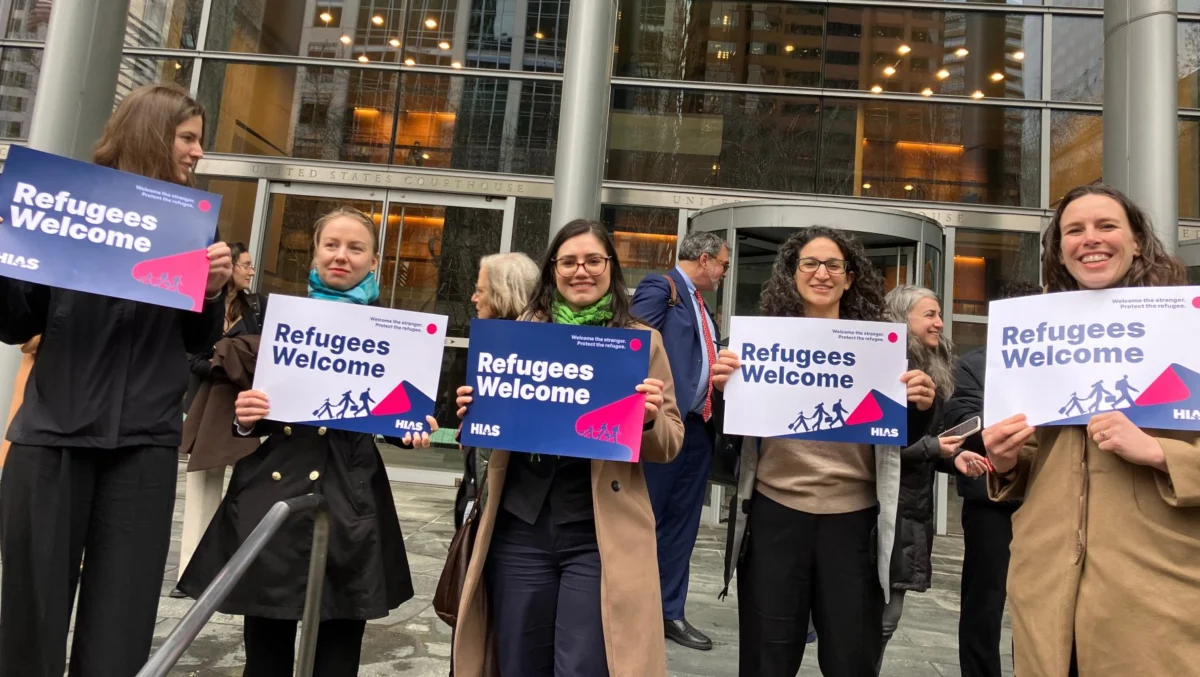
February 2025: The landmark lawsuit Pacito v. Trump was filed, with HIAS joining as a plaintiff. This action directly challenged the executive order suspending the U.S. Refugee Admissions Program (USRAP). The immediate impact of this lawsuit was significant, forcing the administration to resettle a small cohort of vulnerable refugees in the summer of 2025. Crucially, the Pacito v. Trump case also compelled the administration to continue funding essential resettlement support services for refugees already within the United States, preventing a complete collapse of domestic support infrastructure. The image of jubilant HIAS supporters celebrating a court ruling that blocked the suspension of USRAP outside a Seattle courthouse on February 25, 2025, became a potent symbol of this early legal victory.
-
February 2025: Alongside numerous other organizations and corporations, HIAS became a plaintiff in Global Health Council v. Trump. This lawsuit targeted the administration’s abrupt halt to U.S. humanitarian and development assistance, which had provided essential resources such as food, water, medicine, and education to millions globally. This legal action was instrumental in securing the disbursement of some humanitarian aid funds and brought national attention to the critical need for sustained foreign assistance. The case’s progression to the Supreme Court highlighted its national significance and the profound implications for global humanitarian efforts.
-
February 2026: A wave of new legal challenges emerged, reflecting the administration’s continued efforts to reshape immigration policies. Amica Center for Immigrant Rights v. EOIR was filed, with HIAS joining several other legal service providers to contest significant changes to the processes at the Board of Immigration Appeals (BIA). These changes threatened to severely limit individuals’ ability to appeal adverse immigration decisions, potentially leading to the forced return of individuals to unsafe circumstances. This lawsuit successfully halted the implementation of most of these detrimental BIA rule changes.
-
March 2026: HIAS initiated HIAS v. USA, filing a complaint in the Court of Federal Claims. This legal action, brought in conjunction with partners such as the American Bar Association, Mercy Corps, and Save the Children, challenged the widespread suspension and termination of federal grants and cooperative agreements. These agreements are vital for the delivery of essential services to refugees and vulnerable populations.
Broader Legal Fronts: Amicus Briefs and Specialized Litigation
Beyond direct plaintiff roles, HIAS has strategically utilized amicus briefs and specialized litigation to bolster legal arguments and provide critical expertise in cases that impact refugee and asylum law. These efforts, often filed in February and March 2026, demonstrate a comprehensive legal strategy:
-
February 2026 – Noem v. Al Otro Lado: HIAS filed an amicus brief in this case concerning "turnback" policies at the U.S.-Mexico border. The brief drew a poignant parallel between current border policies and the historical tragedy of the M.S. St. Louis, a ship carrying Jewish refugees turned away by the United States in 1939. HIAS leveraged its extensive experience from both the M.S. St. Louis crisis, where it rescued and supported survivors, and its recent work assisting those turned away at the border through its Mexico offices, offering crucial historical and contemporary context.
-
February 2026 – U.H.A. v Bondi: In this case, HIAS submitted an amicus brief opposing the detention of resettled refugees for re-screening purposes. The brief detailed the extensive security vetting already performed on refugees and underscored the severe psychological harm that detention inflicts on individuals with histories of violence and persecution.
-
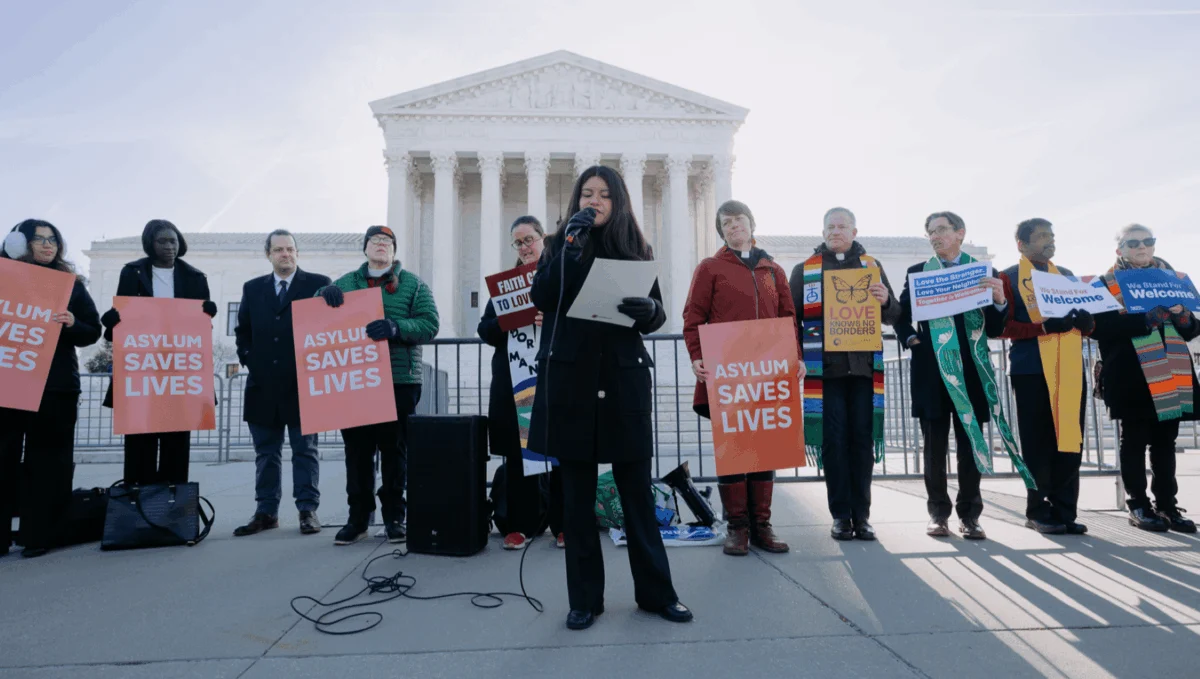
February 2026 – Trump v. Barbara: HIAS joined 57 faith-based organizations from diverse religious traditions in filing an amicus brief. This collective action emphasized the profound moral implications of challenging birthright citizenship and highlighted its importance to numerous faith communities and immigrant groups.
-
March 2026 – Jean A. et al v. Noem: HIAS filed an amicus brief in this lawsuit challenging a new policy that permitted the arrest and detention of resettled refugees. The lawsuit has led to a temporary injunction against this policy. HIAS’s brief reiterated its arguments about the detrimental and unnecessary nature of detaining refugees for re-screening, proudly noting that its resettlement partner, Jewish Family Service of Western Massachusetts, is among the plaintiffs.
Supporting Data and Context
The Trump administration’s policies have had a demonstrable impact on global refugee flows and humanitarian aid. Prior to the widespread implementation of the travel ban and suspension of USRAP, the United States had historically resettled tens of thousands of refugees annually. For example, in fiscal year 2016, under the Obama administration, the U.S. admitted over 84,000 refugees. By fiscal year 2018, this number had plummeted to approximately 22,000. The suspension of the refugee program in early 2017 created a backlog of hundreds of thousands of individuals awaiting resettlement, many of whom were stranded in perilous situations in their home countries or in protracted displacement.
Similarly, U.S. humanitarian and development assistance plays a critical role in global stability and the provision of life-saving resources. In 2017, the U.S. provided over $37 billion in foreign aid, supporting programs that reached millions of vulnerable individuals. The halt in this funding, as challenged in Global Health Council v. Trump, threatened to create widespread humanitarian crises and exacerbate existing vulnerabilities in numerous conflict-affected and impoverished regions.
Analysis of Implications
The extensive legal challenges mounted by HIAS and its partners represent a crucial defense of established legal norms and humanitarian principles. The implications of these lawsuits are far-reaching:
-
Restoration of Protection: The legal victories in cases like Pacito v. Trump have been instrumental in reopening pathways for vulnerable individuals to seek safety and refuge in the United States, directly impacting the lives of thousands.
-
Upholding Humanitarian Commitments: The fight against the halting of humanitarian aid underscores the U.S.’s role as a global leader in providing essential support and highlights the interconnectedness of international stability and humanitarian assistance.
-
Ensuring Due Process: Challenges to the changes in immigration appeals processes aim to safeguard the fundamental right to due process for individuals seeking asylum and other forms of protection, preventing arbitrary decisions that could lead to irreparable harm.
-
Setting Precedents: The ongoing litigation, particularly cases that reach higher courts, has the potential to set critical legal precedents that will shape refugee and immigration law for years to come, reinforcing the principles of non-refoulement and the right to seek asylum.
-
Advocacy for Vulnerable Populations: HIAS’s unwavering commitment through these legal battles demonstrates a powerful form of advocacy, ensuring that the voices and needs of refugees and immigrants are represented and defended in the legal arena, even in the face of significant political opposition.
A Call to Action
As HIAS continues its rigorous legal advocacy, the organization emphasizes the ongoing need for public support. The statement, "Although the U.S. government has abandoned refugees, HIAS never will," encapsulates the organization’s enduring mission. The call to "Give today" highlights the critical role of financial contributions in sustaining these vital legal efforts and continuing to provide essential services to those in need. The organization’s extensive history, spanning over 120 years, underscores its deep-rooted commitment to standing with refugees and immigrants, a commitment that remains steadfast regardless of the prevailing political climate. The ongoing legal battles are not merely a fight against specific policies but a broader defense of humanitarian values and the protection of those seeking safety and a better future.