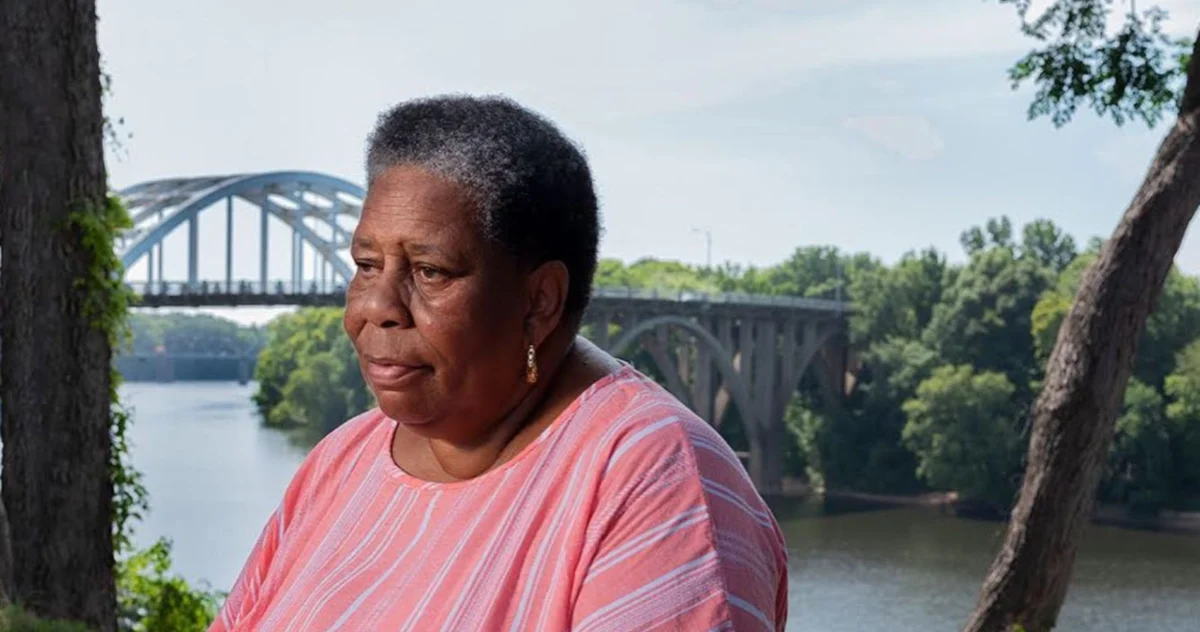
Courageous civil rights activist Jo Ann Bland passed yesterday at 72, her family announcing she "departed this life surrounded by love, leaving behind a legacy of strength, grace, and unwavering dedication to her family and community." Bland, a pivotal figure whose childhood bravery on the front lines of the Selma voting rights movement helped fundamentally reshape American democracy, dedicated her entire life to preserving and teaching the raw, unvarnished truth of the struggle for racial justice, ensuring that the sacrifices of countless "foot soldiers" would never be forgotten. Her passing marks the end of an era for Selma, Alabama, and the broader civil rights community, leaving a profound void in the ongoing fight for equality and historical remembrance.
Born and raised in the heart of Selma, Alabama, Jo Ann Bland’s journey into activism began at an astonishingly young age, a testament to the pervasive injustice and the urgent need for change that defined the Jim Crow South. By the tender age of 11 in 1965, she was already a seasoned activist, having faced arrest at least 13 documented times for her participation in peaceful protests against racial segregation and voter suppression. Her formative years were spent amidst the charged atmosphere of Selma, a city that became a crucible for the civil rights movement, specifically targeted by leaders like Dr. Martin Luther King Jr. and the Southern Christian Leadership Conference (SCLC) for its deeply entrenched resistance to Black voter registration.
Selma: A Battleground for Voting Rights
In the early 1960s, despite federal laws, African Americans in Selma and much of the Deep South faced formidable barriers to exercising their constitutional right to vote. Literacy tests, poll taxes, intimidation, and violence were systematically deployed to disenfranchise Black citizens. In Dallas County, where Selma is located, only about 2% of eligible Black voters were registered by 1965, compared to nearly 80% of white voters. This stark disparity made Selma an ideal, albeit dangerous, focal point for the SCLC’s campaign to secure federal voting rights legislation. Activists from SCLC, the Student Nonviolent Coordinating Committee (SNCC), and local organizations worked tirelessly to organize voter registration drives, often met with fierce resistance from local authorities, led by Sheriff Jim Clark, whose deputies were notorious for their brutality. It was into this charged environment that young Jo Ann Bland stepped, not as an observer, but as a direct participant, her youth belying a fierce commitment to justice.
Bloody Sunday: Witness to History
One of the most defining moments of the Civil Rights Movement, and certainly of Jo Ann Bland’s life, occurred on March 7, 1965. This day, known as "Bloody Sunday," saw Bland, alongside her older sister Linda, among the more than 600 peaceful marchers attempting to walk from Selma to the state capital in Montgomery to demand voting rights. Led by formidable figures such as John Lewis and Hosea Williams, the marchers aimed to draw national attention to the violent disenfranchisement of African Americans. As they crossed the Edmund Pettus Bridge, named ironically after a Confederate general and Ku Klux Klan leader, they were brutally assaulted by Alabama state troopers and local possemen.
Ms. Bland’s firsthand account of Bloody Sunday remains one of the most poignant and vital testimonies to the era’s violence. She recalled the terrifying scene as police chased her and other marchers back towards their church. On the website of the organization she later founded, Foot Soldiers Park, she vividly detailed the horror: "I walked across the Edmund Pettus Bridge on Bloody Sunday, marching alongside more than 600 peaceful activists who ended up being brutally beaten, tear-gassed, and hit or trampled by policemen on horses with billy clubs. At one point, I saw a horse near me, and then a woman fell. I can still hear the sound of her head hitting the pavement. I must have fainted after that, because the next thing I knew I was in a car with my head in my sister’s lap, and her blood was dripping from wounds on her head. Later, she needed 26 stitches."
The images and news reports of the unprovoked assault—showing peaceful demonstrators, including women and children, being tear-gassed, beaten with billy clubs, and trampled—shocked the nation and galvanized public opinion. President Lyndon B. Johnson, initially hesitant, was compelled by the national outrage to act decisively. Bloody Sunday was a pivotal turning point, directly accelerating the passage of landmark legislation.
From Selma to Montgomery: The Triumph of Perseverance
Despite the horrific violence and personal trauma of Bloody Sunday, the young Jo Ann Bland remained undeterred. Her resilience, characteristic of countless "foot soldiers," shone through. Just over two weeks later, on March 25, 1965, when thousands of marchers, now protected by federal troops and marshals and led by the Rev. Dr. Martin Luther King Jr., successfully reached Montgomery, Ms. Bland was once again among them. This historic march, culminating in a powerful address by Dr. King on the steps of the Alabama State Capitol, underscored the unwavering determination of the movement.
The successful Selma to Montgomery marches proved to be a critical catalyst. Within months, President Johnson signed the Voting Rights Act of 1965 into law. This landmark legislation prohibited discriminatory voting practices adopted in many southern states, including literacy tests and poll taxes, and authorized federal oversight of voter registration and elections in areas with a history of discrimination. The impact was immediate and profound: within years, millions of African Americans across the South were registered to vote, fundamentally transforming the political landscape and fulfilling the democratic promise of the 15th Amendment. Jo Ann Bland, a child veteran of this struggle, had not just witnessed history; she had actively shaped it.
A Life Dedicated to Education and Preservation
Ms. Bland’s commitment to justice extended beyond the voting rights marches. After the passage of the VRA, she continued to challenge segregation directly, integrating Selma’s A.G. Parish High School alongside six other courageous students. This act, another testament to her unwavering spirit, helped dismantle the remnants of the "separate but equal" doctrine in her hometown.
Her journey then took her beyond Selma. She attended Staten Island College in New York, seeking further education, and served her country in the U.S. Army, demonstrating a broad commitment to service. However, Selma, the crucible of her activism, remained deeply in her heart. When she returned in 1989, she immediately set about ensuring that the history she helped create would be preserved for future generations.
This led to the co-founding of the National Voting Rights Museum and Institute, an essential institution dedicated to documenting, collecting, and interpreting the history of the voting rights movement. The museum serves as a vital educational resource, drawing visitors from across the globe to learn about the courage and sacrifice of those who fought for the fundamental right to vote. Its exhibits often feature oral histories and artifacts that bring the raw experiences of foot soldiers like Bland to life, ensuring that the human cost and profound significance of the movement are never forgotten.
Ms. Bland’s passion for education and historical preservation only deepened with time. In 2017, she established Journeys for the Soul, a tour company that brought visitors from across the country and around the world to Selma. Through these immersive tours, she personally guided individuals through the very streets and sites where history unfolded, sharing her firsthand accounts and insights. Her goal was not merely to recount events but to allow visitors to feel the weight of history, to understand what foot soldiers endured and sacrificed in the struggle for racial justice. This experiential learning approach made history tangible and impactful, fostering empathy and inspiring new generations of activists.
Her tireless efforts culminated in 2021, when, together with co-founder Kimberly Smitherman, Ms. Bland created Foot Soldiers Park and Education Center. This initiative aimed to preserve the hallowed ground where the Bloody Sunday march began, transforming it into a sacred space for reflection and learning. "My vision for preserving the hallowed ground where the Bloody Sunday march began and creating Foot Soldiers Park," Ms. Bland wrote, "is to show every visitor, and especially every child, that they have the power to make great change in their community." This park stands as a living monument to the power of ordinary people, a place where the echoes of history inspire future action.
An Unflinching Teacher and Inspiring Voice
Throughout her life, Ms. Bland remained an unflinching and unstoppable teacher. She spoke to countless student groups at various Legacy Sites, sharing her experiences with a clarity and conviction that captivated audiences. Her presence at events, such as the dedication of the National Monument to Freedom, underscored her enduring relevance and respected status within the civil rights community. She possessed a unique ability to bridge the past and the present, making the struggles of the 1960s resonate with contemporary issues of justice and equality.
Tributes poured in following the news of her passing. Bryan Stevenson, founder and executive director of the Equal Justice Initiative (EJI), lauded her profound impact: "Jo Ann Bland raised her powerful voice for equality and racial justice, and she refused to be silenced. She inspired countless young people with her courage and championed the power of ordinary people to do extraordinary things to advance justice." This sentiment captures the essence of Bland’s legacy: her unwavering commitment to speaking truth to power and empowering others.
Rep. Terri Sewell, a daughter of Selma herself, echoed these sentiments: "I am heartbroken to learn of the passing of Ms. Jo Ann Bland — a freedom fighter and daughter of Selma, Alabama. It was Foot Soldiers like Jo Ann who put their lives and freedom on the line for the right of all Americans to vote." Such tributes highlight her status not just as a historical figure, but as a beloved community leader whose contributions were deeply felt and widely recognized.
Ms. Bland often articulated the profound lessons gleaned from her life of activism. She famously stated, "We have to talk about the truth of what happened and what was evil and wrong—so that we don’t let the same things happen again." This philosophy underpinned all her educational endeavors, emphasizing the critical importance of historical memory in safeguarding democracy and preventing the resurgence of injustice. She believed deeply in the power of shared history to illuminate paths forward.
On the Foot Soldiers Park website, Jo Ann Bland expressed a fervent hope that these sacred spaces in Selma would be "treasured and honored long after all of us, the original foot soldiers, have passed." This statement reflects her understanding of her place in history and her dedication to ensuring that the legacy of the Civil Rights Movement would continue to educate and inspire. She often reiterated her conviction that "My experience has taught me that the power of ordinary people cannot be overstated." This belief, born from her own extraordinary journey as an "ordinary person" who changed the world, is perhaps her most profound gift to future generations.
Jo Ann Bland’s life was a powerful testament to the transformative impact of courage, perseverance, and an unwavering commitment to justice. From her childhood arrests and the brutality of Bloody Sunday to her tireless efforts in establishing vital educational institutions, she embodied the spirit of the Civil Rights Movement. Her legacy is not merely etched in historical texts but lives on in the institutions she founded, the countless lives she touched, and the continuing pursuit of the ideals for which she so bravely fought. Her passing is a significant loss, yet her voice, her vision, and her profound lessons will undoubtedly continue to resonate, guiding those who strive for a more just and equitable world. Selma, the nation, and indeed the world, have lost one of their greatest daughters, but her spirit as an "unflinching and unstoppable teacher" will endure.