The Equality Trust has officially unveiled the results of its pioneering Community Economist project, a multi-faceted initiative designed to bridge the gap between abstract macroeconomic policy and the lived experiences of citizens across the United Kingdom. Spanning from the urban centers of London to the rural reaches of Scotland, the project represents a strategic shift in how economic narratives are constructed, moving away from top-down statistical modeling toward a grassroots, participatory approach. By training a cohort of ten volunteers—individuals with direct experience of economic hardship but no formal background in fiscal theory—the project seeks to demystify the complex forces that govern daily life and to assert that the economy should serve the public interest rather than dictate it.
The launch of the project’s insight report and accompanying documentary film marks the culmination of months of intensive collaboration. The initiative was born out of a recognition that for many residents of the UK, "the economy" is often perceived as an impenetrable and external force, influenced by global markets and technocratic decisions far removed from the kitchen table. Through the Community Economist model, the Equality Trust aims to foster a sense of agency among marginalized populations, equipping them with the tools to analyze, report, and eventually influence the economic structures that shape their access to housing, education, and social mobility.
A Chronological Overview of the Community Economist Initiative
The trajectory of the Community Economist project began with a nationwide recruitment drive aimed at identifying individuals who were not only affected by economic inequality but were also motivated to catalyze systemic change. The call for applications generated significant interest, reflecting a widespread desire for community-led advocacy in the wake of prolonged economic instability in the UK. From a diverse pool of applicants, ten volunteers were selected based on their unique perspectives and their commitment to the project’s mission.
Following the selection process, the volunteers embarked on a rigorous 12-week training program. This curriculum was designed to transform personal experience into structured community reporting. The workshops focused on several core competencies:
- Storytelling and Narrative Construction: Learning how to frame individual struggles within the broader context of systemic inequality.
- Interview Techniques: Training in ethical data collection and the art of eliciting unfiltered, authentic accounts from neighbors and peers.
- Thematic Analysis: Developing the skills to identify recurring patterns across disparate stories, such as the intersection of rising rents and declining mental health.
By the midpoint of the training, the group reached a consensus on a foundational research question: "What would it be like if everyone had what they needed to live a good life, and how would that be different from how things are now?" This question served as the North Star for the subsequent data collection phase. Over several months, the Community Economists gathered more than ten hours of raw interview footage and dozens of written testimonials, which were then curated into the comprehensive insight report released this January.
Socio-Economic Context: The Impetus for Grassroots Economic Reform
The emergence of the Community Economist project comes at a critical juncture for the United Kingdom. According to data from the Office for National Statistics (ONS) and leading think tanks like the Joseph Rowntree Foundation, wealth inequality in the UK has remained stubbornly high over the last decade. The Gini coefficient, a standard measure of income inequality, suggests that the UK remains one of the most unequal countries among high-income nations in Europe.
Furthermore, the "Cost of Living Crisis" has exacerbated the divide. With inflation affecting essential goods and the housing market seeing record-high prices relative to average earnings, the "private worries" mentioned in the Equality Trust’s report are backed by stark data. In 2024 and 2025, reports indicated that a significant percentage of households were living in "hidden poverty," where even those with full-time employment struggled to meet basic needs. This systemic pressure provided the backdrop for the Community Economists’ work, as they sought to document how these macro trends manifest as micro-level disruptions in family stability, educational aspirations, and community cohesion.
Core Findings: Housing, Education, and the "Good Life"
The insight report produced by the project highlights several key thematic areas where economic policy intersects most painfully with human life. The 10 hours of curated footage revealed that "the economy" is not experienced as a set of GDP growth figures, but as a series of barriers or facilitators to a dignified existence.
The Housing Crisis as an Economic Barrier
A recurring theme in the Community Economists’ reports was the precarious nature of housing. Participants described a "vicious cycle" where high rental costs prevent the accumulation of savings, which in turn stifles geographic mobility and limits access to better-paying jobs. The report argues that when housing is treated primarily as a financial asset rather than a human right, the resulting instability ripples through every other aspect of a person’s life, including their ability to maintain long-term relationships and participate in local civic activities.
Education and the Erosion of Aspiration
The project also delved into the relationship between economic status and educational outcomes. Interviewees noted that the "marketization" of education has created a landscape where the quality of one’s future is often determined by their postcode. The Community Economists identified a growing sense of "aspirational poverty," where young people from low-income backgrounds feel that the economic system is "rigged" against their success, regardless of their individual merit or effort.
Redefining the "Good Life"
Perhaps the most striking aspect of the report is the collective vision of the "Good Life." Far from requesting excessive luxury, the storytellers focused on stability, time for community and family, and the removal of the chronic stress associated with financial insecurity. This finding challenges the traditional economic metric of "consumption" as the primary indicator of well-being, suggesting instead that "security" and "agency" are the true benchmarks of a functioning economy.
Official Responses and Stakeholder Perspectives
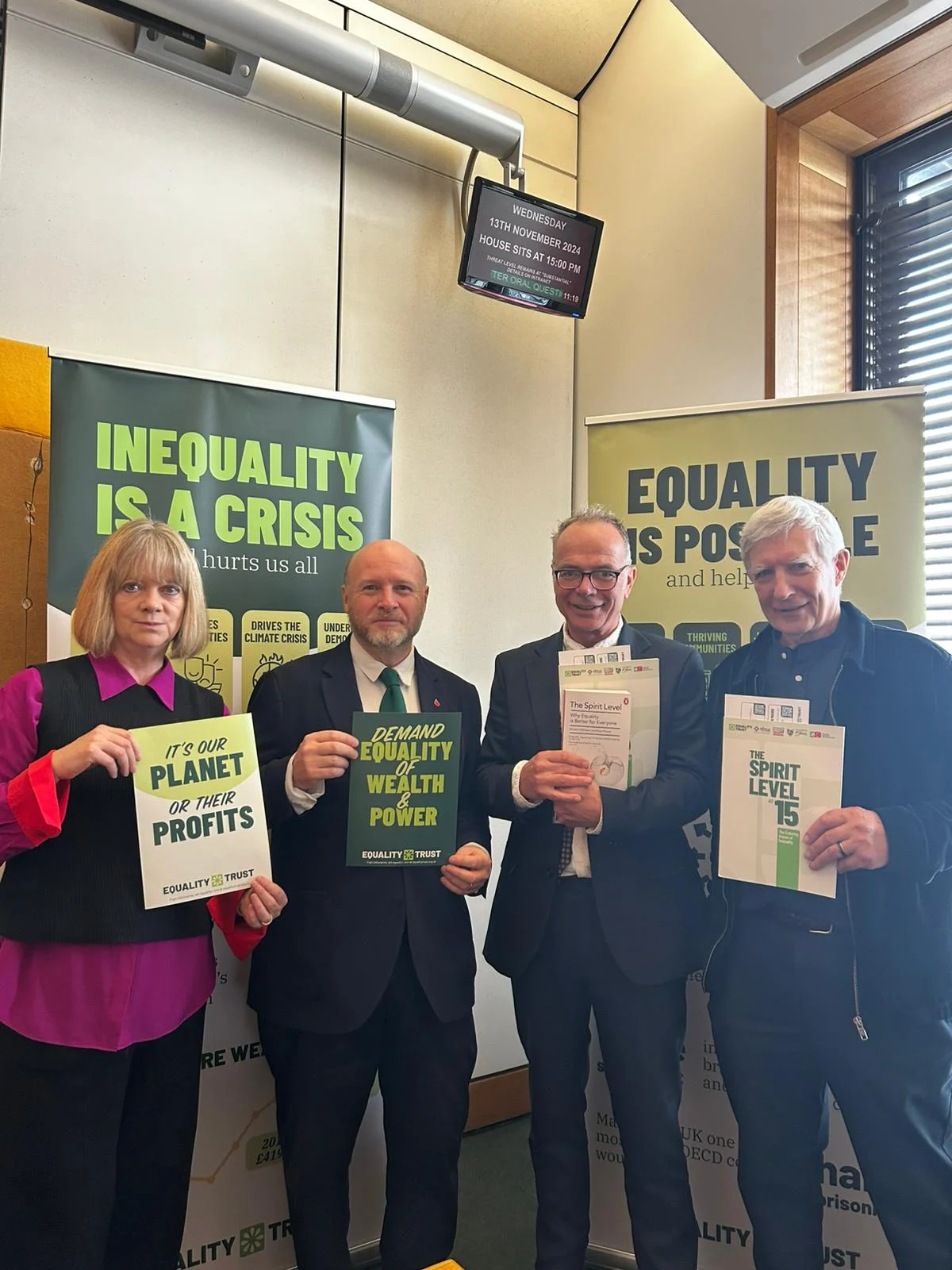
While the project was led by volunteers, it has garnered attention from social scientists and policy advocates. Dr. Jo Wittams, Co-Executive Director of the Equality Trust, emphasized that the project is a direct challenge to the "expert-only" culture of economics. By elevating the voices of those with lived experience, the Trust argues that a more democratic and inclusive form of economic discourse is possible.
Supporters of the initiative argue that traditional economic reporting often misses the nuances of human behavior and community resilience. By utilizing "community reporting," the Equality Trust is employing a methodology similar to Participatory Action Research (PAR), which posits that those experiencing a problem are best positioned to understand and solve it. Critics of current fiscal policy have welcomed the report as a necessary "humanizing force" in a debate often dominated by cold data and partisan rhetoric.
Broader Impact and the Path Toward Social Action
The release of the insight report and film is only the first stage of a three-phase strategic plan. The Equality Trust has outlined a roadmap that seeks to turn these gathered insights into tangible political and social change.
Phase 2: Advocacy and Coalition Building
The project is now entering its second phase, which involves focused workshops and "message testing." The goal is to take the narratives collected by the Community Economists and refine them into powerful advocacy tools. By building coalitions with other NGOs, labor unions, and community groups, the project aims to create a unified front that can lobby for specific policy changes, such as rent controls, living wage guarantees, and progressive taxation.
Phase 3: Social Action and Systemic Change
The final phase of the project will focus on direct social action. This involves moving beyond conversation and into the realm of organized influence. The Equality Trust intends to use the evidence gathered to support campaigns that challenge the status quo of UK economic policy. The "social action" component is designed to prove that when communities are informed and organized, they possess the power to reshape the economic rules that govern them.
Analysis of Implications: A New Paradigm for Economic Justice
The Community Economist project represents a significant departure from traditional charitable work. Rather than merely providing "relief" for the symptoms of inequality, it seeks to address the "root causes" by democratizing economic knowledge. The implication of this work is profound: it suggests that the perceived complexity of the economy is, in itself, a barrier to justice. By demystifying terms like "fiscal drag," "inflationary pressure," and "market volatility" through the lens of real-world stories, the project empowers citizens to demand an economy that prioritizes human flourishing over abstract growth.
Furthermore, the project highlights the importance of "community power." The transition from "private worries" to "shared action" is a psychological and political shift that is essential for any long-term movement toward equality. As the UK continues to navigate a volatile global economic landscape, the model provided by the Community Economists may serve as a blueprint for other nations seeking to integrate grassroots voices into national policy debates.
In conclusion, the Community Economist project stands as a testament to the idea that people make economies, and therefore, people have the power to change them. The insights provided in the latest report are not just a collection of grievances, but a roadmap for a more equitable future. As the project moves into its next phases, the focus will remain steadfast on turning these human stories into the catalysts for a fairer, more inclusive British economy.