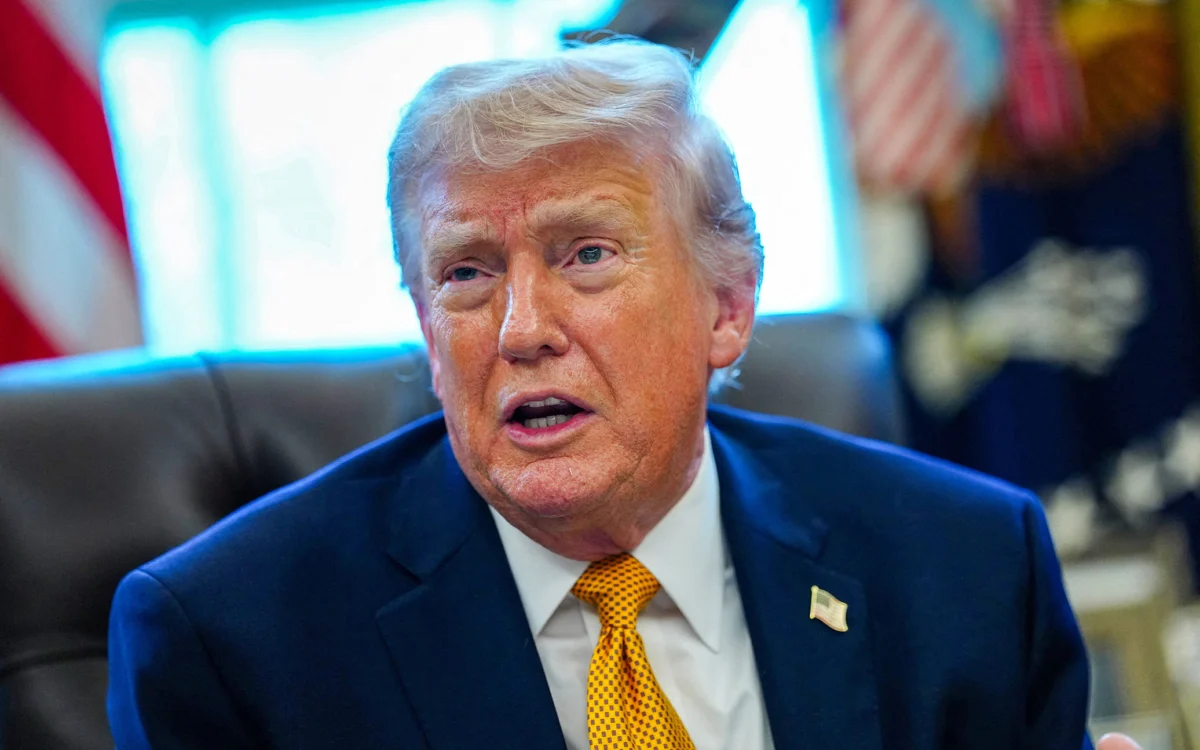
President Donald Trump’s budget request for the upcoming fiscal year, submitted to Congress late last week, signals a dramatic shift in federal spending priorities, with proposed deep cuts to numerous domestic programs, including those vital to individuals with disabilities. The proposal, which outlines a substantial increase in military expenditures, aims to significantly reduce or eliminate funding for key initiatives such as university centers on developmental disabilities, various Individuals with Disabilities Education Act (IDEA) programs, and the Administration for Community Living (ACL). This ambitious budgetary blueprint, while framed by the administration as an effort to streamline government and enhance state flexibility, has ignited immediate and strong opposition from disability advocacy groups who warn of devastating consequences for millions of Americans.
The core of the proposed changes centers on a philosophy articulated by President Trump himself: a belief that many social support programs are better managed at the state and local levels. "It’s not possible for us to take care of day care, Medicaid, Medicare, all these individual things," Trump stated prior to the budget’s release. "They can do it on a state basis. You can’t do it on a federal. We have to take care of one thing: military protection. We have to guard the country." This perspective underpins a budgetary strategy that seeks to devolve responsibility for a wide array of services, potentially leaving vulnerable populations at the mercy of varying state capacities and priorities.
Restructuring Federal Support for Disability Services
A significant casualty of the proposed budget is the Administration for Community Living (ACL), an agency dedicated to overseeing programs that empower people with disabilities and their families. The White House plan calls for the closure of the ACL, with many of its functions to be absorbed by the U.S. Department of Health and Human Services’ Administration for Children, Families and Communities. This consolidation, while presented as an efficiency measure, raises concerns about the specialized expertise and focus that the ACL currently provides.
Furthermore, the budget proposes to zero out funding for several critical programs specifically designed to advance the well-being and rights of individuals with developmental disabilities. These include:
- Developmental Disabilities Projects of National Significance: These grants have historically supported innovative research, policy development, and demonstration projects aimed at addressing complex challenges faced by individuals with developmental disabilities.
- University Centers for Excellence in Developmental Disabilities (UCEDDs): These academic centers are crucial for research, interdisciplinary training of professionals, technical assistance to states and communities, and public education on disability issues. They serve as vital hubs for advancing knowledge and practice in the field.
- Voting Access for Individuals with Disabilities: This program has been instrumental in ensuring that individuals with disabilities have equitable access to the electoral process, supporting initiatives that address barriers to voting.
In contrast to these proposed eliminations, the budget does allocate an additional $100 million to Centers for Independent Living (CILs). The White House has suggested that states could utilize these increased funds to continue programs that might otherwise face cuts under the Trump proposal. However, advocates argue that this increase, while seemingly positive, does not guarantee the preservation of the specialized services lost through the elimination of targeted programs.
Advocates Sound the Alarm: "Dismantling Critical Infrastructure"
The proposed cuts have been met with swift and strong condemnation from leading disability advocacy organizations. Delancy Allred, public policy manager at the Autism Society of America, articulated the deep concern felt by many. "While the budget frames these changes as streamlining and increasing flexibility, eliminating targeted programs like the University Centers for Excellence in Developmental Disabilities, Projects of National Significance and Voting Access for People with Disabilities risks dismantling critical infrastructure that cannot be easily replaced," Allred stated. "These programs play distinct roles in research, training, technical assistance and direct support."
Allred further emphasized the inadequacy of simply shifting funds. "Shifting funding into the Independent Living program, even with an increase, does not guarantee these services will be preserved. Without dedicated funding, essential supports such as early intervention, workforce development and access to civic participation could be reduced or lost, especially in underserved and rural communities." This perspective highlights the fear that a broad reallocation of funds may not adequately address the specific and often complex needs addressed by the targeted programs.
Impact on Special Education: Consolidating IDEA Programs
The budget also proposes significant changes to how funding for programs authorized under the Individuals with Disabilities Education Act (IDEA) is administered. Specifically, President Trump seeks to consolidate funding for several key IDEA programs. This consolidation would involve eliminating separate line items for:
- Preschool Grants: Funding crucial early intervention services for young children with disabilities.
- State Personnel Development: Initiatives aimed at improving the quality and availability of special education teachers and related service providers.
- Technical Assistance: Support for states and school districts in implementing IDEA effectively.
- Personnel Preparation: Programs that train and recruit educators and specialists to work with students with disabilities.
- Parent Information Centers: Resources that assist parents in navigating the special education system and advocating for their children.
Under the proposal, funding for these efforts would be folded into broader grants distributed to states under IDEA Part B. The administration asserts that this approach represents a "historic investment in IDEA" and aligns with the goal of returning education to the states by "streamlining funding and expanding flexibility for states."
A Troubled History of Similar Proposals
This is not the first time the Trump administration has sought to implement such significant changes to special education funding. Last year, when similar proposals were put forth, disability advocates raised alarms about the potential consequences. Stephanie Smith Lee, co-director of policy and advocacy at the National Down Syndrome Congress, who previously served as director of the Department of Education’s Office of Special Education Programs under President George W. Bush, commented on the recurring nature of these proposals.
"Eliminating preschool funds and IDEA programs would have a serious negative impact on students with disabilities, schools and states," Smith Lee stated. "Congress recently soundly rejected this proposal in the FY 2026 appropriations bill on a bipartisan basis. It is our hope and expectation that students with disabilities and their families can count on Congress to reject this misguided proposal once again." Her statement underscores the bipartisan opposition these proposals have faced in the past, suggesting a potential roadblock for the current budget request.
Vocational Rehabilitation Funds and State Control
Furthering the theme of state control, the budget also proposes changes to the allocation of vocational rehabilitation (VR) funds. The administration seeks to do away with specific grants for:
- Supported Employment: Programs that help individuals with significant disabilities find and maintain competitive employment in integrated settings.
- Client Assistance: Services that provide information, counseling, and advocacy for individuals receiving VR services.
- Training: Initiatives aimed at enhancing the skills and knowledge of VR professionals.
- Protection and Advocacy Program: A vital program designed to safeguard the legal rights of individuals with disabilities.
The administration contends that under this plan, states could choose to utilize their broader VR state grants to fund these purposes. However, critics argue that eliminating dedicated funding streams could lead to a reduction in the availability and quality of these specialized services, which are often crucial for individuals with disabilities to achieve meaningful employment and independence.
A Familiar Wish List Rejected by Congress
It is important to note that the president’s budget proposal serves primarily as a statement of priorities and a "wish list" for the administration. It does not have the force of law and requires congressional approval to be enacted. The proposed changes to disability programs largely mirror the requests made by the Trump administration in previous years. In those instances, Congress broadly rejected similar proposals, demonstrating a clear divide between the administration’s vision and the legislative body’s priorities regarding disability services.
Maria Town, president and CEO of the American Association of People with Disabilities, highlighted the significance of the budget’s messaging. "While the president’s budget is ultimately a statement of priorities and does not have the force of law, it sends a clear signal about the values of the Trump administration," Town said. "The proposal is extremely concerning because it targets the very infrastructure that people with disabilities and their families rely on every day."
Town elaborated on the potential repercussions: "Programs like University Centers for Excellence in Developmental Disabilities and Projects of National Significance drive innovation, train the workforce and help states deliver effective supports. Eliminating them would weaken the system at its core. At the same time, cutting investments in special education personnel, technical assistance and parent information centers would leave families with fewer resources to navigate complex systems and fewer qualified professionals to provide services. These are not abstract cuts; they would directly impact whether people with disabilities can learn, work and live independently in their communities."
Broader Implications and the Road Ahead
The proposed budget cuts raise profound questions about the federal government’s commitment to ensuring equal opportunity and support for individuals with disabilities. The emphasis on state control, while seemingly promoting flexibility, carries the risk of creating a patchwork of services that vary significantly in quality and accessibility, potentially exacerbating existing disparities.
The historical context of these proposals, coupled with their bipartisan rejection in previous appropriations cycles, suggests that Congress will likely face continued pressure from disability advocates to resist these cuts. The upcoming legislative debates over the budget will be critical in determining the future of these essential programs and their impact on the lives of millions of Americans with disabilities and their families. The outcome will serve as a significant indicator of national priorities and the government’s dedication to upholding the rights and well-being of all its citizens.