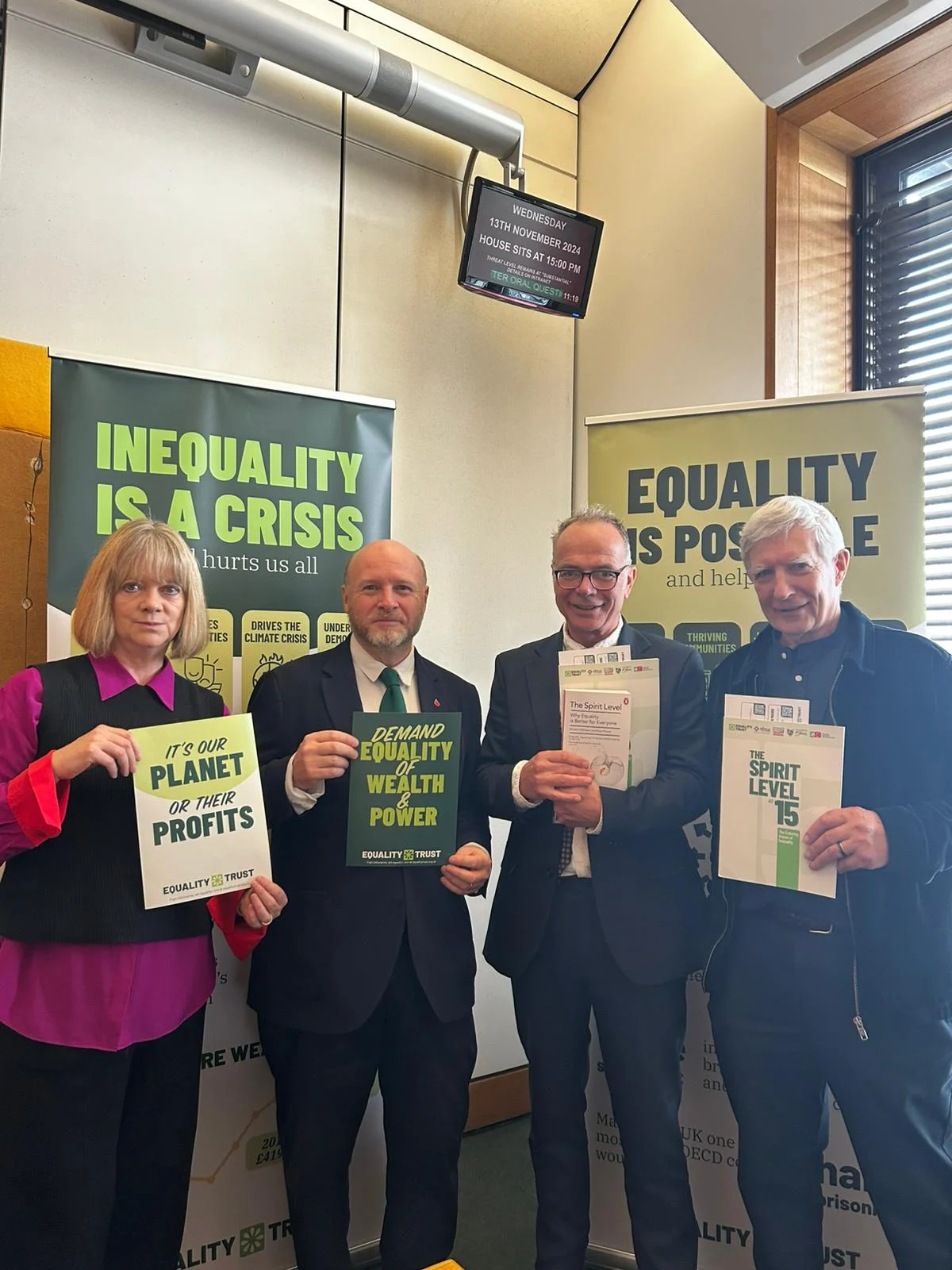
On January 13, 2026, the Public Policy Exchange convened a high-level forum to scrutinize the United Kingdom’s newly inaugurated Child Poverty Strategy. The event, titled "Tackling Child Poverty: Improving Welfare, Security and Future Prospects," featured a keynote analysis from Priya Sahni-Nicholas, Co-Executive Director of The Equality Trust. The discussion centered on the government’s December 2025 policy release, which marks the first comprehensive, UK-wide effort to address systemic juvenile deprivation since the early 2000s. While the strategy has been lauded for shifting the national discourse away from individual blame and toward systemic accountability, Sahni-Nicholas and other policy experts argue that the framework remains incomplete without a rigorous focus on wealth inequality and the structural distribution of power.
A New Era for Social Policy: The 2025 Child Poverty Strategy
The release of the Child Poverty Strategy in late 2025 followed a decade and a half of escalating hardship across the British Isles. Framing child poverty as a "moral, economic, and public-services failure," the current administration explicitly linked the crisis to policy choices made after 2010. The strategy sets an ambitious long-term goal to "end child poverty," with specific benchmarks designed to reduce deprivation within the current parliamentary term.
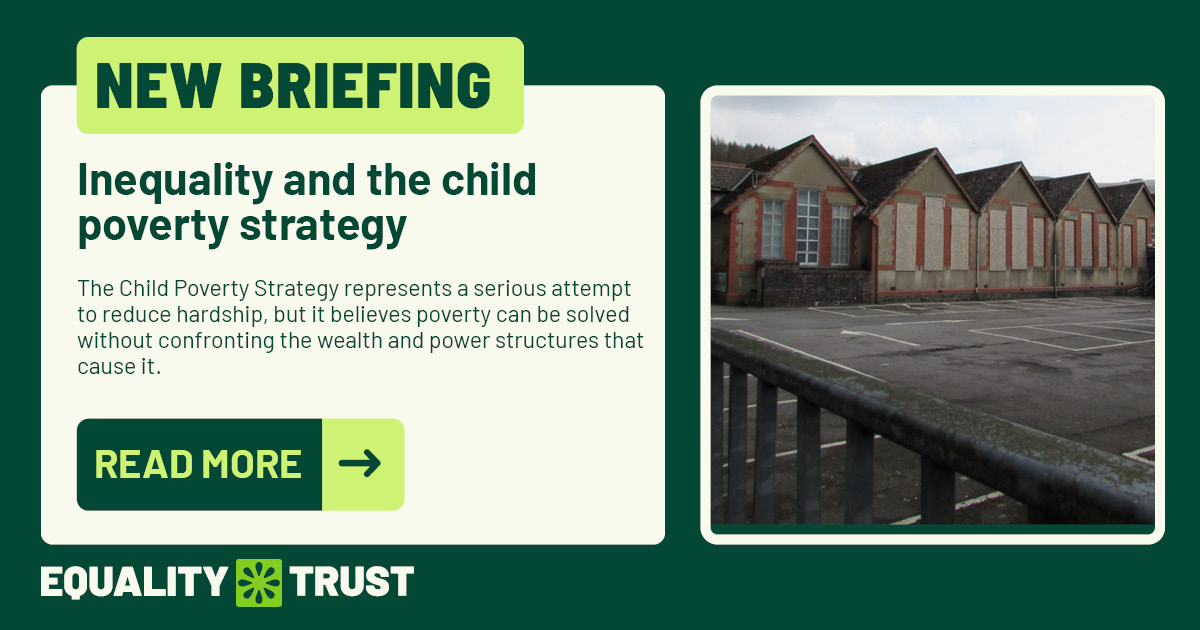
This policy shift arrives at a critical juncture. Since 2010, the United Kingdom has diverged from other advanced European economies. While many neighboring nations successfully reduced child poverty through robust social safety nets, the UK witnessed a steady rise in the number of children living in low-income households. By the start of 2025, official statistics indicated that 4.5 million children—approximately one in three—were living in poverty. Furthermore, nearly 20% of UK households reported inconsistent access to adequate nutrition, highlighting a burgeoning food security crisis.
Statistical Overview: The Human Cost of Economic Disparity
To understand the urgency of the new strategy, one must examine the data underpinning the UK’s current social landscape. The Equality Trust’s analysis highlights that child poverty is not an isolated phenomenon but the sharp end of a broader inequality spectrum.
- The 4.5 Million Milestone: The figure of 4.5 million children in poverty represents a significant increase from 2010 levels, reflecting the erosion of real-term benefit values and the rising cost of living.
- In-Work Poverty: A defining characteristic of the current crisis is that the majority of children in poverty live in working households. Low pay, the "gig economy," and insecure contracts mean that employment is no longer a guaranteed exit route from deprivation.
- Regional Disparities: Data reveals a "postcode lottery" of poverty. Deprivation rates are significantly higher in the North of England, the Midlands, and parts of Wales compared to the Southeast, though London remains a pocket of extreme disparity due to housing costs.
- Material Deprivation: Beyond income alone, one in five children lives in a household that cannot afford basic essentials, including heating, adequate clothing, or internet access for schooling.
The Policy Wins: Addressing the Symptoms of Deprivation
The 2025 strategy introduces several key interventions that have been welcomed by social advocacy groups. Sahni-Nicholas identified these "wins" as essential redistributive measures that mirror the successes of the 1997–2010 period, during which child poverty fell by approximately 600,000.
Abolition of the Two-Child Limit
The most significant policy change is the abolition of the two-child limit on benefits. Analysts project that this single move will lift approximately 450,000 children out of relative poverty. The limit had long been criticized for disproportionately penalizing larger families and entrenching inequality from birth.
Focus on Essential Costs and In-Work Support
The strategy acknowledges that poverty is driven by the high cost of essentials. New measures include the expansion of free school meals, the establishment of universal breakfast clubs, and caps on school uniform costs. Additionally, the government has committed to uprating Universal Credit and increasing the National Living Wage to ensure that work provides a dignified standard of living.

Inclusion of Lived Experience
A notable departure from previous administrative styles is the formal involvement of organizations like "Changing Realities." By incorporating the voices of parents with direct experience of the welfare system, the strategy addresses the "mental load" and social stigma associated with poverty, aiming to restore dignity to the claimant process.
The Missing Pillar: The Invisible Role of Wealth
Despite the strategy’s strengths in addressing income, The Equality Trust argues that it fails to confront the "wealth gap." In her analysis, Sahni-Nicholas pointed out that the word "wealth" is conspicuously absent from the government’s 2025 documentation.
Poverty is often treated as a lack of cash flow, but it is more accurately described as the bottom tier of a highly unequal distribution of assets. Families with identical incomes may experience vastly different qualities of life based on their access to wealth. A family with savings, homeownership, or intergenerational assets has a buffer against economic shocks—such as illness or redundancy—that a family reliant solely on wages does not.
Drawing on the work of economist Thomas Piketty, specifically his thesis that the return on capital (r) often outpaces economic growth (g), Sahni-Nicholas argued that structural inequality will continue to widen as long as assets are taxed at lower rates than labor. When wealth grows faster than the economy, those who own property and stocks pull away from those who depend on wages and benefits. A child poverty strategy that ignores wealth is, in the words of Sahni-Nicholas, "like trying to empty a bath while leaving the taps running."
The Power Dimension: Corporate Influence and Market Structures
The Equality Trust further posits that poverty is a result of power imbalances within the British economy. The strategy discusses "opportunity" and "life chances," yet it remains silent on how corporate power and the housing market actively manufacture the conditions of poverty.
Historically, the UK achieved its greatest reductions in inequality through systemic shifts in power. The post-WWII era (1945–1970s) saw the establishment of the National Health Service, the expansion of social housing, and the strengthening of trade union collective bargaining. These were not merely "anti-poverty" programs; they were reforms that redistributed power from capital to labor.
Today, the influence of the private rental sector and the low-tax environment for high-net-worth individuals create a "poverty trap." When a significant portion of a low-income family’s wages is immediately transferred to a wealthy landlord, the economic system is effectively functioning to redistribute money upward. Without addressing these power dynamics, income top-ups through the benefit system act as a temporary subsidy for an unequal market rather than a permanent solution to poverty.
Chronology of UK Child Poverty Policy
To understand the current strategy’s place in history, a look at the timeline of UK social policy is required:

- 1999: Prime Minister Tony Blair pledges to end child poverty within 20 years.
- 1999–2010: Implementation of Tax Credits and the Sure Start program. Child poverty falls significantly.
- 2010–2015: The Coalition Government introduces "Austerity" measures. The Welfare Reform Act 2012 introduces the Benefit Cap and the under-occupancy penalty (Bedroom Tax).
- 2017: The Two-Child Limit is implemented, significantly increasing poverty rates for larger families.
- 2020–2022: The COVID-19 pandemic and subsequent cost-of-living crisis push an additional hundreds of thousands of children into poverty.
- December 2025: The current government releases the new Child Poverty Strategy, reversing several key austerity-era policies.
- January 2026: Public Policy Exchange event highlights the need for a "wealth-conscious" approach to the 2025 strategy.
Inferred Reactions and Implications for the Future
While the government has received praise for its renewed focus on social security, the response from the broader non-profit sector suggests a "cautious optimism." Organizations such as the Child Poverty Action Group (CPAG) and the Joseph Rowntree Foundation (JRF) are expected to push for more binding targets.
The primary implication of the current analysis is that the 2025 strategy represents a "floor," not a "ceiling." For the strategy to be truly transformative, future iterations must:
- Link Poverty to Fiscal Reform: Sustained progress requires a clear funding model that includes the taxation of wealth and assets to fund public services.
- Narrow the Gap: Success should not be measured only by how many children cross an arbitrary poverty line, but by how much the gap between the richest and poorest in society is narrowed.
- Address Housing as a Right: Tackling the housing crisis is inseparable from tackling child poverty. Rent controls or massive investments in social housing are seen as necessary structural changes.
- Legislative Accountability: Advocates are calling for the strategy’s goals to be enshrined in law, similar to the 2010 Child Poverty Act, to prevent future administrations from abandoning the targets.
Final Analysis: The Path Toward Structural Equality
The 2025 Child Poverty Strategy is a necessary corrective to fifteen years of policy-driven hardship. By reinstating child poverty as a core national priority and removing punitive measures like the two-child limit, the government has taken a vital step toward social repair. However, as Priya Sahni-Nicholas and The Equality Trust have underscored, income redistribution alone cannot solve a crisis rooted in the unequal distribution of wealth and power.
If the UK is to truly "end child poverty," it must move beyond treating the symptoms of an unequal economy and begin reshaping the economic model itself. This requires a bold narrative that recognizes extreme inequality not just as a social ill, but as a direct violation of children’s rights and futures. The current strategy has set the stage; the next act must confront the billionaires and the asset-owners if it hopes to provide a secure future for the next generation.