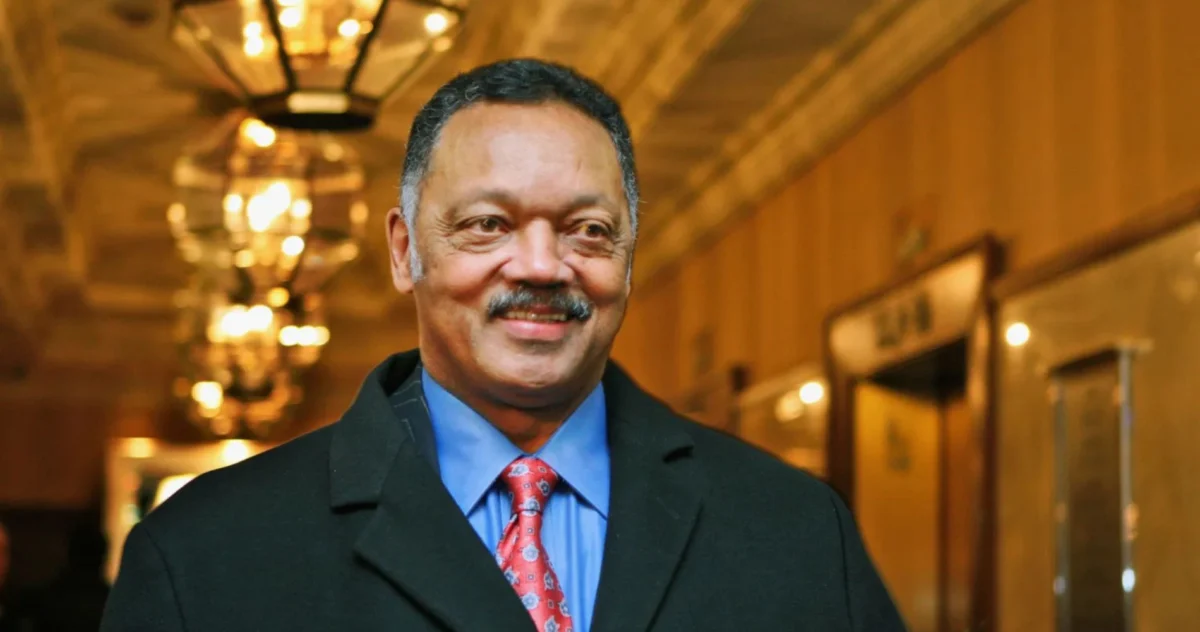
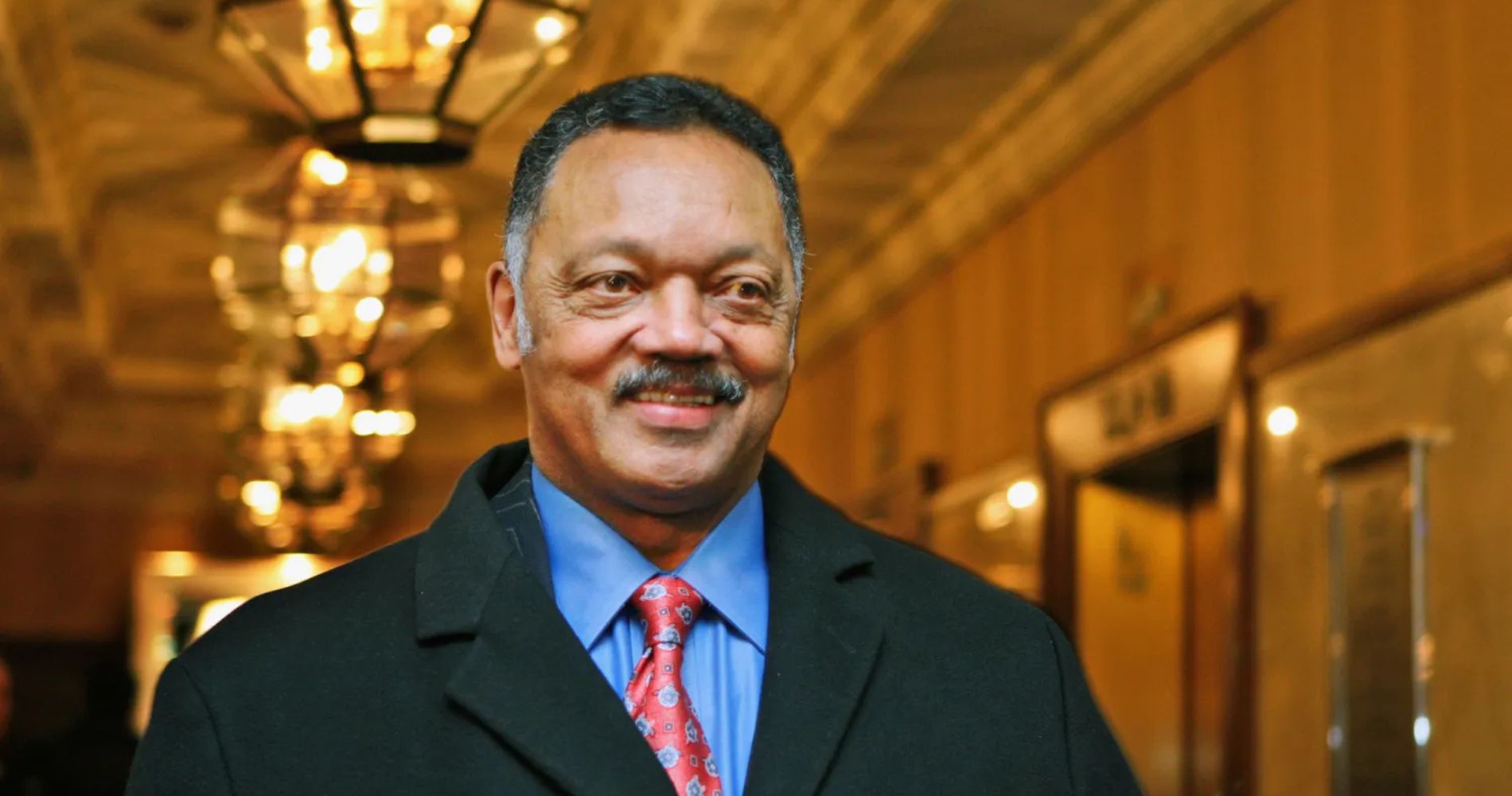
The Reverend Jesse Louis Jackson Sr., a towering figure in the American civil rights movement, a two-time presidential candidate, and a tireless advocate for justice and equality across the globe, died peacefully this morning at the age of 84. His oldest daughter, Santita Jackson, informed The New York Times that he passed away surrounded by his family, who prayed and listened to hymns, bringing a serene close to a life lived in constant motion for change.
In a heartfelt statement, the Jackson family acknowledged the profound impact of his life: “Our father was a servant leader—not only to our family, but to the oppressed, the voiceless, and the overlooked around the world. We shared him with the world, and in return, the world became part of our extended family. His unwavering belief in justice, equality, and love uplifted millions, and we ask you to honor his memory by continuing the fight for the values he lived by.” His passing marks the end of an era, leaving an indelible legacy of activism, political trailblazing, and a relentless pursuit of a more just society.
Early Life and the Genesis of a Movement
Born on October 8, 1941, in Greenville, South Carolina, Jesse Jackson’s early life was shaped by the rigid racial segregation of the Jim Crow South. Despite the systemic barriers, he distinguished himself as an honor student and class president at his all-Black high school, demonstrating an early aptitude for leadership and advocacy. In 1959, his athletic prowess earned him a football scholarship to the University of Illinois, a significant achievement for a young Black man from the segregated South.
It was during his first winter break from college, back in Greenville, that Jackson encountered a pivotal moment that ignited his lifelong commitment to civil rights. Seeking a book for a paper, he was turned away from the white-only Greenville County Public Library, a stark reminder of the pervasive racial discrimination that permeated every aspect of life. This personal affront crystallized the injustices he sought to dismantle.
On July 16, 1960, Jackson, then a determined 18-year-old, joined seven other Black students in a courageous act of defiance. They peacefully entered the segregated library and sat down in the reading room for a "read-in," a silent protest aimed at desegregating the institution. Despite requests to leave, they remained silent and steadfast, leading to their arrest for disorderly conduct. This group, later immortalized as the "Greenville Eight," faced legal repercussions, with each student released on a $30 bond. Their brave act, however, sparked a federal lawsuit that ultimately compelled the Greenville library system to confront its discriminatory practices. Initially, the library opted to close all branches rather than integrate, a testament to the deep-seated resistance to racial equality at the time. Yet, immense public pressure soon forced the libraries to reopen in September 1960, now operating, as the mayor announced, "for the benefit of any citizen having a legitimate need for the libraries and their facilities." This early victory underscored the power of nonviolent direct action and foreshadowed Jackson’s future as a change agent.
From Student Activist to King’s Protégé
Following his impactful experience in Greenville, Jesse Jackson transferred to North Carolina A&T College in Greensboro, a historically Black college, where he continued to hone his leadership skills. He quickly rose to prominence, becoming a leader in his fraternity and the president of the student body. Greensboro itself was a crucible of the Civil Rights Movement, notably the site of the influential sit-ins at Woolworth’s lunch counter in 1960. Jackson immersed himself in this vibrant activist community, joining the local chapter of the Congress of Racial Equality (CORE). His burgeoning leadership was evident when he led hundreds of students in a downtown march in June 1963, resulting in his arrest the following day—a familiar consequence for those challenging the racial status quo.
After graduating in 1964, Jackson moved to Chicago to attend the Chicago Theological Seminary, a move that broadened his academic and activist horizons. His commitment to civil rights deepened, particularly after witnessing the brutal attacks on peaceful marchers in Selma, Alabama, on "Bloody Sunday" in March 1965. The televised images of state troopers violently assaulting unarmed demonstrators shocked the nation and galvanized the movement. Inspired by the Rev. Dr. Martin Luther King Jr.’s urgent call for faith leaders and voting rights supporters to join the Selma campaign, Jackson, with characteristic zeal, climbed onto a cafeteria table at the seminary, challenging his fellow students to answer King’s plea. Approximately 20 students and a third of the faculty heeded his call, traveling South with him to stand in solidarity with the marchers.
The Selma experience solidified Jackson’s resolve to dedicate his life to the movement. Six months later, the then 24-year-old became the youngest staff member of Dr. King’s Southern Christian Leadership Conference (SCLC). King quickly recognized Jackson’s charisma and organizational acumen, choosing him to lead the Chicago chapter of Operation Breadbasket. This innovative national economic development campaign harnessed the collective power of Black churches to negotiate with, and if necessary, boycott businesses that profited from Black consumers but failed to employ Black workers or invest in Black communities.
Dr. King articulated the core philosophy of Operation Breadbasket in 1967: "The fundamental premise of Breadbasket is a simple one. Negroes need not patronize a business which denies them jobs, or advancement [or] plain courtesy. Many retail businesses and consumer-goods industries deplete the ghetto by selling to Negroes without returning to the community any of the profits through fair hiring practices." Under Jackson’s dynamic leadership, Operation Breadbasket in Chicago became, in King’s words, the SCLC’s "most spectacularly successful program." It secured an estimated 2,000 new jobs for the Black community, injecting an impressive $15 million in annual income. Jackson’s effectiveness led to his promotion to national director of the program in 1967, solidifying his status as a key lieutenant in King’s nonviolent army.
The Shadow of Memphis and a New Path
Dr. King became more than a mentor to Jesse Jackson; he became a father figure, guiding his protégé through the complex landscape of the Civil Rights Movement. In 1968, King summoned Jackson to Memphis, Tennessee, to support striking sanitation workers. It was there, on April 4, 1968, that tragedy struck. Jackson was talking with Dr. King from below the balcony of the Lorraine Motel when King was assassinated, a moment that would forever scar Jackson’s memory.
"Every time I think about it, it’s like pulling a scab off a sore," Jackson recounted to The Guardian in 2018, the pain still palpable decades later. "It’s a hurtful, painful thought: that a man of love is killed by hate; that a man of peace should be killed by violence; a man who cared is killed by the careless." King’s murder left a void in the movement, but it also propelled Jackson to continue the fight. In the immediate aftermath, he followed in King’s footsteps, becoming a Baptist minister, a calling that deepened his spiritual grounding and amplified his moral authority.
Jackson continued to lead Operation Breadbasket until 1971. Driven by a vision for broader economic empowerment and social justice, he resigned from the SCLC and founded his own organization: Operation PUSH (People United to Save Humanity). PUSH expanded on the economic justice principles of Breadbasket, advocating for self-help, self-determination, and the empowerment of marginalized communities. Through Operation PUSH, Rev. Jesse Jackson utilized his brilliant oratory and advocacy skills to champion social justice causes not only across the United States but also on the international stage. His global advocacy took him to South Africa, where he campaigned against apartheid; to Haiti, where he supported democratic movements; and to the Middle East, where he engaged in diplomatic efforts. A notable achievement came in 1984 when he played a prominent role in securing the release of Robert O. Goodman Jr., a Navy lieutenant imprisoned in Lebanon, demonstrating his growing influence as an international statesman.
Breaking Barriers: The Presidential Campaigns
Rev. Jackson’s lifelong fight for the poor and disenfranchised culminated in his groundbreaking bids for the Democratic party’s presidential nomination. In 1984, he became only the second Black American to launch a presidential campaign, following Congresswoman Shirley Chisholm’s pioneering run in 1972. His candidacy was a seismic event in American politics, giving voice to millions who felt ignored by the political establishment.
At the 1984 Democratic National Convention in San Francisco, Jackson delivered a powerful speech that resonated deeply with his supporters. "My constituency is the desperate, the damned, the disinherited, the disrespected and the despised," he declared, his voice a clarion call for those on the margins of society. "They are restless and seek relief." His campaign mobilized an unprecedented number of new voters, helping to register over a million Americans, primarily African Americans and other minorities, who had previously been excluded or disillusioned by the political process. He secured more than 18% of the primary vote, totaling approximately 3.5 million votes, a significant achievement for a first-time Black presidential candidate.
Reflecting on his 1984 campaign in a 1996 interview with PBS, Rev. Jackson emphasized its core purpose: "The great responsibility that we have today is to put the poor and the near poor back on front of the American agenda. This is a dangerous mission, and yet it’s a necessary mission!" His campaign shifted the national conversation, forcing the Democratic Party to address issues of poverty, racial inequality, and economic justice with greater urgency.
Following his 1984 run, Jackson founded the National Rainbow Coalition, an organization dedicated to advancing social justice, voting rights, and economic development, building on the broad coalition of marginalized groups his campaign had energized. He ran again for the Democratic nomination in 1988, demonstrating even greater political strength. This time, he won 11 primaries and caucuses, a remarkable feat that solidified his status as a major political force. On Super Tuesday, March 8, 1988, a crucial date in the primary calendar, he ran first or second in 16 of the 21 primaries and caucuses, garnering nearly seven million primary votes—29% of the total.
His televised speech at the 1988 Democratic Convention in Atlanta became an instant classic in American political oratory. Concluding with the powerful and iconic refrain, "Keep hope alive!" repeated four times, the speech was, as The New York Times aptly described it, "immediately hailed as an American political classic." These campaigns, while ultimately unsuccessful in securing the nomination, fundamentally transformed American politics, demonstrating the viability of a Black presidential candidate and paving the way for future generations of minority leaders.
The culmination of this long struggle for political representation came in 2008 with the election of Barack Obama as the first Black president of the United States. Rev. Jackson, present at Obama’s victory celebration in Chicago, wept openly. "It was a big moment in history," he later told The Guardian. In an interview with NPR, he explained the depth of his emotion: "I cried because I thought about those who made it possible who were not there. People who paid a real price: Ralph Abernathy, Dr. King, Medgar Evers, Fannie Lou Hamer, those who fought like hell [at the Democratic national convention] in Atlantic City in ’64, those in the movement in the south." His tears were a tribute to the countless unsung heroes and martyrs whose sacrifices had made that historic moment possible.
Enduring Activism and a Legacy of Hope
In 1996, Rev. Jackson combined Operation PUSH and the National Rainbow Coalition to form the Rainbow/PUSH Coalition, creating a unified front for his diverse advocacy efforts. Under his leadership, the organization continued to tackle critical issues, providing over $6 million in college scholarships to deserving students and helping more than 4,000 families facing foreclosures save their homes. This work underscored his consistent commitment to both educational opportunity and economic stability for underserved communities.
His decades of relentless work to advance civil rights and social justice were formally recognized in 2000 when President Bill Clinton awarded him the nation’s highest civilian honor, the Presidential Medal of Freedom. In presenting the medal, President Clinton eloquently praised Jackson’s profound impact: "Dr. King said, ‘Human progress never rolls on the wheels of inevitability. It comes through the tireless efforts of those willing to be coworkers with God.’ The cause of justice has no greater co-worker than Jesse Jackson. It’s hard to imagine how we could have come as far as we have without the creative power, the keen intellect, the loving heart, and the relentless passion of Jesse Louis Jackson."
In 2017, at the age of 76, Rev. Jackson announced his diagnosis with Parkinson’s disease, a progressive neurological disorder. Last year, reports indicated he was living with progressive supranuclear palsy, a rare brain disorder with symptoms similar to Parkinson’s. Despite these profound health challenges, his activism could not be stopped. Even as his physical abilities diminished, his spirit remained unyielding.
In August 2021, he was arrested in Washington while protesting voting restrictions proposed by Republicans, a testament to his unwavering commitment to safeguarding democratic rights. Even after officially retiring as head of the Rainbow PUSH Coalition in 2023, he continued to advocate for social justice, embodying the principle that the fight for justice is a lifelong endeavor. In 2024, he traveled to Racine, Wisconsin, to encourage young people to vote, emphasizing the critical importance of civic engagement. In 2025, he joined a boycott of Target after the retail giant reversed its diversity initiatives, demonstrating his continued vigilance against backsliding on corporate responsibility and inclusion.
Tributes and the Arc of Justice
News of Rev. Jackson’s passing prompted an outpouring of tributes from across the political spectrum and civil rights community. Senator Raphael Warnock (D-Ga.), himself a prominent Black pastor and civil rights advocate, posted on X (formerly Twitter) that the country "lost one of its great moral voices." Senator Warnock further reflected, "With an eloquence and rhythmic rhetoric all his own, Jesse Jackson reminded America that equal justice is not inevitable; it requires vigilance and commitment, and for freedom fighters, sacrifice."
Rev. Jackson consistently spoke out against what he termed the "ethnic nationalism" that gained prominence during the Trump administration, warning against divisive rhetoric and policies that undermined the nation’s democratic fabric. In a 2018 interview with The Guardian, he reiterated a core tenet of the Civil Rights Movement: "The arc of the moral universe is long and it bends towards justice, but you have to pull it to bend. It doesn’t bend automatically." He acknowledged the persistent challenges: "Dr. King used to remind us that every time the movement has a tailwind and goes forward, there are headwinds."
Reflecting on the political climate, he offered a characteristic message of resilience: "Those who oppose change in some sense were re-energised by the Trump demagoguery. Dr King would have been disappointed by his victory but he would have been prepared for it psychologically. He would have said: ‘We must not surrender our spirits. We must use this not to surrender but fortify our faith and fight back.’" This enduring spirit of resistance and hope defined Jesse Jackson’s extraordinary life.
Jesse Jackson’s legacy is multifaceted and profound. He was a pioneer who broke racial barriers in national politics, inspiring millions and demonstrating the potential for Black leadership at the highest levels of government. He was a relentless advocate for economic justice, understanding that true freedom required not only legal equality but also economic empowerment. He was an international diplomat, using his influence to champion human rights and democracy across the globe. Above all, he was a moral compass for the nation, consistently challenging America to live up to its ideals of liberty and justice for all. His life’s work leaves an indelible mark on the fabric of American society, ensuring that the fight for a more just and equitable world will, indeed, "keep hope alive."