The cinematic landscape of 2025 has been significantly altered by the release of Sinners, a genre-defying supernatural thriller that marks the latest collaboration between visionary director Ryan Coogler and actor Michael B. Jordan. Set against the atmospheric backdrop of the 1930s Jim Crow South, the film represents a bold departure from traditional horror tropes, blending elements of Southern Gothic, historical drama, and the musical to create a narrative that explores the intersection of Black history, folklore, and cultural resilience. Since its initial debut, the film has sparked intensive discussion among critics and audiences alike, not only for its technical prowess but also for its complex subtextual themes and innovative use of sound.
Production Background and the Coogler-Jordan Collaboration
Sinners arrived in theaters following a highly competitive bidding war in early 2024, which saw Warner Bros. Pictures secure the rights to the original script penned by Coogler. The project represents the fifth collaboration between Coogler and Jordan, a partnership that began with the critically acclaimed Fruitvale Station (2013) and continued through the Creed and Black Panther franchises. This creative shorthand is evident in the film’s meticulous construction, as Jordan takes on a dual role, playing twin brothers navigating the dangers of a segregated Louisiana town plagued by an ancient, supernatural threat.
The production, which utilized locations throughout the American South to achieve an authentic period aesthetic, was shrouded in secrecy for much of its development. Early reports categorized the film simply as a "vampire movie," but the final product has revealed a much more ambitious scope. Coogler, working with his frequent collaborators including cinematographer Autumn Durald Arkapaw, has crafted a visual language that balances the gritty reality of the Great Depression with the surreal, heightened elements of the supernatural.
A Technical Masterclass in Musical Integration
One of the most distinctive features of Sinners is its approach to musicality. While not a traditional "movie musical" in the sense of characters breaking into song to explain their internal states, the film utilizes music as a core narrative engine. Coogler’s direction treats the soundtrack and the score not as incidental background noise, but as a visceral force that dictates the film’s emotional temperature and pacing.
The film’s centerpiece is a sequence involving the song "I Lied to You," performed by baritone Miles Caton. This number serves as a historical and cultural bridge, beginning with the foundations of the blues—characterized by an untuned piano and rhythmic "church stomps"—before evolving into a complex arrangement that incorporates hip-hop, rock, Indigenous West African percussion, and East Asian woodwinds. This stylistic progression is intended to symbolize the transcendence of Black musical spirits across time and space.
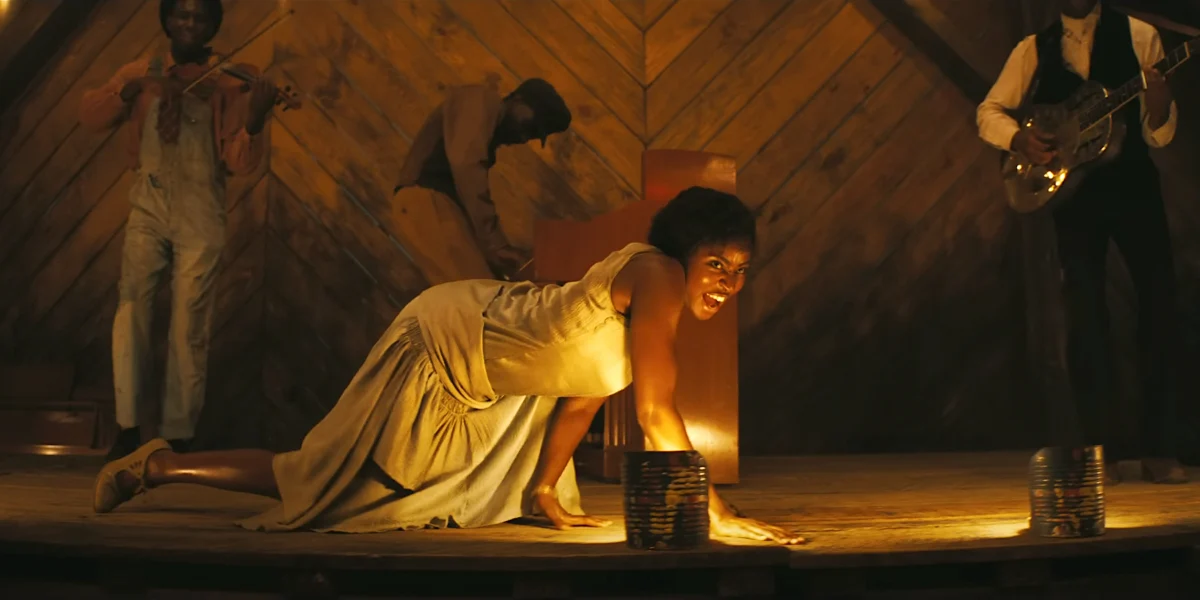
To capture this evolution, Coogler utilized an ambitious one-shot sequence set within a 1930s juke joint. The scene features a chronological collage of dancers: 1930s sharecroppers, 1980s DJs, West African Griots, 1990s Oakland residents, and contemporary dancers. This technical feat has been praised by critics for its ability to visualize the "shared pulse" of the African diaspora, turning a horror film into a celebration of cultural continuity.
Analysis of Key Musical Performances
Beyond the technical achievement of the "I Lied to You" sequence, individual performances contribute to the film’s haunting atmosphere. Jack O’Connell, who portrays the primary antagonist, leads a rendition of the traditional Keltic song "Rocky Road to Dublin." In the context of the film’s vampire lore, the song is recontextualized as an eerie, claustrophobic chant that emphasizes the predatory nature of the antagonists. The use of thumping rhythms and swelling vocals creates a sense of dread that contrasts sharply with the soulful, grounded music of the human protagonists.
Additionally, Jayme Lawson’s performance of "Pale, Pale Moon" has emerged as a highlight for musicologists and film critics. The song adheres to traditional blues structures but is elevated by a visual and vocal performance that emphasizes sensuality and collective power. The scene culminates in a synchronized stomp by the juke joint patrons, a moment that industry analysts suggest represents the "singular shared pulse" of Indigenous Black music. This motif of the "stomp" or the "beat" serves as a recurring theme throughout the film, acting as a defense mechanism against the supernatural forces that threaten the community.
Chronology of Development and Release
The journey of Sinners from conception to cultural phenomenon followed a strategic rollout:
- January 2024: Ryan Coogler’s script is shopped to major studios under a shroud of secrecy.
- February 2024: Warner Bros. Pictures wins the rights in a deal that includes Coogler retaining a significant portion of the intellectual property.
- Spring 2024: Casting announcements confirm Michael B. Jordan, Jack O’Connell, Jayme Lawson, and Delroy Lindo.
- Late 2024: The first teaser trailer is released, sparking debate over the film’s genre and its use of Prohibition-era action aesthetics.
- Early 2025: The film premieres to strong critical reviews, with particular emphasis on the score and the subversion of horror tropes.
- Post-Release: Digital discourse expands as audiences analyze the film’s subtext, leading to viral discussions regarding the "gay movie" theory and the film’s status as a modern classic.
Addressing the "Black Trauma" Narrative
Prior to the film’s release, some cultural commentators expressed concern that a horror film set in the 1930s South might lean into "Black trauma porn"—a term used to describe media that exploits the historical suffering of Black people for entertainment. However, critical consensus suggests that Sinners avoids these pitfalls by empowering its protagonists and framing the supernatural threat as something that can be resisted through community and cultural heritage.
By using vampires as a metaphor for external predatory forces, Coogler allows the characters to engage in a struggle that is both physical and spiritual. The film’s focus on the power of music and the resilience of the juke joint culture provides a counter-narrative to the typical depictions of the era, emphasizing joy and artistic innovation even in the face of systemic oppression and supernatural danger.
Critical Interpretations and Queer Subtext
In the weeks following the film’s release, a significant segment of the audience has begun to explore the queer subtext within Sinners. This discourse was further amplified by a popular analytical video from cultural critics Mal and Tima, who argue that the film functions as a "gay movie" through its themes of "otherness," hidden identities, and the specific dynamics between its central characters.
While the film does not feature an overt queer romance in the traditional sense, proponents of this theory point to the intense, coded relationships and the way the film explores the concept of "sin" as defined by a rigid, judgmental society. This interpretation aligns with the broader history of the horror genre, which has frequently used monsters and the supernatural as allegories for marginalized identities. The debate has added a layer of academic and social relevance to the film, ensuring its longevity in cultural conversations.
Broader Impact and Industry Implications
The success of Sinners has significant implications for the film industry. At a time when major studios are increasingly reliant on established franchises and sequels, the box office performance of an original IP like Sinners suggests that there is a substantial market for high-concept, director-driven genre films.
Furthermore, the film’s innovative use of sound and its refusal to be pigeonholed into a single genre may influence future productions. By proving that a horror film can also function as a sophisticated musical and a historical drama, Coogler has expanded the boundaries of what "commercial" cinema can achieve.
Industry analysts also note the importance of the film’s "shared pulse" theme. In a fragmented media landscape, Sinners has managed to create a communal viewing experience, drawing audiences back to theaters for the visceral impact of its sound design and cinematography. As the film continues its theatrical run and moves toward digital platforms, it is poised to remain a touchstone for discussions on how cinema can honor the past while pushing the boundaries of the future.
Conclusion
Sinners stands as a testament to the power of original storytelling and the enduring strength of the Coogler-Jordan partnership. By integrating the history of Black music into the framework of a supernatural thriller, the film offers a unique sensory experience that transcends traditional genre boundaries. Whether viewed as a horror spectacle, a cultural history, or a subtextual exploration of identity, Sinners has solidified its place as a landmark achievement in contemporary American cinema. As the film’s themes of evolution and resilience continue to resonate, it serves as a reminder that the most potent stories are often those that find the rhythm in the darkness.