The Equality Trust, a leading national charity dedicated to reducing social and economic inequality in the United Kingdom, has announced the departure of Gerry Boyle from its Board of Trustees. Mr. Boyle’s exit follows the completion of two consecutive three-year terms, the maximum duration permitted under the organization’s governing constitution. His departure, effective March 23, 2026, marks the end of a pivotal era for the Trust, during which the organization navigated a global pandemic, a domestic cost-of-living crisis, and significant shifts in the international philanthropic landscape. Mr. Boyle, who brought a background in business and international development to the board, served as a key figure in the Trust’s finance committee, overseeing the charity’s transition toward a more sustainable, grassroots-funded model.
A Legacy Rooted in Social Evidence
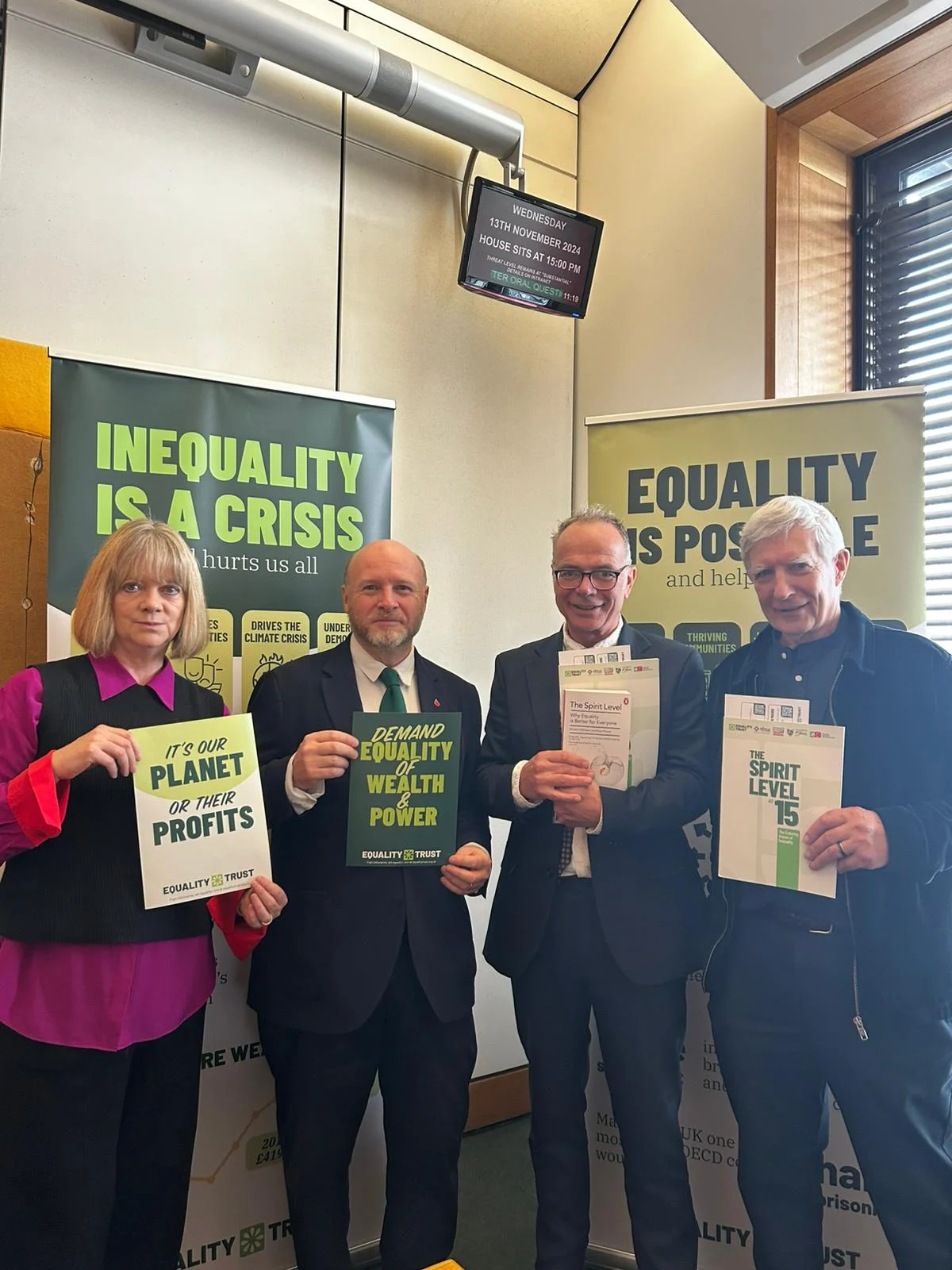
Gerry Boyle’s involvement with The Equality Trust began in 2020, driven by the foundational research presented in The Spirit Level: Why More Equal Societies Almost Always Do Better. Authored by the Trust’s founders, Professors Richard Wilkinson and Kate Pickett, the book provided a comprehensive data-driven argument that high levels of inequality correlate with a wide range of social ills, including lower life expectancy, higher rates of incarceration, and diminished social mobility. Mr. Boyle’s tenure was characterized by an effort to translate these academic findings into actionable policy advocacy.
Upon joining the board, Mr. Boyle integrated his professional expertise in project management and international development with a board comprised of academics, career campaigners, and individuals with lived experiences of socio-economic marginalization. This multidisciplinary approach was essential as the Trust sought to address the systemic "fragmentation" of UK society. During his six years, the Trust focused heavily on the implementation of the Socio-Economic Duty, a provision of the Equality Act 2010 that requires public bodies to consider how their decisions can reduce the inequalities of outcome resulting from socio-economic disadvantage.
Chronology of Challenges: 2020–2026
The period between 2020 and 2026 represented one of the most volatile eras for UK non-profit organizations. Mr. Boyle’s first term began at the height of the COVID-19 pandemic, which served as a catalyst for widening wealth gaps. According to data from the Office for National Statistics (ONS), the pandemic disproportionately affected lower-income households, both in terms of health outcomes and financial stability.
By 2022, the UK entered a prolonged cost-of-living crisis, fueled by surging inflation and energy prices. For The Equality Trust, this period necessitated a dual focus: maintaining its long-term campaign for structural reform while addressing the immediate economic pressures facing its supporters. Mr. Boyle’s second term, beginning in 2023, coincided with a tightening of the fiscal environment. The "austerity" measures referenced by Mr. Boyle in his departing statements referred to the continued restraint in public spending, which increased the burden on the third sector to provide services and advocacy that were previously the purview of state-funded entities.
The Economic Reality of the Third Sector
One of the primary contributions of Mr. Boyle’s tenure was his work on the board’s finance committee. His departure highlights a growing crisis within the UK charity sector regarding "lumpy funding." Historically, organizations like The Equality Trust relied on a small number of substantial grants from large foundations or government bodies. However, the mid-2020s saw a significant contraction in this model.
The reduction in international aid budgets by the UK government—specifically the decision to maintain the 0.5% GNI target rather than returning to 0.7%—had a ripple effect across the charitable sector. Furthermore, shifts in US foreign policy and philanthropic priorities led to a decrease in transatlantic grant-making. Mr. Boyle noted that this environment forced a strategic pivot toward individual giving. Replacing a few large institutional grants with thousands of small, recurring donations from individual supporters became a survival imperative.
Data indicates that while individual giving in the UK remained resilient, the rising cost of living has impacted the "real value" of these donations. For an organization advocating for wealth redistribution and higher wages, the irony of seeking funds from a public whose disposable income is shrinking was a constant strategic hurdle during Mr. Boyle’s final years on the board.
Legislative Milestones and Youth Advocacy
Despite financial headwinds, the 2020–2026 period saw the Equality Trust achieve several key objectives. A central pillar of the Trust’s work during Mr. Boyle’s tenure was the activation of the Socio-Economic Duty (Section 1 of the Equality Act 2010). While the duty was not initially commenced by the UK government, the Trust worked with local authorities and devolved administrations in Scotland and Wales to voluntarily adopt these standards. By 2026, dozens of councils across England had integrated socio-economic impact assessments into their budgetary processes, a move the Trust credits with protecting essential services for the most vulnerable.
Additionally, the Trust expanded its youth engagement initiatives. Recognizing that younger generations face unique hurdles regarding housing affordability and precarious employment, the Trust developed programs to amplify the "voices of young people at the sharp end of inequality." These initiatives aimed to shift the narrative of inequality from an abstract economic concept to a lived reality, fostering a new generation of activists.
Analysis of Implications for the Equality Movement
The departure of a long-standing trustee like Gerry Boyle signifies a moment of transition for the Equality Trust and the broader egalitarian movement in the UK. Analysts suggest that the "fragmentation" mentioned by Mr. Boyle is a reference to the increasing polarization of wealth and the weakening of social cohesion. As of early 2026, wealth inequality in the UK remains a persistent issue, with the top 1% of households holding significantly more wealth than the bottom 50% combined.
The Trust’s future efficacy will likely depend on its ability to navigate three specific areas:
- Sustainable Revenue Models: The shift from "lumpy" institutional funding to "democratized" funding will require sophisticated digital engagement strategies to maintain a steady stream of small-scale contributions.
- Political Engagement: With the UK political landscape remaining in a state of flux, the Trust must continue to advocate for the Socio-Economic Duty to be made a mandatory requirement for all central government departments, not just local authorities.
- Global Connectivity: While the Trust focuses on the UK, the interconnectedness of global markets means that domestic inequality cannot be solved in isolation. Mr. Boyle’s background in international development was a testament to the need for a global perspective on wealth taxes and corporate accountability.
Reactions from the Sector
While official statements from the full board are pending, the sentiment within the organization reflects a deep appreciation for the stability provided by Mr. Boyle during his six-year stint. His role as a "hands-off" yet strategically focused board member is cited as a model for effective charity governance, where trustees provide oversight without interfering in the day-to-day operations of professional staff.
Observers in the charity sector note that the "two-term limit" is a double-edged sword. While it ensures a constant influx of fresh perspectives and prevents institutional stagnation, it also results in the loss of deep institutional memory. The Equality Trust will now look to recruit a successor who can balance the financial rigors of the current economic climate with the ideological passion required for social justice advocacy.
Future Outlook
As Gerry Boyle steps down, the Equality Trust faces a UK society that is arguably more aware of inequality than it was in 2020, yet more economically strained. The organization’s reliance on its supporters—characterized by Mr. Boyle as the key to "maximum freedom to campaign effectively"—will be tested in the coming years.
The Trust remains committed to its core mission: to dismantle the structures that allow vast disparities in wealth and power to persist. As it enters a post-Boyle era, the organization continues to call for systemic changes, including a fairer tax system, a stronger social safety net, and a refocusing of the economy to serve the many rather than the few. Mr. Boyle’s tenure serves as a case study in how business acumen can be harnessed for the public good, providing a blueprint for future trustees who wish to contribute to the "really important struggle" of social equality.
The Equality Trust has invited its supporters and the public to acknowledge Mr. Boyle’s contributions and to continue their financial support to ensure the organization remains a robust voice in the fight against inequality. The search for new board members is expected to begin in the second quarter of 2026, with an emphasis on maintaining the diversity of thought and experience that has defined the board’s recent history.