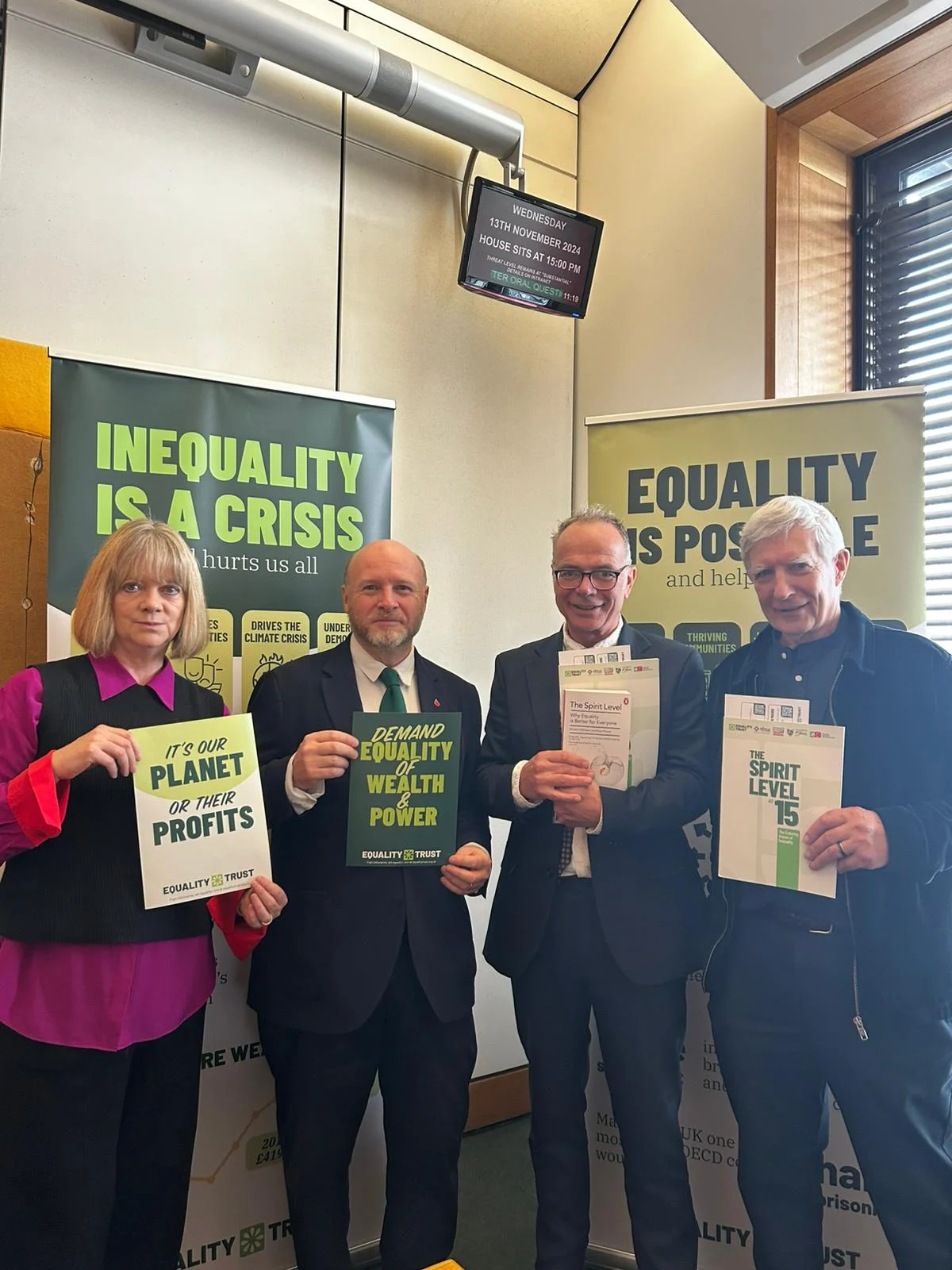
On January 13, 2026, the Public Policy Exchange hosted a high-level seminar titled Tackling Child Poverty: Improving Welfare, Security and Future Prospects, where policy experts, stakeholders, and government representatives gathered to dissect the United Kingdom’s newly unveiled Child Poverty Strategy. A central figure in the discussion was Priya Sahni-Nicholas, Co-Executive Director of The Equality Trust, who provided a comprehensive analysis of the government’s approach. While acknowledging the strategy as a significant departure from the policy frameworks of the previous decade, Sahni-Nicholas argued that the current roadmap remains insufficient because it fails to address the underlying structural disparities in wealth and power that drive systemic deprivation.
The UK Child Poverty Strategy, released in December 2025, represents the first coordinated, UK-wide effort to address the issue since the end of the last Labour administration in 2010. It arrives at a critical juncture: by the start of 2026, data indicated that 4.5 million children in the United Kingdom—roughly one in three—were living in poverty. Furthermore, nearly 20% of UK households were classified as living in food insecurity, unable to consistently afford basic nutritional needs. The government’s new strategy explicitly frames these figures not as an inevitability of global economic trends, but as a direct consequence of policy choices made over the last fifteen years.
A Decadal Shift: The Chronology of UK Child Poverty Policy
To understand the significance of the 2026 strategy, it is necessary to examine the trajectory of UK social policy over the last quarter-century. Between 1997 and 2010, the UK saw a substantial reduction in child poverty, with approximately 600,000 children lifted out of hardship through a combination of tax credits, increased benefits, and expanded public services. However, the introduction of austerity measures in 2010 marked a sharp reversal.
Key policy changes, such as the 2017 implementation of the two-child limit on Universal Credit and Child Tax Credit, significantly exacerbated the crisis. While most advanced European economies saw child poverty rates stabilize or decline during the 2010s, the UK became an outlier. The "benefit cap" and the "bedroom tax," combined with stagnant wage growth and a burgeoning gig economy, created a "perfect storm" for low-income families.
By 2024, the political landscape shifted, leading to the formation of a government committed to a "long-term mission" to end child poverty. The December 2025 strategy was the culmination of a year-long review involving various government departments, including the Department for Work and Pensions (DWP), the Department for Education (DfE), and the Treasury.
Key Pillars of the 2026 Strategy
The Equality Trust’s analysis highlights several "wins" within the government’s new framework. Most notably, the strategy centers on the abolition of the two-child limit, a move projected to lift approximately 450,000 children out of relative poverty. This single policy change is regarded by economists as the most impactful redistributive measure in the strategy, directly addressing the disproportionate hardship faced by larger families.
The strategy also moves away from the "individual failure" narrative that characterized previous administrations. Instead, it identifies systemic drivers such as low pay, insecure work, and the high cost of essentials—specifically housing and childcare. Proposed interventions include:

- The expansion of free school meals and breakfast clubs: Aimed at reducing the "at-the-gate" costs for parents and improving educational outcomes.
- National Living Wage increases: Targeted at reducing "in-work poverty," a phenomenon where households remain below the poverty line despite having at least one adult in employment.
- Uniform cost caps and childcare expansion: Efforts to lower the high entry barriers for parents returning to the workforce.
Furthermore, the government has been praised for its "intersectionality" and "spatial lens." The strategy recognizes that poverty is not evenly distributed across the UK, with specific regions and local authorities facing compounding disadvantages based on disability, ethnicity, and family structure. By involving organizations like Changing Realities—which amplifies the voices of parents with lived experience of poverty—the government has attempted to infuse the policy with a sense of dignity and realism.
The Missing Pillar: The Wealth Gap and Structural Inequality
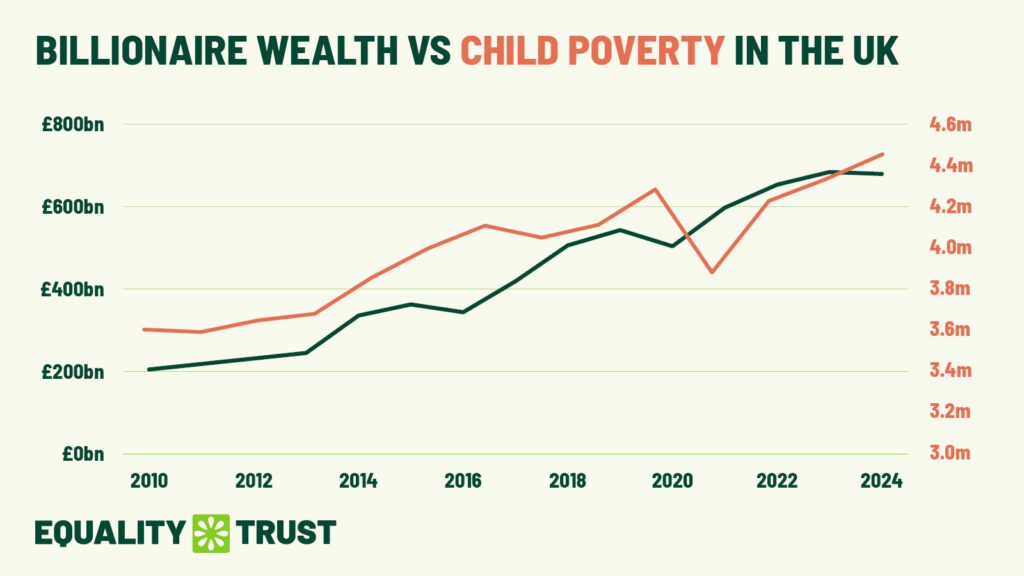
Despite these advancements, The Equality Trust maintains that the strategy possesses a significant "blind spot": the total omission of wealth inequality. In her address to the Public Policy Exchange, Sahni-Nicholas noted that the word "wealth" does not appear once in the diagnosis, metrics, or proposed solutions of the strategy.
From an analytical perspective, treating poverty solely as an income and cost problem ignores the reality of the UK’s asset-based economy. Families with identical incomes can experience vastly different standards of living based on their access to assets, such as homeownership, savings, or inherited wealth. Those without these safety nets are far more vulnerable to economic shocks, such as sudden illness or job loss.
The Equality Trust points to the work of economist Thomas Piketty, specifically the concept that the return on capital (r) often outpaces economic growth (g). When wealth grows faster than wages, the structural gap between asset owners and wage earners widens. In the UK, the majority of government revenue is derived from income tax—wages and work—while returns on assets are often taxed at significantly lower rates. Sahni-Nicholas argued that trying to end child poverty without addressing this imbalance is akin to "trying to empty a bath while leaving the taps running."
Analysis of Implications: Power and Corporate Influence
A secondary critique offered by policy analysts involves the "unspoken dimension" of power. The 2026 strategy discusses "opportunity" and "life chances," but it remains largely silent on how corporate power, the housing market, and political influence shape the conditions that produce poverty.
Historically, the most dramatic reductions in UK inequality were not the result of targeted anti-poverty programs alone but of system-wide shifts in distribution. Following the Second World War, the UK implemented high top rates of income tax, expanded trade union membership, and invested heavily in social housing. These measures redistributed power as much as they redistributed money.
By contrast, the 2026 strategy operates within the existing economic model. It seeks to mitigate the worst effects of the system rather than reshaping the model itself. For instance, while the strategy addresses the cost of housing, it does not propose fundamental reforms to the housing market or the taxation of property wealth, which remain primary drivers of the transfer of wealth from the poor to the rich via rent.
Reactions and Broader Impact
The response from the wider policy community has been a mixture of relief and caution. Anti-poverty charities like the Child Poverty Action Group (CPAG) and the Joseph Rowntree Foundation have welcomed the abolition of the two-child limit as a "landmark moment." However, fiscal hawks and some business groups have expressed concerns regarding the funding of these measures, questioning whether the reliance on economic growth will be sufficient to sustain long-term redistribution without broader tax reform.

The Equality Trust’s position suggests that for the strategy to be truly transformative, it must move toward "inequality reduction" rather than just "poverty reduction." This would involve:
- Fiscal Reform: Aligning the taxation of wealth with the taxation of income to fund social investment.
- Binding Targets: Establishing statutory requirements for the government to narrow the gap between the richest and poorest deciles of the population.
- Housing Reform: Moving toward a model that treats housing as a human right and a social necessity rather than a speculative asset.
Conclusion: The Path Forward
The 2026 Child Poverty Strategy marks a definitive end to the era of austerity-driven social policy in the United Kingdom. It reinstates child poverty as a core national priority and introduces evidence-based measures that will undoubtedly improve the lives of hundreds of thousands of children.
However, as highlighted by The Equality Trust at the Public Policy Exchange, the strategy serves more as a "corrective" than a "transformation." The persistence of child poverty in one of the world’s wealthiest nations is a symptom of a deeply unequal economic structure. Until the government is willing to confront the concentration of wealth at the top and the power dynamics that sustain it, the "end of child poverty" may remain an elusive goal.
The next phase of the strategy, expected to be reviewed in the coming parliamentary sessions, will be the true test of the government’s ambition. Observers will be looking for a shift from income top-ups to structural reforms that address the "missing pillar" of wealth, ensuring that the progress made in 2026 is not just a temporary reprieve, but a permanent change in the UK’s social fabric.