The Equality Trust has announced the departure of Gerry Boyle from its Board of Trustees following the completion of two consecutive three-year terms, the maximum duration permitted under the organization’s governing constitution. Boyle’s exit marks the end of a significant era for the charity, which has navigated a period of intense economic volatility, political shifts, and a fundamental restructuring of third-sector financing. His tenure, beginning in early 2020 and concluding in March 2026, coincided with some of the most challenging years for social justice campaigning in the United Kingdom, characterized by the long-term effects of austerity, the post-pandemic recovery, and a persistent cost-of-living crisis.
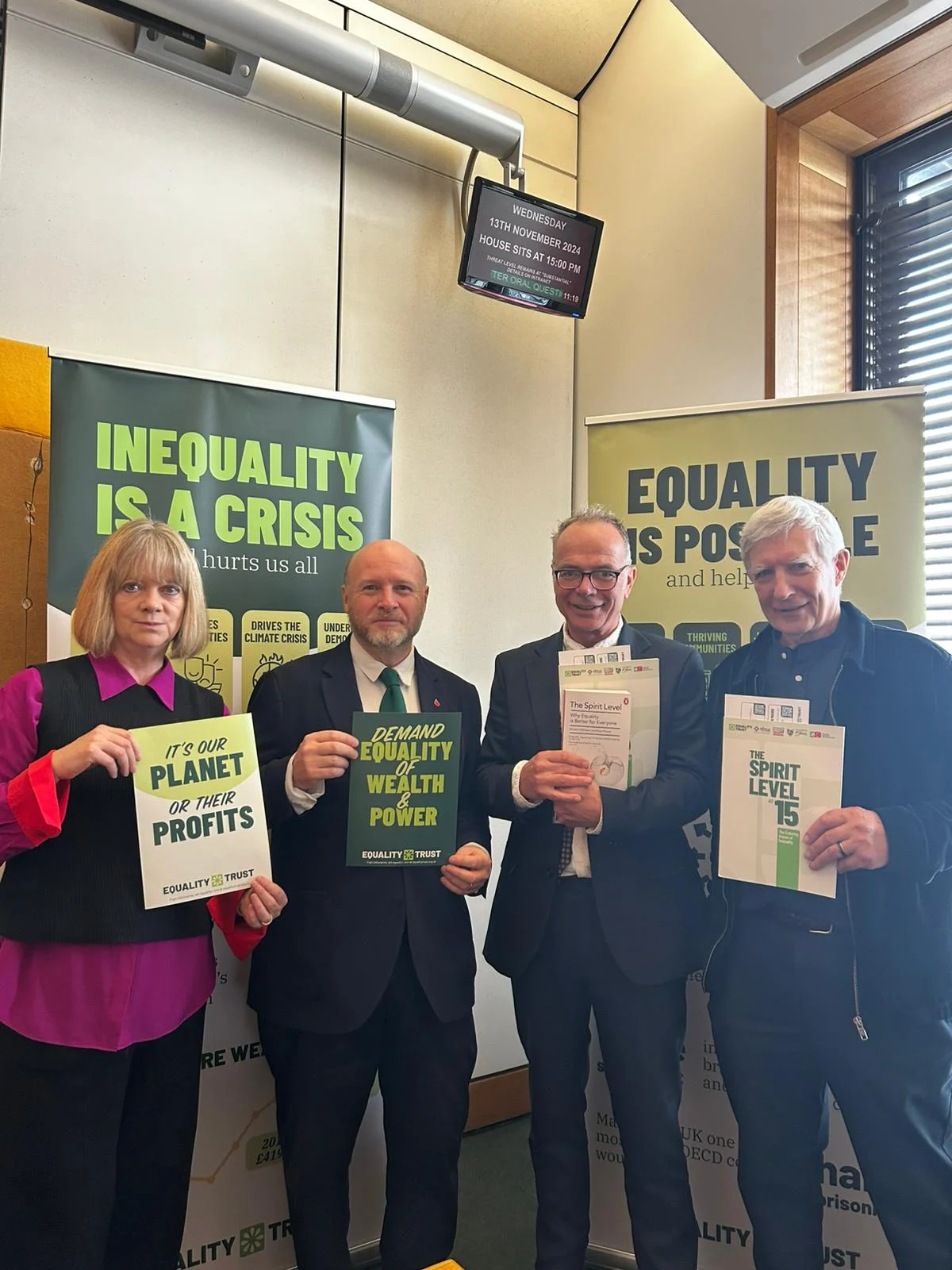
Boyle, a professional with an extensive background in business and international development, joined the Trust during a period of organizational expansion. His appointment was driven by a commitment to the evidence-based advocacy pioneered by the Equality Trust’s founders, Professors Richard Wilkinson and Kate Pickett. The organization was established following the 2009 publication of The Spirit Level: Why More Equal Societies Almost Always Do Better, a seminal work that utilized decades of data to demonstrate that societies with large gaps between rich and poor experience worse outcomes in health, education, and social cohesion. Boyle’s contribution has been noted for bridging the gap between corporate strategic management and grassroots social activism.
A Chronology of Governance and Strategic Evolution
The period between 2020 and 2026 represented a transformative phase for the Equality Trust’s internal governance. When Boyle joined the board, the organization was refining its focus from academic dissemination to direct legislative advocacy. Throughout his first term, Boyle served as a bridge between the board’s academic wing and its operational staff, helping to modernize the charity’s financial oversight mechanisms.
By 2023, midway through his second term, the Trust faced a rapidly changing political environment. The UK’s departure from the European Union and the subsequent realignment of domestic policy required the board to pivot its focus toward local government implementation of equality measures. Boyle’s role on the board’s finance committee became particularly critical during this time, as the charity sector at large began to grapple with the "triple threat" of rising operational costs, fluctuating grant availability, and increased demand for services.
As Boyle steps down in March 2026, the Trust has transitioned into a more diversified funding model, moving away from a reliance on large, "lumpy" institutional grants toward a broader base of individual supporters. This strategic shift was a hallmark of the board’s recent efforts to ensure long-term sustainability in an era where public funding for advocacy-based NGOs has significantly diminished.
Navigating the Crisis in Third-Sector Funding
A primary focus of Boyle’s tenure was the stabilization of the Trust’s financial health amidst a deteriorating environment for UK charities. Data from the National Council for Voluntary Organisations (NCVO) indicates that between 2022 and 2025, real-term income for small-to-medium-sized advocacy groups fell by approximately 12%, driven largely by the withdrawal of statutory funding and the erosion of the value of grants due to inflation.
Boyle highlighted the specific challenge of "lumpy funding," a phenomenon where an organization’s budget is dominated by a few large, time-limited grants. In the context of the Equality Trust, the failure of a single major grant to materialize could historically pose a systemic risk. Under the guidance of the finance committee, the Trust initiated a multi-year campaign to bolster its "unrestricted funds"—donations from individual supporters that allow the organization to remain agile and independent of the specific agendas sometimes attached to large institutional funders.
This financial pressure was compounded by shifts in international aid policy. The UK government’s decision to maintain the reduction of Official Development Assistance (ODA) from 0.7% to 0.5% of Gross National Income had a ripple effect across the sector. As international development NGOs lost funding, they increasingly competed for the same domestic philanthropic pots as social justice organizations like the Equality Trust. Boyle’s background in international development provided the board with a unique perspective on these global trends, allowing the Trust to anticipate and mitigate these competitive pressures.
Policy Achievements: The Socio-Economic Duty and Youth Advocacy
Despite the economic headwinds, the Equality Trust secured several key policy victories during Boyle’s six-year tenure. One of the most significant was the continued push for the full implementation of the Socio-Economic Duty. Contained within Section 1 of the Equality Act 2010, the duty requires public bodies to consider how their decisions can reduce the inequalities of outcome caused by socio-economic disadvantage.
While the UK government has historically declined to commence the duty in England, the Equality Trust—working with a coalition of partners—successfully advocated for its voluntary adoption by numerous local authorities and its formal implementation in Scotland and Wales. This work involved the creation of rigorous toolkits for local councils to measure the impact of their spending on the poorest deciles of the population.
Furthermore, the Trust expanded its "Youth Voices" initiative during this period. This program was designed to empower young people from marginalized backgrounds to engage directly with policymakers. By providing training in data analysis and public speaking, the Trust ensured that the demographic most affected by long-term inequality—Generation Z and the emerging Generation Alpha—had a platform to influence the national discourse. Boyle noted that the inclusion of lived experience on the board and within campaigning strategies was essential to the organization’s smart, diverse, and highly motivated culture.
Supporting Data: The State of Inequality in 2026
The urgency of the Equality Trust’s mission is underscored by recent economic data. As of early 2026, the Gini coefficient—a standard measure of income inequality—remains high in the UK compared to its European neighbors. According to figures from the Office for National Statistics (ONS) and the Resolution Foundation, the gap between the wealthiest 10% and the bottom 10% has widened significantly since the start of the decade.
Key metrics tracking the Trust’s areas of concern include:
- Wealth Concentration: The top 1% of households in the UK currently hold more wealth than the bottom 70% combined, a disparity that has grown since 2020.
- CEO-to-Worker Pay Ratios: In the FTSE 100, the average CEO now earns approximately 120 times the median wage of their employees, up from a ratio of 108 to 1 in 2022.
- Public Health Correlation: Consistent with the findings in The Spirit Level, areas of the UK with the highest levels of income inequality continue to report lower life expectancy and higher rates of mental health issues, a trend that the Trust’s research team has documented extensively over the last three years.
Analysis of Implications and Future Outlook
The departure of a long-standing trustee like Gerry Boyle poses both a challenge and an opportunity for the Equality Trust. His exit necessitates a search for new leadership that can maintain the balance between professional business acumen and a radical commitment to social change. The Trust’s current strategy focuses on three pillars: expanding the evidence base for equality, campaigning for systemic legislative change, and building a mass movement of supporters.
The shift toward a "supporter-led" funding model is perhaps the most critical implication of the current board’s strategy. By encouraging a large number of small contributions, the Trust aims to insulate itself from the volatility of the grant market. However, this model requires constant engagement with a public that is itself facing a rising cost of living. Analysts suggest that the success of this model will depend on the Trust’s ability to clearly communicate the link between systemic inequality and the everyday financial struggles of the average household.
As the political landscape prepares for the next general election cycle, the Equality Trust remains a pivotal voice in the debate over the UK’s economic future. The organization’s work in highlighting the "unfairness" of current wealth distribution has moved from the fringes of academic debate into the center of mainstream political discourse.
The Board of Trustees has expressed its gratitude for Boyle’s six years of service, noting that his "hands-off" yet strategic oversight provided the stability necessary for the executive team to execute complex campaigns. His tenure serves as a case study in how business expertise can be effectively channeled into charity governance, providing a blueprint for future trustees as the organization enters its next phase of advocacy.
In his concluding remarks, Boyle emphasized that while the struggle against inequality has become more difficult due to the fragmenting social and economic background of the UK, the experience of board membership remains a vital way for individuals to contribute to systemic change. The Trust now begins the process of recruiting a successor who can navigate the complexities of a society where the fight for equality is, in his words, "getting harder" but remains more essential than ever.