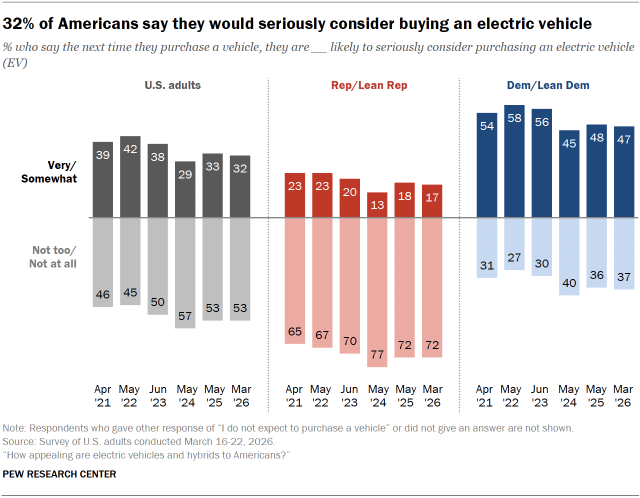
A recent comprehensive study by the Pew Research Center reveals a noticeable dip in American interest in purchasing electric vehicles (EVs) as their next automobile, a trend that has emerged amidst a backdrop of escalating geopolitical tensions and fluctuating economic conditions. The report, which surveyed 3,524 U.S. adults between March 16 and March 22, 2026, indicates that only about one-third of Americans are now seriously considering an EV, a figure that has stagnated from the previous year and significantly declined from 42% in 2022. This sentiment shift is occurring at a critical juncture, with the U.S. engaged in a military conflict with Iran, a development that has had a direct and immediate impact on energy markets.
The findings from the Pew Research Center’s "Americans’ Shifting Views on Energy Issues" report paint a nuanced picture of consumer attitudes towards energy consumption and policy in 2026. The research builds upon the center’s extensive history of tracking public opinion on energy-related topics, providing crucial insights for policymakers, industry leaders, and the general public. The survey methodology involved members of the Pew Research Center’s American Trends Panel, ensuring the results are representative of the broader U.S. adult population.
Context of a Shifting Energy Landscape
The survey’s timing is particularly significant. Conducted just weeks into the U.S. military conflict with Iran, the period immediately preceding and during the survey saw a dramatic surge in gasoline prices. Reports from major news outlets, including the New York Times and CNN, documented gasoline prices soaring past the $4 per gallon mark in many regions. This economic shockwave has, paradoxically, also correlated with an increase in online search interest for electric vehicles, suggesting a complex interplay between immediate cost concerns and longer-term considerations of energy independence and sustainability.
However, the Pew data indicates that this increased search interest has not yet translated into a widespread commitment to EV adoption. The report highlights that a substantial majority of Americans—53%—state they are not too or not at all likely to seriously consider purchasing an EV. Furthermore, 15% of respondents indicated they do not expect to purchase a vehicle in the foreseeable future, a factor that further tempers the potential EV market growth.
EV Interest Trends: A Tale of Two Powertrains
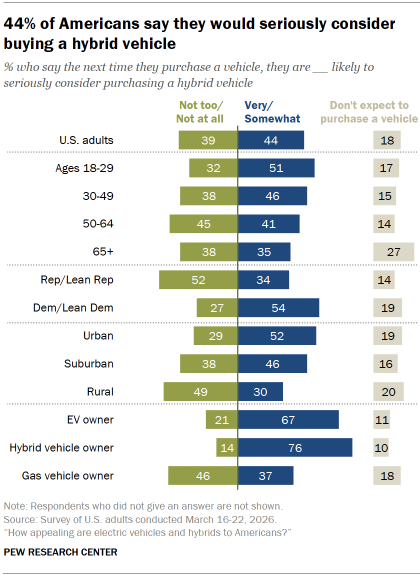
A key takeaway from the research is the continued preference for hybrid vehicles over fully electric ones. While EV consideration has seen a decline, interest in hybrids remains relatively stable. Approximately 44% of Americans indicated they would seriously consider purchasing a hybrid vehicle as their next car, a figure consistent with the previous year’s survey. This suggests that for many consumers, the perceived benefits of hybrids—such as improved fuel efficiency without the range anxiety associated with some EVs—remain more attractive than the all-electric option.
The data also reveals significant demographic and political divides in attitudes toward EVs. Democrats and those who lean Democratic continue to express a greater likelihood of considering an EV purchase compared to Republicans and their leaners (47% versus 17%). However, even within the Democratic party, there has been a notable decline in interest, with Democrats now 11 percentage points less likely to consider an EV than in 2022, when that figure stood at 58%. This suggests that concerns about the practicality and cost of EVs are not limited to one political spectrum.
Demographic Divides in EV Consideration
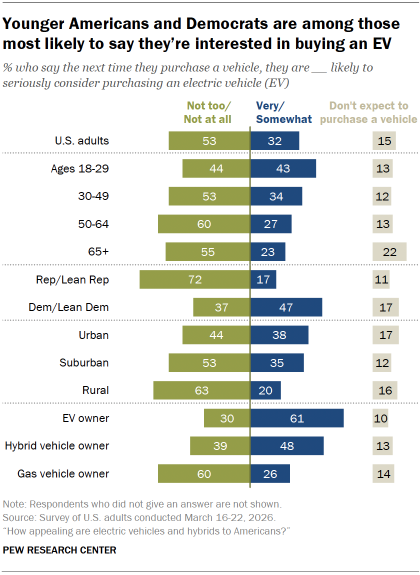
The survey further illustrates that younger Americans, across both political affiliations, are more inclined to consider EVs than their older counterparts. Adults under the age of 30 are evenly split on their likelihood of seriously considering an EV, whereas a larger proportion of those aged 50 and older express a disinclination towards purchasing one. This generational gap is a critical indicator for the future trajectory of EV adoption, highlighting the importance of engaging younger consumers with messaging and incentives that address their specific concerns and preferences.
Geographically, individuals residing in urban and suburban areas demonstrate a higher propensity to seriously consider purchasing an EV when compared to those living in rural communities. This aligns with existing trends in EV infrastructure development, which is often more robust in densely populated areas, potentially alleviating some of the charging concerns that might deter rural residents.
Current Vehicle Owners’ Perspectives
The study also delved into the purchasing intentions of current vehicle owners. Among those who already own an EV, a majority (61%) would consider another EV for their next purchase. However, a significant minority, three-in-ten EV owners, stated they would not consider an EV again. This finding could point to issues with current EV models, such as battery longevity, charging infrastructure limitations, or initial purchase cost, even among those who have already made the switch.
For owners of gasoline-powered vehicles, the reluctance to consider an EV is even more pronounced. A substantial 60% of these owners indicated they would not seriously consider an EV for their next car. This segment of the market represents a significant hurdle for widespread EV adoption, suggesting that manufacturers and policymakers need to address fundamental concerns about cost, convenience, and performance to sway these consumers.
Hybrid Vehicles: A Stronger Contender
The sustained interest in hybrid vehicles is a recurring theme throughout the Pew report. The 44% consideration rate for hybrids is a significant figure, and it appears to be driven by a similar demographic pattern as EV interest, albeit with broader appeal. Democrats, younger individuals, and urban/suburban dwellers are more likely to express serious consideration for hybrids.
Furthermore, the loyalty among current hybrid owners is exceptionally high, with 76% indicating they would seriously consider another hybrid. This suggests a strong satisfaction rate among this group, reinforcing the hybrid as a viable and appealing option for a significant portion of the car-buying public. Even among gasoline car owners, a notable 37% expressed some interest in hybrids, though a larger share (46%) still indicated they would not seriously consider this option.
Federal Government’s Role in EV Adoption
The report also examines public opinion on the federal government’s role in promoting electric vehicle adoption. A critical development in this area is the expiration of federal tax credits for EV purchases on September 30, 2025. Following this, the data shows a decline in public support for government intervention. Currently, 40% of Americans believe the federal government should encourage EV use, a figure that has seen a downward trend since the Biden administration’s push for electrification.
A slightly larger segment of the population, 45%, now advocates for a neutral stance, where the government neither encourages nor discourages EV use. This indicates a growing sentiment for market forces to dictate the pace of adoption, rather than direct governmental influence. A smaller but significant portion, 14%, believes the government should actively discourage EV use, a view that might be influenced by concerns about grid capacity, mineral sourcing for batteries, or the economic impact on traditional automotive industries.
The partisan divide remains stark on this issue. While 60% of Democrats still favor government encouragement of EVs, this figure represents a 10-percentage-point decrease since 2022. Similarly, Republican support for government encouragement has also waned, falling by 7 percentage points. This indicates a broader erosion of consensus on the federal government’s role in steering the automotive market towards electric mobility, potentially reflecting economic anxieties and a reassessment of the costs and benefits associated with such policies.
Broader Implications and Future Outlook
The Pew Research Center’s findings underscore a complex and evolving public opinion landscape regarding energy and transportation choices. The confluence of a volatile geopolitical situation impacting fuel prices and a potential reassessment of government incentives has created a challenging environment for accelerating EV adoption. While interest in EVs has dipped, the persistent appeal of hybrid technology suggests a market that is not entirely resistant to alternative powertrains, but one that demands a more balanced approach to address consumer concerns.
The decline in federal support for EV incentives, coupled with the observed drop in public enthusiasm across both major parties, suggests that future policy decisions will need to navigate a more cautious and potentially divided electorate. The long-term success of electrification efforts will likely depend on continued innovation in battery technology, expansion of charging infrastructure in underserved areas, and a clear communication strategy that addresses the economic and practical considerations that remain paramount for a majority of American consumers. As the nation grapples with energy security and environmental sustainability, the insights from this research provide a critical roadmap for understanding the public’s current disposition and the challenges that lie ahead.