A year into the second Trump administration, a stark divergence in American attitudes towards energy sources has solidified, revealing a widening partisan chasm. Republicans increasingly favor prioritizing fossil fuels like oil, coal, and natural gas, a significant reversal from sentiments expressed in 2020. Conversely, while Democratic support for wind and solar power remains robust, it has shown a slight decrease from earlier in the decade. These findings emerge from a comprehensive Pew Research Center survey conducted in March 2026, a period marked by the commencement of U.S. military engagement with Iran, which has precipitated significant global energy market volatility and a notable surge in domestic gasoline prices. This report builds upon Pew Research Center’s ongoing commitment to understanding public perspectives on energy issues and policy.
Shifting Priorities: Renewables Versus Fossil Fuels
The question of whether to prioritize the expansion of renewable energy or fossil fuel production has become a central point of contention in American energy policy discussions. The March 2026 survey reveals that while a majority of Americans (57%) still lean towards prioritizing renewable energy development, this figure represents a substantial decline from 79% in 2020. This downward trend is largely attributable to a dramatic shift in Republican viewpoints.
In 2020, a majority of Republicans and those who lean Republican (65%) expressed a preference for focusing on renewable energy. Today, that sentiment has been almost completely inverted, with only 28% of Republicans advocating for renewable energy prioritization, while an overwhelming 71% now assert that fossil fuels should take precedence. This ideological realignment within the Republican party suggests a growing emphasis on energy independence and traditional energy sectors, potentially influenced by the current geopolitical climate and domestic economic concerns.
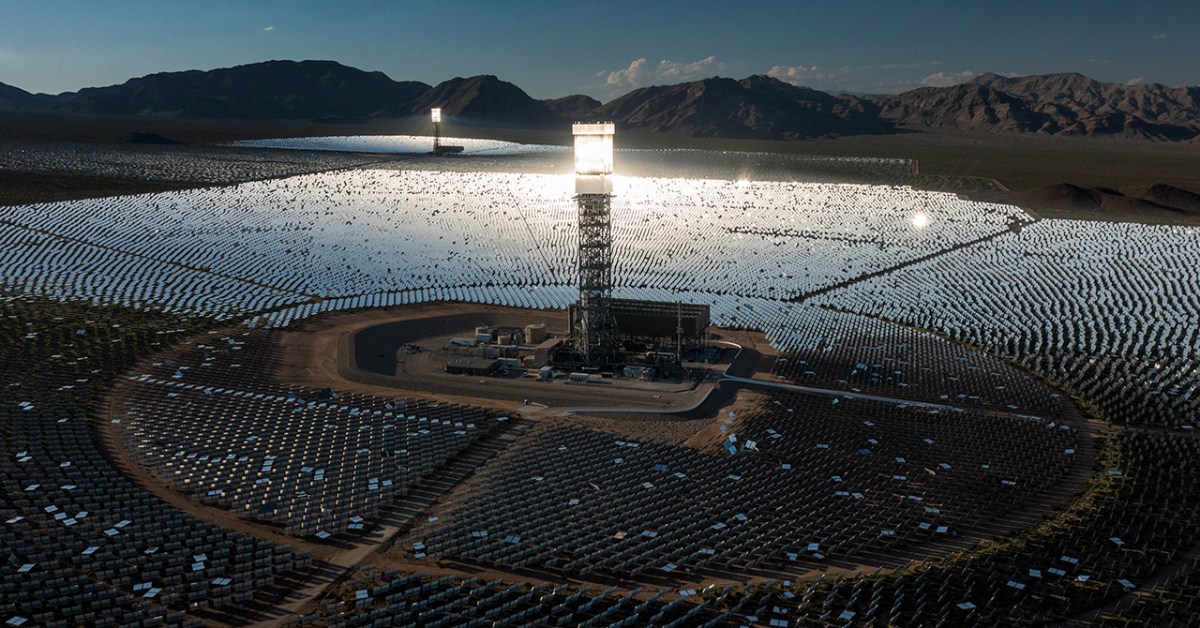
On the other hand, Democratic support for prioritizing wind and solar power production remains exceptionally high, with approximately 83% of Democrats and Democratic leaners endorsing this approach. However, even this stalwart support has seen a marginal decrease from previous years, indicating a potential subtle recalibration of priorities across the broader electorate.
The Federal Government’s Role in Energy Policy
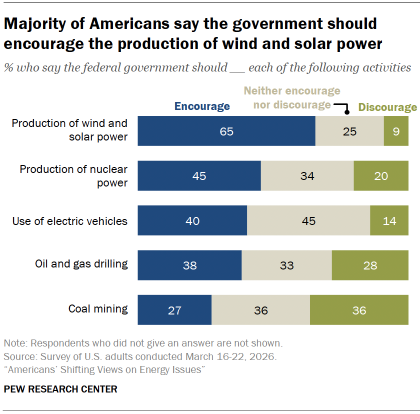
The role of the federal government in shaping the nation’s energy landscape is another area where partisan divides are pronounced. The current administration, under President Trump, has actively pursued policies aimed at reducing or eliminating subsidies for renewable energy projects that were initiated during the previous administration. Simultaneously, there has been a concerted effort to encourage increased domestic production of fossil fuels, including oil, coal, and natural gas. The Pew survey sought to gauge public opinion on what the federal government’s primary focus should be.
The data indicates that wind and solar power continue to garner the most public support for government encouragement, with roughly two-thirds of Americans (65%) favoring policies to expand their production. Coal mining, however, faces the least favor, with a higher percentage of respondents (36%) indicating that the government should discourage its activity compared to those who believe it should be encouraged (27%). Views on other energy sources, such as natural gas and oil, remain more mixed, with no single option attracting majority support or significant opposition.
Historical Context and Evolving Perceptions
Understanding the current energy landscape requires acknowledging the trajectory of public opinion over the past several years. The Pew Research Center has consistently tracked these sentiments, providing valuable data for analysis.
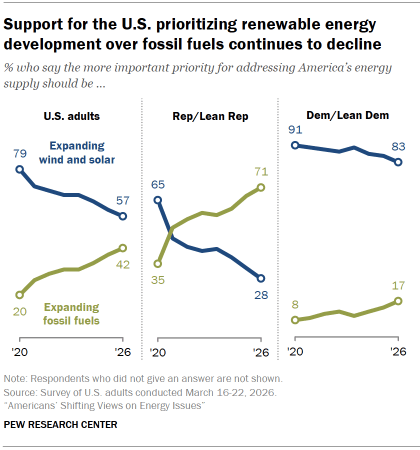
In 2020, a more unified approach to energy policy was evident, with broader bipartisan support for renewable energy development. However, subsequent years have witnessed a significant polarization of these views. The period between 2020 and 2025, for instance, saw a substantial decline in Republican support for wind and solar power, with drops exceeding 20 percentage points for both sources. This trend appears to have accelerated into 2026, particularly in light of the current administration’s policy directives.
The survey also highlighted shifts in how Americans perceive the environmental impact, cost, and reliability of various energy sources. While a majority of Americans generally view wind and solar as environmentally beneficial, this perception has slightly diminished since 2021. Furthermore, assessments of their cost and reliability are considerably less positive, especially among Republicans.
Republicans’ Shifting Stance on Renewables
The most dramatic ideological shift observed in the survey is among Republicans regarding renewable energy. The data clearly illustrates a growing skepticism and a move towards prioritizing traditional energy sectors. This trend can be partly attributed to the current administration’s explicit focus on "energy dominance" and its critiques of renewable energy technologies as unreliable and costly.
A notable point of concern for proponents of renewable energy is the decline in the perception of its environmental benefits among Republicans. While the majority of Republicans still acknowledge that renewables are better for the environment than most other sources, this share has decreased since 2021. This suggests that the narrative framing renewable energy as detrimental to the environment or as an inefficient alternative is gaining traction within segments of the Republican electorate.
Cost and Reliability Concerns Fueling Skepticism
The perceived cost and reliability of renewable energy sources are significant factors influencing public opinion, particularly among Republicans. The survey indicates that a greater proportion of Republicans view solar and wind power as more expensive than other energy sources. Specifically, 44% of Republicans believe wind power is costlier, and 43% hold the same view for solar power, compared to only 19% and 24% respectively who believe they are cheaper. This contrasts sharply with Democrats, who are more likely to perceive solar and wind as cost-effective. A 2023 Pew survey corroborated this sentiment, finding that most Republicans anticipated that a transition from fossil fuels to renewables would negatively impact their home energy prices.
Reliability is another critical area where perceptions diverge. While Americans generally view both solar and wind power as less reliable than other energy sources, Republicans express particularly strong reservations. In a 2023 survey, the majority of Republicans anticipated that a transition to renewable energy would result in a less reliable energy grid. This year’s findings reinforce this concern, with Republicans being far more likely to label solar and wind as less reliable. Democrats, while more mixed in their views, show a greater tendency to consider solar power reliable, though they are divided on the reliability of wind power.
The Geopolitical Context: Iran Conflict and Energy Markets
The survey was conducted a few weeks into the U.S. military conflict with Iran, an event that has had profound implications for global energy markets. This geopolitical tension has led to significant price fluctuations and supply chain disruptions, directly impacting domestic energy costs and public perception. The increase in gasoline prices, for example, has been a significant concern for American consumers, potentially influencing their views on energy sources.
The conflict has underscored the vulnerabilities of global energy dependence and has likely amplified calls for greater energy security and independence. For Republicans, this may translate into renewed support for domestic fossil fuel production as a means to achieve these goals, while Democrats might see it as an imperative to accelerate the transition to diversified, domestically sourced renewable energy.
Nuclear Power: A Potential Bridge?
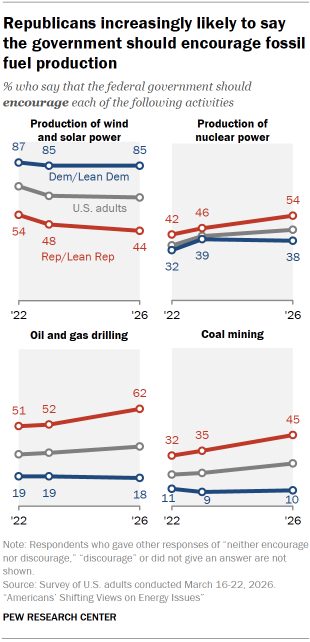
Amidst the polarized debate over renewables and fossil fuels, nuclear power emerges as a less contentious option. Slightly over half of Republicans (54%) and 38% of Democrats believe the federal government should encourage nuclear power production. These figures represent an increase since 2022, suggesting a growing bipartisan, albeit uneven, recognition of nuclear energy’s potential role in the nation’s energy portfolio. The partisan divide on nuclear power is considerably smaller than on other energy issues, hinting at a potential area for policy consensus.
Conclusion: A Divided Nation Navigating an Energy Transition
The Pew Research Center’s 2026 survey paints a clear picture of a nation grappling with complex energy choices, heavily influenced by political ideology and current events. The widening partisan gap on energy priorities, particularly concerning the balance between renewable and fossil fuel development, highlights the challenges ahead for policymakers.
As the United States navigates a critical juncture in its energy future, shaped by geopolitical uncertainties and evolving technological capabilities, public opinion will continue to play a pivotal role. The divergent views on environmental impact, cost, and reliability of different energy sources underscore the need for nuanced policy approaches that can address both economic realities and long-term sustainability goals, while bridging the increasingly deep partisan divide. The coming years will likely see continued debate and policy adjustments as the nation strives to achieve energy security and meet its environmental commitments.