The past two years have ushered in an unprecedented era of transformation in the global workplace, catalyzed by the rapid-paced experimentation forced by the COVID-19 pandemic. This period has not merely tweaked existing work models but has fundamentally reshaped our collective understanding of employment, purpose, and the future of professional engagement. While many questions remain open and data continues to evolve, a clear shift in power dynamics towards employees has become evident, particularly concerning talent attraction and retention. This article, part of a broader series examining emerging trends categorized as ‘Purpose,’ ‘Process & Policy,’ ‘Polarisation & Activism,’ and ‘People,’ delves into the profound ‘People’ trends that are redefining the employer-employee relationship and challenging organizations to foster more inclusive and equitable environments.
The Genesis of a Workforce Revolution: Pandemic’s Initial Impact and Shifting Priorities
The onset of the pandemic in early 2020 plunged economies worldwide into immediate uncertainty, forcing businesses to adapt at an astonishing pace. Initial responses ranged from widespread layoffs and furloughs to the rapid adoption of remote work, fundamentally altering daily routines and professional interactions. As the initial shock subsided, a more nuanced reality began to emerge. Employees, many grappling with increased personal responsibilities, health anxieties, and a blurred line between work and home life, started to re-evaluate their priorities. This period of introspection, often intensified by the existential threat of the pandemic, led to a profound reassessment of what individuals sought from their careers and employers. The traditional employer-centric model, where job security and a steady paycheck often outweighed other considerations, began to erode, paving the way for a more employee-driven market.
The Great Resignation: A Global Phenomenon
One of the most defining characteristics of this new era has been the phenomenon dubbed "The Great Resignation." While researchers note that a building trend of voluntary resignations existed prior to the pandemic, the global health crisis undoubtedly accelerated and amplified it. A March 2021 survey by Microsoft, encompassing a global workforce, revealed a striking statistic: over 40% of employees were contemplating leaving their current employers within the year. This intent, even if not fully realized, signaled a significant shift in employee sentiment and a growing dissatisfaction with the status quo.
The data underscores the scale of this talent exodus and the corresponding challenges for employers. In the United States, August 2021 saw a staggering 4.3 million voluntary quits, coinciding with 10.4 million open job positions. This unprecedented gap between available talent and employer demand created a fiercely competitive hiring landscape. Across the Atlantic, the United Kingdom experienced a record high of over 1 million open jobs during the same period. The implications extend beyond immediate hiring difficulties; a Willis Towers Watson survey indicated that 70% of U.S. employers anticipated this talent gap to persist into the following year, with 61% reporting ongoing struggles with employee retention. Even in Germany, the European Union’s largest economy, company leaders expressed increasing alarm over the lack of skilled employees, with concerns jumping 11% in just three months to reach 34.6% by July 2021. These figures paint a clear picture of a global talent crunch, where the power has undeniably shifted into the hands of the workforce.
Demystifying the Exodus: Who is Leaving and Why?
Analysis into "The Great Resignation" reveals specific demographics and sectors driving this trend. Mid-career professionals, those typically with significant experience but perhaps feeling stagnant or undervalued, showed a 20% increase in resignation rates compared to pre-pandemic levels. Sectors experiencing extreme demand during the pandemic, such as technology and healthcare, also saw elevated turnover. The intense pressures, burnout, and often inadequate support within these fields likely pushed many to seek better opportunities or entirely new career paths.
Furthermore, while service and hospitality sectors have historically high turnover rates, the pandemic brought greater public awareness and empathy for the often poor working conditions prevalent in these industries. This heightened scrutiny, coupled with a tight labor market, empowered workers to demand better treatment and compensation. A new, more assertive form of departure, termed "Rage Quitting," also gained traction. This phenomenon describes employees abruptly leaving their jobs, often in response to unbearable or toxic work environments, indicating a diminished tolerance for negative workplace experiences. These trends collectively highlight a workforce increasingly unwilling to compromise on personal well-being, fair treatment, and a sense of purpose in their work.
The Great Divergence: An Inclusive Recovery Imperative
While "The Great Resignation" captures headlines, it is crucial to acknowledge a parallel and often overlooked reality: "The Great Divergence." This term refers to the stark inequalities embedded within the current economic recovery, where not all pandemic-era employment changes were voluntary resignations. Millions faced unwanted job losses, exacerbating an already global employment crisis.
According to the OECD, 20 million fewer people were in work in member countries since the start of the pandemic, contributing to over 110 million fewer jobs worldwide. The International Labour Organization (ILO) calculated that global hours worked in 2021 would be 4.3% below pre-pandemic levels, equivalent to 125 million full-time jobs. Critically, the OECD pointed out that this reduction in working hours disproportionately affected low-paid jobs, further widening economic disparities. While global unemployment saw a slight drop as of May 2021, it remained higher than pre-pandemic levels, indicating a persistent deficit in equitable employment opportunities.
This dual reality—the empowered professional opting out and the vulnerable worker pushed out—demands an inclusive recovery. Policymakers, business leaders, and HR professionals must adopt a comprehensive approach to talent and employment that addresses both sides of the coin. This is a pivotal moment to reset employment practices, making them fairer and more accessible to all people, ensuring that the recovery benefits everyone, not just those with the privilege to choose.
Implications for Employers: The Urgency of People-Centred Cultures and DEI
The seismic shifts in the labor market have forced organizations to confront a fundamental truth: employees are now the primary drivers of talent attraction and retention. Ignoring workplace culture and employee experience is no longer viable; these factors directly impact an organization’s success and, on a broader scale, societal economic growth. The pandemic has sharpened attention on the imperative to value employees, ensure inclusive workplaces, and implement fair labor practices and policies.
This means moving beyond superficial perks to deeply embed people-centred work cultures. As global initiatives like "The Great Reset" and "build back better" seek to rebuild economies, the human element must be at their core. Organizations that prioritize psychological safety, flexibility, transparency, and a genuine commitment to diversity, equity, and inclusion (DEI) will be the ones that thrive. HR executives and business leaders universally acknowledge this paradigm shift in talent management. Experts like Barry Phillips of Legal Island, who champions DEI change-makers, emphasize the critical role of understanding these evolving trends. The challenge now lies in translating this understanding into actionable strategies that create environments where employees feel valued, heard, and empowered.
The current climate of uncertainty, while stressful for some, has also served as a catalyst for others to rethink their careers and explore new opportunities. The act of quitting, in this context, has become a powerful statement: "we can do better." Organizations must internalize this message and respond proactively. This involves:
- Rethinking Compensation and Benefits: Beyond salary, employees are looking for comprehensive benefits, mental health support, and true work-life integration.
- Fostering Authentic Leadership: Leaders must demonstrate empathy, transparency, and a genuine commitment to their employees’ well-being and professional growth.
- Cultivating Inclusive Work Environments: DEI is no longer a ‘nice-to-have’ but a strategic imperative. Organizations must actively dismantle systemic barriers, promote equitable opportunities, and foster a sense of belonging for all. This is particularly crucial for addressing the "Great Divergence" by ensuring equitable access to opportunities for marginalized groups disproportionately affected by job losses.
- Embracing Flexibility: The pandemic proved that many roles can be performed effectively outside traditional office settings. Offering flexibility in terms of location, hours, and work arrangements is now a key differentiator.
Broader Impact and the Path Forward
The long-term societal and economic implications of these shifts are profound. The redefinition of the employer-employee relationship is not merely a temporary adjustment but a fundamental transformation. For societies, this could lead to more equitable labor markets, reduced burnout, and a workforce that is both more productive and more engaged. For businesses, it presents both immense challenges and unparalleled opportunities to innovate, attract top talent, and build resilient, future-ready organizations.
The current moment demands more than just incremental changes; it requires profound, systemic adjustments. The call for an inclusive recovery is not just an ethical plea but an economic necessity. By embracing people-centred strategies, prioritizing DEI, and fostering cultures of trust and empowerment, organizations can navigate this tumultuous period and emerge stronger, more equitable, and more sustainable. This is our collective moment to make lasting, positive change, leveraging the lessons learned from an era of unprecedented disruption to build a better future of work for all.
Closing Notes:
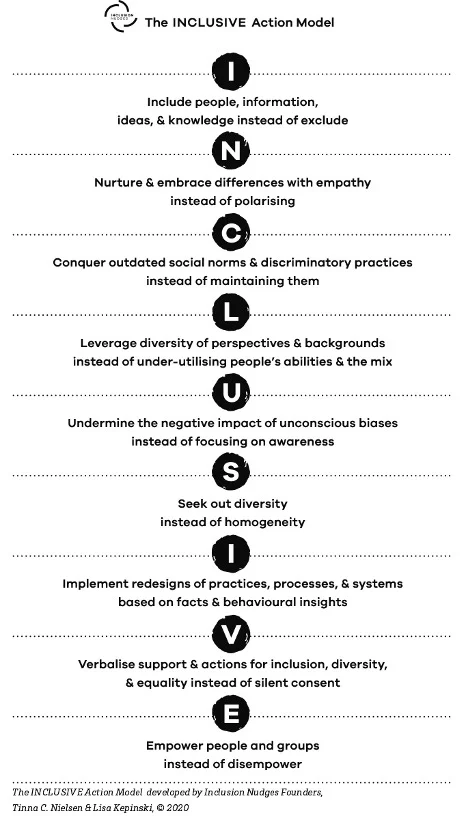
This summary of research on emerging workplace trends from the pandemic-era serves as a vital resource for those focused on DEI and inclusive leadership. As organizations continue to grapple with these evolving dynamics, tools and frameworks that promote equitable practices become indispensable. Concepts like "Retention with an Alternative Future Vision," "Talent Readiness & Mobility in Colours & Shapes," "Colour Code People to Ensure Meritocracy," "Social Shuffle to Include Others," and "Ask Flip Questions to Change Your Perceptions in the Moment"—all found in The Inclusion Nudges Guidebook and other resources—offer actionable strategies to embed inclusion into everyday practices. These nudges can help shift mindsets and behaviors, fostering environments where all individuals can thrive, thereby addressing the challenges presented by both the Great Resignation and the Great Divergence. Further exploration into the broader series, including articles on PROCESS & POLICY, POLARISATION & ACTIVISM, and PURPOSE, will provide a holistic understanding of the comprehensive shifts underway and how to effectively respond.