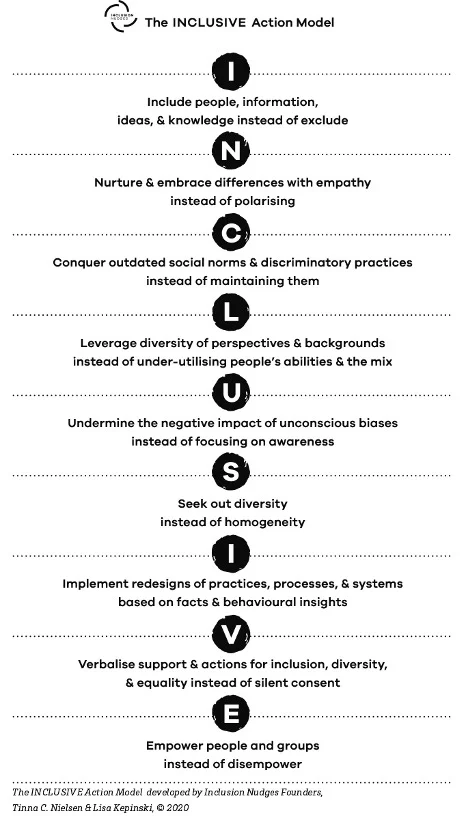
The persistent pursuit of genuine diversity, equity, and inclusion (DEI) within organizations, communities, and societies often encounters a frustrating cycle of progress and regression. Despite significant investments in training programs, policy reforms, and awareness campaigns, many initiatives struggle to translate good intentions into consistent, inclusive behaviors and outcomes. This challenge has prompted a search for more effective methodologies, leading to the emergence of Inclusion Nudges – a groundbreaking approach that leverages insights from behavioral science to embed inclusivity into the very fabric of systems, processes, and cultures. This paradigm shift moves beyond mere awareness, focusing instead on subtly guiding human behavior towards equitable actions as the default, not the exception.
The Imperative for Inclusive Design: Addressing the Intention-Action Gap
For years, change-makers dedicated to fostering more inclusive and fair environments have grappled with a disheartening reality: progress is often slow, fragile, and prone to reversal. The frustration stems from observing initiatives designed to promote diversity, equality, and human rights fail to yield the anticipated rapid or substantial impact. Internal change agents within multinational corporations, for instance, frequently report experiencing this "two steps forward, one step back" dynamic, a sentiment echoed across a wide array of global networks. This consistent pattern highlights a fundamental disconnect: individuals and organizations often possess a strong rational understanding and stated commitment to inclusion, yet their actions frequently diverge from these intentions.
This crucial "intention-action gap" is not a failure of will or knowledge, but rather a profound insight into the mechanics of the human mind. Traditional DEI efforts, heavily reliant on rational arguments, ethical appeals, and explicit education, often fall short because they primarily address the conscious, reflective mind. However, a vast body of scientific evidence now confirms that the majority of human decisions and behaviors are driven by an unconscious, automatic system. This realization underscores the urgent need for a new solution that targets these deeper, often unseen, drivers of behavior.
Beyond Rationality: Unveiling the Unconscious Mind’s Influence
To understand why traditional approaches falter and why designing for inclusion is imperative, one must first grasp the profound influence of the unconscious mind. Consider a hypothetical, yet disturbingly real, scenario: a group of senior leaders discusses candidates for a top management position. Following interviews, one leader confidently asserts, "The best qualified candidate is undoubtedly the tallest. Tall leaders excel at strategy execution, possess superior presence, and demonstrate greater resilience in challenging times. They are simply the best." While such a statement, when explicitly voiced, sounds absurd to the rational mind, the underlying bias it represents is a pervasive, albeit often invisible, reality.
No leader with an explicit intention to hire the most qualified candidate would rationally argue that height dictates leadership prowess. Yet, extensive research from various fields—including psychology, sociology, and behavioral economics—demonstrates that physical attributes like height profoundly, and often unconsciously, influence perceptions of competence and leadership potential. Studies have consistently shown that taller individuals are disproportionately represented in leadership roles, often earning higher incomes and receiving more promotions. For example, data from numerous Western countries indicates that approximately 60% of top corporate leaders are at or above 185 cm (6 ft 1 in) tall, compared to only about 14% of the general male population. This "height-leadership effect" persists across diverse cultures and industries, highlighting an irrational bias that shapes organizational hierarchies.
The explanation lies in the automatic, instinctive operations of the unconscious mind. This system forms rapid associations between concepts, such as "tall" and "leader," and then links these to desirable traits like "strong," "presence," "powerful," and "capable." Once these unconscious beliefs are activated, the conscious, rational mind often retroactively seeks evidence to confirm them, effectively becoming blind to contradictory facts or the merits of other candidates. This cognitive mechanism, known as confirmation bias, leads to flawed judgments and decisions, often without conscious awareness.
The Dual-Process Theory of the Mind
The human mind operates through two interdependent modes of thinking:
- The Automatic System: Characterized by being unconscious, fast, instinctive, effortless, associative, and uncontrolled. It functions like an "autopilot," responsible for 90-99% of our daily thoughts, choices, and behaviors. This system relies heavily on mental shortcuts, such as heuristics and biases, to process information quickly and efficiently.
- The Reflective System: Defined as conscious, slow, effortful, rational, logical, self-aware, rule-following, and controlled. This system is what we typically associate with deliberate thought and decision-making.
While both systems are universal, the automatic system’s dominance creates a significant gap between our rational knowledge and our unconscious actions. Even when an individual consciously knows that height is irrelevant to leadership ability, their automatic system might still unconsciously favor a taller candidate due to ingrained associations. This fundamental gap explains why knowledge and willpower alone are often insufficient to drive lasting inclusive change.
The Rise of Behavioral Science in Social Change
The recognition of this intention-action gap and the pervasive influence of the unconscious mind spurred a critical re-evaluation of how social change is pursued. Pioneers in behavioral economics, such as Nobel laureates Daniel Kahneman and Amos Tversky, laid the groundwork by demonstrating the systematic irrationalities in human judgment. Their work was famously popularized by Richard Thaler and Cass Sunstein in their seminal 2008 book, Nudge: Improving Decisions About Health, Wealth, and Happiness, which introduced the concept of "nudges" – subtle interventions that steer people towards better choices without restricting their freedom.
This intellectual lineage provided the scientific bedrock for a new approach to DEI. The founders of Inclusion Nudges, Lisa and Tinna, drawing from their decades of experience as internal change-makers in multinational corporations, observed firsthand the limitations of conventional DEI strategies. They realized that a new solution was needed—one that directly addressed the unconscious drivers of behavior. This led them to experiment with applying insights from a multidisciplinary array of sciences, including behavioral economics, nudging, psychology, anthropology, linguistics, neuroscience, and complex system and microeconomic theory. Their empirical work demonstrated that this behavioral science-informed approach made a crucial difference in achieving tangible, sustainable impact.
The core premise of behavioral nudging in the context of inclusion is to redesign the "choice architecture"—the environment and processes in which people make decisions—to make inclusive choices the easiest, most obvious, or default option. This non-intrusive steering leverages the automatic system’s reliance on shortcuts, gently "pushing" individuals toward behaviors aligned with their explicit intentions and the collective interest, without resorting to rational persuasion, threats, or punishment.
Inclusion Nudges: A Framework for Systemic Change
An Inclusion Nudge is defined as a design based on insights from behavioral and social sciences, crafted to steer the unconscious mind towards inclusive behavior by targeting behavioral drivers, judgment and choice processes, and perceptions. These designs help bridge the intention-action gap by addressing the implicit norms embedded in cultures and systems, making inclusion the effortless norm.
The Inclusion Nudges change approach is structured around three distinct, yet often interconnected, types of designed interventions:

1. Illuminating Hidden Issues (Feel the Need Nudges)
The human mind is more powerfully motivated by what it sees and feels than by what it is told. To initiate genuine change, people must first viscerally experience and understand the hidden issues they are being asked to address. This category of Inclusion Nudges aims to make invisible patterns visible, thereby compelling the unconscious mind to "feel the need" to engage in change. A prime example involves illustrating gender disparities in professional networks and visibility.
Consider an intervention designed to counter resistance to a women’s sponsorship program. Instead of simply stating the need for greater visibility for women, a "Feel the Need" Nudge might visually present the names of senior male executives widely recognized for their performance, followed by a starkly shorter list of equally high-performing senior women. The visual disparity, perhaps even calling out numerous male names versus only a few female names, creates an immediate, visceral impact. Leaders confronted with this visual evidence of unequal informal networks and visibility instinctively recognize the imbalance, moving beyond mere intellectual acknowledgment to a felt sense of urgency. This approach bypasses the defensive reactions often triggered by direct accusations of bias, instead allowing individuals to arrive at the conclusion that change is necessary on their own terms. Such designs "nudge everybody to be inclusive" by making the status quo unacceptable without explicit lectures on bias.
2. Engineering Inclusive Processes (Process Design Nudges)
Motivating people to recognize an issue is often insufficient; true inclusion requires enabling them to act inclusively as a matter of routine. Process Design Nudges embed inclusive behaviors directly into daily operations, decision-making frameworks, IT systems, and physical environments, making inclusion the automatic default. These designs eliminate the need for conscious effort or constant reminders, allowing individuals to mitigate bias and embrace diverse perspectives seamlessly.
An excellent illustration addresses the common challenge of unequal participation in group discussions, where dominant voices can overshadow others, and groupthink can stifle diverse perspectives. The "Share with a Peer" Process Design Nudge tackles this by introducing a structured interaction: before a group discussion, individuals are asked to share their initial thoughts or solutions with just one peer. This simple intervention serves multiple purposes: it ensures that all voices are heard, mitigates conformity to majority views, and provides an immediate opportunity to clarify misunderstandings. By empowering every individual to articulate their perspective in a low-stakes, safe environment, this nudge contributes significantly to psychological safety and fosters a truly inclusive culture where diverse inputs are naturally captured and valued, leading to better decisions and solutions. These designs implicitly make "inclusion the norm without talking about inclusion and diversity," by hardwiring it into the way work gets done.
3. Reshaping Perceptions (Frame Perceptions Nudges)
The way issues are presented and communicated profoundly influences how they are understood, perceived, and acted upon. Frame Perceptions Nudges strategically alter the framing of problems, tasks, or situations to shift individual and collective understanding, challenge stereotypes, and promote inclusive actions. This involves carefully chosen language, visual representations, and contextual anchors that influence the unconscious mind’s interpretation of reality.
A powerful example is the "Show the Hidden People by Reversing the Numbers" Nudge. Instead of presenting statistics in a conventional manner (e.g., "70% of senior leadership are men"), this nudge flips the narrative to highlight the underrepresented group (e.g., "Only 30% of senior leadership are women"). While mathematically equivalent, the psychological impact differs significantly. The reversed framing draws attention to the "hidden people" – those whose contributions might be overlooked – and implicitly emphasizes the consequences of their absence. This reframing shifts perceptions from viewing diversity as a burden or a compliance issue to recognizing it as a source of untapped value and a critical lever for organizational effectiveness. By subtly altering the anchor of thought processes, these nudges effectively change narratives, discourses, and stereotypes that often impede progress towards equality and human rights.
The Expanding Reach and Urgency of the Nudge Approach
The urgency for adopting behavioral design in DEI is amplified by contemporary societal trends. Far from diminishing, the power of the unconscious mind is, in many respects, increasing. Modern life is characterized by unprecedented cognitive overload—stemming from information complexity, the constant influx of data, the echo chambers of social media reinforcing homogeneity, and increasingly busy and stressed lifestyles. This environment intensifies our reliance on mental shortcuts and effortless judgment, making us even more susceptible to biases and automatic decision-making. Consequently, this often leads to greater homogeneity and exclusion, directly undermining the collective need for diverse perspectives and inclusive environments.
The global recognition of behavioral insights is rapidly growing, extending beyond academic circles into public policy, corporate strategy, and social innovation. Governments worldwide are establishing "nudge units" to tackle complex societal challenges, from public health to economic stability. Similarly, leading organizations are integrating behavioral science into their talent management, product design, and cultural transformation efforts. This widespread adoption underscores the efficacy of targeting the unconscious mind as a potent lever for change. For DEI, this translates into a strategic shift from awareness-based training, which often yields limited long-term behavioral change, to systemic, behavioral design that re-engineers environments to make inclusive choices the default.
A Global Movement for Collective Impact
Inclusion Nudges transcends a mere change approach; it embodies a global initiative and a vibrant community dedicated to collective impact. The mission, to make inclusion the norm everywhere for everyone, is predicated on empowering individuals and fostering a culture of shared learning and collaboration.
A recurring challenge in the social change sector is the reluctance to share "how-to" methodologies. While many initiatives proudly showcase "what" they achieve, the detailed, replicable steps for "how" to replicate success often remain proprietary or undisseminated. This inhibits broader adoption and slows the pace of global progress. The founders of Inclusion Nudges, Lisa and Tinna, recognized this critical gap, choosing to build their initiative on principles of sharing, reciprocity, and open source.
- Sharing: The initiative actively encourages change-makers to contribute their successful behavioral designs and experiences. These contributions are meticulously documented, often in step-by-step descriptions within resources like The Inclusion Nudges Guidebook and Action Guides, complete with explanations of the underlying behavioral insights. This open sharing of practical, evidence-based interventions is fundamental to accelerating progress and scaling impact. It transforms individual successes into collective knowledge, empowering a wider network of practitioners.
- Reciprocity: The movement thrives on a reciprocal exchange of knowledge and support. By both receiving and contributing examples, individuals actively participate in a virtuous cycle that strengthens the collective capacity for change. This extends to offering peer support and disseminating information about these valuable resources, fostering a dynamic ecosystem of mutual empowerment.
- Open Source: In a radical departure from conventional intellectual property models, the Inclusion Nudges concept and approach are shared under a Creative Commons License. This commitment to open access ensures that knowledge is not hoarded for commercial gain or restricted to a select few, but freely available to anyone seeking to foster a more inclusive world. This open-source philosophy is a powerful enabler of social change, democratizing access to effective methodologies and fostering widespread experimentation and adaptation.
This tripartite foundation—sharing, reciprocity, and open source—is designed to dismantle barriers to entry, accelerate learning, and maximize the global reach of Inclusion Nudges. It recognizes that true systemic change requires the collective intelligence and collaborative effort of countless individuals and organizations working in concert.
Conclusion: Towards a Future Where Inclusion is the Default
The journey towards a truly inclusive world is complex and multifaceted, but the insights offered by behavioral science provide a powerful new compass. By understanding and deliberately designing for the nuances of the human mind—particularly the automatic system that governs the vast majority of our actions—we can move beyond aspirational statements to concrete, measurable changes in behavior. Inclusion Nudges offer a practical, evidence-based framework for making inclusion the default rather than a constant struggle against unconscious biases.
The transformative potential of this approach lies in its ability to empower every individual, team, and organization to become an active agent of change. By integrating these behavioral designs into daily actions, systems, and cultures, the burden of promoting inclusion can be alleviated, transforming it from an arduous task into an integrated, natural part of how we interact, decide, and work. Resources such as The Inclusion Nudges Guidebook and Action Guides provide comprehensive models and detailed interventions, drawing on decades of practical experience, to guide this transformation.
The invitation stands open: join the global Inclusion Nudges movement. By applying these innovative designs, sharing experiences, and embracing the principles of reciprocity and open access, we can collectively accelerate the realization of a world where inclusion is not just an ideal, but a lived reality for everyone, everywhere. The time for passive hoping is over; the era of active, intelligent design for inclusion has arrived.