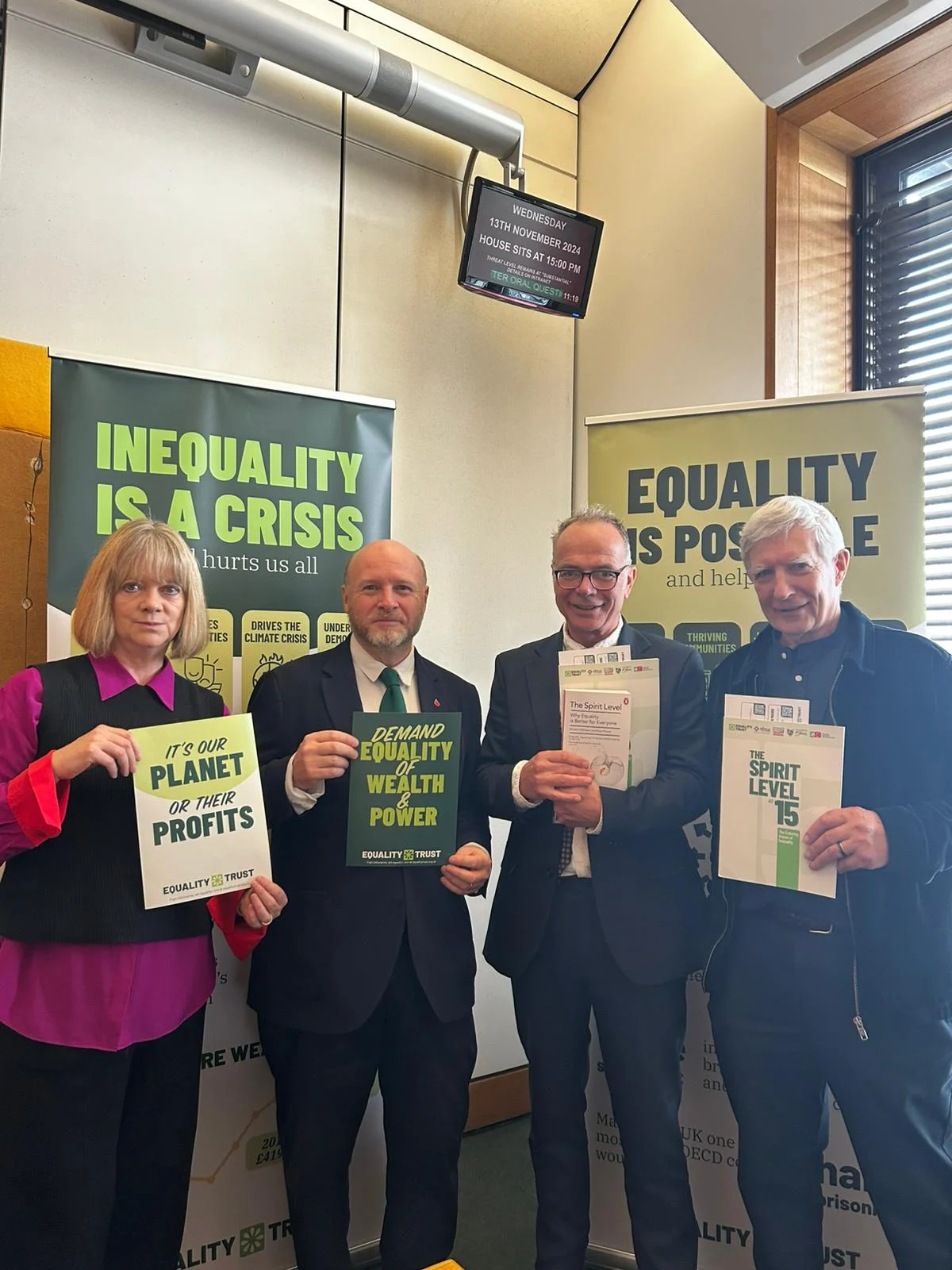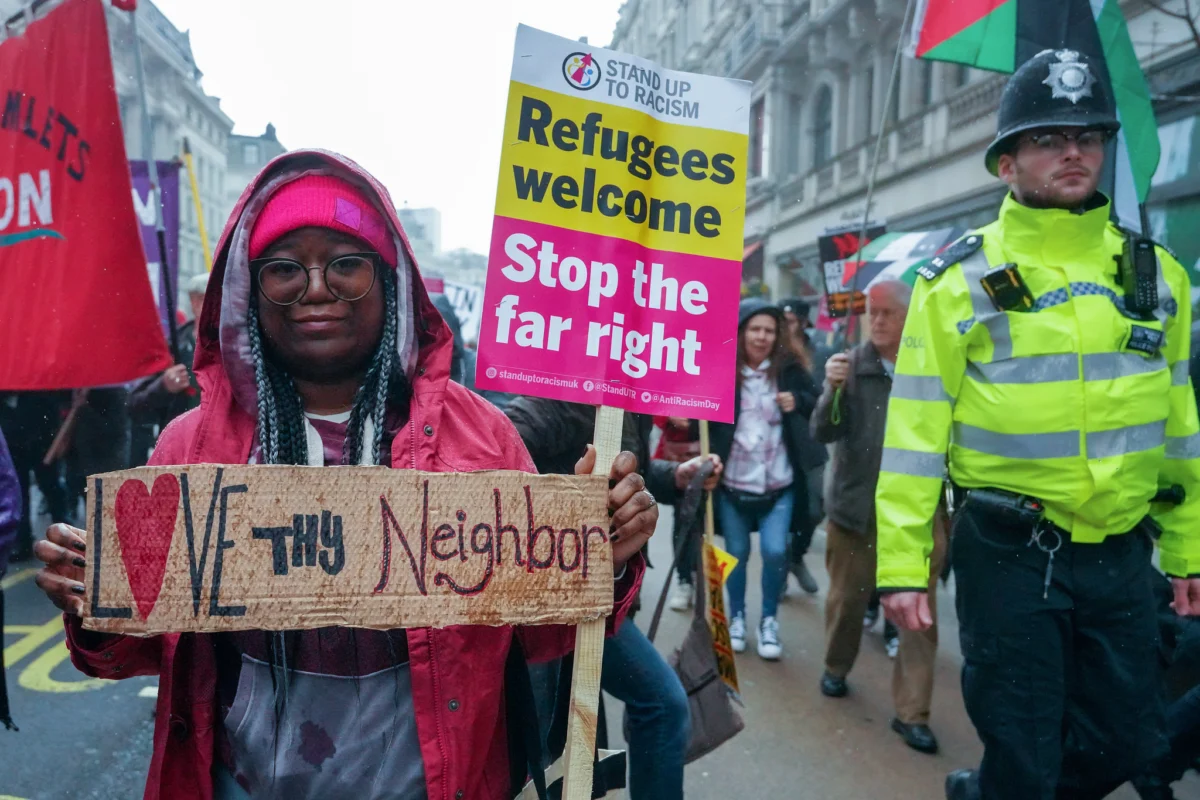
On January 13, 2026, the Public Policy Exchange hosted a high-level seminar titled "Tackling Child Poverty: Improving Welfare, Security and Future Prospects," where policymakers and advocacy leaders gathered to scrutinize the government’s recently unveiled national strategy. Among the key contributors was Priya Sahni-Nicholas, Co-Executive Director of The Equality Trust, who provided a comprehensive assessment of the government’s efforts to reverse a decade and a half of rising hardship. While the strategy marks a significant departure from previous administrations, the analysis presented during the event suggests that the current framework may still be insufficient to address the structural foundations of inequality that drive poverty in the United Kingdom.
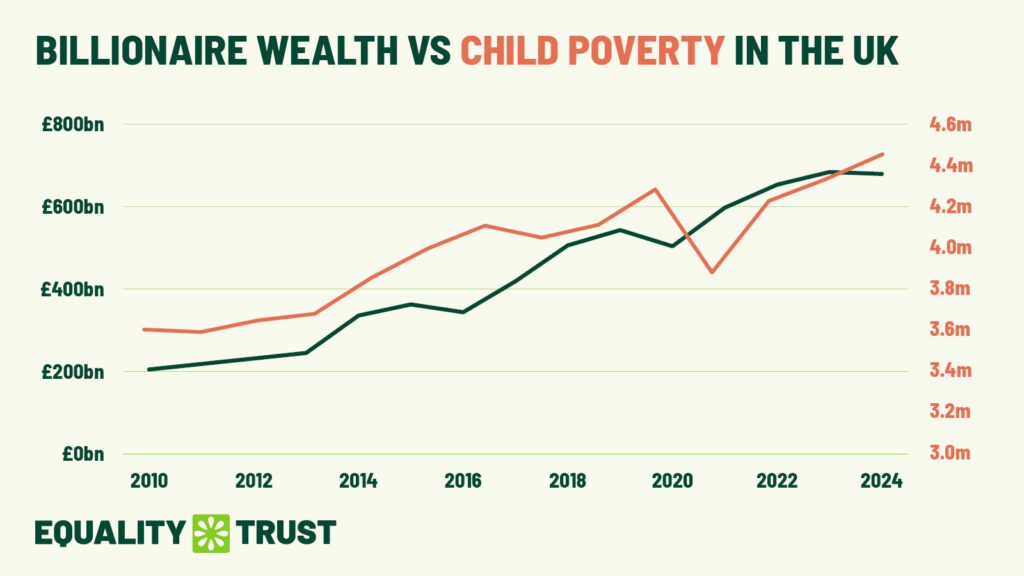
The Child Poverty Strategy, released in December 2025, represents the first UK-wide initiative of its kind since the early 2000s. It arrives at a critical juncture: by the start of 2025, an estimated 4.5 million children—approximately one in three—were living in poverty. Furthermore, nearly 20% of UK households reported inconsistent access to adequate food, a metric that has placed the UK as an outlier among advanced European economies. The strategy explicitly frames these figures not as an inevitability of global economic trends, but as a direct consequence of policy choices made since 2010.
A Decade of Divergence: The Chronology of UK Child Poverty
To understand the weight of the 2026 strategy, it is necessary to examine the historical trajectory of child poverty in the UK. Between 1997 and 2010, the UK saw a concerted effort to reduce child poverty through a combination of tax credits, increased benefits, and the expansion of public services like Sure Start. During this period, approximately 600,000 children were lifted out of relative poverty. However, the subsequent decade of austerity and welfare reform saw a reversal of these gains.
Following the 2010 general election, the introduction of the "two-child limit" on Universal Credit and tax credits, alongside the benefit cap and the freezing of local housing allowances, created a widening gap between household incomes and the cost of living. By 2023, the UK was the only major European economy where child poverty was consistently rising while other nations saw stability or decline. The December 2025 strategy was designed as a direct intervention to this trend, aiming to "end child poverty" over the long term and achieve measurable reductions within the current parliamentary term.
The Strategy’s Successes: A Shift in Governance
The analysis provided by The Equality Trust identifies several areas where the 2026 strategy succeeds in correcting the course of national policy. The most significant shift is the framing of poverty as a systemic failure rather than an individual moral failing. By designating child poverty as a core national priority, the government has signaled that its reduction is a cross-departmental responsibility, involving the Department for Work and Pensions (DWP), the Department for Education, and the Treasury.
A cornerstone of the strategy is the abolition of the two-child limit. Economic modeling suggests this single policy change will account for the majority of projected poverty reductions, potentially lifting 450,000 children out of relative poverty. Critics of the limit have long argued that it disproportionately penalized larger families and contributed to the entrenchment of generational disadvantage. Its removal is seen by advocacy groups as a vital redistributive measure that prioritizes the dignity and welfare of children over fiscal contraction.
Furthermore, the strategy demonstrates an increased commitment to "lived experience." The government’s consultation process included direct engagement with organizations like Changing Realities, ensuring that parents facing financial hardship helped shape the diagnosis of the problem. This has resulted in a focus on the "mental load" of poverty—the stress of insecurity and the stigma associated with seeking help—and has led to practical measures such as uniform cost caps and the expansion of breakfast clubs and free school meals.

The Missing Pillar: The Role of Wealth Inequality
Despite these advancements, the analysis from the Public Policy Exchange event highlights a critical oversight in the government’s approach: the total absence of wealth in the strategic framework. While the government focuses heavily on income and the cost of living, it fails to address the highly unequal distribution of assets and resources that underpins the UK economy.
Wealth inequality is a primary driver of long-term insecurity. Families with identical incomes can experience vastly different standards of living based on their access to assets, such as homeownership, savings, or inherited wealth. In the UK, returns on capital have historically outpaced economic growth, a phenomenon famously articulated by economist Thomas Piketty as r > g. When wealth grows faster than wages, the structural gap between those who own assets and those who rely solely on labor income widens.
The Equality Trust points out that the word "wealth" does not appear in the strategy’s diagnosis or solutions. This omission is significant because the majority of government revenue is derived from taxes on wages and consumption, while returns on assets are often taxed at significantly lower rates. Without addressing this imbalance, the government remains reliant on wage growth to fund public services—a difficult prospect in a low-growth economy. Experts argue that a child poverty strategy that ignores wealth is akin to attempting to empty a bathtub while the taps remain fully open.
Power and Corporate Influence
Another dimension discussed at the event was the role of power in shaping the economic conditions that produce poverty. Inequality is not merely a matter of resource allocation; it is a reflection of who holds influence in the housing market, corporate boardrooms, and the political sphere. The strategy’s emphasis on "opportunity" and "life chances" avoids a more challenging discussion regarding how corporate power and low taxation of the wealthy actively create the conditions for in-work poverty.
History suggests that the most dramatic reductions in UK inequality were not the result of targeted anti-poverty programs alone, but of system-wide shifts in power. The post-World War II era, for example, saw a sustained reduction in inequality driven by the creation of the National Health Service (NHS), the massive expansion of social housing, and the strengthening of trade union rights. These were deliberate political choices that restructured the economy to distribute gains more evenly across the population.
Broader Impact and Future Implications
The 2026 Child Poverty Strategy is viewed by many as a "floor" rather than a "ceiling." To achieve a truly transformative outcome, future policy iterations will likely need to integrate fiscal reform and wealth redistribution more aggressively.
From a fiscal perspective, the sustainability of the current strategy depends on its funding model. If the government continues to rely on income-based taxation to fund welfare expansions, it may face political pressure during economic downturns. Analysts suggest that linking child poverty reduction to broader tax reform—specifically regarding capital gains and property wealth—could provide a more stable foundation for social investment.
Additionally, the strategy’s success will be measured by its ability to narrow the gap between the richest and poorest communities, not just by lifting families slightly above an arbitrary poverty line. This requires a spatial lens that addresses regional disparities in housing costs and job quality, particularly in the North of England and the Midlands, where child poverty rates remain significantly higher than the national average.

Accountability and the Road Ahead
To ensure the strategy does not stall, advocacy groups are calling for binding targets and transparent reporting mechanisms. A ten-year ambition requires more than just goodwill; it requires political consequences for failure and a robust framework for cross-government partnership. The inclusion of the DWP, health, and education departments in a unified implementation plan is a positive step, but the practicalities of this collaboration remain to be seen.
The consensus from the Public Policy Exchange event is that while the 2026 strategy marks a welcome shift away from the policies of the last fifteen years, it stops short of addressing the root causes of the UK’s inequality crisis. To truly end child poverty, the government may eventually have to tell a bolder story: one where extreme wealth concentration is recognized as being fundamentally incompatible with the rights and futures of the nation’s children.
In the final analysis, the Child Poverty Strategy is an essential corrective that will materially improve the lives of hundreds of thousands of families. However, as long as it treats poverty as a marginal issue to be solved through income top-ups rather than a structural outcome of a deeply unequal economic system, its long-term impact may remain limited. The challenge for the coming decade will be to move beyond poverty reduction and toward a comprehensive reduction of inequality in all its forms—income, wealth, and power.