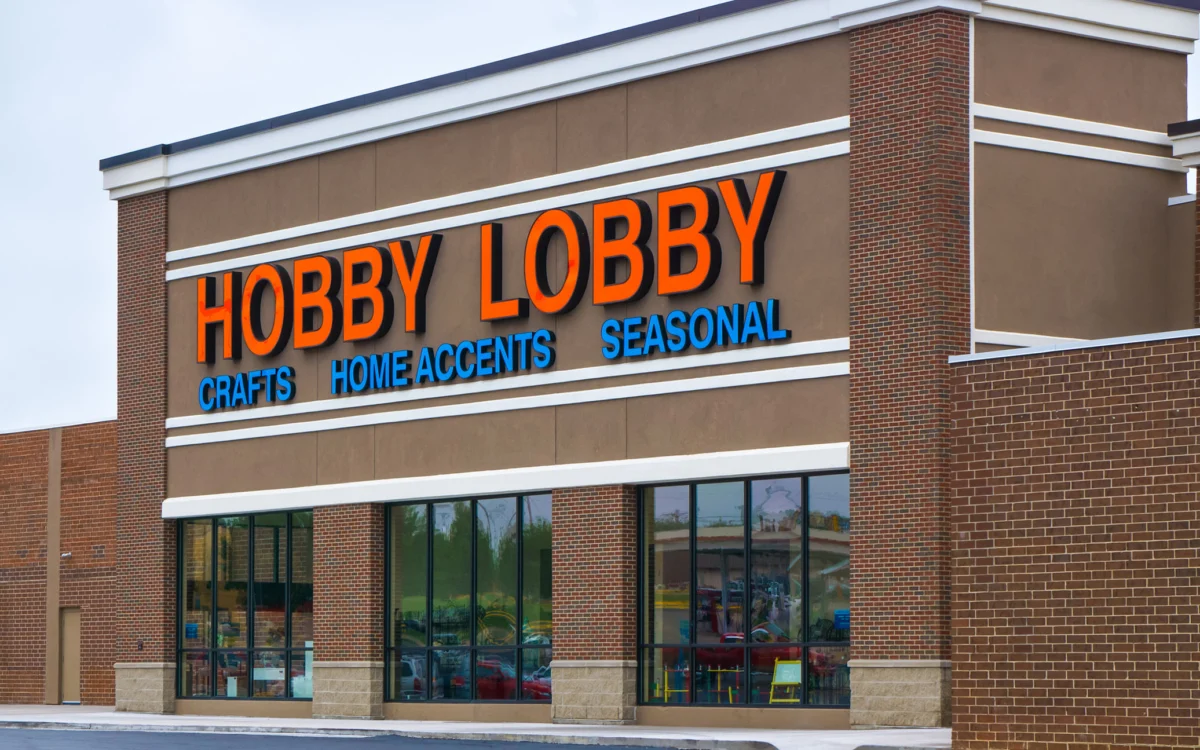
A federal jury has delivered a significant verdict against a Harahan, Louisiana, Hobby Lobby store, finding that it discriminated against a Jefferson Parish man with intellectual disabilities when he was forcibly removed and pepper-sprayed three years ago. The jury awarded Charles "Chip" George damages, concluding that the store manager’s actions violated the Americans with Disabilities Act (ADA) by treating him less favorably due to his disability. While the jury acknowledged the discrimination, they rejected a claim that the store failed to provide reasonable accommodations and reduced the initial damage request from approximately $450,000 to $10,000.
The civil lawsuit, filed on behalf of Mr. George by his family, highlighted a decade-long history of Mr. George patronizing the Hobby Lobby on Citrus Boulevard. His routine visits were reportedly peaceful, centered on his passion for purchasing paintings of beloved comic book superheroes such as Batman, Superman, and the Incredible Hulk. These purchases represented a significant part of his leisure and personal expression.
Understanding Chip George’s Needs and the Incident
Mr. George’s intellectual disabilities present him with an elementary-school reading level and an inability to independently tally his purchases. Consequently, he relied on store employees to assist him with calculations, ensuring he had sufficient funds to buy the artwork he desired. His frequent visits, often multiple times a week, underscored his regular engagement with the store and its staff.
The incident that led to the lawsuit occurred on the morning of November 27, 2023, the Monday following Thanksgiving. This day, typically characterized by post-holiday shopping bustle, saw the store in a state of considerable "chaos," with long lines of customers, as testified by several witnesses. It was within this environment that the interaction with the new store manager, Heather Ford, took place.
According to court records and witness testimony, Ms. Ford observed Mr. George asking a customer service manager to calculate the total cost of his intended purchases. Ms. Ford reportedly approached Mr. George and informed him that the store was too busy and that he would need to return at a later time. This directive, delivered in a busy and potentially overwhelming environment, appeared to agitate Mr. George, who then began shouting obscenities. Ms. Ford responded by ordering him to leave the store.
Escalation and Legal Ramifications
Following Mr. George’s refusal to leave, Ms. Ford contacted 911. Her report to dispatchers described Mr. George as loitering, being belligerent, and refusing to depart. She specifically requested officers to "come talk to him" and expressed her desire for him to be banned from the store. Crucially, Mr. George’s legal team argued that Ms. Ford failed to inform the responding deputy of Mr. George’s intellectual disabilities at the time of her call.
When a deputy arrived at the scene, court records indicate that Mr. George attempted to punch the officer. This action led to his arrest for resisting arrest with violence. During the arrest, the deputy deployed pepper spray directly into Mr. George’s face and mouth. The spray also inadvertently affected his sister, Kimberly George, and her boyfriend, who had intervened in an attempt to de-escalate the situation and restrain Mr. George. The aftermath of the confrontation saw Mr. George spending 25 hours in jail before family members were able to secure his release on bail.
The criminal charges filed against Mr. George were later dropped by prosecutors. Court records reveal that Mr. George was deemed incompetent to stand trial, a determination that underscores the challenges he faces due to his intellectual disabilities.
Legal Arguments and Jury Deliberations
Following the verdict, lead plaintiff attorney Christopher Edmunds expressed a sense of vindication. "We feel vindicated," Edmunds stated. "It’s very stressful going to trial, Hobby Lobby had very competent legal counsel. But the jury heard all the evidence and at the end of the day, the jury has spoken loud and clear that Hobby Lobby violated the Americans with Disabilities Act."
The defense for Hobby Lobby, led by attorney Hal Ungar, contended that the plaintiff’s legal team had presented no concrete evidence of discrimination. Ungar argued that Ms. Ford would have taken the same measures to remove any individual causing a similar disturbance, regardless of disability. The defense’s strategy aimed to portray Ms. Ford’s actions as a reasonable response to disruptive behavior, asserting that the accommodations Mr. George required would have fundamentally altered the store’s operations, thereby falling under an exception to the ADA.
"This case is about if it’s okay and reasonable to say ‘no’ if someone is being belligerent," Ungar told the jurors. "Their strategy was to call Ms. Ford a monster. Over and over. And it was just to distract you with parlor tricks to hide the lack of evidence."
The Americans with Disabilities Act (ADA) in Context
The ADA, enacted in 1990, is a landmark civil rights law that prohibits discrimination based on disability. It ensures equal opportunity for individuals with disabilities in all areas of public life, including employment, transportation, public accommodations, communications, and government activities. Title III of the ADA specifically addresses public accommodations, prohibiting discrimination by private businesses that are open to the public.
Under Title III, businesses are required to make reasonable modifications in policies, practices, or procedures when necessary to afford individuals with disabilities equal enjoyment of goods and services, unless doing so would fundamentally alter the nature of such goods and services. The legal interpretation of "reasonable accommodation" and "fundamental alteration" often forms the crux of ADA litigation.
In Mr. George’s case, the jury’s finding of discrimination suggests they believed the store manager’s actions were a direct result of his disability and that less favorable treatment occurred. The rejection of the "reasonable accommodation" claim implies that the jury may have agreed with Hobby Lobby’s argument that the requested assistance would have imposed an undue burden or fundamentally altered operations, or that the specific actions taken by Mr. George did not rise to the level requiring such accommodations in that specific moment of heightened store activity.
Broader Implications and Future Steps
The verdict in this case carries significant implications for how businesses interact with customers with disabilities, particularly in high-traffic environments. The legal team for Mr. George plans to pursue further action beyond the monetary damages awarded. Attorney Christopher Edmunds intends to petition U.S. District Judge Barry Ashe to issue an injunctive order. This order would mandate that Hobby Lobby implement comprehensive training for its employees across its thousands of stores nationwide on the provisions and requirements of the Americans with Disabilities Act.
Furthermore, Mr. Edmunds plans to request the lifting of the permanent ban placed on Mr. George from the Harahan Hobby Lobby store, allowing him to resume his patronage. This request underscores the desire for reintegration and the right to access public spaces without fear of discriminatory treatment.
Karen Meyer, another sister of Mr. George, emphasized the importance of nationwide training. "One of the big things I wanted out of this was for the employees to have the training throughout the whole country," Meyer stated. "So at least they will have other tools or options on how to de-escalate, rather than escalate a situation." This sentiment highlights a broader societal need for improved understanding and handling of situations involving individuals with disabilities.
The case serves as a potent reminder of the ongoing challenges faced by individuals with intellectual disabilities in navigating public spaces and the critical importance of robust enforcement of disability rights laws. The jury’s decision, while a victory for Mr. George and his family, also points to a continuing need for education and awareness to foster more inclusive and understanding environments for all members of the community. The outcome will likely be closely watched by disability advocacy groups and businesses alike, as it contributes to the evolving legal landscape surrounding disability rights in public accommodations.