A comprehensive global survey conducted in the spring of 2025 by the Pew Research Center reveals a striking divergence in attitudes toward political systems, with Americans exhibiting a particularly high degree of dissatisfaction despite their nation’s economic standing. While citizens in many higher-income countries generally express contentment with their political structures, requiring only minor or no changes, a significant majority of Americans believe their system is in dire need of reform. This sentiment is further complicated by a widespread lack of confidence that such changes can be effectively implemented, painting a picture of a populace deeply concerned about the state of its governance.

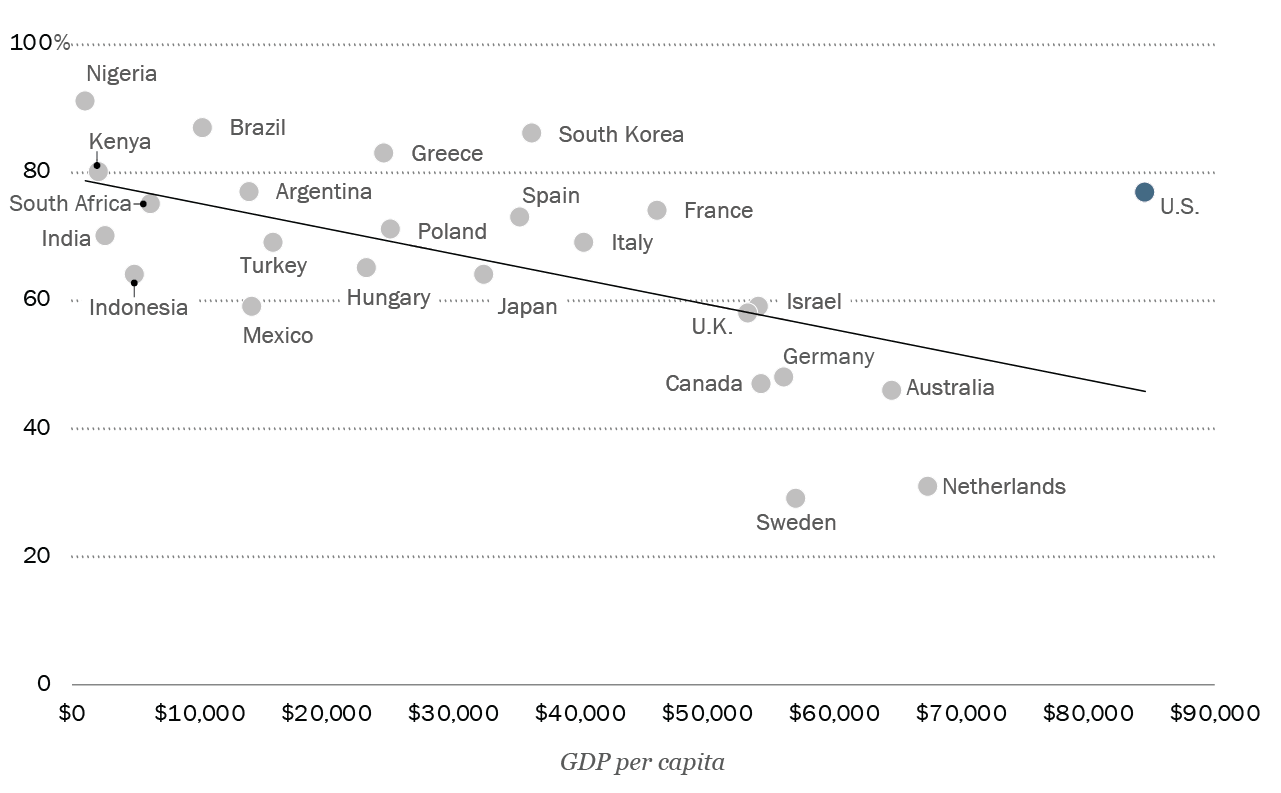
The research, which polled over 31,000 individuals across 25 nations, found a general correlation between economic prosperity and public satisfaction with political systems. Typically, wealthier nations tend to report lower levels of desire for fundamental political overhauls. Conversely, populations in middle-income countries are more inclined to call for significant or complete reform of their political establishments. However, the United States, boasting the highest Gross Domestic Product (GDP) per capita among the surveyed nations, stands as a notable exception to this trend. A substantial 77% of Americans surveyed indicated that the nation’s political system requires major changes or complete reform.
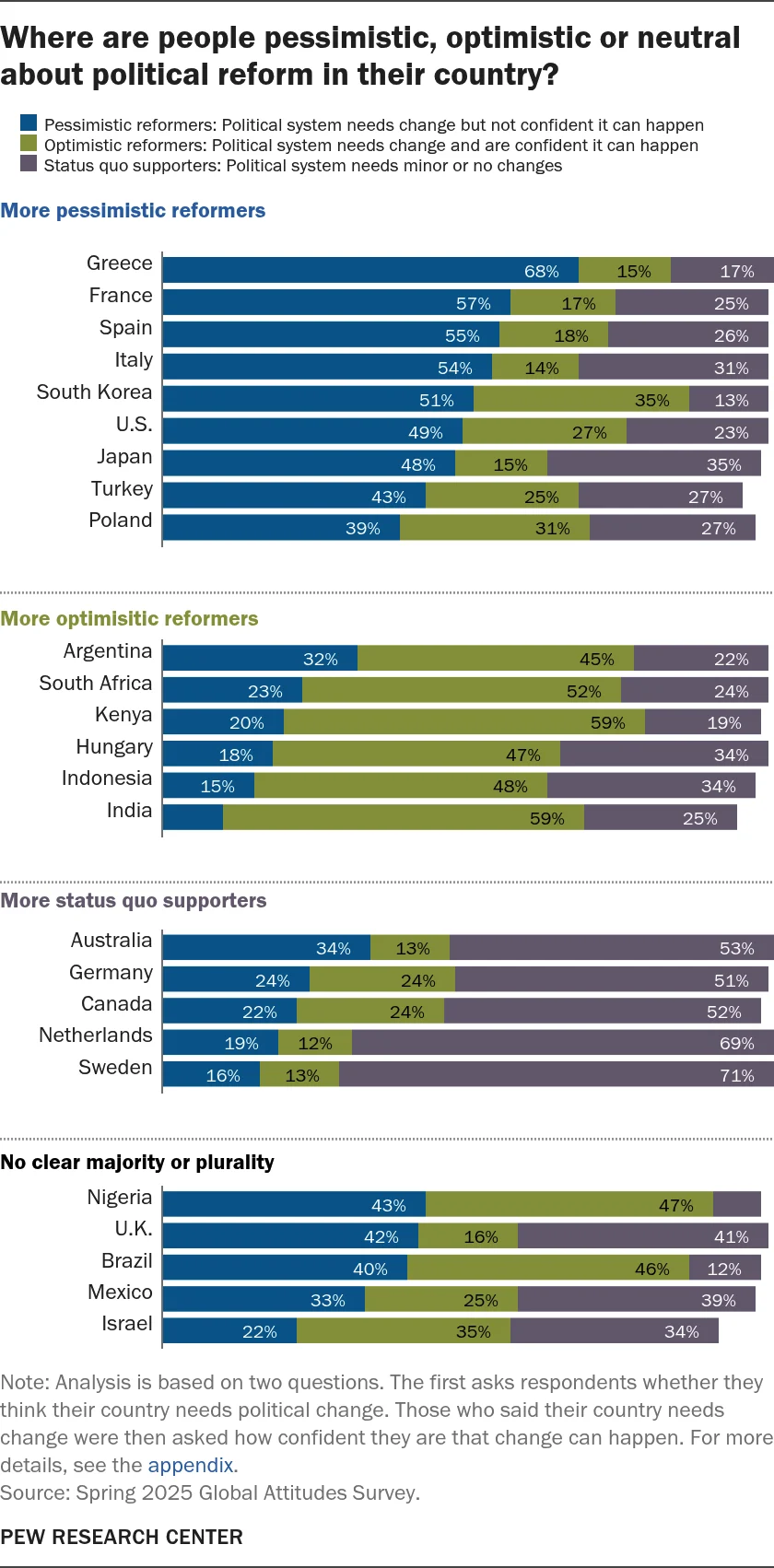
This widespread desire for change within the U.S. is not universally accompanied by optimism. The Pew Research Center’s analysis categorizes Americans into three distinct groups based on their views of the political system: "pessimistic reformers," "optimistic reformers," and "status quo supporters."
- Pessimistic Reformers: This group believes the political system needs substantial alteration but lacks confidence that such changes can be successfully enacted. In the U.S., this segment comprises 49% of the population.
- Optimistic Reformers: These individuals also advocate for significant political reform but are confident in the system’s ability to adapt and improve. This group constitutes 27% of Americans surveyed.
- Status Quo Supporters: This segment believes the political system requires no changes or only minor adjustments. In the United States, this group makes up 23% of the population.
The prevalence of "pessimistic reformers" is a significant finding, suggesting a deep-seated disillusionment with the current political landscape, coupled with a perceived inability to effect meaningful improvements. This dynamic is not unique to the United States; the survey identified nine countries, including Greece, France, Spain, Italy, South Korea, Japan, Turkey, and Poland, where pessimistic reformers form the largest segment of the population. This suggests a shared challenge in democratic societies grappling with perceived systemic flaws and a lack of faith in reform processes.
In contrast, "optimistic reformers," who believe in the possibility of positive change, represent the dominant group in six surveyed nations: India, Kenya, South Africa, Indonesia, Hungary, and Argentina. These findings highlight varying levels of public faith in institutional capacity for change across different socio-economic and political contexts.

Meanwhile, "status quo supporters," who are content with the existing political order, form the largest segment in five countries: Sweden, the Netherlands, Australia, Canada, and Germany. These nations, often characterized by strong democratic institutions and stable economies, appear to enjoy a higher degree of public confidence in their political systems.
Economic Standing and Political Discontent: The U.S. Anomaly
The United States’ position as a "pessimistic reformer" nation, despite its unparalleled GDP per capita, warrants closer examination. Among the nine countries where pessimistic reformers are the largest demographic, the U.S. possesses the highest per capita income by a considerable margin. This economic standing sharply contrasts with the findings in other high-income nations where a larger share of the population identifies as "status quo supporters." For instance, the Netherlands, with the second-highest GDP per capita among those surveyed, saw 69% of its adults identifying as status quo supporters, a stark difference from the 19% who were pessimistic reformers.
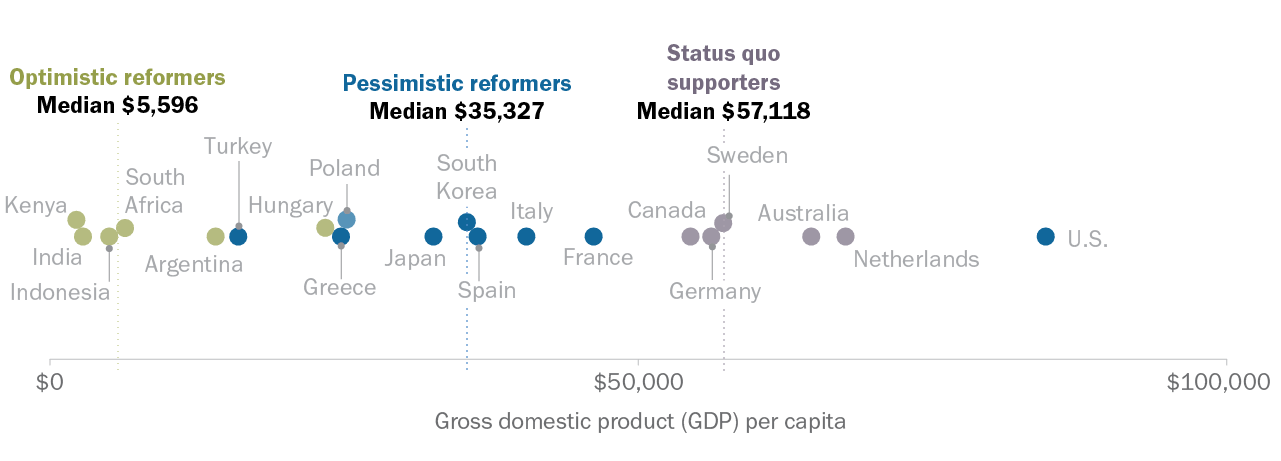
This economic disparity suggests that while wealth may correlate with general satisfaction in many developed nations, it does not automatically translate to contentment with political systems. The U.S. appears to be an outlier, where high economic prosperity coexists with profound dissatisfaction and a lack of faith in the nation’s governance.
Democracy Ratings and Societal Views
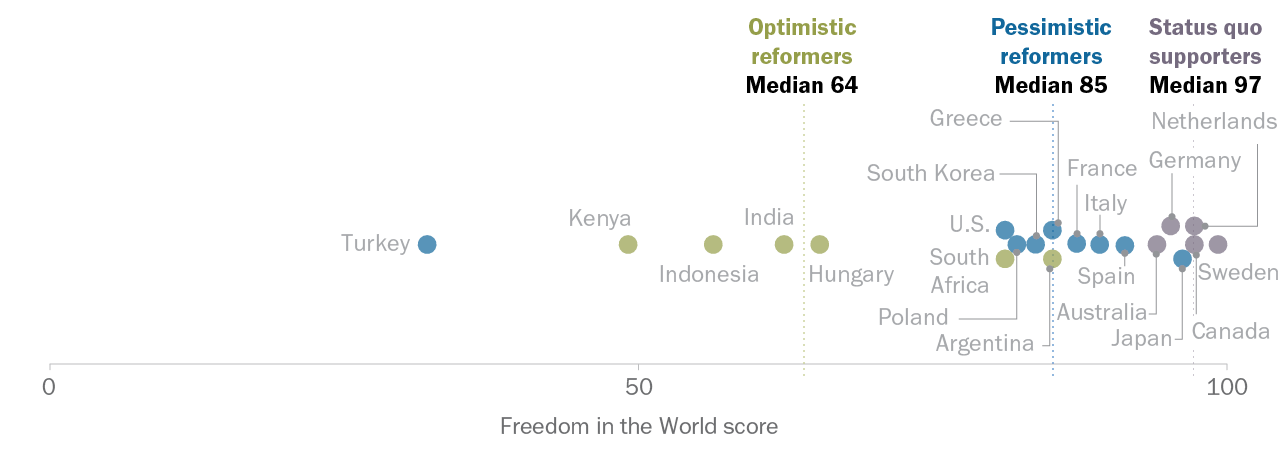
Further analysis by Pew Research Center indicates that the U.S. aligns with other "pessimistic reformer" nations not only in its economic standing but also in certain aspects of its democratic health and societal outlook. Based on ratings from Freedom House, a non-governmental organization that assesses global political rights and civil liberties, the U.S. generally scores high in terms of democratic freedoms, though not as high as countries dominated by "status quo supporters." For example, Sweden, with a near-perfect Freedom House score, overwhelmingly comprises status quo supporters. This suggests that while the U.S. is considered a strong democracy, its citizens perceive deeper systemic issues that are not fully captured by external assessments of freedom.
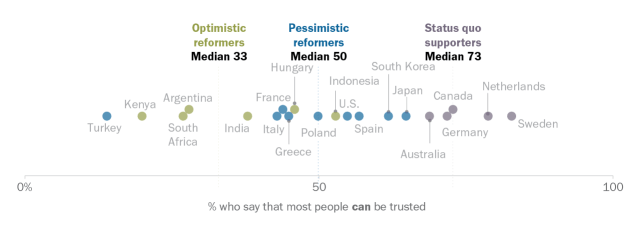
Beyond political structures and democratic ratings, the survey also delved into public perceptions of fellow citizens and the nation’s economic future. In countries with a high proportion of pessimistic reformers, including the U.S., there is a tendency towards lower levels of social trust, a more negative assessment of the morality and ethics of fellow citizens, and a generally more pessimistic outlook on the economy.
Specifically, only 55% of Americans reported trusting most people, a figure significantly lower than in countries like Sweden (83%) and the Netherlands (79%), where status quo supporters are dominant. Perhaps more strikingly, the United States is the only surveyed nation where a majority of adults view the morality and ethics of their fellow citizens as "bad" rather than "good." This stark finding underscores a potential erosion of social cohesion and collective optimism within the American populace.
The outlook for the next generation’s economic prospects also reveals a divide. In the nine countries where pessimistic reformers are most prevalent, a median of only 20% of adults believed that children would be better off financially than their parents. This contrasts with optimistic reformer nations, where a median of 42% expressed such optimism, with India and Indonesia showing particularly high rates of confidence.
Context and Methodology
The Pew Research Center’s Spring 2025 Global Attitudes Survey encompassed 31,938 individuals across 25 countries, including Argentina, Australia, Brazil, Canada, France, Germany, Greece, Hungary, India, Indonesia, Israel, Italy, Japan, Kenya, Mexico, the Netherlands, Nigeria, Poland, South Africa, South Korea, Spain, Sweden, Turkey, the United Kingdom, and the United States. The survey sought to understand public sentiment regarding the need for political reform and the confidence in the ability to achieve it. GDP per capita data was sourced from the World Bank and accessed on March 23, 2026. Democracy ratings were provided by Freedom House.

This research is part of Pew Research Center’s ongoing commitment to understanding global perspectives on democracy, governance, and societal well-being. The findings offer a critical lens through which to view the current state of political sentiment in the United States and its comparison with international trends, highlighting both shared challenges and unique national characteristics. The data suggests that while economic prosperity is a significant factor in national well-being, it does not solely dictate public satisfaction with political systems, and a lack of confidence in reform processes can create a potent mix of concern and inaction.