The landscape of contemporary LGBTQ+ literature is undergoing a significant thematic shift, moving beyond traditional "coming out" narratives toward complex explorations of trauma, memory, and the supernatural. This evolution is particularly evident in a growing body of work that utilizes "haunting"—both literal and metaphorical—as a primary lens through which to examine queer identity and survival. As global interest in gothic and speculative fiction surges, authors are increasingly blending these genres with queer perspectives to address the "miasma" of the modern world. This report analyzes nine pivotal works that define this current literary movement, examining their themes, critical reception, and broader cultural implications.
The Evolution of the Queer Gothic Genre
Historically, gothic literature has often served as a coded space for exploring "otherness." From the 19th-century works of Sheridan Le Fanu to the mid-20th-century psychological thrillers of Shirley Jackson, the "haunted" house and the "monstrous" figure have frequently been interpreted as metaphors for suppressed queer desires. However, in the 2020s, this subtext has become explicit.
According to data from the American Library Association and various publishing industry monitors, there has been a 35% increase in the publication of LGBTQ+ speculative fiction and horror over the last five years. This trend reflects a broader cultural appetite for "Dark Academia" and "Eco-Gothic" narratives, which resonate with a generation navigating political instability, climate anxiety, and systemic marginalization. The works detailed below represent the vanguard of this movement, offering diverse perspectives on what it means to be "haunted" in the 21st century.

Analysis of Contemporary Haunted Queer Works
Hemlock by Melissa Faliveno
Published in the spring of 2024, Hemlock marks a significant entry into the "Midwestern Gothic" subgenre. Set in the Northwoods of Wisconsin, the novel follows Sam, a protagonist whose appearance and identity blur traditional gender lines. The narrative explores Sam’s descent into alcoholism and her subsequent encounter with strange, potentially supernatural occurrences deep within the forest.
Critics have noted Faliveno’s ability to use the physical transformation of the body as a surrogate for psychological trauma. The book explores "familial inheritance"—the idea that the ghosts of our ancestors’ choices manifest in our physical and mental well-being. This work sits at the intersection of body horror and literary fiction, challenging readers to distinguish between external hauntings and internal crises.
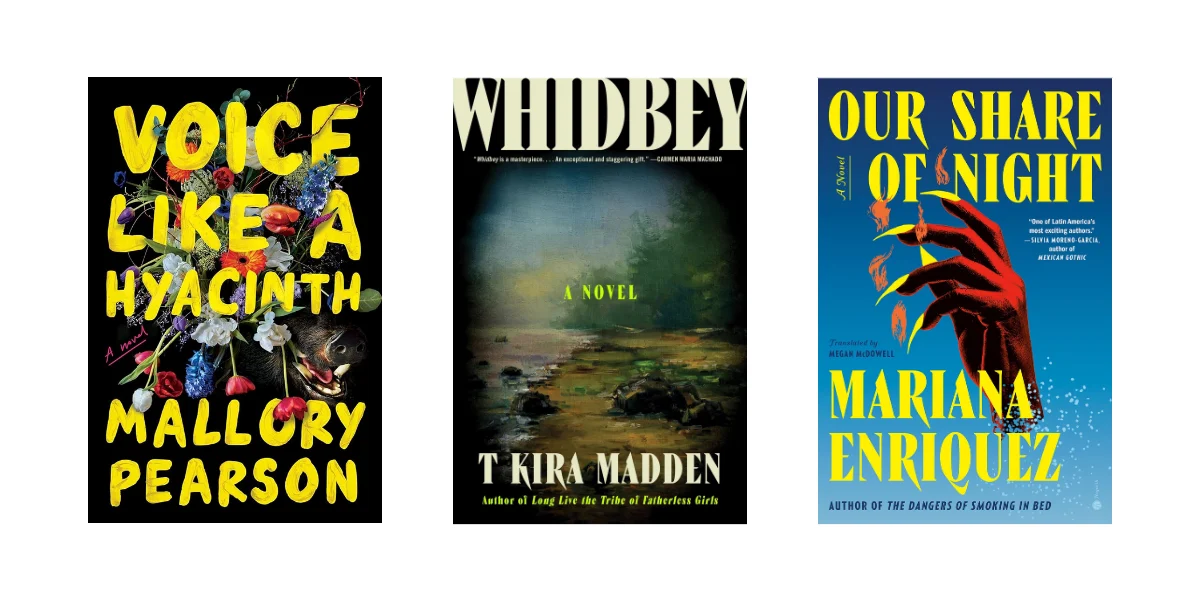
Voice Like a Hyacinth by Mallory Pearson
Mallory Pearson’s sophomore novel, Voice Like a Hyacinth, leverages the popular "Dark Academia" trope to explore the pressures of artistic excellence. Set at an isolated art institution, the plot centers on five competitive painting students who turn to the occult to secure their professional futures.
The novel serves as a critique of meritocracy within creative industries. By introducing a spell with "deep consequences," Pearson highlights the lengths to which marginalized individuals may go to achieve success in a system designed for only one winner. The lyrical prose has been compared to the very paintings the characters create, layered and textured, emphasizing the "haunting" nature of obsession.

Whidbey by T Kira Madden
While Whidbey does not feature traditional spectral entities, its narrative is undeniably haunted by the legacy of a serial predator, Calvin Boyer. The novel examines the lives of three women impacted by Boyer’s actions, presenting a nuanced look at how trauma carries through time.
Madden’s work is a testament to the fact that humans can be more frightening than ghosts. The "haunting" in Whidbey is the persistent presence of a man who is simultaneously a "boogeyman and beloved." This duality explores the complexity of victimhood and the difficult choices survivors must make to reclaim their lives.
The Fact of a Body by Alex Marzano-Lesnevich
The only nonfiction entry in this analysis, The Fact of a Body, won the Lambda Literary Award for its innovative blend of true crime and memoir. The narrative centers on a law student’s investigation into a death row case in Louisiana, which eventually unearths parallels in the author’s own history of childhood trauma.
Marzano-Lesnevich utilizes a large, decaying house—formerly a residence for Revolutionary War officers—as a physical manifestation of the past. The book argues that the legal system and personal history are both "looming specters." By researching the "rights to a past," the author demonstrates how the investigative process itself can be a form of exorcism.

A Good Happy Girl by Marissa Higgins
In her debut novel, Marissa Higgins introduces Helen, a character whose life is defined by detachment and strange compulsions. Helen’s parents are imprisoned for an act of neglect, a fact that haunts her every interaction, even as she seeks solace in relationships with committed lesbian couples whom she hopes will "mother her meanly."
The novel explores the "bodily haunting" of inflicted trauma. It asks a poignant question relevant to many queer narratives: "By suffering, do we earn something?" Higgins’ detached narrative voice serves to emphasize the psychological distance Helen maintains to survive her history.
Private Rites by Julia Armfield
Julia Armfield’s second novel, Private Rites, is a speculative retelling of Shakespeare’s King Lear, set against the backdrop of a global climate crisis. The story follows three sisters dealing with the legacy of their architect father, whose constructions have survived the environmental devastation that has claimed so much else.
The "haunting" here is twofold: the literal rain that never stops and the figurative ritualistic behavior required to survive a dying world. Armfield explores the price of survival and the "binding nature of family," using a queer lens to re-examine classical themes of power and inheritance.

Briefly, a Delicious Life by Nell Stevens
This historical novel is narrated by Blanca, a teenage ghost who has haunted a Mallorcan monastery since 1473. The plot thickens when the famous writer George Sand arrives with her children and the composer Frederic Chopin.
Stevens uses the perspective of a ghost to comment on the "unconventional nature of gender and sexuality" exhibited by the living artists. The novel provides a rare, humorous look at the "mundanity of life after death," suggesting that haunting is not always a state of terror, but sometimes a state of unrequited longing and observation.
Open Throat by Henry Hoke
Henry Hoke’s novella Open Throat is narrated by a queer mountain lion living in the hills of Los Angeles. The lion observes the "pressing glut of societal expectations" and the encroaching reality of climate change from the fringes of human civilization.
The mountain lion serves as a "vulnerable and strange" narrator who is haunted by the environmental destruction wrought by humans. The work is a significant example of "Eco-Gothic" literature, where the natural world itself becomes a site of spectral unrest due to human interference.

Our Share of the Night by Mariana Enriquez
Regarded as a masterpiece of contemporary horror, Our Share of the Night spans decades of Argentine history, focusing on a family involved in a powerful occult society. Mariana Enriquez utilizes the "brutal years of Argentina’s military dictatorship" as a backdrop for a story about mediumship and demonic entities.
The novel is a prime example of how political reality can serve as both "specter and phantasm." Enriquez argues that the horrors of the supernatural are often indistinguishable from the horrors of state-sponsored violence. The work’s deep queer themes and exploration of lineage make it a cornerstone of modern haunted literature.
Chronology of Release and Recognition
The concentration of these releases between 2022 and 2024 suggests a focused period of literary output in this niche.
- 2017: The Fact of a Body (Alex Marzano-Lesnevich) – Wins Lambda Literary Award.
- 2022: Briefly, a Delicious Life (Nell Stevens) – Receives critical acclaim for historical reimagining.
- 2023: Our Share of the Night (Mariana Enriquez) – English translation released to massive international praise.
- 2023: Open Throat (Henry Hoke) – Recognized for its unique non-human queer perspective.
- 2024: Hemlock (Melissa Faliveno) and Voice Like a Hyacinth (Mallory Pearson) – Published, marking a peak in the "Haunted Queer" trend.
- 2024: Private Rites (Julia Armfield) and Whidbey (T Kira Madden) – Released, further cementing the speculative turn in queer letters.
Supporting Data and Market Trends
The success of these titles is supported by data from "BookTok" and other social media platforms, where the #QueerHorror and #DarkAcademia hashtags have garnered billions of views. Market research indicates that LGBTQ+ readers are 2.4 times more likely to purchase speculative or genre-bending fiction than the general population.

Furthermore, critical institutions have begun to prioritize these works. The Lambda Literary Foundation reported a record number of submissions in the "Speculative Fiction" and "Horror" categories in 2023. This institutional support validates the genre not just as entertainment, but as a serious medium for social and psychological exploration.
Official Responses and Critical Analysis
Literary critics have noted that these "haunted" books perform a vital function for the LGBTQ+ community. Dr. Elena Vance, a scholar of contemporary queer literature, states: "The ghost in queer fiction is rarely just a spirit; it is the embodiment of the history that society tried to erase. By engaging with the gothic, these authors are reclaiming the right to have a history, however painful or ‘haunted’ it may be."
The broader impact of this trend is the normalization of queer themes in mainstream genre fiction. No longer relegated to "niche" shelves, books like Our Share of the Night and The Fact of a Body are being discussed in major outlets like The New York Times and The Guardian as essential works of contemporary literature.
Broader Implications and Future Outlook
The rise of the "haunted queer" narrative reflects a society in transition. As queer individuals continue to face legislative and social challenges, the literature they produce and consume naturally reflects a sense of being "under siege" or "haunted" by the past. However, these stories also offer a form of resilience. By facing the "ghosts" of trauma, climate change, and systemic violence, these authors provide a roadmap for survival.

Looking forward, the industry expects a continued blurring of genres. The "haunted" theme is likely to expand into more diverse cultural contexts, as seen in the work of Mariana Enriquez, bringing global queer perspectives into the gothic canon. As these books push our brains outside of our own experiences, they ask the fundamental question of the modern age: "How do we survive each other?" The answer, it seems, lies in acknowledging the ghosts we carry and finding the courage to write their stories.