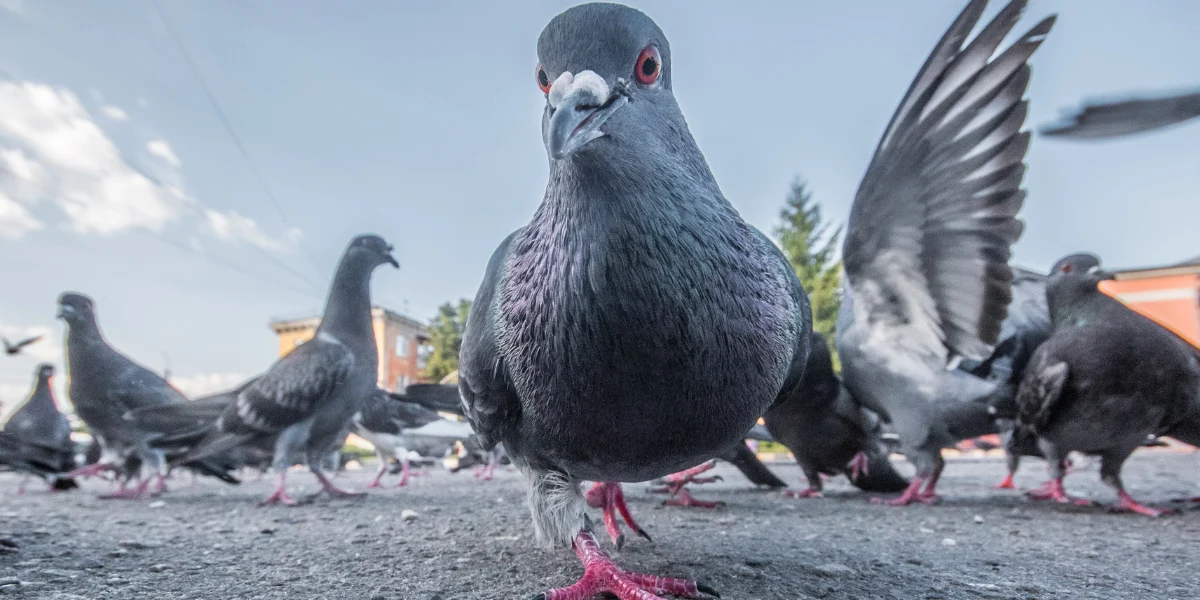
On a clear Saturday morning in South Philadelphia, a group of twenty observers gathers on a street corner, binoculars aimed at the power lines where a flock of pigeons rests. These participants are part of Philly Pigeon Tours, a 90-minute walking excursion designed to provide an in-depth look at the biology, history, and social dynamics of the common rock dove (Columba livia). Led by tour guides Aspen Simone and Hannah Michelle (HM) Brower, the initiative seeks to illuminate what they describe as "the pigeon layer"—a pervasive but often overlooked dimension of urban life that is deeply intertwined with human social structures and history.
The tour operates at the intersection of ornithology and sociology, utilizing a "queer lens" to re-examine the behaviors and societal perceptions of these birds. For Simone and Brower, who both identify as queer, the project began with a personal rescue. After finding a malnourished pigeon they named Primrose on a city street, the pair transitioned from casual observers to advocates. Through the process of rehabilitating Primrose, they gained a nuanced understanding of pigeon body language and flocking patterns. What began as a localized interest soon expanded into a professional venture; after a profile in The Philadelphia Inquirer, the tours began selling out consistently. Currently, Philly Pigeon Tours conducts two public walks per week, alongside specialized sessions for schools and private groups.
Challenging Heteronormative Frameworks in Avian Biology
A central component of the tour involves dismantling traditional biological assumptions. As the group moves through the neighborhood, Simone and Brower point out mating pairs, noting that the behaviors often used to identify sex are frequently misunderstood. For example, the pigeon "mating dance"—characterized by circling, cooing, and tail-dragging—is often reflexively attributed to males pursuing females. However, the guides emphasize that these behaviors can be performed by pigeons of any sex.
According to Simone, the tendency to assign gender roles to these actions is often a reflection of human projection rather than rigorous science. "It’s people—including birders and scientists—projecting a specific set of ideas about human gender roles onto pigeons," they noted during a recent tour. This observation is supported by a growing body of research in the field of "queer ecology," which examines how human cultural biases influence the study of the natural world.
The complexity of pigeon biology extends to their genetic and hormonal makeup. Unlike mammals, which typically follow an XY sex-determination system, birds utilize a ZW system, where the female is the heterogametic sex (ZW) and the male is homogametic (ZZ). Furthermore, the production of "crop milk"—a highly nutritious secretion used to feed hatchlings—is not limited to one sex. Both male and female pigeons produce this substance, driven by the hormone prolactin. This shared biological responsibility renders both parents integral to the survival of the young, complicating traditional notions of "maternal" versus "paternal" roles in the animal kingdom.
The Social History of Stigma and the "Rats with Wings" Narrative
The current perception of pigeons as "rats with wings" is a relatively modern phenomenon. For thousands of years, pigeons enjoyed a prestigious status in human society. Domesticated roughly 10,000 years ago, they served as vital sources of food, high-quality fertilizer, and reliable long-distance messengers. During the 19th century, pigeon breeding was a high-status hobby; even Charles Darwin relied heavily on observations of pigeon variations to develop his theories in On the Origin of Species.
The shift toward demonization began in the mid-20th century. Sociologist Colin Jerolmack, who has extensively studied the cultural history of the pigeon, traces the "rats with wings" moniker to 1966, when it was popularized by New York City Parks Commissioner Thomas Hoving. Jerolmack’s research into decades of media coverage reveals that pigeons became a "symbol of what we find vile and morally repugnant in the urban cityscape."
This era of stigmatization coincided with broader social anxieties regarding urban disorder. In a 1966 article from The New York Times, the Supervisor of Bryant Park famously complained that "the homosexuals and the winos are my biggest headache," while simultaneously labeling the pigeon as the park’s "most persistent vandal." Simone and Brower point out that the language used by city officials to describe pigeons—terms like "dirty," "diseased," and "nuisance"—often mirrored the derogatory language used to marginalize LGBTQ+ individuals and the unhoused. By framing certain groups and species as "social problems," authorities justified policies of removal and eradication.
A Timeline of the Pigeon’s Cultural Re-emergence
While the late 20th century was marked by efforts to exclude pigeons from public spaces through the use of spikes, traps, and poisons, the mid-2020s have seen a notable shift in public sentiment. This "pigeon renaissance" is characterized by a series of high-profile media events and celebrity endorsements:
- Late 2024: Social media accounts highlighting "non-traditional" pigeon dynamics, such as the "bisexual pigeon throuple" in Kansas and the "lesbi-hens" Charm and Suki, went viral, garnering millions of views and fostering a new interest in avian social complexity.
- November 2025: During an appearance on the podcast Las Culturistas, actress Sarah Paulson delivered a passionate defense of the species, calling on the public to "stop hating on the pigeon."
- December 2025: Mother Jones officially named the pigeon one of its "Heroes of 2025," citing their resilience and the growing movement to recognize their historical importance.
- Spring 2026: A wave of long-form journalism in outlets such as The New Yorker, The Guardian, and The New York Times Magazine, along with the PBS documentary The Pigeon Hustle, explored the ethics of urban wildlife management and the history of pigeon-human cooperation.
These events suggest a growing appetite for a more empathetic and scientifically accurate understanding of urban wildlife. For Philly Pigeon Tours, this cultural shift provides an opportunity to advocate for more humane coexistence strategies.
Implications for Urban Coexistence and Public Policy
The practical goal of the tour is to encourage residents to move away from adversarial methods of pigeon control. Simone and Brower argue that deterrents like metal spikes and glue traps are not only inhumane but often ineffective, as they fail to address the root causes of pigeon population density, such as food availability and nesting sites.
Instead, they advocate for "pigeon lofts" or "pigeon houses," a method used successfully in several European cities. These structures provide pigeons with a designated place to roost and nest. City managers can then swap real eggs for dummy eggs, humanely controlling the population while maintaining a healthy, stable flock. This approach treats the birds as residents of the city rather than invaders.
The broader implications of the tour reach beyond ornithology. By examining the "pigeon layer," participants are encouraged to think critically about how society defines "belonging" in the urban environment. Aspen Simone notes that the way we treat the most marginalized species often reflects the way we treat the most marginalized people. "I’m thoroughly convinced there’s a version of humanity where we can get our needs met without seriously harming each other," Simone says. "It wasn’t always like this, and that means it doesn’t have to be like this forever."
Conclusion: Reimagining the Urban Ecosystem
Philly Pigeon Tours represents a growing movement toward "inclusive ecology," where the city is viewed as a shared habitat rather than a human-only zone. By highlighting the queer aspects of pigeon biology and the shared history of stigma between pigeons and marginalized human groups, the tour challenges participants to reconsider their relationship with the natural world.
As urban centers continue to evolve, the demand for sustainable and ethical interactions with wildlife is likely to increase. The work of Simone and Brower suggests that the first step toward a more harmonious city is simply looking up and recognizing the complexity of the lives happening just above our heads. Through education and the debunking of long-standing myths, Philly Pigeon Tours is helping to transform the "rats with wings" narrative into one of resilience, diversity, and mutual survival.