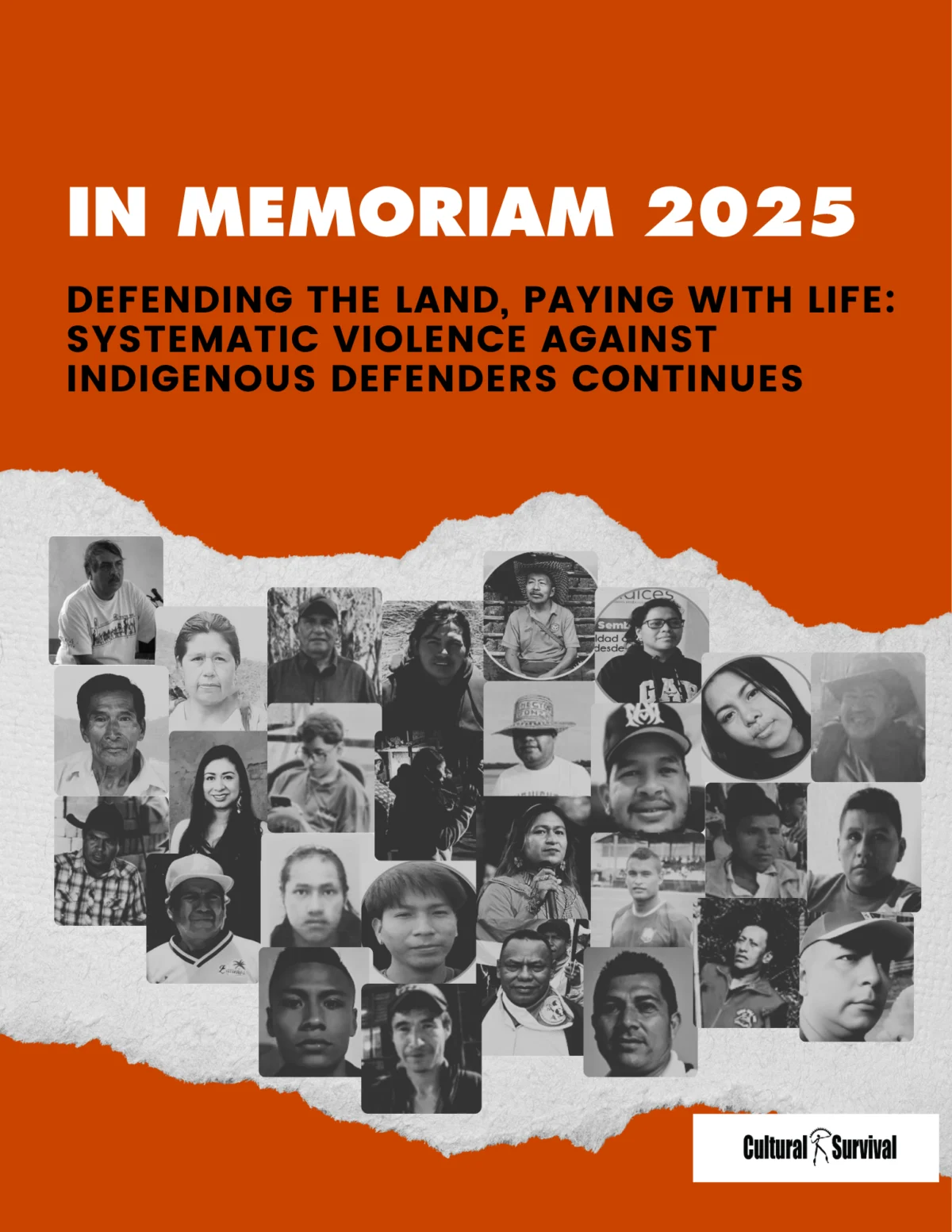
On March 10, 2026, Indigenous Peoples’ rights organization Cultural Survival released its annual “In Memoriam” report, meticulously documenting the tragic murders of Indigenous land and rights defenders across Latin America in 2025. This critical exposé, coinciding with the 25th session of the UN Permanent Forum on Indigenous Issues, was accompanied by a comprehensive advocacy brief titled “Defending the Land, Paying with Life.” This document delves into the systemic violence that fuels these assassinations, situating them within established international human rights legal frameworks. Cultural Survival’s report and brief collectively issue a robust call to action, targeting companies, states, the UN Permanent Forum on Indigenous Issues, the Presidency of the Escazú Agreement’s governing board, and the broader international community, urging them to implement concrete measures for the protection of these vital defenders.
The stark reality for Indigenous Peoples fighting to protect their ancestral lands and natural resources is undeniable: Latin America remains the most perilous region globally for those who dare to defend their rights. Data from 2024 paints a grim picture, with Global Witness reporting that a staggering 82% of the 146 documented murders of defenders occurred within this region. Countries like Mexico and Colombia, despite having established protection mechanisms for human rights defenders, continue to witness the loss of life among these individuals. The existing mechanisms, while theoretically in place, appear insufficient to deter the relentless wave of threats, intimidation, kidnappings, physical and digital assaults, and other insidious forms of violence designed to silence and incapacitate defenders.
Cultural Survival’s “In Memoriam” report specifically names and honors the Indigenous defenders who were tragically murdered. These individuals, deeply committed to the well-being of their communities and the preservation of their territories, were killed for their unwavering dedication. Their work, often on the front lines of environmental stewardship, is crucial for the planet’s health. They protect vital forests and water sources, and stand as a bulwark against extractive projects whose supply chains contribute significantly to climate change and a cascade of environmental disasters worldwide. Each life lost represents an irreplaceable loss of unique cultural heritage, linguistic diversity, ancestral knowledge, and a profound connection to the land that sustains all life.
The report meticulously references a multitude of international human rights standards and legal precedents that underscore the obligations of states to protect Indigenous defenders. These include the foundational UN Declaration on the Rights of Indigenous Peoples (UNDRIP), the International Labour Organization’s Convention 169 (ILO 169) concerning Indigenous and Tribal Peoples, the International Covenant on Civil and Political Rights (ICCPR), and crucial jurisprudence from the Inter-American Court of Human Rights. These frameworks collectively establish a clear mandate for states to undertake tangible actions to implement the rights of Indigenous Peoples and ensure the safety and security of those who advocate for them.
The Structural Violence Undermining Defender Protection
“Defending the Land, Paying with Life” goes beyond merely cataloging the victims; it systematically analyzes the underlying structural violence that perpetuates these killings. The brief argues that the impunity enjoyed by those responsible for these crimes is a direct consequence of weak governance, corruption, and a persistent disregard for Indigenous rights by both state actors and powerful economic interests. The report highlights how the expansion of extractive industries, including mining, logging, agribusiness, and large-scale infrastructure projects, frequently encroaches upon Indigenous territories, often without free, prior, and informed consent (FPIC). This encroachment inevitably leads to conflict, and Indigenous defenders who resist these incursions become targets.
The brief elaborates on the specific challenges faced by defenders, including legal harassment, the criminalization of their activism, and the deliberate targeting of their communities. It points to a disturbing trend where state security forces, instead of protecting defenders, are sometimes complicit in or indifferent to the violence perpetrated against them. Furthermore, the influence of transnational corporations, whose operations often drive these destructive projects, is scrutinized. The report emphasizes that these companies have a moral and legal responsibility to ensure their operations do not contribute to human rights abuses and environmental degradation.
A Chronology of Peril: The Escalating Crisis
The patterns of violence against Indigenous defenders in Latin America are not new, but recent years have seen a disturbing intensification. While the “In Memoriam” report focuses on 2025, the preceding years have shown a consistent and alarming trend.
- Early 2000s onwards: The rise of large-scale extractive industries across Latin America, fueled by global demand for commodities, increasingly brings corporations into conflict with Indigenous territories. Early instances of resistance and subsequent repression begin to be documented by human rights organizations.
- 2010s: International attention begins to grow regarding the risks faced by environmental and land defenders. Reports from organizations like Global Witness and Front Line Defenders highlight the disproportionate impact on Indigenous communities. The UN Declaration on the Rights of Indigenous Peoples, adopted in 2007, provides a crucial legal framework, but its implementation remains a significant challenge.
- 2019: The Escazú Agreement (Regional Agreement on Access to Information, Public Participation and Access to Justice in Environmental Matters in Latin America and the Caribbean) is adopted, representing a landmark treaty aimed at protecting environmental defenders and ensuring environmental rights. However, its ratification and effective implementation by signatory states have been uneven.
- 2020-2024: The COVID-19 pandemic exacerbates existing vulnerabilities. Lockdowns and reduced oversight can create opportunities for illegal resource extraction and violence, while Indigenous communities often face greater difficulties in accessing justice and protection. The numbers of reported killings and attacks continue to be alarmingly high.
- March 10, 2026: Cultural Survival releases its “In Memoriam” report for 2025, detailing the murders of 46 Indigenous defenders, and simultaneously launches the “Defending the Land, Paying with Life” advocacy brief, urging immediate and decisive action from various stakeholders.
Supporting Data: A Landscape of Violence
The figures cited by Cultural Survival and other monitoring bodies paint a stark picture of the ongoing crisis.
- Latin America’s Grim Distinction: As noted, Latin America consistently accounts for the majority of defender killings globally. In 2024 alone, 82% of the 146 documented murders of defenders occurred in this region. This statistic underscores the systemic nature of the problem and the urgent need for regional and international intervention.
- Mexico and Colombia: Hotspots of Violence: These two nations, despite having specific mechanisms designed to protect defenders, remain among the most dangerous. The continued loss of life in these countries suggests that existing protection frameworks are either inadequate, underfunded, or not effectively implemented.
- Extractive Industries as Primary Drivers: Reports from organizations like the Stockholm Environment Institute have linked a significant percentage of defender killings to conflicts arising from mining, oil and gas extraction, logging, and large-scale agricultural expansion. These industries often operate in areas with weak environmental regulations and where Indigenous communities have established territories.
- Disproportionate Impact on Indigenous Peoples: Indigenous defenders are consistently overrepresented among those killed. Their deep connection to land and natural resources, coupled with their historical marginalization, makes them particularly vulnerable to the impacts of development projects and the violence that often accompanies them.
Voices of Concern and Calls for Accountability
The release of the report and advocacy brief has garnered attention from various human rights advocates and international bodies. While direct official responses from all implicated parties may not be immediately available, the underlying sentiment from civil society and human rights experts is one of grave concern and an urgent demand for accountability.
Alicia Moncada, Cultural Survival’s Director of Advocacy and Communications, eloquently articulated the profound loss represented by these murders: “Every name in this report is a universe that was extinguished, a language, a territory, a form of knowledge that the world will never recover. In memoriam is not an act of mourning; it is an act of resistance.” This statement encapsulates the spirit of the report – not just a record of tragedy, but a call to remember, to honor, and to act.
From international human rights organizations, the consistent message has been that states have a non-negotiable obligation to protect human rights defenders, including Indigenous Peoples defending their lands and territories. This obligation stems from both domestic legal frameworks and their commitments under international human rights law. Companies, in turn, are increasingly being held accountable for their supply chains and the human rights impacts of their operations. The principle of corporate social responsibility is evolving into a demand for tangible due diligence and a commitment to respecting human rights throughout their value chains.
Key Recommendations for a Safer Future
Cultural Survival’s advocacy brief outlines critical recommendations for the various actors responsible for safeguarding Indigenous defenders and upholding Indigenous rights:
-
For States:
- Strengthen Protection Mechanisms: Ensure that existing protection mechanisms for defenders are adequately resourced, independently operated, and responsive to the specific needs of Indigenous communities. This includes proactive risk assessment and timely intervention.
- End Impunity: Conduct thorough, impartial, and expeditious investigations into all reported killings and attacks against defenders. Bring perpetrators, including those who instigate violence, to justice.
- Uphold Free, Prior, and Informed Consent (FPIC): Ensure that Indigenous Peoples’ rights to FPIC are respected in all decisions concerning projects or policies that may affect their lands, territories, and resources.
- Implement UNDRIP and ILO 169: Fully integrate the principles and provisions of the UN Declaration on the Rights of Indigenous Peoples and ILO Convention 169 into national legislation and practice.
- Promote Access to Justice: Facilitate meaningful access to justice for Indigenous communities, including culturally appropriate legal aid and redress mechanisms.
-
For Companies:
- Conduct Human Rights Due Diligence: Implement robust due diligence processes to identify, prevent, mitigate, and account for the human rights impacts of their operations and supply chains.
- Respect Indigenous Rights: Ensure that all business activities are conducted with full respect for Indigenous Peoples’ rights, including their rights to land, territory, self-determination, and FPIC.
- Engage in Meaningful Consultation: Establish transparent and inclusive consultation processes with Indigenous communities, going beyond mere notification.
- Support Local Communities: Invest in sustainable development initiatives that benefit Indigenous communities and contribute to their well-being and environmental stewardship.
-
For the UN Permanent Forum on Indigenous Issues and the Presidency of the Escazú Agreement:
- Amplify Defender Voices: Continue to provide a platform for Indigenous Peoples and defenders to share their experiences and advocate for their rights at the international level.
- Monitor Implementation: Intensify efforts to monitor the implementation of international human rights standards and agreements, such as UNDRIP and the Escazú Agreement, particularly concerning the protection of defenders.
- Facilitate Dialogue and Cooperation: Promote dialogue and cooperation between states, companies, Indigenous Peoples, and civil society to address the challenges faced by defenders.
-
For the International Community:
- Increase Funding and Support: Provide sustained financial and technical support to organizations working to protect Indigenous defenders and promote Indigenous rights.
- Exercise Diplomatic Pressure: Use diplomatic channels to urge states to uphold their human rights obligations and to hold those responsible for violence against defenders accountable.
- Raise Public Awareness: Continue to educate the public about the vital role of Indigenous defenders and the threats they face.
Taking Action: A Call to Global Solidarity
Cultural Survival’s campaign emphasizes that collective action is essential. The organization urges individuals to:
- Sign Petitions: Advocate for justice and protection by signing petitions directed at the authorities in Mexico and Colombia, urging them to fulfill their obligations to protect Indigenous defenders, prevent violence, and ensure justice. These petitions serve as a direct mechanism for citizens to voice their demands to governments.
- Amplify the Message: Share a photograph of yourself holding a sign stating, “Justice for Indigenous defenders murdered in Latin America.” This visual act of solidarity helps to raise awareness and demonstrate widespread support for the cause.
The hashtags promoted – #ProtejanALasDefensorasIndigenas, #JusticiaParaLxsDefensorxsIndigenas, #ProtectTheProtectors, and #DefendTheDefenders – aim to unify online advocacy efforts and amplify the reach of this critical message. Tagging @culturalsurvival helps to consolidate the campaign and ensures that the organization can track and amplify these important acts of solidarity.
The social media handles provided for key government bodies in Mexico and Colombia offer direct channels for individuals to express their concerns and demands for action. By engaging with these official accounts, advocates can exert pressure and ensure that the voices of those demanding justice are heard by those in power.
The fight to protect Indigenous land defenders is intrinsically linked to the broader struggle for environmental justice, human rights, and the preservation of global biodiversity. The continued violence against these courageous individuals is not merely a regional issue; it is a global crisis that demands a unified and unwavering response from states, corporations, international bodies, and individuals alike. The report “Defending the Land, Paying with Life” serves as a somber testament to the sacrifices made and a powerful impetus for transformative change.