The past two years have marked an unprecedented and tumultuous period, fundamentally reshaping the global understanding of work and its future. The ongoing pandemic era has served as a crucible for rapid-paced experimentation with novel working models, precipitating a profound re-evaluation of professional life for millions worldwide. Amidst this dynamic environment, a series of interconnected trends have emerged, categorized broadly into ‘Purpose,’ ‘People,’ ‘Process & Policy,’ and ‘Polarisation & Activism.’ This article focuses specifically on the transformative shifts concerning ‘People,’ examining the altered dynamics between employees and employers, the phenomenon of the Great Resignation, and the broader implications for talent, retention, and an inclusive economic recovery.
The seismic shifts triggered by the pandemic have recalibrated the power balance within the labour market, unequivocally tilting it towards employees. As economies, organizations, and individuals worldwide continue to navigate the complex recovery from the pandemic’s immediate and lingering effects, the centrality of talent has become paramount. Employees, empowered by new perspectives on work-life integration, personal values, and the viability of diverse working arrangements, are now in a significantly stronger position to articulate their expectations regarding attraction and retention by employers. This newfound leverage underscores a critical transformation in human capital management, demanding a fundamental re-evaluation of traditional workplace norms and practices.
The Genesis and Trajectory of the Great Resignation
One of the most defining characteristics of the pandemic-era labour market has been the phenomenon widely dubbed "The Great Resignation." This term encapsulates a surge in voluntary resignations across various sectors and geographies, signifying a collective re-assessment by workers of their careers, priorities, and employer relationships. While the term gained widespread currency during the pandemic, it is crucial to contextualize it within pre-existing labour market trends. Researchers have noted that a gradual increase in resignation rates was observable even before the COVID-19 outbreak, suggesting that the pandemic acted as a powerful accelerant rather than the sole instigator of this trend. The health crisis, coupled with widespread remote work mandates and unprecedented personal introspection, provided a catalyst for many to act on latent desires for change.
A global survey released by Microsoft in March 2021 offered an early glimpse into the scale of this impending shift, revealing that over 40% of the global workforce was contemplating leaving their employers within the year. This intent, while not directly translating to actual resignations in every instance, signaled a significant underlying dissatisfaction and a burgeoning willingness among employees to seek alternative opportunities. The subsequent months provided concrete evidence of this trend manifesting in tangible job data, primarily driven by a combination of burnout, a desire for greater flexibility, and a re-evaluation of personal values against professional demands.
Statistical Evidence of a Shifting Landscape
The United States labour market, often a bellwether for global trends, experienced unprecedented churn. In August 2021 alone, a staggering 4.3 million Americans voluntarily quit their jobs, marking a record high in a single month. This mass exodus occurred concurrently with an equally remarkable 10.4 million open job vacancies during the same month. The juxtaposition of high resignations and abundant openings created a tight labour market where employers struggled to fill critical roles across industries, from technology to retail. The imbalance between available workers and open positions exerted upward pressure on wages and forced companies to rethink their talent acquisition and retention strategies.
Across the Atlantic, the United Kingdom faced similar challenges. During the same period in August 2021, the Office for National Statistics (ONS) reported a record high number of more than 1 million open jobs, indicating a severe labour shortage that mirrored the U.S. experience. These figures painted a stark picture of an economy grappling with severe talent shortages and an increasingly assertive workforce. The implications of these numbers extended beyond immediate hiring difficulties, suggesting a more fundamental shift in worker expectations and employer responsibilities.
The pervasive concern among employers was further highlighted by a survey from Willis Towers Watson in August 2021. This report indicated that 70% of U.S. employers anticipated the talent gap to persist into the following year, signaling a long-term challenge rather than a temporary anomaly. Furthermore, 61% of these employers reported active struggles with employee retention, indicating that attracting new talent was only half the battle; keeping existing talent proved equally challenging amidst a more competitive and demanding labour landscape. The concern was not isolated to Anglo-Saxon economies. Germany, the largest economy in the European Union, witnessed an 11% jump in company leaders expressing worry about the lack of skilled employees within just three months, reaching 34.6% by July 2021, according to the Ifo Institute. This data underscores a global predicament: a workforce in flux, demanding more from their employers, and a corporate world scrambling to adapt.
Demographics of Departure: Who is Leaving and Why?
An analysis by the Harvard Business Review in September 2021 provided further granularity on the demographics driving the Great Resignation. It revealed that resignation rates were particularly pronounced among individuals at mid-career levels, experiencing an increase of 20% from pre-pandemic figures. This cohort, often comprising experienced professionals aged 30-45, found themselves at a juncture where years of accumulated experience met a heightened awareness of personal well-being and career fulfillment. Many had endured intense workloads during the pandemic, leading to significant burnout and a re-evaluation of their long-term professional trajectories. This group often has greater financial stability than entry-level workers, allowing them the flexibility to seek new opportunities that better align with their evolving priorities.
Sector-wise, the technology and healthcare industries, both of which experienced extreme and sustained demand throughout the pandemic, saw particularly high resignation rates. Healthcare workers, often frontline heroes, faced immense physical and emotional toll, leading many to seek less demanding or more fulfilling roles outside of traditional clinical settings. Technology professionals, in high demand and often able to work remotely, found themselves with a wealth of options and the flexibility to pursue roles that offered better compensation, work-life balance, or alignment with personal values, further intensifying the talent war in these critical sectors.
Beyond these specific segments, the service and hospitality sectors continued their historical trend of high turnover. However, the pandemic brought an unprecedented level of public awareness and empathy towards the often-poor working conditions, low wages, and lack of benefits prevalent in these industries. This heightened public consciousness, coupled with labour shortages, emboldened workers to demand better terms and conditions. A significant shift observed across many sectors was the rise of "Rage Quitting," where employees, no longer willing to tolerate negative or exploitative work environments, would abruptly resign, often on the spot. This phenomenon, highlighted by the BBC in September 2021, served as a vivid manifestation of the power shift, indicating a breaking point for many workers who felt undervalued or mistreated. These instances of "rage quitting" underscore a critical need for employers to foster respectful, inclusive, and supportive workplaces.
The Imperative for People-Centred Cultures and The Great Reset
The cumulative impact of these trends has sharpened organizational attention on the critical need to genuinely value employees and cultivate inclusive workplaces underpinned by fair labour practices and equitable policies. In an era where uncertainty has become the new constant, individuals react differently. For some, it induces stress and anxiety; for others, it catalyzes introspection, leading to a profound re-evaluation of their current situations and a readiness to explore new opportunities. Quitting, in this context, has transformed into an active declaration of "we can do better," as articulated by The Atlantic in October 2021. Employees are increasingly recognizing that alternative work options exist, compelling organizations to acknowledge that workplace culture and employee experience are no longer secondary considerations but primary drivers of talent attraction, retention, and ultimately, organizational success and broader societal economic growth.
Industry leaders and human resources professionals have begun to acknowledge this paradigm shift. Many have publicly stated their commitment to re-evaluating employee value propositions, investing in mental health support, and enhancing flexibility. The World Economic Forum’s "Great Reset" initiative and other "build back better" movements, designed to reimagine global systems post-pandemic, explicitly advocate for people-centred work cultures as an indispensable component of future economic resilience and equity. This mandate goes beyond superficial perks; it calls for a fundamental redesign of work around human needs, well-being, and dignity. It encompasses flexible working arrangements, competitive compensation, opportunities for growth, psychological safety, and a genuine commitment to diversity, equity, and inclusion (DEI). Companies that fail to adapt to this new reality risk being left behind in the intensifying global competition for talent, facing not only recruitment difficulties but also reputational damage.
The Great Divergence: An Uneven Recovery and Deepening Inequalities
While the Great Resignation highlights the agency of some workers to seek better opportunities, it is crucial to acknowledge that the pandemic-era employment changes have not been universally voluntary or positive. "The Great Divergence" refers to the stark inequalities embedded within the current economic recovery, where many job losses were involuntary and contributed significantly to a global employment crisis. This often-overlooked aspect reveals a darker side of the labour market transformation, where systemic inequities were exacerbated.
In OECD countries, there are approximately 20 million fewer people in work since the onset of the pandemic. Globally, the International Labour Organization (ILO) calculates that over 110 million fewer jobs existed worldwide in 2021 compared to pre-pandemic levels. The ILO’s estimates further suggest that global hours worked in 2021 were 4.3% below pre-pandemic levels, an equivalent of 125 million full-time jobs. These figures illustrate the immense scale of job destruction and underemployment that disproportionately affected vulnerable populations and sectors, particularly those with less job security and lower wages.
Crucially, the OECD highlighted that the reduction in working hours was most significantly concentrated in low-paid jobs. This trend exacerbated existing socio-economic disparities, pushing more individuals into precarious employment or unemployment, while simultaneously increasing the workload for those who retained their jobs. While global unemployment rates showed a slight decline as of May 2021, they remained notably higher than pre-pandemic benchmarks, indicating a persistent deficit in full employment. The recovery, therefore, has been deeply uneven, creating a two-tiered labour market: one where skilled workers in demand wield greater power and benefit from increased flexibility and compensation, and another where low-skilled or marginalized workers continue to face significant precarity and struggle to regain stable employment. This divergence underscores the need for targeted interventions to ensure that the recovery benefits all segments of the population.
The Mandate for an Inclusive Recovery and DEI Integration
The confluence of the Great Resignation and the Great Divergence presents a clear, urgent mandate for an inclusive recovery. It is a critical moment for organizations and policymakers to embrace the full scope of pandemic-era work shifts and to fundamentally reset talent and employment frameworks to be fairer and more equitable for all people. This is not merely an ethical imperative but an economic necessity to foster sustainable growth and societal stability. The current dynamics offer a unique window of opportunity to implement profound, lasting changes.
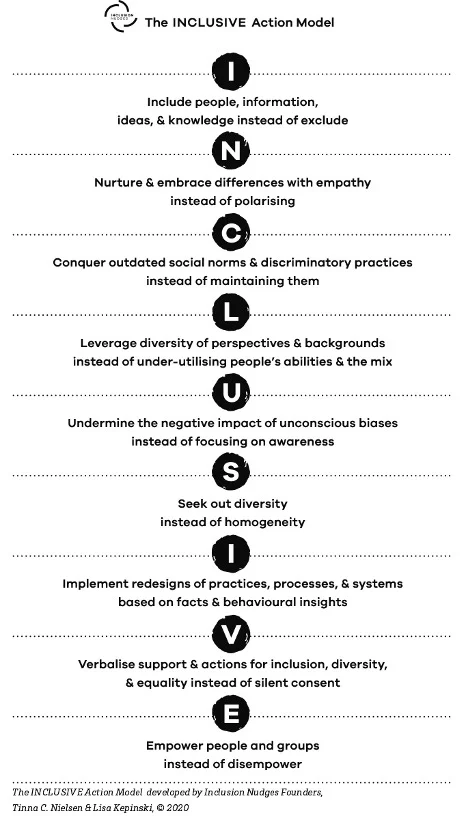
Achieving an inclusive recovery necessitates a deliberate and comprehensive integration of Diversity, Equity, and Inclusion (DEI) principles into every facet of organizational strategy and public policy. For organizations, this means moving beyond performative gestures to implement systemic changes that address root causes of inequity. It involves:
- Re-evaluating compensation and benefits: Ensuring fair pay, comprehensive health benefits, and robust support systems that acknowledge the diverse needs of a modern workforce, including caregiving responsibilities and mental health support.
- Cultivating truly inclusive cultures: Creating environments where every employee feels valued, respected, and has opportunities to thrive, regardless of their background or identity. This includes actively addressing microaggressions, unconscious biases, and fostering psychological safety through transparent communication and responsive leadership.
- Investing in skills development and reskilling: Providing accessible pathways for upward mobility, especially for those in low-paid or vulnerable positions, to equip them with the skills needed for future jobs and to bridge existing talent gaps.
- Adopting flexible and adaptable work models: Moving beyond rigid structures to embrace hybrid, remote, and flexible schedules that cater to diverse employee needs, enhancing work-life balance and accessibility, which have proven to be significant drivers of employee satisfaction and retention.
- Strengthening employee voice and engagement: Establishing robust mechanisms for employees to provide feedback, contribute to decision-making, and voice concerns without fear of retribution, fostering a sense of ownership and belonging.
- Addressing the "rage quitting" drivers: Proactively identifying and rectifying negative work environments, excessive workloads, and poor management practices through regular employee surveys, exit interviews, and leadership training.
For policymakers, an inclusive recovery implies targeted interventions to support marginalized groups, invest in public services, and create regulatory frameworks that protect worker rights and promote equitable labour practices. This includes robust social safety nets, accessible education and training programs, and policies that combat discrimination in hiring and promotion, ensuring that the economic recovery reaches those who need it most.
Broader Implications and the Future of Work
The shifts observed in the "People" dimension of work during the pandemic are not transient anomalies but herald a new era. The heightened employee expectations around purpose, well-being, flexibility, and inclusion are likely to endure and intensify, becoming permanent features of the modern labour market. Organizations that proactively embrace these changes, rather than merely reacting to them, will be better positioned to attract and retain top talent, foster innovation, and build resilient workforces capable of navigating future disruptions.
The pandemic has undeniably accelerated conversations around the ethical dimensions of work, the social contract between employers and employees, and the role of businesses in fostering societal well-being. It has highlighted that a thriving economy is inextricably linked to a thriving workforce, and that prioritizing human capital is not just a cost center but a strategic investment. The challenges of the Great Resignation and the Great Divergence compel a re-imagining of work that is more human-centric, equitable, and sustainable. This moment, fraught with both crisis and opportunity, offers a profound chance to forge a future of work that truly serves all people, ensuring that progress is inclusive and benefits society as a whole.