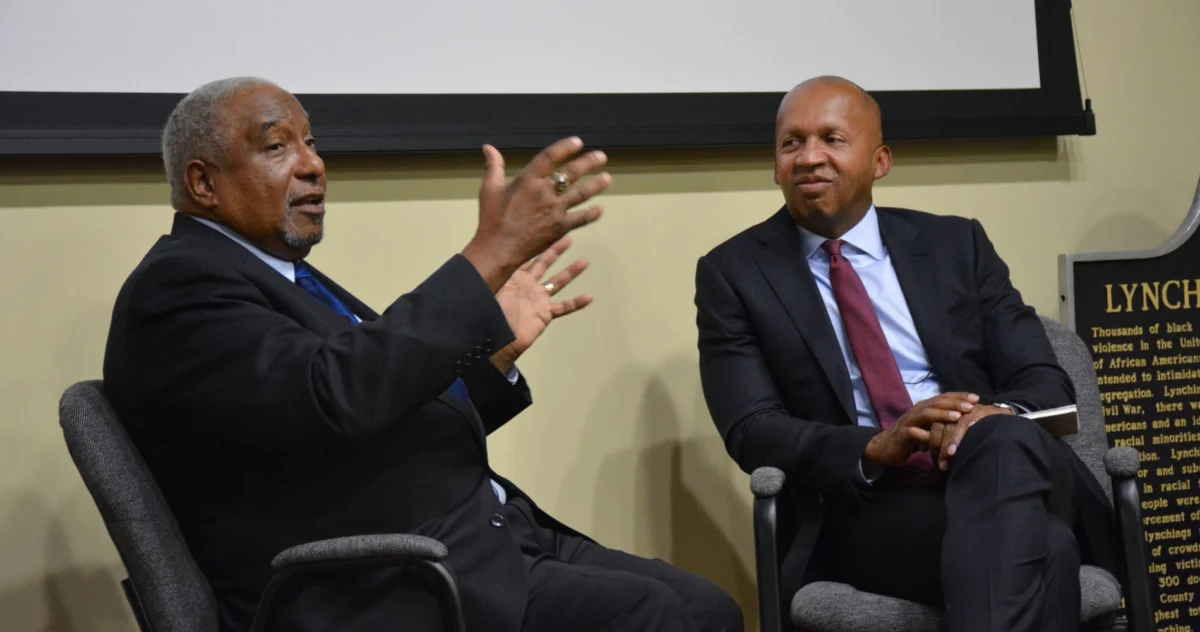
Dr. Bernard LaFayette Jr., a towering figure in the American Civil Rights Movement whose unwavering commitment to nonviolence laid critical groundwork for the Selma voting rights campaign and shaped generations of activism, passed away on March 5 at his home in Tuskegee, Alabama, following a heart attack. He was 85. Dr. LaFayette’s life was a testament to the transformative power of strategic nonviolent action, a philosophy he championed from the segregated streets of his youth to the international stage, ultimately contributing significantly to the passage of the landmark Voting Rights Act of 1965 and inspiring countless movements for social change worldwide.
Born in Tampa, Florida, in 1940, Bernard LaFayette Jr. came of age in the deeply entrenched system of racial segregation that defined the American South. This era, governed by Jim Crow laws, systematically denied African Americans fundamental rights and opportunities, enforcing racial hierarchy through legal statutes and widespread violence. Public spaces, including transportation, schools, and even water fountains, were rigidly segregated under the guise of "separate but equal," a doctrine upheld by the Supreme Court’s Plessy v. Ferguson decision in 1896. For Black citizens, this meant constant humiliation and the ever-present threat of violence for transgressing arbitrary racial boundaries.
A pivotal moment that irrevocably shaped LaFayette’s commitment to justice occurred when he was just seven years old. He recounted this traumatic experience in his memoir, In Peace and Freedom: My Journey in Selma. While riding a segregated streetcar in downtown Tampa with his maternal grandmother, Rozelia Forrester, affectionately known as Ma Foster, he witnessed firsthand the brutality of the system. Black passengers were forced to pay their fare at the front of the trolley, then exit and reboard through the back door. As Ma Foster and young Bernard attempted to reboard, the trolley driver abruptly pulled away, knocking his grandmother to the ground. The sight of his beloved grandmother’s fall inflicted a profound emotional wound. "I felt like a sword cut me in half," he wrote, "and I vowed I would do something about this problem one day." This incident, he later recalled, "was the moment that caused me to decide that I was going to use my life to fight against the segregation system." His resolve manifested early; by age 12, he had joined the National Association for the Advancement of Colored People (NAACP), an organization at the forefront of the legal battle against segregation.
The Nashville Movement: Forging a Nonviolent Path
Ma Foster’s influence extended beyond instilling a sense of justice; she also insisted that her grandson pursue ministry, leading him to enroll at the American Baptist Seminary in Nashville. It was there, as a 19-year-old freshman, that LaFayette found his calling and the intellectual framework for his burgeoning activism. Nashville, at the time, was becoming a crucial training ground for the burgeoning Civil Rights Movement. Under the tutelage of the Rev. James Lawson, a disciple of Mahatma Gandhi’s philosophy of nonviolent resistance, and through workshops at the legendary Highlander Folk School (which had previously trained activists like Rosa Parks), LaFayette and his roommate, John Lewis, immersed themselves in the principles and tactics of nonviolent direct action.
These workshops were not mere academic exercises; they were rigorous preparations for confronting entrenched racism. Students learned how to absorb physical and verbal abuse without retaliating, how to maintain dignity in the face of provocation, and how to use their moral courage to expose the injustice of segregation. Armed with this training, LaFayette, Lewis, Diane Nash, James Bevel, and other young activists launched a groundbreaking sit-in campaign in early 1960. Targeting segregated lunch counters in downtown Nashville, they faced arrests, violence, and intimidation. However, their unwavering commitment to nonviolence, coupled with strategic economic boycotts, ultimately forced city leaders to desegregate downtown businesses, making Nashville the first major Southern city to do so. This success catapulted LaFayette and his peers into national prominence within the movement, leading them to become foundational members of the Student Nonviolent Coordinating Committee (SNCC), which they helped establish in April 1960. SNCC quickly distinguished itself as a youth-led, grassroots organization committed to direct action and empowering local communities.
Challenging Interstate Segregation: The Freedom Rides
The struggle against segregation extended beyond local businesses. In 1960, the Supreme Court, in Boynton v. Virginia, ruled that segregation in interstate bus travel was unconstitutional. However, like many landmark rulings, its enforcement remained elusive. In late 1960, LaFayette and John Lewis, while traveling home for Christmas break on a Greyhound bus, decided to test the ruling. They integrated the front of the bus, refusing to move to the back, even as the enraged driver repeatedly stormed off the bus at every stop, threatening to return with law enforcement. President Barack Obama, in his 2020 eulogy for John Lewis, recounted this incident, marveling at "the courage of two people… on their own, to challenge an entire infrastructure of oppression. Nobody was there to protect them. There were no camera crews to record events." This solitary act of defiance foreshadowed the larger, more perilous campaigns to come.
The following year, in May 1961, the Congress of Racial Equality (CORE) initiated the Freedom Rides, an organized effort to test the enforcement of Boynton v. Virginia across the Deep South. The first group of Freedom Riders faced horrific violence, with their buses attacked and burned by white mobs in Anniston and Birmingham, Alabama. Despite the extreme danger, LaFayette, Lewis, and other members of the Nashville movement, recognizing the critical importance of continuing the mission, decided to resume the Rides. Their journey led them to Montgomery, Alabama, on May 20, 1961. There, at the Greyhound station, a mob of over 300 white assailants, promised several minutes of impunity by local police, brutally attacked the Riders with baseball bats, hammers, and pipes. Police stood by, offering no protection. LaFayette, consistent with his training, refused to retaliate. "We didn’t run; we didn’t fight back," he wrote in his memoir. "We got back up when slammed to the ground, and looked our attackers directly in the eyes, fighting violence with nonviolence."
From Montgomery, the Freedom Riders pressed on to Jackson, Mississippi, where LaFayette was arrested and held for over a month in the infamous Parchman Farm prison. Parchman, known for its brutal conditions and forced labor, became a crucible for hundreds of young civil rights activists, solidifying their resolve and forging deep bonds of solidarity. The experience convinced LaFayette to leave college and dedicate himself full-time to the movement. Reflecting on this period later, he told The Associated Press in 2021, "We lived through this, but this was our daily lives. When you think about it, we weren’t trying to make history or trying to rewrite history. We were responding to the problems of the particular time." This humility underscored the immediate, urgent nature of their struggle against systemic injustice.
The Selma Campaign: Architect of Voting Rights
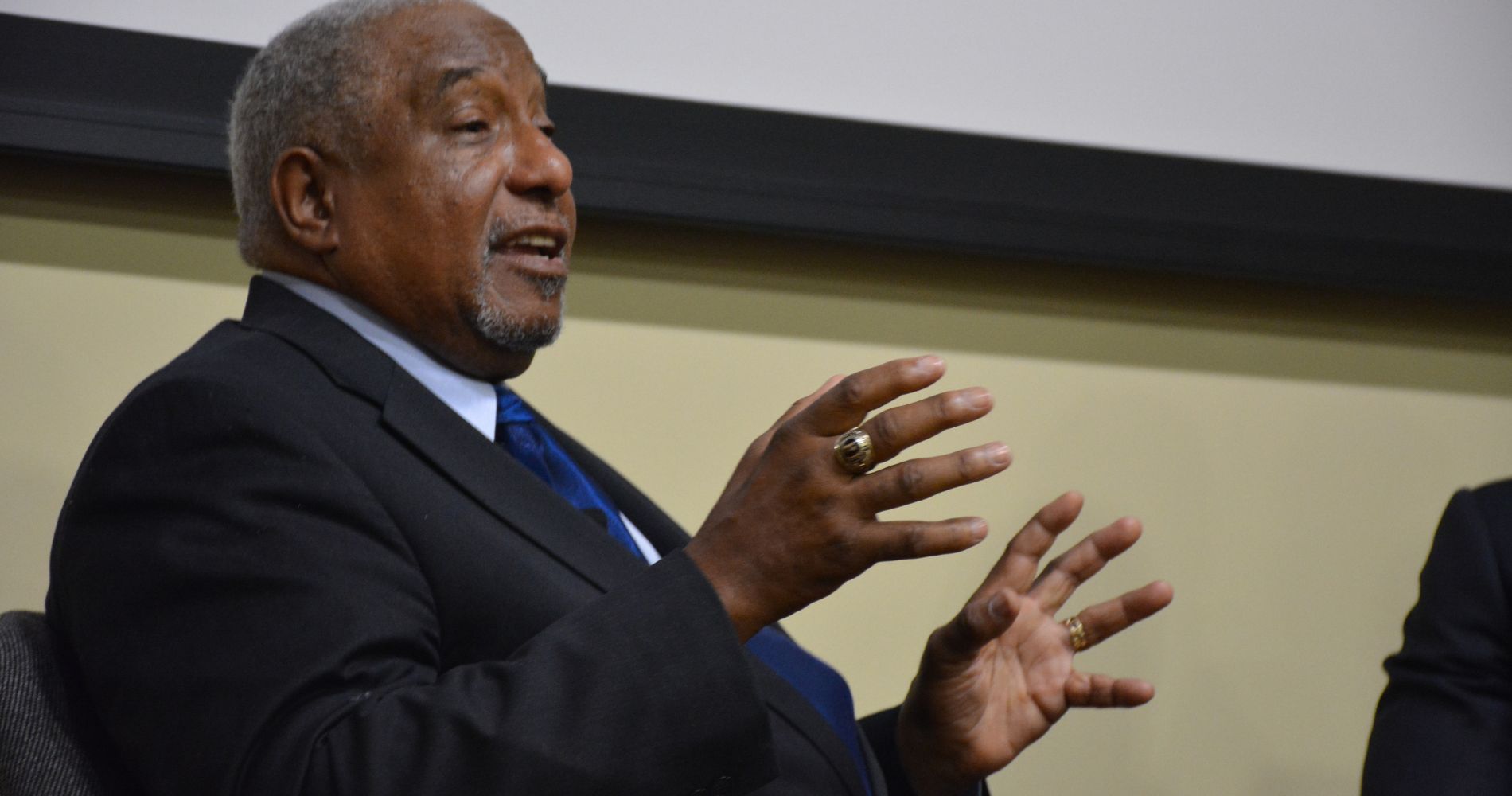
As SNCC expanded its voter registration projects across the South, Selma, Alabama, was initially deemed too perilous due to its deeply entrenched white supremacist power structure and history of violence against Black residents. However, Dr. LaFayette, undeterred, declared, "I’ll take Selma," to SNCC leader Jim Forman. In 1963, he and his wife, Colia Liddell Lafayette, herself a prominent civil rights activist, moved to the city. As director of SNCC’s Alabama Voter Registration Campaign, LaFayette embarked on the painstaking, dangerous work of organizing. He understood that lasting change required empowering local communities and fostering indigenous leadership. He worked closely with existing local organizations, such as the Dallas County Voters League, founded in the 1930s by S.W. and Amelia Boynton, cultivating trust and building momentum through quiet, door-to-door canvassing. This meticulous effort of "developing local leadership and to bring various levels of leadership together in a way that they were able to sustain themselves through the struggle" was crucial.
The environment in Selma was intensely hostile. Black citizens attempting to register to vote faced poll taxes, literacy tests, intimidation, economic retaliation, and violence. Registrars deliberately made the process impossible, often requiring impossible questions or arbitrary rejection. LaFayette’s work was fraught with constant threats. On June 12, 1963, in a chillingly coordinated attack on civil rights workers that also saw Medgar Evers assassinated in his Mississippi driveway, Dr. LaFayette was brutally beaten outside his Selma home by a white man armed with a gun. When his neighbor emerged with a rifle, LaFayette, demonstrating extraordinary courage and adherence to his nonviolent principles, stepped between the two armed men. He felt "an extraordinary sense of internal strength instead of fear." He persuaded his neighbor not to shoot and looked his assailant directly in the eyes, embodying his belief that nonviolence was "a fight to win that person over, a struggle of the human spirit." The next day, he wore his bloodied shirt to work, a defiant symbol that he would not be intimidated. By 1965, Dr. LaFayette had been arrested 10 times in four Southern states and subjected to numerous beatings by both white civilians and law enforcement.
LaFayette’s tireless organizing in Selma laid the essential groundwork for the historic Selma to Montgomery marches. While he was in Chicago working on a new project for Dr. Martin Luther King Jr. on March 7, 1965, the world witnessed "Bloody Sunday." State and local police brutally attacked hundreds of peaceful civil rights protesters on the Edmund Pettus Bridge with billy clubs, whips, and tear gas, stopping their planned march to Montgomery. The televised images of this horrific violence shocked the nation and galvanized public opinion, swaying lawmakers and President Lyndon B. Johnson to push for comprehensive voting rights legislation. LaFayette immediately organized a contingent of activists from Chicago to travel to Selma, joining thousands of demonstrators for the climactic 54-mile march to Montgomery two weeks later. This collective action, born from LaFayette’s years of grassroots organizing and fueled by the national outrage over Bloody Sunday, directly led to the signing of the Voting Rights Act on August 6, 1965. This landmark legislation outlawed discriminatory voting practices, fundamentally transforming American democracy by ensuring equal access to the ballot box for African Americans.
Beyond Selma: A Global Advocate for Nonviolence
Dr. LaFayette’s work did not end with the Voting Rights Act. He continued his activism with the Southern Christian Leadership Conference (SCLC) in Chicago, where he trained young Black leaders in the Chicago Freedom Movement. His efforts there had far-reaching implications, notably organizing tenant unions that, according to Mary Lou Finley, a professor emeritus at Antioch University Seattle who worked with him, directly contributed to "the tenant protections we have today." He also successfully persuaded the city of Chicago to implement the nation’s first mass screening for lead poisoning, demonstrating his expansive vision for social justice that encompassed economic, housing, and health equity.
In 2015, during a discussion with Bryan Stevenson of the Equal Justice Initiative (EJI), Dr. LaFayette recounted how Dr. King personally asked him to become the national coordinator for the Poor People’s Campaign in 1968. King’s words were stark: "This is going to be my last campaign. And we are going for broke." LaFayette immediately headed to Atlanta to formulate the campaign’s strategy, which aimed to unite diverse impoverished communities across racial lines to demand economic justice. Tragically, Dr. LaFayette was in Memphis with Dr. King on the morning of King’s assassination on April 4, 1968. In their final conversation, King instructed him on the vital need "to institutionalize and internationalize nonviolence." LaFayette devoted the rest of his life to fulfilling this directive.
After completing his bachelor’s degree at American Baptist and earning a master’s and doctorate from Harvard University, Dr. LaFayette became a preeminent scholar and practitioner of nonviolence. He led the Center for Nonviolence and Peace Studies at the University of Rhode Island, chaired the Consortium on Peace Research, and conducted extensive nonviolence training programs in Latin America, South Africa (working with the African National Congress), and Nigeria. Former U.S. Ambassador to the United Nations Andrew Young aptly described him as a "global prophet of nonviolence," noting that LaFayette "literally went everywhere he was invited." SNCC recognized him as "one of the most widely recognized authorities on strategies for nonviolent social change and one of the leading exponents of nonviolent direct action in the world."
A Lasting Legacy of Courage and Compassion
Tributes poured in from across the nation, underscoring Dr. LaFayette’s profound impact. On the House floor, U.S. Rep. Terri Sewell of Alabama honored him as an "extraordinary man who had extraordinary talents and extraordinary courage," praising him for having "placed himself on the front lines of the struggle for civil rights, risking life and limb to challenge injustice and dismantle segregation across the South." She emphasized that his close collaboration with Dr. King "helped to advocate a philosophy of nonviolent social change that moved our nation closer to its founding promise of liberty and justice for all."
Steven Reed, the first Black Mayor of Montgomery, Alabama, issued a statement recognizing LaFayette’s indelible mark: "Generations of Americans have the right to vote today because Bernard LaFayette refused to yield to fear. His example challenges each of us to stand firm in the face of injustice, to lead with compassion, and to carry forward the work he and so many others began. We honor his legacy not only with our words, but with our continued commitment to building a more just, equitable, and hopeful future."
Dr. Bernard LaFayette Jr.’s life story is a powerful narrative of resilience, moral courage, and strategic vision. From a childhood marked by the sting of segregation to becoming a global ambassador for peace, he consistently demonstrated that nonviolence is not passivity but a potent force for systemic change. His work in Nashville and Selma, meticulously organizing, training, and inspiring, provided the essential foundation for some of the Civil Rights Movement’s most significant victories. The Voting Rights Act of 1965, which transformed the political landscape of the South and the nation, stands as a direct testament to the seeds he sowed.
His dedication to institutionalizing nonviolence globally ensured that the lessons learned in the crucible of the American South would empower liberation movements worldwide. He taught that confronting injustice with love, discipline, and strategic action could dismantle even the most entrenched systems of oppression. Dr. LaFayette’s own philosophy, articulated in his memoir, offered a poignant reflection on his dangerous life as an activist: the value of life "lies not in longevity, but in what people do to give it significance." By this measure, Dr. Bernard LaFayette Jr. lived a life of immeasurable significance, leaving an enduring legacy that continues to inspire the pursuit of justice, equality, and peace for all.