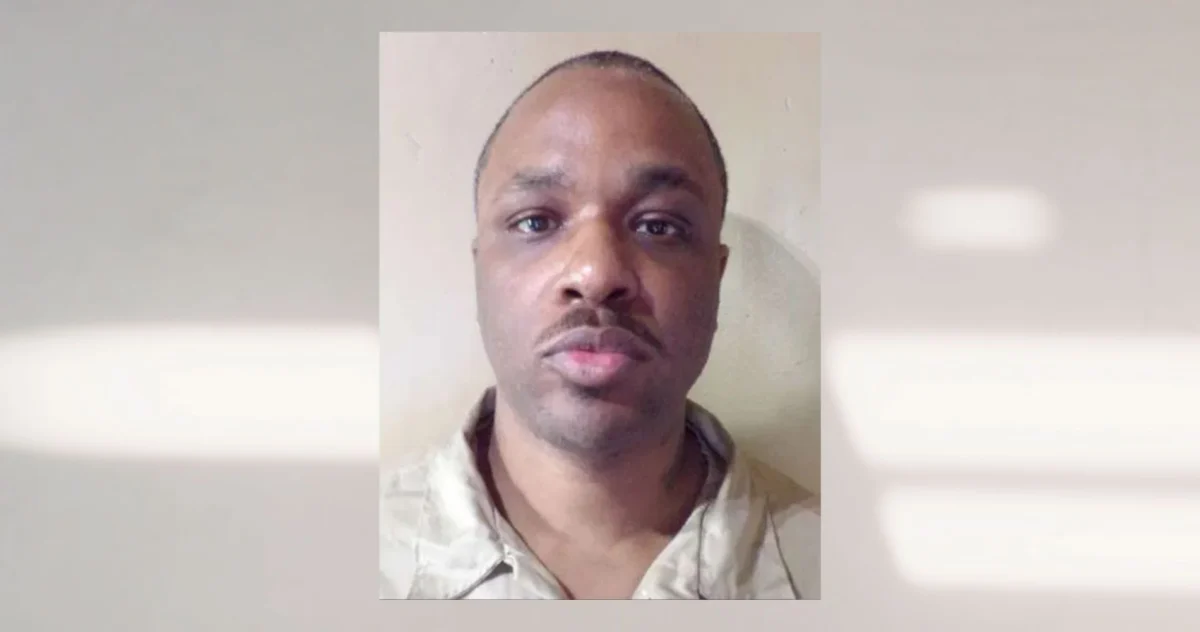
In a significant development for Alabama’s capital punishment system, Governor Kay Ivey today commuted the death sentence of Charles "Sonny" Burton to life without parole, correcting a death sentence that had long been cited as a stark example of the arbitrariness and potential for injustice within the state’s application of capital punishment. Burton, 75, had spent more than three decades on Alabama’s death row for a 1991 robbery that resulted in a death, despite the undisputed fact that he never pulled the trigger and the actual shooter had previously had his own death sentence overturned and commuted to life without parole. The decision by Governor Ivey comes after extensive appeals from jurors who sentenced Burton, the victim’s own daughter, and a broad coalition of legal advocates who argued that Burton’s case represented an extreme outlier in capital sentencing.
The 1991 Crime: A Detailed Account
The case stems from a violent robbery that occurred on October 22, 1991, at an auto parts store in Talladega, Alabama. Charles "Sonny" Burton was one of six men involved in the heist. According to court records and subsequent investigations, the plan involved robbing the store. During the course of the robbery, customer Doug Battle was fatally shot. Crucially, it was established and undisputed that Burton had already exited the store when Derrick DeBruce, another participant in the robbery, fired the shot that killed Mr. Battle. Burton’s legal team consistently argued that he was not only not the shooter, but he also did not order, solicit, or even witness the shooting take place, having already left the immediate vicinity of the fatal encounter. This distinction became central to the protracted legal battle over his sentence.
Under Alabama law, as in many states, individuals can be charged with capital murder under the "felony murder rule" even if they did not directly commit the killing, provided they were a participant in a felony that resulted in a death. This legal principle allows for accomplice liability, meaning that those involved in a dangerous felony that foreseeably leads to a death can be held equally responsible for capital murder, regardless of who pulled the trigger. It was under this framework that Charles Burton, along with the other five men, was charged with capital murder for Doug Battle’s death.
The Legal Labyrinth: Burton’s Path to Death Row
Following the 1991 crime, all six individuals involved faced capital murder charges. However, the outcomes of their cases varied dramatically, highlighting what critics describe as systemic inconsistencies in the application of justice. The State of Alabama reached plea agreements with four of the men, allowing them to avoid the death penalty entirely. This left Charles Burton and Derrick DeBruce as the only two facing the ultimate penalty.
Charles Burton was convicted of capital murder in 1992 and subsequently sentenced to death. His conviction was predicated on his participation in the robbery, even though he was not the direct perpetrator of the homicide. For over three decades, Burton navigated the complex and often slow-moving appeals process of the U.S. judicial system, his life hanging in the balance. During this period, his case drew increasing scrutiny from legal scholars, human rights advocates, and even some of the very jurors who had originally condemned him.
The Shooter’s Fate: A Disparate Outcome
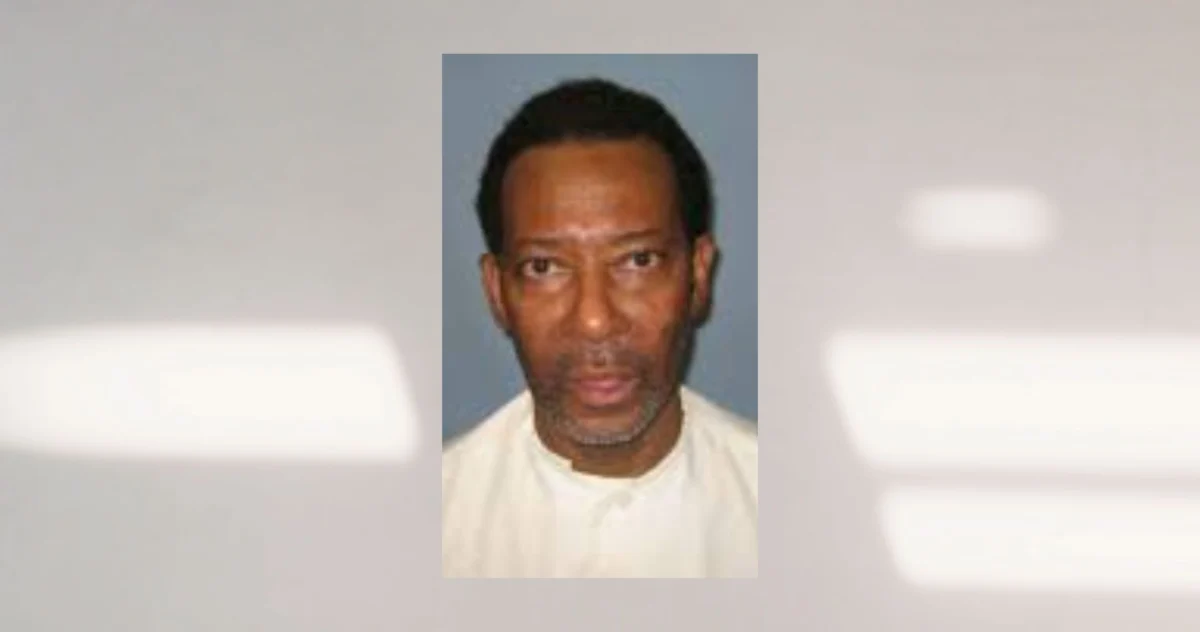
The disparity in sentencing became particularly pronounced with the case of Derrick DeBruce, the individual identified as the actual shooter of Doug Battle. DeBruce was also sentenced to death. However, in 2014, a federal court intervened, overturning his death sentence. The court found that DeBruce’s constitutional rights had been violated during his original trial, leading to a resentencing. In a critical development, the State of Alabama subsequently agreed that DeBruce should be resentenced to life without parole.
This decision created a stark and arguably untenable situation: the person who physically committed the murder was no longer facing execution, while Charles Burton, who did not pull the trigger and was not even present for the shooting, remained on death row. This unique circumstance led legal experts and advocates to label Burton’s case as an "extreme outlier" among capital punishment cases, underscoring the arbitrary nature that can plague the system. As Matt Schulz, Burton’s lawyer, succinctly put it, "Not only did he not kill anyone, but he didn’t order anyone to kill anyone. He didn’t hire anyone to kill anyone. He didn’t tell anyone to kill anyone. He literally did not even see anyone kill anyone." The argument was clear: if the shooter was spared execution, it was fundamentally unjust to execute an accomplice with lesser culpability.
Jurors’ Plea: A Call for Justice and Reflection
Perhaps one of the most compelling aspects of Charles Burton’s clemency petition was the extraordinary intervention of the jurors who had originally sentenced him to death in 1992. Six of the eight living jurors who voted for the death penalty expressed no opposition to his sentence being commuted to life without parole. More significantly, at least three jurors explicitly wrote to Governor Ivey, urging her to grant clemency.
Priscilla Townsend, one of these jurors, voiced her profound disappointment and concern. "It’s absolutely not fair. You don’t execute someone who did not pull the trigger," she told The Associated Press. While Townsend stated she still believes in the death penalty "for the worst of the worst," she firmly asserted that Burton did not fit that description. In a powerful op-ed, she wrote, "I am deeply disappointed in how this case has slipped through the cracks, and am concerned about Alabama’s system of justice if it allows Mr. Burton’s execution."
Another juror, James Cottongim, echoed these sentiments in his letter to the governor, stating that while the crime was terrible, it would be "very unjust" for Burton to be executed when the actual shooter was resentenced to life. "Since Mr. Burton was not the man who pulled the trigger, it just seems wrong that he should be put to death when the shooter was resentenced to life," he wrote, concluding that "Our original sentence of death is just no longer appropriate given the circumstances." The collective voice of the jurors, expressing remorse and a reconsideration of their original verdict in light of new circumstances, added immense moral weight to the clemency appeal, highlighting a growing discomfort with the finality of capital punishment when new facts emerge or legal standards evolve.
A Daughter’s Voice: Empathy from a Victim’s Family
Further strengthening the case for clemency was the unexpected and poignant plea from Tori Battle, the daughter of the victim, Doug Battle. Nine years old at the time of her father’s death, Tori Battle urged Governor Ivey to grant clemency to Burton, articulating a perspective focused on healing rather than retribution. "I do not see how this execution will contribute to my healing," she wrote to the governor. "My father, Doug Battle, was many things. He was strong, but he valued peace. He did not believe in revenge. And in that way, I am very much his daughter…I hope you will consider extending grace to Mr. Burton and granting him clemency."
Her statement, read to Burton’s loved ones and supporters at a gathering in Montgomery, underscored a growing trend among some victims’ families who, having endured immense loss, choose to advocate for mercy rather than execution. This stance challenges conventional narratives surrounding capital punishment, suggesting that for some, true justice and healing do not necessarily align with the state-sanctioned killing of an offender, particularly one whose direct culpability in the homicide is questionable.
Humanitarian Concerns: Burton’s Declining Health
Beyond the legal and ethical arguments, humanitarian concerns surrounding Charles Burton’s advanced age and deteriorating health also played a significant role in the clemency appeals. At 75 years old, Burton is frail and in failing health. His sister, Eddie Mae Ellison, described his condition to The Associated Press, noting his debilitating rheumatoid arthritis, which causes him immense pain and restricts his movement. His attorney further detailed that Burton primarily uses a wheelchair and is required to wear a state-issued helmet due to frequent falls, indicative of his severe physical decline.
Despite these grave health issues, the State of Alabama had moved to execute Burton. In January, the Alabama Supreme Court authorized the governor to set an execution date, and Governor Ivey had scheduled his execution by nitrogen suffocation for March 12. The prospect of executing an elderly, infirm man, particularly one who did not directly commit the murder, raised significant ethical questions about the state’s pursuit of capital punishment. It highlighted the potential for executions to become cruel and unusual in practice, even if not in legal theory, when applied to individuals suffering from severe physical ailments.
Alabama’s Capital Punishment Landscape: Context and Controversy
Alabama has a long and complex history with capital punishment, often standing out for its high rate of executions and the unique aspects of its death penalty statute. Historically, Alabama was one of the few states where judges could override a jury’s sentencing recommendation, often imposing a death sentence even when a jury recommended life imprisonment—a practice that has since been abolished. The state has also faced persistent criticism for its methods of execution, its legal aid for indigent defendants, and the perceived arbitrariness in how capital cases are prosecuted and sentenced.
Governor Kay Ivey has presided over the executions of 25 people during her nine years as governor, a number that places her among state executives with the highest execution rates since the death penalty was reinstated in 1976. This track record makes her decision to grant clemency to Charles Burton particularly noteworthy. While she has generally allowed executions to proceed, there have been rare instances of intervention. Last year, for example, she commuted the death sentence of Robin "Rocky" Myers to life in prison without parole, citing "considerable questions" about his guilt. This prior action set a limited precedent for executive clemency in cases where significant doubts or mitigating factors arise.
Comparatively, other Republican governors in states with active death penalties, such as Oklahoma’s Governor Kevin Stitt, have also granted clemency in similar "outlier" cases where justice appeared to be fundamentally misaligned, further emphasizing that such interventions are not unprecedented across the political spectrum or within states that support capital punishment.
Governor Ivey’s Decision: A Rare Exercise of Clemency
Governor Ivey’s decision to commute Charles Burton’s sentence to life without parole marks a significant moment for Alabama’s justice system. It represents a rare exercise of executive clemency in a state known for its firm stance on capital punishment. While the governor’s office did not issue an extensive statement beyond the commutation, the decision implicitly acknowledges the profound issues raised by Burton’s case: the arbitrariness of sentencing, the disparity in outcomes for co-defendants, the compelling appeals from jurors, the victim’s family, and the humanitarian concerns surrounding an elderly, ailing inmate.
This action suggests a recognition that the principles of justice, particularly the reservation of the death penalty for the "worst of the worst," were not adequately met in Burton’s situation. It avoids what many perceived as an impending and profound injustice, where an individual with demonstrably lesser culpability than the actual perpetrator would have been executed. The decision ensures that Burton will spend the remainder of his life incarcerated, held accountable for his role in the tragic events of 1991, but without the ultimate penalty that was increasingly seen as disproportionate and unjust.
Broader Implications for Capital Punishment
The commutation of Charles Burton’s death sentence carries broader implications for the debate surrounding capital punishment, both in Alabama and across the United States. Firstly, it reinforces arguments about the inherent arbitrariness that can plague the death penalty system. When co-defendants with varying degrees of culpability receive vastly different sentences, or when the actual killer is spared while an accomplice faces execution, it erodes public confidence in the fairness and consistent application of justice.
Secondly, the active participation and remorse expressed by the original jurors underscore the evolving standards of decency and understanding within society regarding capital punishment. It highlights that the finality of a death sentence can become problematic when new information or perspectives emerge over time, even decades after the original trial. This case may encourage more robust post-conviction review processes and greater scrutiny of accomplice liability in capital cases.
Finally, Governor Ivey’s decision, following her commutation of Rocky Myers’ sentence, suggests a potential, albeit cautious, willingness to use executive clemency as a failsafe mechanism in the face of compelling evidence of injustice or disproportionate sentencing. While not signaling a broad shift away from capital punishment in Alabama, it indicates that certain "extreme outlier" cases, particularly those involving questions of direct culpability and disparate treatment, can still prompt a re-evaluation at the highest executive level.
Conclusion: A Precedent in Alabama’s Justice System
The commutation of Charles "Sonny" Burton’s death sentence closes a chapter on a case that had become a potent symbol of the complexities and controversies surrounding capital punishment in Alabama. By opting for life without parole, Governor Ivey has averted an execution that many believed would have been a grave miscarriage of justice. This decision not only brings a measure of resolution to Burton and his family but also serves as a critical point of reflection for Alabama’s legal system, prompting ongoing discussions about fairness, consistency, and the fundamental principles that should guide the application of the ultimate penalty. The case of Charles Burton will undoubtedly be cited for years to come as a testament to the persistent challenges of ensuring equitable justice within the framework of capital punishment.