The language and definitions employed in initiatives aimed at fostering Diversity, Equity, Belonging, and Inclusion (DEBI) are not merely semantic choices but profoundly shape their reception, engagement, and ultimate success or failure within organizations and broader society. An often-overlooked aspect of DEBI work is the inherent power of words to either unlock collaborative potential or erect invisible barriers, leading to widespread disengagement and skepticism. This phenomenon, which can be likened to setting "hidden tripwires," underscores a fundamental challenge: without a clear, shared understanding of these core concepts, even the most well-intentioned efforts risk becoming inert or, worse, counterproductive.
The Semantic Minefield: Why Words Trigger Disengagement
Imagine the internal monologue of employees when confronted with terms like "diversity," "equity," or "inclusion." Do they conjure images of progress and opportunity, or do they evoke a resigned "Uhhh!" or a dismissive "Blah blah blah!"? Decades of observation in the field reveal common, problematic patterns of thought and feeling that words can trigger. For instance, an employee might think, "Oh, diversity isn’t my issue! It only applies to people from the minority groups, not me!" This immediate self-exclusion indicates a fundamental misinterpretation, suggesting that diversity is an ‘other’ problem rather than a collective endeavor.
Similarly, reactions such as, "I am the one being discriminated against. Don’t ask me how to fix it – it’s your problem" (often from minority groups directed at majority groups), or conversely, "You’re diverse, so you need to fix it – it’s your problem" (from majority to minority groups), highlight a deep-seated lack of shared ownership and responsibility. The perception that "Diversity and inclusion are not my day job, so I don’t really have time for that. Someone else has got to fix it" further illustrates a compartmentalization that prevents integration into core business functions. Phrases like "Let’s make sure we attract some diversity talent" (implying only minorities or women) or "If we are going to promote women and minorities, then we have to exclude others" (implying white men) reveal a prevalent "zero-sum game" mentality that frames DEBI as a competitive struggle rather than a mutually beneficial endeavor. These reactions are not isolated incidents but reflect systemic issues in how DEBI initiatives have been historically presented and perceived.
The Psychology of Language: Unveiling Unconscious Biases
The profound impact of words is well-documented in cognitive science. Language is not just a tool for communication; it shapes our perceptions, influences our behaviors, and molds our cultures. Research into the "priming effect" demonstrates how words, even when encountered unconsciously, can subtly alter our thoughts and subsequent actions. A classic study illustrated this by exposing participants to words associated with the elderly (e.g., "wrinkle," "forgetful"); these individuals subsequently walked slower than a control group exposed to neutral words. This unconscious influence underscores how the persistent use of certain DEBI terminology can inadvertently activate negative associations or stereotypes. For instance, attempts to counter stereotypes by stating "girls are as good as boys at math" have sometimes backfired, inadvertently reinforcing the underlying false belief that boys are inherently better.
Beyond shaping perception, words carry emotional weight that can powerfully drive unconscious thinking and decision-making. In the context of DEBI, this emotional trigger can create significant barriers to engagement.
- The Fear of Loss (Loss Aversion): If DEBI is framed as a zero-sum game, where one group’s gain necessitates another’s loss, it triggers loss aversion—a well-established cognitive bias where individuals are more motivated to avoid a loss than to achieve an equivalent gain. This perception can lead to resistance against change, as individuals fight to maintain the status quo, fearing a diminution of their own power or privilege. Studies consistently show that individuals perceive DEBI efforts as a threat if they believe it will dilute their existing advantages.
- Strengthening Tribalism (In-Group/Out-Group Dynamics): Words can also activate an instinctive tribal mentality, particularly when interactions involve "out-group" members. This can create an unconscious, irrational fear or anxious reaction, leading individuals to unintentionally exclude information or perspectives shared by those perceived as outsiders. Conversely, they may disproportionately trust and process information from "in-group" members, fostering an environment where diverse perspectives are neither sought nor valued, undermining the very essence of inclusion.
- The Shadow of Shame: A powerful, often unspoken, emotional impact in DEBI work is the feeling of shame. Some individuals may experience this when confronted with DEBI language, stemming from past accusations of discrimination (even unintentional) or from a sense of guilt over their privilege and inaction in the face of inequality. This shame can manifest as unconscious attacks or micro-aggressions against those who trigger these feelings, inadvertently creating a hostile environment and stalling genuine progress.
These psychological responses demonstrate that without careful consideration of language, DEBI initiatives can inadvertently alienate key stakeholders, perpetuate existing biases, and hinder the very change they aim to achieve.
The Peril of Ambiguity: When Definitions Diverge
A critical "hidden tripwire" in DEBI work is the frequent absence of formally articulated definitions for "diversity," "equity," "belonging," and "inclusion." Organizations often assume a common understanding, yet individuals’ interpretations are profoundly shaped by their unique lived experiences, social constructs, and knowledge. This results in widely divergent mindsets that directly impact who engages, how they engage, and the effectiveness of their actions.
For some, "diversity" might solely refer to gender balance or racial representation; for others, it might encompass neurodiversity, socioeconomic background, or cognitive styles. Similarly, "inclusion" could be narrowly interpreted as organizing "diversity networks," while others might understand it as actively leveraging a diversity of perspectives in decision-making processes. "Equity" might be reduced to simply setting "diversity hiring targets," rather than addressing systemic barriers to fair treatment and opportunity. When these foundational terms lack a unified, comprehensive framework, expecting aligned actions and consistent progress becomes an "absurd reality." A 2022 survey by McKinsey & Company revealed that only 35% of surveyed employees felt their organization had clear, shared definitions for DEBI, highlighting a significant disconnect between leadership intent and employee understanding. This ambiguity often leads to fragmented efforts, duplicated work, and ultimately, stalled progress.
A Historical Perspective on DEBI Framing
The evolution of DEBI initiatives offers a chronological context to the current challenges. Early diversity efforts, particularly in the mid-20th century, often focused on compliance and legal mandates, primarily addressing racial and gender discrimination. The language used was typically legalistic and focused on "affirmative action" or "equal opportunity," often perceived as quotas or preferential treatment. This framing contributed to the "zero-sum game" perception, where advancements for one group were seen as detrimental to another.
In the late 20th and early 21st centuries, the focus expanded to "diversity and inclusion," recognizing the need not just for representation but also for creating environments where diverse individuals could thrive. However, the language remained largely abstract, often emphasizing "business cases for diversity" without clearly articulating how individuals contribute or benefit. The recent addition of "equity" and "belonging" reflects a more nuanced understanding, aiming to address systemic inequalities and the individual’s psychological experience within an organization. Yet, even these more sophisticated concepts can fall victim to ambiguous framing, leading to the same pitfalls of misunderstanding and resistance. The journey highlights a consistent challenge: moving beyond buzzwords to actionable, universally understood principles.
Crafting a Unified Framework: The Inclusion Nudges Approach to DEBI Definitions
Recognizing these challenges, the Inclusion Nudges global initiative, founded by Lisa and Tinna, has developed a set of robust definitions designed to guide action and foster genuine engagement. These definitions serve as "guiding stars" for creating inclusive workplaces, communities, and societies:
- Diversity: The Mix of All of Us. This definition transcends narrow interpretations, emphasizing that diversity encompasses all people, their demographic differences, backgrounds, multiple identities, unique experiences, perspectives, knowledge, abilities, and ideas. It explicitly moves away from referencing only "the minority," positioning diversity as a universal characteristic of humanity.
- Equity: The Fairness Frame for the Mix. Equity is defined as ensuring all people have equal access to opportunities and fair treatment. Crucially, it involves the active elimination of discriminatory practices, systems, laws, policies, social norms, and cultural traditions. Equity is about balancing power and correcting existing inequalities, focusing on patterns of behavior and processes that perpetuate disparity. Its core intent is fairness for all.
- Belonging: I Feel Valued as a Part of the Mix. Belonging centers on the individual’s lived experience, where they feel welcomed, safe, seen, heard, and valued. It implies a culture where individuals can be their full, authentic selves without having to "cover" or downplay personal traits. This sense of belonging is a direct outcome of effective diversity, equity, and inclusion practices.
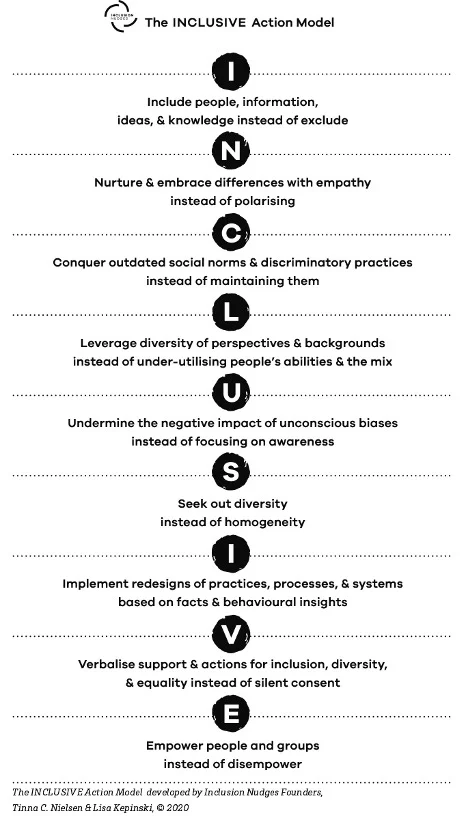
- Inclusion: Welcoming and Applying the Mix. Inclusion is about fostering the structures, systems, processes, culture, behavior, and mindset that embrace and respect all people and their diversity. It actively seeks out, welcomes, and applies diverse knowledge, perspectives, information, and ideas. Inclusion means challenging excluding norms, speaking up against injustice, and ensuring all individuals can participate and contribute to their fullest potential.
These definitions are intentionally comprehensive, inclusive, and action-oriented, providing a common language that aims to bridge the gap between abstract concepts and tangible change.
From Abstraction to Action: Engaging All Stakeholders
However, merely articulating and communicating these definitions, even compelling ones, is insufficient. Rational understanding, residing in the conscious "System 2" mind (as per Daniel Kahneman’s theory of thinking fast and slow), is not the primary driver of everyday behavior, which is largely governed by unconscious "System 1" processes. To truly embed DEBI, the focus must shift from simply defining words to actively involving people in defining DEBI through observable, shared actions.
A more effective approach involves engaging all people in identifying the specific actions and behaviors they perceive as inclusive, inviting, respectful, empathetic, and that make them feel included, belonging, valued, growing, and empowered. This participatory process not only generates context-specific definitions but also fosters ownership and early onboarding into the change initiative. It leverages the diversity within the group itself, turning theoretical concepts into practical, relatable experiences.
Once these examples of inclusive behaviors are gathered, they must be made highly visible and easily digestible. Instead of being buried in spreadsheets or lengthy documents, these diverse, real-life examples and personal stories should be showcased in communication materials—on walls in factories, offices, meeting rooms, and digital platforms. This "Inclusion Nudge" illustrates how inclusion manifests in myriad ways without explicitly using the buzzword. When communicating internally, sharing one concrete example at a time, emphasizing that "peers and similar others" are already adopting these behaviors, can be incredibly powerful. Leveraging social proof, such as "8 out of 10 of your colleagues are doing X," reinforces the idea that inclusive actions are becoming the norm, not the exception.
Beyond Buzzwords: Integrating DEBI into the Organizational Fabric
The ultimate goal is to achieve inclusion so seamlessly that it becomes an intrinsic part of the organizational culture, functioning effectively even without constant verbal reiteration of the terms. This means shifting the perception away from the words themselves and towards the desired outcomes and actions. Instead of saying "we need inclusion," one might frame it as "it’s how work gets done here" or "it’s how people experience being in the group."
This approach challenges organizations to articulate the desired outcomes of DEBI in terms that resonate with core business objectives. For instance, instead of "we need diversity," the message could be "we need the thinking from everyone for new solutions," directly linking diverse perspectives to innovation. Rather than "we need equity," it becomes "we need our systems designed to enable our most objective decision-making," connecting fairness to operational excellence. This strategy integrates DEBI into the vocabulary of performance, agility, innovation, global mindset, and employee authenticity, making it relevant to every aspect of the organization. Companies that effectively embed DEBI into their operational language and practices consistently report higher employee engagement, increased innovation, and superior financial performance, according to studies by institutions like Catalyst and Boston Consulting Group. This integration transforms DEBI from a standalone initiative into the fundamental fabric of organizational success.
Conclusion: A Call for Intentional Language and Collective Action
The profound impact of how Diversity, Equity, Belonging, and Inclusion are framed cannot be overstated. When definitions are ambiguous, and communication triggers unconscious biases, fear, or shame, DEBI efforts are severely hampered. By intentionally crafting clear, action-oriented definitions and, more importantly, involving all stakeholders in identifying and visualizing inclusive behaviors, organizations can dismantle hidden tripwires and foster genuine, widespread engagement. Moving beyond abstract terminology to integrate DEBI into the daily language and operational rhythm of an organization—framing it as "how work gets done"—is crucial for making inclusion the norm, not just an aspiration. This requires a collective commitment to intentional language and sustained action, ensuring that every individual feels valued, heard, and empowered to contribute to a truly inclusive environment. Let us join forces, transforming definitions into a lived reality, and together make inclusion the norm—everywhere, for everyone.