Five years have passed since the Domestic Abuse Act became law on 29 April 2021, marking a pivotal moment in the nation’s response to a pervasive societal issue. This landmark legislation, the culmination of relentless campaigning by organisations like Women’s Aid, dedicated survivors, and tireless activists, promised a fundamental shift in how domestic abuse is understood, addressed, and ultimately, eradicated. As the fifth anniversary is observed, reflections abound on the Act’s profound impact, its successes in transforming legal and social landscapes, and the critical gaps that still demand urgent attention to fully realise its ambitious vision.
The Genesis of a Landmark Law: A Decade of Advocacy
Before the passage of the Domestic Abuse Act, the landscape for victims of domestic abuse was fragmented and often inadequate. While existing laws addressed various aspects of violence and abuse, there was no single, comprehensive framework that fully encompassed the multifaceted nature of domestic abuse, particularly its non-physical forms and its impact on children. For decades, campaigners highlighted the urgent need for a unified legislative response that recognised the insidious nature of control, coercion, and emotional abuse, alongside physical violence.
Women’s Aid, alongside numerous sister organisations, grassroots activists, and parliamentary champions, spearheaded a powerful movement. Their advocacy was rooted in the lived experiences of survivors, whose voices became the undeniable force driving the legislative agenda. The campaign meticulously documented the systemic failures, the gaps in protection, and the devastating consequences for millions affected by domestic abuse. This sustained pressure built a compelling case for reform, culminating in a broad political consensus that a new, more robust legal framework was indispensable. The Act’s journey through Parliament was marked by intense debate, scrutiny, and amendments, all aimed at strengthening its provisions and ensuring it would genuinely make a difference to the lives of those it sought to protect.
Revolutionising the Definition and Scope of Domestic Abuse
One of the most significant achievements of the Domestic Abuse Act was its statutory definition of domestic abuse, which moved beyond purely physical violence to encompass a broader spectrum of harmful behaviours. For the first time, it legally recognised emotional, coercive, and controlling abuse, as well as economic abuse, as forms of domestic abuse. This expanded definition was crucial, reflecting the reality that abuse rarely manifests solely as physical violence; often, it is a complex pattern of behaviours designed to isolate, control, and degrade.
Crucially, the Act also made history by formally recognising children as victims of domestic abuse in their own right, rather than merely witnesses. This provision acknowledged the profound psychological and developmental harm children suffer when exposed to domestic abuse, even if they are not directly targeted. This change has significant implications for child protection services, family court proceedings, and the provision of specialist support, ensuring that children’s experiences are properly assessed and addressed.
Furthermore, the Act extended the reach of laws relating to coercive control. Previously, proving coercive control often required victims to live with the perpetrator. The new provisions recognised that abusive relationships can continue, and control can be exerted, even when victims and perpetrators do not cohabit. This amendment has been vital for victims who may have left an abusive relationship but continue to be subjected to control and harassment, or for those in non-cohabiting relationships.
Beyond these core definitions, the Act introduced provisions impacting a wide range of areas, from housing to the family courts. It aimed to provide greater protection for survivors seeking refuge, strengthen the powers of police and courts, and improve the consistency of the justice system’s response to domestic abuse cases. These provisions collectively aimed to create a ‘step change’ in societal and institutional responses, recognising the insidious nature of domestic abuse that permeates every aspect of a survivor’s life.
Impact and Achievements: A New Era of Protection
The five years since the Act’s implementation have seen tangible improvements in several areas. The expanded legal definition has led to increased awareness among the public, frontline professionals, and within the justice system, fostering a more nuanced understanding of abuse. This has, in turn, empowered more victims to recognise their experiences as abuse and seek help.
Data suggests a notable increase in the reporting of non-physical forms of domestic abuse, particularly coercive control, since the Act came into force. While this rise partly reflects increased awareness and confidence in reporting, it also underscores the previously unaddressed scale of these abuses. Police forces across the nation have undergone extensive training to better identify and respond to these complex cases, leading to a greater number of arrests and prosecutions.

The recognition of children as victims has prompted a re-evaluation of support services. Many local authorities and charities have adapted their programmes to offer more child-centred interventions, aiming to mitigate the long-term trauma associated with exposure to domestic abuse. In family courts, the Act has strengthened the consideration of domestic abuse in decisions relating to child contact and residence, prioritising the safety and well-being of children and the non-abusing parent.
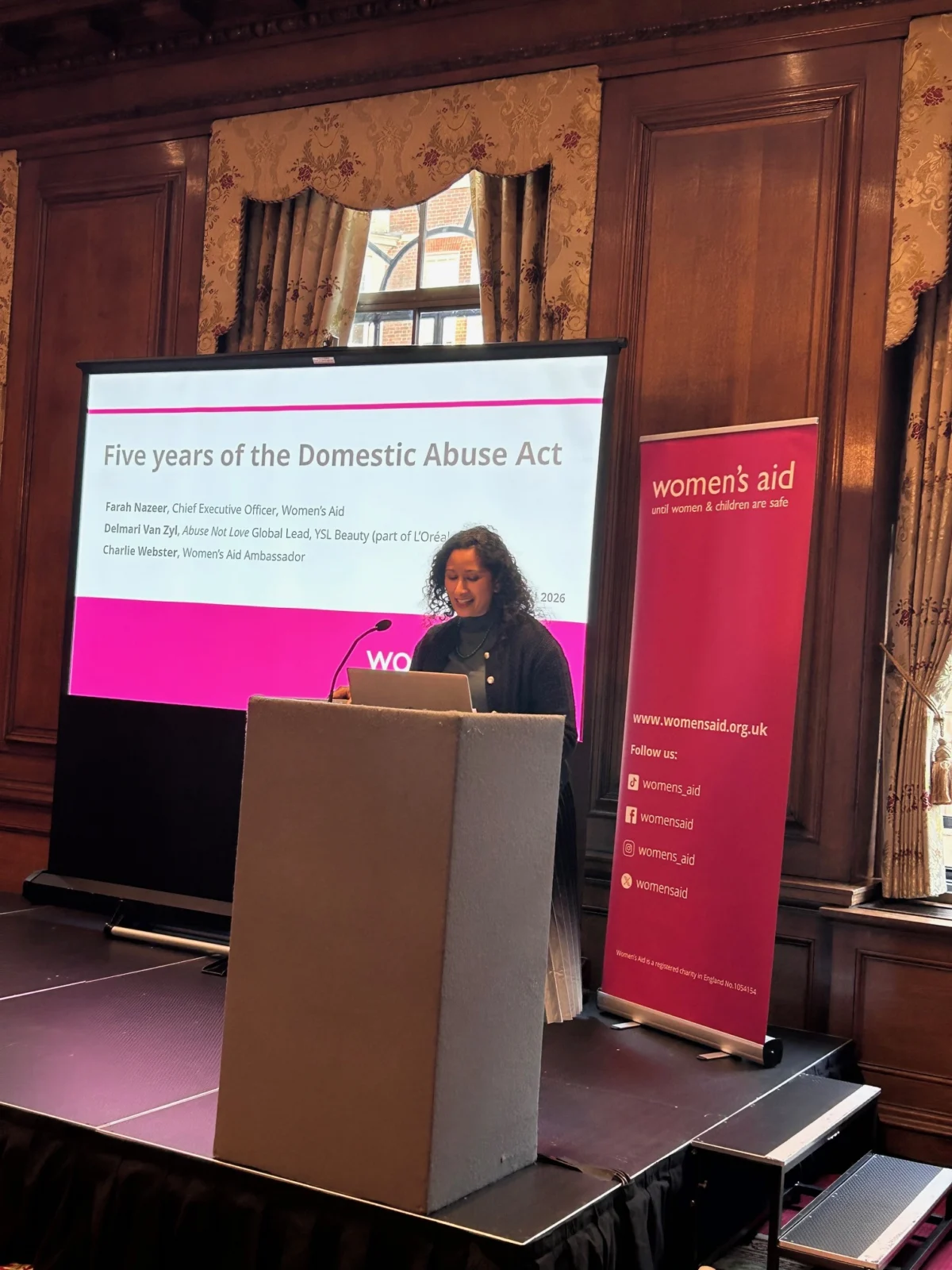
Farah Nazeer, CEO of Women’s Aid, encapsulated the ongoing challenge at a dedicated anniversary reception, stating, “Our task is clear: match the promise of the law with the reality of peoples’ lives.” This sentiment highlights the dual nature of the anniversary: a moment to celebrate legislative progress, but also a call to action to ensure its full and equitable implementation.
Voices from the Frontline: Survivor-Led Advocacy
The anniversary reception brought together a diverse array of voices, all united in their commitment to improving life for survivors. Among them was Women’s Aid ambassador Charlie Webster, whose powerful address underscored the irreplaceable value of survivor insight. “You can’t design a system to protect people whose reality you don’t understand,” Webster asserted. “Survivor voice is not a nice addition to policy. It’s quality control. The abuse ending is not the end of the story. We need long-term wrap-around support. Because healing is not an incident, it’s a journey. And right now we’re leaving too many people to walk it alone.”
Webster’s words resonate deeply with the experiences of countless survivors, emphasising that legal protection is merely the first step. The journey to healing and recovery requires sustained, holistic support, encompassing housing, financial independence, psychological care, and community integration. This comprehensive approach, guided by those who have lived through abuse, is essential for truly breaking the cycle of violence.
A government spokesperson, reflecting on the anniversary, acknowledged the profound impact of the Act: "The Domestic Abuse Act was a landmark achievement, delivering stronger protections for victims and survivors and holding perpetrators to account. We are immensely proud of the progress made over the past five years and are committed to continuing our work with expert organisations like Women’s Aid to ensure the Act’s provisions are fully realised across the country."
Similarly, a representative from the National Police Chiefs’ Council stated, "The Act has provided clearer legal frameworks and enhanced our capabilities to tackle domestic abuse. Our officers are better equipped to identify coercive control and protect vulnerable individuals. We continue to invest in training and collaboration with support services to deliver an effective response."
Challenges and Unfinished Business: Gaps Still Left to Fill
Despite the significant strides, the journey towards ending domestic abuse is far from over. The anniversary is also a moment for sober reflection on the Act’s limitations and the persistent challenges in its implementation. Women’s Aid and other advocacy groups consistently highlight several critical "gaps still left to fill":
- Sustainable Funding for Support Services: While the Act strengthened legal frameworks, the funding for specialist domestic abuse services, particularly refuges and community-based support, remains precarious. Many services operate under constant financial strain, unable to meet the ever-increasing demand. The economic impact of the cost of living crisis has exacerbated this, with services reporting a surge in complex cases and a struggle to retain skilled staff. Without robust, long-term funding, the promise of the Act cannot be fully delivered, as victims lack the safe spaces and expert assistance needed to escape and rebuild their lives.
- Protection for All Survivors: Concerns persist regarding the Act’s reach and effectiveness for specific vulnerable groups. Migrant women, particularly those with insecure immigration status, often face significant barriers to accessing support and justice due to fears of deportation or lack of access to public funds. Similarly, disabled survivors, LGBTQ+ individuals, and those from minoritised ethnic communities can encounter additional systemic hurdles and a lack of culturally competent support. The Act, while broad, needs further provisions or dedicated strategies to ensure universal protection.
- Perpetrator Interventions: While the Act focuses heavily on victim protection, there is an ongoing need for more effective and widely available perpetrator programmes. Addressing the root causes of abusive behaviour and holding perpetrators accountable through evidence-based interventions is crucial for preventing re-offending and breaking cycles of abuse. Without tackling perpetrator behaviour, the burden of safety disproportionately falls on victims.
- Consistency in Implementation: The Act’s effectiveness can vary significantly across different regions due to disparities in local resources, training, and interpretation by police forces, local authorities, and the judiciary. Achieving consistent application of the law and equitable access to justice and support remains a significant challenge.
- Economic Abuse Provisions: While the Act recognised economic abuse, its practical application and enforcement can be complex. Survivors often struggle to recover financially from abuse, which can trap them in dangerous situations or hinder their ability to achieve independence. Further clarity and stronger enforcement mechanisms are needed to tackle this often-overlooked aspect of control.
The Path Forward: Building a Future Free from Abuse
As the nation reflects on the five-year milestone, the collective resolve to eradicate domestic abuse remains strong. Women’s Aid, in collaboration with survivors, supporters, ambassadors, and policymakers, has released an anniversary film, articulating a shared vision for a future free from abuse and outlining the critical next steps.
The focus must now shift from legislative enactment to comprehensive implementation and continuous improvement. This includes:
- Securing long-term, sustainable funding for the entire domestic abuse support sector, recognising its vital role as a lifeline for millions.
- Developing targeted strategies and provisions to ensure that all survivors, regardless of their background or circumstances, can access safety and justice without fear or discrimination.
- Investing in evidence-based perpetrator programmes that challenge abusive behaviours and promote accountability.
- Strengthening inter-agency collaboration and promoting best practice across the police, judiciary, social services, and health sectors to ensure a consistent and effective response nationwide.
- Continuing public awareness campaigns to challenge societal norms that enable abuse and foster a culture of respect and equality.
The Domestic Abuse Act represented a significant leap forward, providing a robust legal framework that has undeniably saved lives and improved countless others. Yet, as the inspiring voices of survivors and advocates remind us, the true measure of its success lies not just in its passage, but in its sustained, equitable, and compassionate application. The five-year anniversary serves as both a celebration of progress and a powerful reminder that the fight for a future free from abuse is an ongoing journey that requires unwavering commitment, collective action, and a steadfast dedication to matching the promise of the law with the lived reality of every individual.