In an era defined by unprecedented global challenges, from pandemics and geopolitical shifts to rapid technological disruption and economic volatility, the imperative for robust and adaptive organizational teams has never been more pronounced. While the conversation around diversity, equity, and inclusion (DEI) has rightfully gained significant traction, often emphasizing demographic dimensions such as gender, race, and ethnicity, a critical form of diversity—cognitive diversity—remains largely underestimated and underutilized. This deeper layer of diversity, encompassing varied ways of thinking, processing information, and approaching problems, is increasingly recognized by leading researchers and organizations as a potent differentiator, essential for innovation, superior problem-solving, and effective risk mitigation.
The journey towards understanding and leveraging diversity in the workplace has evolved significantly over the past half-century. Initially rooted in compliance and equal employment opportunity (EEO) mandates in the mid-20th century, the focus gradually shifted towards affirmative action programs designed to correct historical imbalances. By the late 20th and early 21st centuries, the "business case for diversity" emerged, articulating how demographic representation could lead to improved financial performance, enhanced market understanding, and a stronger talent brand. This period saw a surge in corporate DEI initiatives aimed at increasing the representation of women, minorities, and other underrepresented groups across all organizational levels. While these efforts remain fundamentally important for achieving social equity and unlocking broad talent pools, contemporary research now highlights that true organizational potential is harvested when this demographic diversity is complemented by an intentional focus on cognitive diversity, fostered within an environment of genuine inclusion and psychological safety.
The Evolving Landscape of Diversity and Inclusion
The historical trajectory of diversity initiatives reveals a progressive deepening of understanding. Early approaches often treated diversity as a mere headcount exercise, focusing on visible representation. However, organizations quickly learned that diversity without inclusion could lead to tokenism, disengagement, and even increased conflict rather than improved performance. This recognition spurred the rise of "inclusion" as an equally vital component, emphasizing the creation of environments where all individuals feel valued, respected, and empowered to contribute their unique perspectives. The concept of "belonging" further enriched this framework, highlighting the emotional connection and psychological safety necessary for individuals to thrive and fully engage.
Within this evolving landscape, cognitive diversity stands out as a sophisticated yet frequently overlooked dimension. It moves beyond the visible characteristics of individuals to explore the intrinsic variations in how people perceive, interpret, and respond to information and challenges. These differences, encompassing everything from problem-solving styles and learning preferences to risk tolerance and communication approaches, are not always immediately apparent but profoundly impact team dynamics and outcomes. Neglecting this crucial aspect means organizations risk assembling teams that, despite appearing demographically diverse, might suffer from a homogeneity of thought that stifles innovation and limits adaptability, especially when navigating complex and ambiguous situations.
Unpacking Cognitive Diversity: Insights from Leading Research
Decades of rigorous academic inquiry consistently underscore the transformative power of cognitive diversity. Among the most influential contributions are the extensive studies by professors Alison Reynolds and David Lewis. Their research, spanning several decades, has meticulously examined how individuals approach and engage with new, uncertain, and complex situations, and what distinguishes the highest-performing teams in solving intricate problems with speed and efficacy. Their findings unequivocally point to two critical factors: cognitive diversity and psychological safety. Teams excelling in these areas consistently demonstrate higher levels of curiosity and a propensity for experimentation, traits conspicuously absent in teams characterized by group conformity or excessive internal conflict.
Reynolds and Lewis, drawing upon an assessment tool developed by psychiatrist Peter Robertson, categorize cognitive diversity into two primary dimensions:
-
Knowledge and Information Processing: This dimension assesses an individual’s preference when confronted with novel, uncertain, or complex issues. Do they tend to consolidate and implement existing knowledge, relying on established frameworks and proven solutions? Or do they lean towards generating new knowledge, exploring uncharted territories, and developing innovative approaches? A cognitively diverse team would ideally possess a healthy mix of both preferences, allowing for both efficient execution of known solutions and creative exploration of unknown possibilities. For example, in a crisis management scenario, some team members might prioritize leveraging existing protocols and best practices (consolidating), while others might push for novel, untested solutions (generating new knowledge).
-
Perspective and Expertise Facilitation: This aspect evaluates whether individuals primarily prefer to apply their own specialized expertise or if they are more inclined to orchestrate and integrate the ideas and expertise of others. In complex scenarios, a team member who can synthesize disparate viewpoints and facilitate collaborative ideation is as valuable as one who brings deep individual expertise. The optimal team leverages both, ensuring that individual strengths are utilized while collective intelligence is maximized through cross-pollination of ideas. An engineer might focus on applying their specific technical knowledge, while a project manager might excel at drawing out insights from various specialists and integrating them into a cohesive strategy.
The synergy of high diversity across both these parameters, coupled with a robust culture of psychological safety, is what empowers teams to thrive in dynamic environments. Such teams naturally access a wider spectrum of knowledge and perspectives. When members feel secure enough to voice dissenting opinions, challenge assumptions, and engage in constructive conflict without fear of retribution, it fosters an environment ripe for exploration, learning, and superior decision-making. This dynamic is crucial because dealing with unprecedented issues necessitates both a grounding in existing wisdom and a fearless foray into the unknown.
Beyond these two core dimensions, cognitive diversity also encompasses a broader array of individual differences, including personality styles (e.g., introversion versus extroversion), mental models, approaches to risk (risk-averse versus risk-tolerant), preferred processes (structured versus agile), and tolerance for ambiguity. These varied traits create a rich tapestry of complementary team members, each contributing a unique lens through which to view problems and opportunities.
The Business Case for Cognitive Diversity: Beyond Demographics
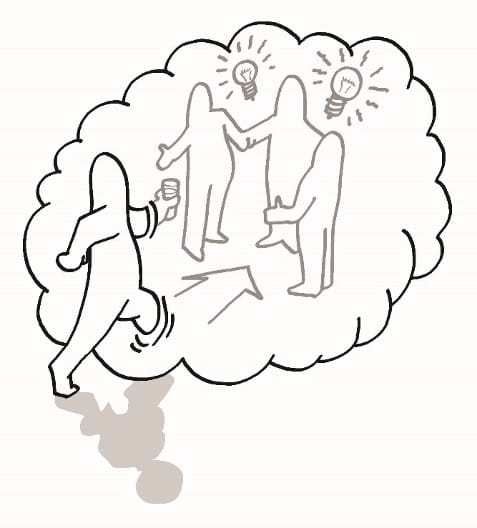
While demographic diversity initiatives have demonstrated clear benefits—such as a 25% higher likelihood for ethnically diverse companies to outperform their peers in profitability (McKinsey & Company research) or a 21% higher likelihood for gender-diverse companies to do so—the impact of cognitive diversity often goes deeper, addressing the fundamental mechanisms of collective intelligence. For instance, research by Scott E. Page, author of "The Difference: How the Power of Diversity Creates Better Groups, Firms, Schools, and Societies," illustrates how a diverse set of "toolkits" (heuristic problem-solving methods, interpretations, perspectives, and predictive models) within a group can consistently outperform a group of highly skilled but cognitively homogeneous experts, especially when tackling complex, non-linear problems. Page’s work provides a compelling mathematical and empirical foundation for understanding why a team of diverse thinkers, even if individually less "brilliant" than a team of homogeneous "superstars," can often arrive at better solutions for complex challenges.
This is particularly pertinent in today’s Volatile, Uncertain, Complex, and Ambiguous (VUCA) world. Organizations are no longer just seeking incremental improvements; they require transformative innovation and resilience to navigate unforeseen disruptions. A team composed of individuals who think similarly, even if highly intelligent, can fall prey to groupthink, confirmation bias, and a limited scope of solutions. Conversely, a cognitively diverse team can anticipate a broader range of potential problems, generate more creative solutions, and identify novel opportunities that might otherwise be missed. This translates into greater adaptability, strategic foresight, and the ability to pivot rapidly in response to market shifts or unexpected crises.
The Indispensable Role of Inclusive Leadership and Psychological Safety
The mere presence of cognitive diversity within a team is insufficient to unlock its full potential. Without inclusive leadership and a culture of psychological safety, these diverse ways of thinking can lead to friction, misunderstanding, and even paralysis. Psychological safety, a concept extensively researched by Harvard Business School professor Amy Edmondson, refers to a shared belief held by members of a team that the team is safe for interpersonal risk-taking. In such an environment, individuals feel comfortable speaking up, asking questions, admitting mistakes, and challenging the status quo without fear of embarrassment, rejection, or punishment.
Inclusive leaders are pivotal in cultivating this environment. Their behaviors can significantly influence the degree to which employees feel included, valued, and empowered. Deloitte Australia’s diversity research highlights this impact, revealing that leaders’ behaviors can account for up to a 70 percentage point difference in the proportion of employees who feel highly included versus those who do not. For members of minority groups, the effect of inclusive leadership is even more pronounced, amplifying their sense of belonging and willingness to contribute.
Effective inclusive leadership involves a range of proactive behaviors:
- Active Solicitation: Proactively inviting diverse perspectives, especially from quieter team members or those with non-conforming views. This involves creating explicit opportunities for input, such as structured brainstorming sessions or anonymous feedback channels.
- Fairness and Respect: Ensuring equitable treatment, transparent decision-making processes, and respectful interactions for all, regardless of background or cognitive style.
- Valuing Contributions: Acknowledging and appreciating the unique insights each team member brings, demonstrating how different perspectives strengthen the collective outcome.
- Fostering Belonging: Creating an atmosphere where everyone feels they are an integral part of the group, fostering connections and shared purpose.
- Empowerment: Giving team members autonomy, delegating meaningful tasks, and encouraging them to take initiative and ownership, thereby increasing their confidence and engagement.
- Facilitating Constructive Conflict: Guiding discussions to leverage differences in opinion as opportunities for deeper understanding and better solutions, rather than allowing them to devolve into personal attacks. This requires strong facilitation skills to ensure respectful debate and synthesis of ideas.
The challenge, however, is that while many CEOs and senior leaders are increasingly advocating for DEI at a strategic level, cascading this support and translating it into actionable behaviors across all management levels remains a significant hurdle. Many leaders report feeling ill-equipped or lacking the practical tools to foster inclusion, particularly when it involves navigating sensitive conversations about exclusion or discrimination. This gap between aspiration and execution often impedes the creation of truly inclusive cultures that can fully harness cognitive diversity.
Bridging the Gap: Practical Frameworks and Tools for Leaders
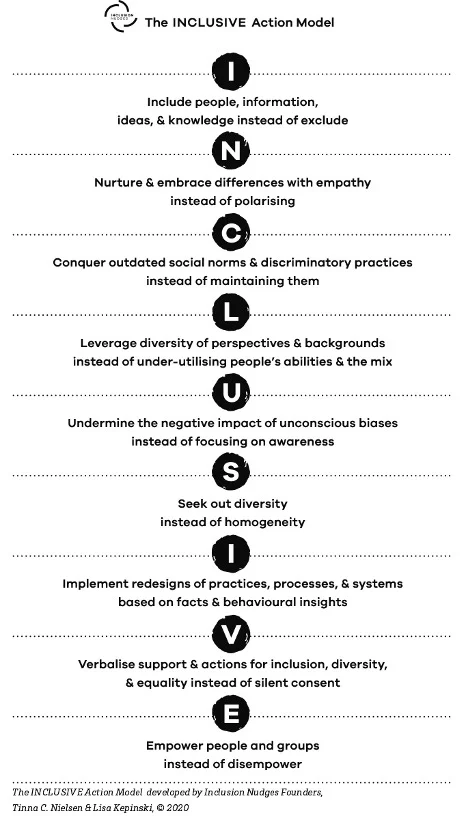
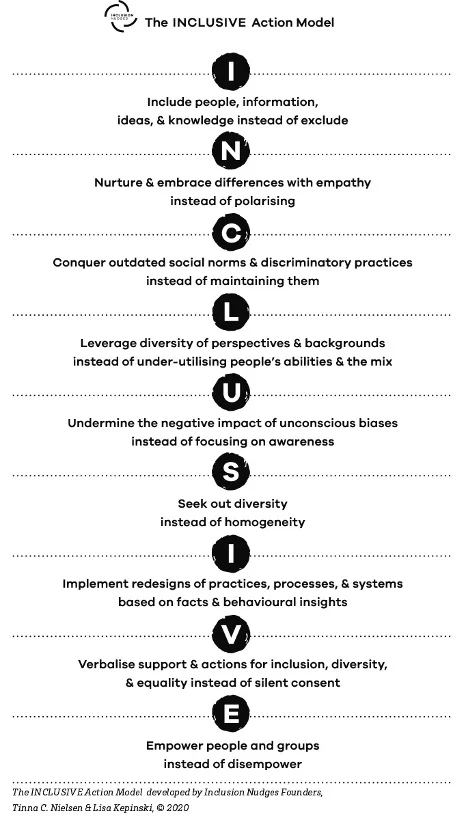
Recognizing this critical need, practitioners like Tinna Nielsen and Lisa Quast, founders of Inclusion Nudges, have developed practical frameworks and tools designed to empower leaders. Their "Inclusion Nudges Inclusive Action Model" provides a holistic approach to creating inclusive cultures, structures, and behaviors. This model acknowledges the multifaceted nature of inclusion, requiring simultaneous attention to individual actions, systemic changes, and cultural norms. It offers a structured way to address unconscious biases and foster environments where diverse thinking can flourish.
Their "Action Guide: Inclusion Nudges for Leaders" offers 30 easy-to-apply inclusive actions rooted in behavioral science. These "nudges" are subtle interventions that guide behavior towards more inclusive outcomes, making inclusion the default and the norm rather than an exception. Leaders who adopt these behavioral designs report increased confidence in understanding and implementing inclusive practices. This initial success often sparks a positive feedback loop, encouraging them to take further actions and catalyzing broader cultural change within their organizations. The objective is to dismantle the common barrier where leaders hesitate to act due to uncertainty or fear of missteps, providing them with proven, step-by-step guidance. The positive reception of such practical tools underscores the readiness of leaders to engage with DEI when provided with clear, actionable strategies.
Strategic Implications for Organizations in the 21st Century
The implications of prioritizing cognitive diversity extend across various organizational functions and are crucial for future success:
- Talent Acquisition and Development: Recruitment strategies must evolve beyond traditional skill sets and experience to actively seek out candidates with diverse cognitive profiles. Interview processes should be designed to uncover problem-solving styles, learning preferences, and approaches to ambiguity, perhaps through scenario-based assessments or structured behavioral interviews. Development programs should equip employees with the skills to work effectively in cognitively diverse teams, including active listening, empathetic communication, and constructive conflict resolution.
- Team Formation and Design: Intentional team composition, rather than organic formation, becomes paramount. Leaders must move beyond simply assigning individuals based on availability or technical expertise and instead consider the cognitive profiles required to address specific challenges. Psychometric tools and assessments, when used ethically and effectively, can aid in identifying and balancing cognitive styles, creating teams that are "fit for purpose" for complex projects.
- Organizational Culture: A culture that champions cognitive diversity actively encourages constructive debate, rewards critical thinking, and celebrates a multitude of perspectives. It moves beyond tolerance to active appreciation of differences, understanding that friction, when managed effectively, can be a powerful catalyst for innovation and growth. This requires a shift in leadership mindset to view divergent opinions as assets rather than obstacles.
- Enhanced Decision-Making Processes: Structuring decision-making processes to intentionally include diverse viewpoints, employing techniques like "pre-mortems" (imagining future failure to identify risks) or assigning "devil’s advocate" roles, can prevent groupthink and lead to more robust, thoroughly vetted outcomes. This also includes establishing clear protocols for how dissenting opinions are heard and integrated.
- Strategic Resilience and Innovation: In an increasingly unpredictable global landscape, organizations with high cognitive diversity are better positioned to anticipate emerging threats, adapt swiftly to changing market conditions, and innovate proactively, thereby building greater strategic resilience. Their capacity to generate novel ideas and evaluate complex scenarios from multiple angles provides a significant competitive advantage.
The journey towards truly harnessing the power of diversity is ongoing. While significant strides have been made in recognizing and addressing demographic diversity, the subtle yet profound impact of cognitive diversity demands greater attention. By integrating an understanding of varied thinking styles with robust inclusive leadership and a foundation of psychological safety, organizations can move beyond mere representation to achieve genuine intellectual leverage, driving unprecedented levels of innovation, problem-solving, and adaptability—a crucial mandate for thriving in the complex decades ahead. The challenge now lies in empowering every leader, at every level, with the knowledge and tools to champion this holistic approach to diversity, ensuring that every mind is not only present but fully engaged and utilized to its fullest potential.