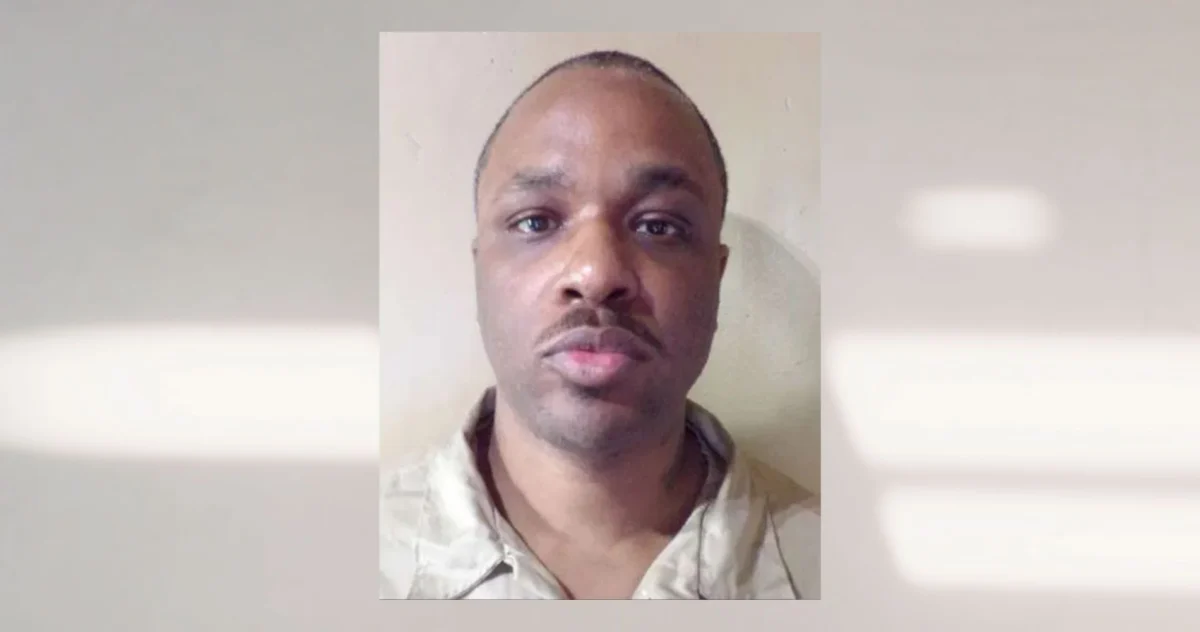
New details have emerged about the horrifying death of Kenneth Gilchrist, a 31-year-old man incarcerated at Donaldson Correctional Facility in Alabama, revealing a disturbing pattern of deliberate indifference by prison staff, including a sergeant and a nurse, who failed to offer assistance as he lay dying from a stab wound. Camera footage, meticulously described in a recent federal court opinion, captured correctional officers ignoring Mr. Gilchrist for over 30 minutes while he was clearly in acute distress, ultimately leading to his preventable death. This incident, brought to light by the U.S. District Court for the Northern District of Alabama on April 28, 2026, underscores a deeply entrenched culture of cruelty and disregard for human life that has long characterized the Alabama Department of Corrections (ADOC), a system already under scrutiny by the Justice Department for unconstitutional conditions.
The Unfolding Tragedy: A Minute-by-Minute Account of Neglect
The federal court opinion provides a harrowing, minute-by-minute account of Mr. Gilchrist’s final moments, derived directly from surveillance video footage. The sequence of events began after Mr. Gilchrist was stabbed during an altercation within his housing unit. Rather than receiving immediate medical attention, the video shows an unnamed incarcerated man bringing Mr. Gilchrist, slumped in a wheelchair, to the entrance of the health care unit. Upon arrival, Mr. Gilchrist collapsed from the wheelchair onto the floor, exhibiting clear "signs of life" and "evident distress."
What followed was a chilling display of institutional apathy. The footage depicts a nurse and at least three correctional officers walking past Mr. Gilchrist without offering any form of aid. Two officers were observed standing by, actively watching him writhe on the ground, yet taking "no action to assist." The court found that Mr. Gilchrist was left on the infirmary entrance floor for more than two agonizing minutes before an officer finally directed the incarcerated man who brought him to drag Mr. Gilchrist away from the health care unit down a hallway.
He was then taken to a windowed barbershop, where he again fell out of the wheelchair and began writhing on the floor in intense pain. For the next half-hour, numerous officers, including Sergeant Shaun Mechalske, repeatedly passed by the barbershop, observing Mr. Gilchrist’s severe medical crisis through the windows, yet none intervened. The court’s description paints a stark picture:
"Inmate Gilchrist continues to writhe on the floor, flailing his arms. [An officer] passes the barbershop again at approximately 00:29:22, at which point the three inmates and another correctional officer are observed watching Inmate Gilchrist on the floor.
At approximately 00:29:54, Plaintiff again passes the barbershop, and at approximately 00:30:45, Plaintiff returns to the hallway and opens the barbershop door. (Id.). Inmate Gilchrist continues to writhe on the floor as Plaintiff stands holding the door open and the three inmates are looking on. At approximately 00:31:29, Plaintiff closes the door and begins watching Inmate Gilchrist through the window. At approximately 00:32:10, Plaintiff opens the door again, and one of the inmates in the hallway enters the barbershop to get Inmate Gilchrist back into his wheelchair while Plaintiff stands holding the door open, making no effort to assist. At approximately 00:32:46, having been unable to get Inmate Gilchrist back into the wheelchair, the inmate exits the barbershop and Plaintiff closes the door. .Inmate Gilchrist continues to writhe on the floor (and he is now almost fully visible in the frame) while two of the three hallway inmates leave and one remains seated in the hallway, watching.
At approximately 00:33:46, Plaintiff reenters the frame and speaks with the remaining inmate in the hallway while observing Inmate Gilchrist through the barbershop windows. At approximately 00:34:22, Plaintiff leaves the hallway again, returning briefly at approximately 00:34:58 to glance at Inmate Gilchrist before leaving once more. Inmate Gilchrist continues to writhe on the floor, flailing his arms and legs, as various correctional officers, including Sergeant Shaun Mechalske, pass by the barbershop windows without intervening.
At approximately 00:45:03, after lying on the barbershop floor without meaningful assistance for approximately nineteen minutes and twenty-three seconds, Inmate Gilchrist stops moving. No one enters the barbershop until approximately 00:58:43, when Sergeant Mechalske enters and attempts to rouse him, shortly after which the video ends. By that point, Inmate Gilchrist had been on the barbershop floor for over thirty-three minutes."
This detailed chronology, presented by the court, paints a stark picture of a man left to die in plain view of multiple correctional staff, highlighting a profound breakdown of duty of care.
A Pattern of Fatal Neglect: Systemic Failures at ADOC
Mr. Gilchrist’s tragic death is not an isolated incident but rather a grim symptom of a deeply rooted, systemic problem within the Alabama Department of Corrections, particularly at Donaldson Correctional Facility. The failure to provide timely and adequate medical assistance during emergencies has been repeatedly documented, contributing to a staggering number of preventable deaths.
Months before Mr. Gilchrist’s death in July 2021, Jason Kirkland died under similarly egregious circumstances at Donaldson. Mr. Kirkland suffered "mechanical asphyxia" when his head became wedged in a broken tray slot in his cell door. A federal judge subsequently found that the officer assigned to monitor the unit had gone on a break and joined another officer in a central control room "while Kirkland was in medical distress." It took several critical minutes for another incarcerated man to discover Mr. Kirkland and finally attract the attention of prison staff, by which time it was too late. This incident, like Gilchrist’s, points to a clear failure of oversight and a dereliction of basic duty by correctional personnel.
Another harrowing example occurred in December 2020, when Tommy Rutledge died of hyperthermia at Donaldson, with a body temperature recorded at an alarming 109 degrees. A federal district court, in a lawsuit filed in that case, found that Mr. Rutledge’s death was a direct result of officers falsifying temperature log readings, allowing his cell to reach dangerous temperatures of 101 to 104 degrees. The court’s findings were further compounded by the testimony of then-Commissioner of Health Services for ADOC, Ruth Naglich, who acknowledged that a similar incident had previously occurred at the prison, indicating a persistent, unaddressed vulnerability to extreme heat.
Beyond these documented cases, the families of people incarcerated in Alabama prisons have reported a litany of abuses and fatal neglect. Many loved ones have reportedly died after being denied crucial medical attention for injuries sustained during beatings by staff or other incarcerated individuals. Disturbingly, some families have reported that ADOC removed life support from their loved ones without their knowledge or consent, and in some horrific instances, returned bodies with missing organs. The emotional toll on families is immense, often compounded by the lack of transparency; many were not even notified of their loved ones’ deaths. One grieving parent recounted how a warden informed her of her child’s death "like she was telling me to pick up my dry clean[ing]," underscoring the dehumanizing approach to the lives of incarcerated individuals and their families.
Justice Department Intervention and ADOC’s Unwavering Stance
The pervasive issues within Alabama’s correctional system are not new to federal scrutiny. Seven years prior to the recent court opinion detailing Mr. Gilchrist’s death, the Justice Department formally notified the State of Alabama that the conditions in its prisons were unconstitutional. This notification, based on extensive investigations, highlighted severe deficiencies across various aspects of prison operations, including safety, security, and medical and mental health care.
Despite this federal mandate for reform, the situation has shown little improvement. Research conducted by the Equal Justice Initiative (EJI) has revealed a shocking statistic: in the seven years since the Justice Department’s warning, at least 100 people have been killed inside Alabama’s state prisons. Hundreds more have tragically lost their lives to suicide and fatal drug overdoses, further evidence of a system in profound crisis that fails to provide even basic safety and care.
Former Commissioner John Hamm, during his tenure, even acknowledged to the Alabama Legislature that ADOC harbored a culture that "enables and encourages excessive force and civil rights abuses." This admission from a high-ranking official underscores the deeply ingrained nature of the problems. Yet, despite these official acknowledgments, federal court findings, and the mounting death toll, ADOC continues to allocate millions of dollars to legal defense, fighting lawsuits that challenge its unconstitutional practices rather than investing those resources in substantive reforms.
The revelation of Mr. Gilchrist’s mistreatment was largely due to the presence of surveillance cameras, which allowed for the identification and subsequent discipline of the officers involved. However, this level of accountability remains an anomaly. Many areas within Alabama’s prisons still lack camera coverage, creating blind spots where abuses can occur unchecked. Consequently, numerous other officers implicated in prisoner deaths have never faced criminal charges and, disturbingly, continue to work within these facilities. This disparity highlights a critical flaw in accountability mechanisms: without irrefutable visual evidence, the institutional default appears to be one of denial and protection of personnel, rather than transparent investigation and justice.
Accountability, Transparency, and the Path Forward
The death of Kenneth Gilchrist, meticulously detailed by a federal court, serves as a stark reminder of the urgent need for comprehensive reform within the Alabama Department of Corrections. The incident illuminates several critical systemic failures: a profound lack of medical care, an entrenched culture of indifference among staff, and a severe deficit of accountability.
The financial implications of ADOC’s continued resistance to reform are substantial. The state’s ongoing expenditure of millions on legal defense, rather than proactive measures to improve conditions, represents a misallocation of taxpayer funds that perpetuates a cycle of abuse and litigation. These funds could otherwise be directed towards essential improvements, such as enhanced staff training in emergency response and de-escalation, increased medical personnel and resources, and widespread installation of functional surveillance systems to ensure transparency and deter misconduct.
The human cost, however, far outweighs the financial. Families of incarcerated individuals are left grappling with unimaginable grief, often compounded by a lack of official communication, transparent investigations, and ultimately, justice. The emotional and psychological trauma inflicted by such systemic neglect extends beyond the walls of the prisons, impacting communities and eroding public trust in the state’s ability to uphold basic human rights, even for those deprived of liberty.
The role of organizations like the Equal Justice Initiative in documenting these abuses and advocating for systemic change is more critical than ever. Their research and legal interventions provide crucial insights into the daily realities within Alabama’s prisons and serve as a catalyst for federal oversight and judicial action.
For true change to occur, there must be a fundamental shift in the culture of care within ADOC. This requires not only policy changes but also rigorous enforcement, comprehensive staff training that emphasizes empathy and ethical conduct, and robust accountability mechanisms that ensure all personnel, regardless of rank, are held responsible for their actions and inactions. The widespread deployment of functional and monitored surveillance cameras, coupled with independent oversight, could significantly enhance transparency and deter the kind of fatal neglect witnessed in Kenneth Gilchrist’s tragic final moments. Until such comprehensive reforms are implemented, the horrifying deaths and unconstitutional conditions within Alabama’s prisons are likely to persist, further staining the state’s justice system.