The narrative trajectory of the Max original series Hacks has reached a critical juncture in its third season, juxtaposing the professional zenith of its central protagonist, Deborah Vance, with the systemic collapse of her management team’s independent venture. While the series has primarily functioned as an exploration of the intergenerational mentorship between legendary comedian Deborah Vance (Jean Smart) and millennial writer Ava Daniels (Hannah Einbinder), the most recent developments shift the focus toward the precarious nature of the Hollywood representation industry. As Deborah Vance achieves a landmark commercial success—selling out Madison Square Garden (MSG) in a record-breaking ten minutes—her manager, Jimmy LuSaque Jr. (Paul W. Downs), faces a professional regression that highlights the broader trends of corporate consolidation and the vulnerability of boutique agencies in the modern media landscape.
The Professional Descent of Jimmy LuSaque Jr.
The recent episodes, scripted by Genevieve Aniello and Jess Dweck and directed by Lucia Aniello, present a stark contrast in career outcomes. Jimmy LuSaque Jr. and his partner Kayla Purington (Meg Stalter) have spent the duration of the series attempting to establish Schaefer & Lusaque as a viable independent management firm. This endeavor was born out of a desire to provide bespoke, talent-first representation outside the bureaucratic and often predatory environment of Latitude, the major agency where Jimmy previously worked.
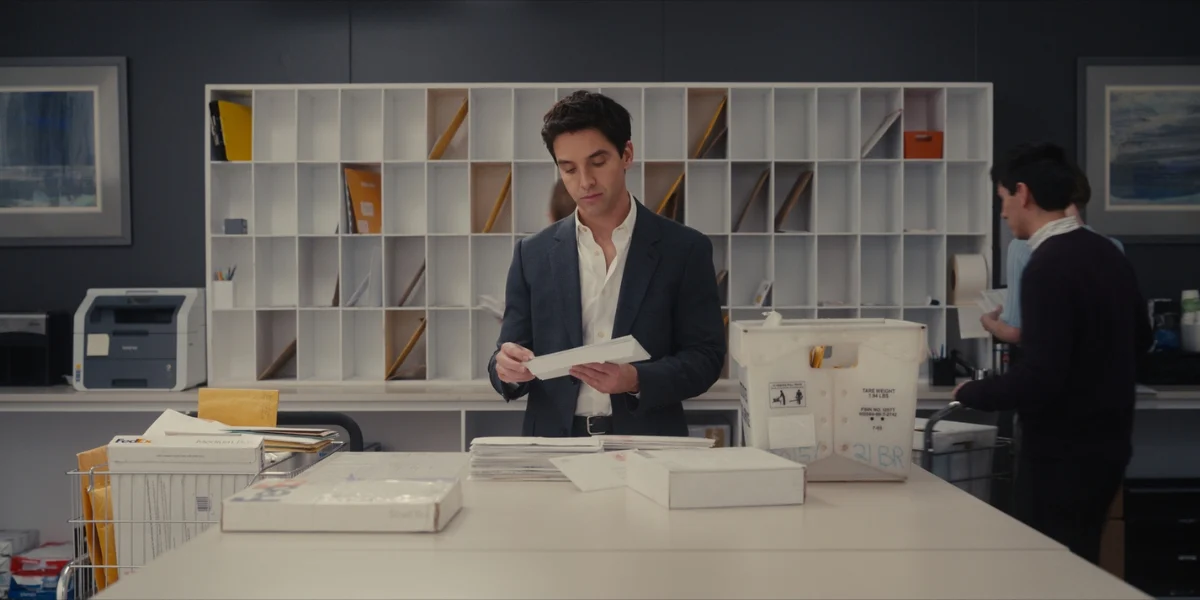
However, the climax of this arc reveals the fragility of independent firms when confronted by industry giants. Despite securing Deborah Vance’s career-defining MSG residency and orchestrating a high-profile "cube stunt" in Las Vegas to generate viral engagement, Jimmy is forced to shutter his business. This dissolution is precipitated by a legal threat from Kayla’s father, a high-ranking executive at Latitude, who utilizes the agency’s vast resources to bully the smaller firm into submission. The resulting resolution sees Jimmy returning to the mailroom of Latitude—a literal and metaphorical return to the bottom of the corporate hierarchy. This plot point serves as a poignant commentary on the "up or out" culture of Hollywood and the difficulty of maintaining autonomy in an era of conglomerate dominance.
Chronology of the Schaefer & Lusaque Venture
To understand the weight of Jimmy’s defeat, one must look at the timeline of his professional evolution throughout the series:
- The Latitude Departure (Season 1): Jimmy begins as a junior agent at Latitude, struggling to manage the volatile demands of Deborah Vance while navigating the nepotism inherent in his pairing with Kayla, the daughter of his boss.
- The Formation of the Boutique Firm (Season 2): Driven by a commitment to Deborah’s creative rebirth and a rejection of Latitude’s impersonal approach, Jimmy resigns to form his own management company. This move represents a significant financial and professional risk, typical of the "boutique agency" trend seen in the 1990s and early 2000s.
- Scaling and Success (Season 3, Early Episodes): Jimmy and Kayla successfully navigate the complexities of Deborah’s "late-night" aspirations and her return to stand-up prominence. They demonstrate a unique synergy, functioning as a "funhouse mirror" version of Deborah and Ava’s relationship.
- The Corporate Reclamation (Season 3, Recent Episodes): Following a period of significant growth, the firm is targeted by Latitude. The threat of an expensive, protracted lawsuit forces Jimmy to trade his ownership and independence for a subordinate role within the very machine he sought to escape.
Data and Context: The Reality of Talent Representation
The struggle depicted in Hacks mirrors real-world shifts in the entertainment industry. For decades, Hollywood representation was dominated by the "Big Four" agencies: Creative Artists Agency (CAA), William Morris Endeavor (WME), United Talent Agency (UTA), and International Creative Management (ICM). In 2022, the landscape shifted dramatically when CAA acquired ICM Partners, further concentrating power and making it increasingly difficult for independent managers and smaller agencies to compete for top-tier talent and package deals.
According to industry reports, boutique firms often provide more personalized attention but lack the "packaging" power—the ability to bundle writers, directors, and actors into a single project—that large agencies possess. In Hacks, Jimmy’s inability to withstand the legal pressure from Latitude reflects the reality of "strategic litigation" used by large corporations to eliminate competition or reclaim talent. The show’s portrayal of the mailroom as Jimmy’s final destination is a nod to the historical "mailroom-to-mogul" pipeline, though in this instance, it serves as a punitive measure rather than a professional starting point.
The Scaffolding of Character Actors
While the narrative focuses on the professional tragedy of Jimmy LuSaque Jr., the series continues to rely on a robust ensemble of character actors to flesh out its universe. The production’s ability to integrate seasoned performers into pivotal, albeit brief, roles provides the "scaffolding" necessary for the leads to succeed.
In the current season, Alanna Ubach appears as a straight-talking executive at Madison Square Garden. Ubach, a veteran character actor known for her roles in Euphoria and Legally Blonde, embodies the "supporting" philosophy that sustains prestige television. In a recent interview with The Ankler, Ubach described her career goal as being the "potatoes and the butter and the broccoli on the side," emphasizing that character actors provide the essential substance that allows a production to feel lived-in and authentic.
Similarly, the recurring presence of Lauren Weedman as Mayor Jo adds a layer of absurdist humor that balances the show’s more grounded industry critiques. The casting of performers like Weedman and Ubach—and cameos by figures such as Katya Zamolodchikova—demonstrates a directorial commitment to utilizing comedic specialists to enhance the show’s world-building. This strategy ensures that the show remains an ensemble piece even as it focuses on the internal mechanics of a two-person comedy team.
Analysis of Implications: Capitalism and the Creative Process
The resolution of Jimmy’s arc in this episode offers a sobering analysis of the intersection between art and capitalism. Hacks has consistently explored what it means to be a creative professional under a system that prioritizes output and profit over process and exploration. Jimmy’s dedication to his clients—staying up for ticket presales, managing high-stress stunts, and sacrificing his own firm to protect his clients’ interests—positions him as a rare figure of integrity in a cynical industry.
However, the show posits that talent and skill are often insufficient to overcome systemic barriers. The "conglomeratization" of the media industry, where larger entities buy out smaller publications and firms for strategic consolidation rather than growth, is reflected in Jimmy’s forced return to Latitude. This mirrors the real-world experience of many media professionals who have seen independent outlets absorbed by private equity firms or larger media groups, often resulting in layoffs or the erosion of original brand identities.
Official Responses and Inferred Reactions
While the creators of Hacks—Lucia Aniello, Paul W. Downs, and Jen Statsky—have not issued a formal statement on the specific legalities of the Latitude-Schaefer merger, the writing suggests a deliberate critique of industry power dynamics. Paul W. Downs, who both co-created the show and portrays Jimmy, has often discussed the character’s "lesbian cultural energy" and his role as the emotional glue of the series. By placing his own character in the mailroom, Downs highlights the vulnerability of the "middleman" in Hollywood—the person who facilitates the art but does not own the platform.
Industry analysts suggest that the plotline resonates with the current climate of labor unrest and corporate restructuring in Hollywood. The 2023 WGA and SAG-AFTRA strikes highlighted the growing divide between the "talent" and the "conglomerates." Jimmy’s defeat at the hands of a corporate bully serves as a micro-level representation of these macro-level tensions.
Conclusion: The Broader Impact
The latest developments in Hacks elevate the series from a character-driven comedy to a sophisticated industry procedural. By documenting the rise and fall of Schaefer & Lusaque, the show provides a rare glimpse into the logistical and legal hurdles of talent management. Jimmy LuSaque Jr.’s story is not merely a subplot; it is a vital component of the show’s commentary on the cost of doing business in a world where "making it" often requires surrendering one’s autonomy to the very systems one sought to change.
As the series moves forward, the impact of Jimmy’s return to Latitude will likely ripple through Deborah and Ava’s careers. With their manager now operating from within the belly of the beast, the power dynamics of the central trio will inevitably shift. Hacks continues to prove that while the "potatoes and broccoli" of the supporting cast provide the flavor, the systemic challenges of the industry provide the heat, creating a complex and often heartbreaking portrait of modern entertainment.