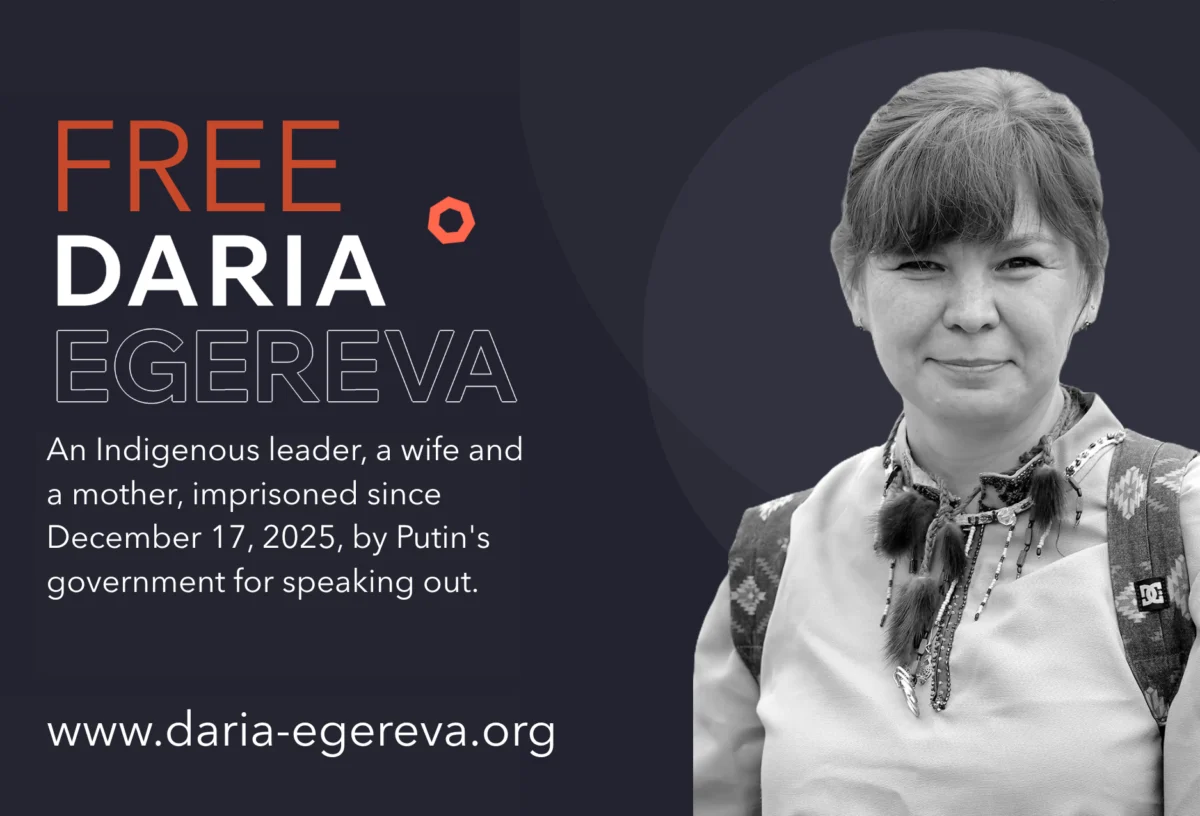
Bonn, Germany – In a powerful display of solidarity and unwavering commitment to Indigenous leadership, the International Indigenous Peoples’ Forum on Climate Change (IIPFCC), also known as the Indigenous Peoples’ Caucus within the UN Framework Convention on Climate Change (UNFCCC), announced on June 9, 2026, at the UN Climate Change Conference (SB64) in Bonn, Germany, its decision to reconfirm Daria Egereva as Co-Chair of the Forum until her full release. This historic affirmation underscores the collective resolve of the global Indigenous climate movement to protect and uphold the voices of its leaders, even in the face of severe political repression. Cultural Survival, a long-standing advocate for Indigenous rights, has welcomed this decision, framing it as a profound act of solidarity that refuses to allow state-sponsored persecution to silence essential Indigenous voices on the international stage.
Egereva, a prominent Selkup Indigenous human rights defender hailing from the Tomsk region of Russia, has been a pivotal figure within the IIPFCC since assuming the role of Co-Chair in 2023. Her arrest on December 17, 2025, followed by a court order for her detention the subsequent day, marks a significant escalation of pressure against Indigenous activists. She faces accusations of participation in a "terrorist organization," a charge that carries severe penalties, potentially ranging from 10 to 20 years of imprisonment. This detention occurred mere days after her return from COP30 in Belém, Brazil, where she played a crucial role in coordinating the participation of accredited Indigenous Peoples, a testament to her extensive engagement in global climate governance. The timing and nature of her arrest are widely interpreted as direct retaliation for her decades-long dedication to advocating for Indigenous rights and environmental protection.
Unwavering Support Amidst Repression
The IIPFCC’s decision to retain Egereva in her leadership capacity, rather than appointing a successor, sends a clear and unambiguous message: her voice, her mandate, and her integral role within the global Indigenous climate movement remain inviolable. By keeping her position secure, the Caucus affirms that imprisonment cannot strip away her standing or diminish her influence. This strategic move ensures that her seat and her authority as a leader of the global Indigenous climate movement are preserved, ready for her to resume her duties fully upon her release.
Alicia Moncada (Wayuu), Director of Advocacy and Communications at Cultural Survival, articulated the profound significance of this decision: "This decision tells Daria, and every Indigenous defender facing persecution, that we will not let a prison cell erase their voice." This statement encapsulates the spirit of resilience and mutual support that defines the Indigenous movement. It highlights a proactive approach to safeguarding its leadership against state-sponsored silencing tactics.
Cultural Survival has reiterated its steadfast support for Daria Egereva, the IIPFCC, and all Indigenous human rights and climate defenders whose safety, dignity, and freedom are under threat. The organization has renewed its urgent call for Egereva’s immediate and unconditional release, celebrating the Caucus’s decision as an exemplary model of how the Indigenous movement actively protects its own members and upholds its collective leadership.
Background to the IIPFCC and Indigenous Climate Advocacy
The International Indigenous Peoples’ Forum on Climate Change (IIPFCC) serves as the primary consultative body for Indigenous Peoples within the UNFCCC process. Established to ensure Indigenous Peoples’ perspectives, rights, and knowledge are integrated into international climate policy, the IIPFCC comprises representatives from Indigenous organizations worldwide. Its mandate extends to advocating for the recognition of Indigenous territories as critical carbon sinks, promoting Indigenous-led conservation initiatives, and demanding the protection of Indigenous rights in all climate actions.
The UNFCCC, established in 1992 under the United Nations, is the international body tasked with coordinating global efforts to combat climate change. Its Conferences of the Parties (COPs) are annual summits where member states negotiate and implement climate policies. Indigenous Peoples, as stewards of approximately 80% of the world’s remaining biodiversity, have a vested interest in these negotiations and have consistently pushed for stronger climate action that respects their rights and traditional knowledge.
The IIPFCC, through its active participation in COPs and subsidiary body meetings like the Bonn Climate Change Conference (SB sessions), plays a crucial role in shaping the discourse and outcomes of climate negotiations. Leaders like Daria Egereva are instrumental in articulating the unique vulnerabilities and the vital contributions of Indigenous Peoples to climate solutions. Egereva’s work has often focused on the interconnectedness of Indigenous rights, land sovereignty, and effective climate mitigation and adaptation strategies.
Chronology of Events Leading to Egereva’s Detention and the IIPFCC’s Response
Early 2023: Daria Egereva is elected Co-Chair of the International Indigenous Peoples’ Forum on Climate Change (IIPFCC), marking her ascension to a prominent leadership role in global climate advocacy.
November 2025: Egereva actively participates in COP30 in Belém, Brazil, coordinating the engagement of accredited Indigenous Peoples in the UNFCCC negotiations. This period often involves intense advocacy, negotiation, and the articulation of Indigenous priorities to national delegations and international bodies.
December 17, 2025: Daria Egereva is arrested in Russia. The timing of her arrest, shortly after her return from a major international climate conference, strongly suggests a connection to her advocacy work.
December 18, 2025: A Russian court orders Egereva’s detention based on accusations of participating in a "terrorist organization." This charge carries significant legal implications and severe potential penalties, highlighting the state’s aggressive stance against her.
Early 2026: Reports of Egereva’s detention and the charges against her begin to circulate within Indigenous rights networks and international human rights organizations. Concerns about the political motivation behind her arrest grow.
June 9, 2026: During the UN Climate Change Conference (SB64) in Bonn, Germany, the IIPFCC announces its decision to reconfirm Daria Egereva as Co-Chair until her full release. This announcement is made during a critical juncture of international climate negotiations, amplifying its significance.
Supporting Data and the Broader Context of Indigenous Rights and Climate Change
The persecution of Indigenous human rights defenders like Daria Egereva is not an isolated incident. Global data highlights a concerning trend of increasing threats and violence against those who defend land, forests, and environmental rights, a significant proportion of whom are Indigenous.
- Global Witness Report (2023): This report indicated that in 2022, at least 177 environmental defenders were killed globally, with a disproportionate number being Indigenous. Latin America remains the deadliest region for defenders. While Egereva’s situation involves detention rather than direct killing, the underlying pattern of state and corporate repression against environmental defenders is starkly evident.
- Indigenous Peoples and Biodiversity: Indigenous territories are estimated to hold 80% of the world’s remaining biodiversity. Their traditional knowledge and land management practices are crucial for effective conservation and climate change mitigation. Repressing Indigenous leaders directly undermines these vital efforts.
- Climate Change Impacts on Indigenous Communities: Indigenous communities are often on the frontlines of climate change, experiencing its impacts disproportionately due to their close relationship with the environment and their often remote locations. Egereva’s work, therefore, is directly linked to the survival and well-being of her community and other Indigenous peoples facing similar threats.
- Legal Frameworks: International legal instruments, such as the UN Declaration on the Rights of Indigenous Peoples (UNDRIP), recognize the rights of Indigenous peoples to their lands, territories, and resources, and their right to participate in decision-making processes that affect them. Egereva’s detention raises serious questions about Russia’s adherence to these international commitments.
The charge of participating in a "terrorist organization" is frequently used by authoritarian regimes to silence dissent and criminalize legitimate activism. The lack of transparency and the potential for politically motivated prosecutions in such cases are well-documented by international human rights organizations.
Implications and Analysis of the IIPFCC’s Decision
The IIPFCC’s decision to reconfirm Daria Egereva as Co-Chair carries significant implications for the global Indigenous movement and international climate diplomacy:
- Demonstration of Collective Strength: This act showcases the internal strength and solidarity of the Indigenous movement. It signals that the movement will not abandon its leaders when they face persecution, thereby deterring further repression.
- Upholding Indigenous Governance: By refusing to replace Egereva, the IIPFCC reinforces its own governance structures and the legitimacy of its elected leaders, regardless of external pressures. It asserts that Indigenous leadership is not contingent on freedom of movement but on the mandate given by the community.
- Amplifying the Call for Release: Keeping Egereva in her formal role ensures that her situation remains visible within the UNFCCC process. It provides a consistent platform for advocacy for her release, integrating her personal struggle with the broader fight for Indigenous rights and climate justice.
- Setting a Precedent: This decision could serve as a precedent for other Indigenous organizations and movements facing similar challenges, demonstrating a robust strategy for maintaining leadership continuity and solidarity in times of crisis.
- Challenging State Repression: The IIPFCC’s stance directly challenges the efficacy of state repression as a tool to silence Indigenous voices. It highlights that such tactics can, in fact, galvanize greater international support and solidarity for the targeted individuals and movements.
Broader Impact and Future Outlook
The case of Daria Egereva and the IIPFCC’s response resonate beyond the immediate context of climate negotiations. It underscores the critical link between human rights, environmental protection, and Indigenous self-determination. As the world grapples with the escalating climate crisis, the role of Indigenous Peoples as frontline guardians of the environment becomes increasingly vital. Any attempt to silence or incarcerate these voices represents a direct threat to effective climate action and global environmental sustainability.
The international community, particularly within the UNFCCC framework, faces a critical juncture. The IIPFCC’s action calls for greater attention to the safety and security of Indigenous defenders and for mechanisms to ensure their unimpeded participation in climate governance. The continued advocacy by organizations like Cultural Survival, coupled with the unwavering solidarity of the IIPFCC, aims to secure Egereva’s release and to reinforce the message that Indigenous leadership in the fight for a sustainable planet will not be intimidated or extinguished.
The ongoing efforts to secure Daria Egereva’s freedom are a testament to the enduring spirit of Indigenous resistance and the power of collective action in the face of adversity. Her continued role as Co-Chair, even while detained, ensures that her struggle remains a focal point in the global effort to achieve climate justice and uphold the rights of all peoples.
About Cultural Survival
Cultural Survival has been a dedicated advocate for Indigenous Peoples’ rights and has supported Indigenous communities in their pursuit of self-determination, cultural preservation, and political resilience since its founding in 1972. For more information, please visit www.cs.org.
Media Contact:
Agnes Portalewska
[email protected]