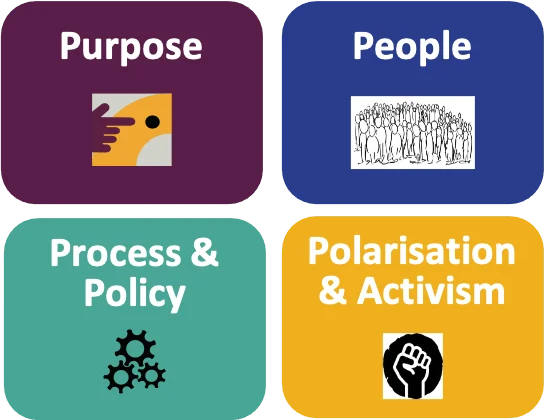
The past two years have marked an unprecedented period of global upheaval, propelling the world of work into a rapid, large-scale experiment with new operational paradigms. Far from being a temporary disruption, the ongoing pandemic era has fundamentally altered perceptions of work and its future, ushering in a complex landscape characterized by evolving data and persistent open questions. Analysis of emerging trends reveals four interconnected pillars defining this transformation: a renewed focus on Purpose, significant shifts in the dynamics of People and talent, a necessary overhaul of Process & Policy, and the increasing impact of societal Polarisation & Activism within the workplace. These shifts carry profound implications for Diversity, Equity, and Inclusion (DEI) strategies, demanding adaptive leadership and continuous reflection from organizations navigating this ambiguous and fast-changing environment.
The Deep Dive into Purpose: A Foundational Redefinition of Work
The onset of the pandemic served as a profound catalyst, prompting individuals globally to engage in deep introspection regarding their personal purpose and its alignment with their professional lives. A significant U.S. survey by McKinsey revealed that nearly two-thirds of respondents were actively reflecting on their purpose, driven by their pandemic experiences. Fundamental questions emerged, challenging the long-held implicit work model that often demanded substantial personal sacrifices for career advancement: "Is this job truly worth my energy and time?"
This re-evaluation has translated into tangible shifts in employee behavior. A global Edelman survey from August 2021 indicated that almost 60% of employees had either left or were planning to leave their jobs in pursuit of roles that better resonated with their personal values, while 50% sought improved lifestyles. These purpose-driven motivations now outweigh traditional exit reasons such such as higher compensation or career growth, which were prevalent in pre-pandemic times. The shift is notably cross-generational; U.S. millennial workers were three times more likely to re-evaluate their work, while the U.K. saw a doubling of employees over 50 opting for early retirement since the pandemic began. While not every departure is solely attributable to a lack of purpose, it has undeniably become a central consideration.
The lockdowns starkly illuminated how pre-existing work models often hindered the fulfillment of personal purpose, particularly exposing the costs of unequal and biased workplaces. The dual burden faced by many women, balancing professional and domestic responsibilities, was not new but became undeniably visible during the pandemic. This unprecedented period finally compelled a widespread realization that the old ways of working were unsustainable for fostering healthy, connected, and fulfilling lives. Consequently, women, especially those with caregiving responsibilities, reported significantly higher rates of burnout and resignations. Globally, women’s employment declined by 54 million, or 4.2%, in the first year of the pandemic, compared to a 3% drop for men. This data underscores an urgent need for redesigned, healthier work models that holistically integrate personal purpose with professional and private life, ensuring sustainability for all employees, particularly women.
Before the pandemic, research by PwC highlighted a significant intention-action gap among business leaders regarding purpose. While nearly 79% acknowledged its importance, only 34% actually integrated organizational purpose into decision-making. Furthermore, many struggled to cultivate work environments that fostered employees’ sense of personal purpose. The pandemic, however, drastically disrupted this inertia, forcing a reckoning with how individuals perceive the meaning and purpose of their work. This re-evaluation holds profound implications for employees, managers, leaders, stakeholders, organizations, and society at large, demanding a responsive and integrated approach to DEI.
The Great Resignation and the Rise of Employee Power
As economies and organizations grapple with recovery, talent has emerged as the pivotal factor. The balance of power has decisively shifted towards employees, who are now in a stronger position to articulate what will attract and retain them. This era is widely characterized by "The Great Resignation," a phenomenon accelerated by the pandemic. A global Microsoft survey from March 2021 revealed that over 40% of employees were considering leaving their employers within the year. While researchers note that a resignation trend was building pre-pandemic, its acceleration and the sheer intent to resign represent a critical talent concern.
The numbers are striking: In the U.S., August 2021 saw 4.3 million voluntary quits alongside 10.4 million open jobs. The U.K. recorded over 1 million open jobs during the same period. This talent gap is projected to persist, with 70% of U.S. employers expecting it to continue into the following year, and 61% struggling with employee retention. Even Germany, the EU’s largest economy, witnessed an 11% jump in concern among company leaders regarding the lack of skilled employees, reaching 34.6% by July 2021.
Analysis indicates that resignation rates are particularly prevalent among mid-career professionals, showing a 20% increase from pre-pandemic levels, especially in high-demand sectors like technology and healthcare. While the service and hospitality sectors traditionally experience high turnover, the pandemic brought increased public awareness and empathy for their often-poor working conditions. A notable trend is the rise of "Rage Quitting," where workers impulsively leave due to intolerable negative work environments. The pandemic has undeniably intensified the focus on valuing employees and ensuring inclusive workplaces with fair labor practices and policies.
Uncertainty has become a defining characteristic of our times. For some, this breeds stress, while for others, it provides an impetus to re-evaluate and pursue new opportunities. Quitting, in this context, has become an active declaration that "we can do better." Organizations can no longer afford to ignore the profound impact of workplace culture and employee experience on attracting and retaining talent, which ultimately dictates organizational success and broader economic growth. A people-centered work culture must be central to "The Great Reset" and other "build back better" initiatives as societies emerge from the pandemic.
However, the narrative of "The Great Resignation" is not uniformly positive. "The Great Divergence" highlights the growing inequalities within the current economic recovery. Not all pandemic-era employment changes were voluntary resignations; many were unwanted job losses, exacerbating a global employment crisis. OECD countries report 20 million fewer people in work since the pandemic’s start, and over 110 million fewer jobs worldwide. The International Labour Organization (ILO) estimated global hours worked in 2021 to be 4.3% below pre-pandemic levels, equivalent to 125 million full-time jobs, with low-paid jobs disproportionately affected. While global unemployment slightly decreased by May 2021, it remains higher than pre-pandemic levels. This underscores the urgent need for an inclusive approach to talent and employment, one that embraces the full scope of pandemic-era shifts and resets systems to be fairer to all, seizing this moment for profound, equitable change.
Reimagining Processes and Policies: The New Social Contract of Work
Periods of significant change often bring existing inefficiencies and outdated norms into sharp relief, presenting invaluable opportunities to reassess, design, and experiment with new solutions. The pandemic intensely focused attention on where and how work is performed, triggering a major re-negotiation of the social contract between employees and employers. Workers now exhibit a significantly lower tolerance for workplace "presenteeism," arduous commutes, rigid dress codes, inadequate working conditions, unfair compensation, discrimination, the illusion of meritocracy, limited control over their work, "always-on" availability expectations, excessive business travel, feelings of isolation, and a lack of well-being and psychological safety. Critically, the pandemic also highlighted enduring gender inequalities in family care responsibilities. It became undeniably clear that many workplaces were built on outdated norms that no longer served contemporary realities, necessitating a fundamental reset of organizational policies governing the location and execution of work.
One of the most significant policy shifts revolves around work location. Emerging data, while sometimes conflicting, consistently reveals a strong desire among various demographic groups (e.g., by generation, gender, level) to continue working remotely. In the U.S., remote work is projected to continue at least one day a week. The Future Forum Pulse report highlighted that the desire for flexible work is strongest among women, working parents, and employees of color, who reported gains in employee experience scores while working remotely. This shift is anticipated to have broad social ramifications, fostering greater employee diversity, improved work-life balance, and expanded talent pools as geographical proximity becomes less critical.
However, many employees expect more than just one day of remote work weekly, with estimates suggesting up to two-thirds of workers are prepared to quit if remote work is not the norm. Pre-pandemic, remote work policies were often ad hoc, leading to biases, burdening managers with subjective decisions, discouraging employees from making requests, and generally being perceived as unfair. Research conducted by Lisa and Veronika Hucke in 2019 demonstrated that the majority of remote workers were senior males, while working mothers faced stigma when requesting flexibility, and junior staff feared career repercussions for expressing such desires. The widespread global experience with remote work during the pandemic now presents a crucial opportunity to rectify these historical imbalances and establish equitable, inclusive policies.
Crucially, the process of creating these new policies is as important, if not more so, than the policies themselves. An approach designed in isolation risks irrelevance, low acceptance, and potentially exacerbating existing inequalities. A multi-country survey of knowledge workers revealed a concerning disconnect: 66% of executives reported designing post-pandemic workforce policies with little to no direct input from their employees. This insular approach contributes to executive overconfidence, with 66% believing they are "very transparent," while only 42% of workers agree. This significant gap in perception foreshadows potential implementation failures. The collective call to action from the pandemic era is clear: policies must be assessed for current and future fit, co-created using data and input from all organizational levels, integrate behavioral insights, and be implemented with agile experimentation to foster genuinely inclusive workplace models.
Navigating Polarisation and the Imperative of Employee Activism
Emerging from lockdowns, societies are grappling with a complex mix of emotions, including sadness, loss, fear, a lack of control, and anger, which inevitably spill over into the workplace. Research from 17 countries revealed that 60% of people feel more divided now than before the pandemic, a 30% increase from pre-pandemic rates. New challenges arise in this polarized environment, such as "no jab, no job" policies, which some view as essential for public health, while others perceive them as an overreach. Global frustration and fatigue have manifested in over 50,000 pandemic-related protests. "COVID rage" has led to increasing accounts of customer abuse towards workers, particularly in hospitality and service sectors, where up to 80% reported witnessing or experiencing such incidents. Simultaneously, the pandemic has starkly highlighted widening inequalities in access to vaccinations and, consequently, economic recovery, deepening the chasm between the ‘haves’ and ‘have-nots.’
Beyond pandemic-specific divisions, a long-term erosion of trust in public officials and civic institutions has intensified. A global study from August 2021 indicated that Millennials and Generation Z harbor such deep distrust that they expressed greater faith in governance by artificial intelligence than by fellow humans. This sentiment stems from ongoing concerns about corruption, stale political leadership, and threats to physical safety posed by surveillance and militarized policing targeting activists and people of color. The tragic murder of George Floyd in May 2020 sparked an unprecedented surge in Black Lives Matter and anti-racism activism across over 60 countries, bringing issues of inequality and discrimination to the forefront of societal and workplace discourse.
Employees are now unequivocally demanding that their workplace leaders take a stand on critical social issues, with one global survey indicating that as many as 76% expect this. Furthermore, employees are increasingly energized to take action themselves. The August 2021 Edelman survey showed that 60% of employees feel empowered to be change-makers in their workplace, and 75% globally stated they would act to advance urgently needed organizational changes, with 40% willing to go public through whistleblowing, protests, or social media posts. In the U.S., there has been a resurgence of interest in labor unions as a means to safeguard human rights at work and participate in redesigning organizational cultures; October 2021 alone saw over 25,000 workers on strike, significantly higher than the average of 10,000 in the preceding three months.
The question remains whether organizational leaders have truly grasped the magnitude of these changes. A global survey revealed that only 48% of employees believe their employers are consistently acting on their stated values. This disconnect carries significant risks, including eroding trust, damaging leader credibility, and decreasing employee engagement. The Great Resignation is further fueled by this gap, with 33% of employees quitting when their employer failed to address a societal or political issue they felt obliged to confront. The era of the silent executive on DEI issues is unequivocally over, as is the tolerance for empty public statements without tangible change. The new standard demands inclusive leaders who are allies through concrete actions, not merely through social media posts.
The Enduring Imperative for DEI and Inclusive Leadership
The turbulent period of the pandemic has irrevocably altered the landscape of work, serving as a powerful catalyst for shifts that were, in many cases, already nascent. The re-evaluation of personal and professional purpose, the empowerment of a discerning workforce, the necessity of flexible and equitable policies, and the heightened demand for ethical leadership in a polarized world are not fleeting trends but foundational changes. These four pillars—Purpose, People, Process & Policy, and Polarisation & Activism—are deeply interconnected and converge on a singular, undeniable truth: the future of work is inextricably linked to the robust implementation of Diversity, Equity, and Inclusion.
Organizations that embrace these shifts with foresight and genuine commitment will be better positioned to attract and retain top talent, foster innovation, and build resilient, adaptive cultures. Conversely, those that cling to outdated norms or fail to engage meaningfully with employee expectations risk falling behind, facing increased turnover, diminished trust, and reputational damage. The pandemic has provided a stark opportunity to dismantle historical inequalities and construct more humane, equitable, and sustainable models of work.
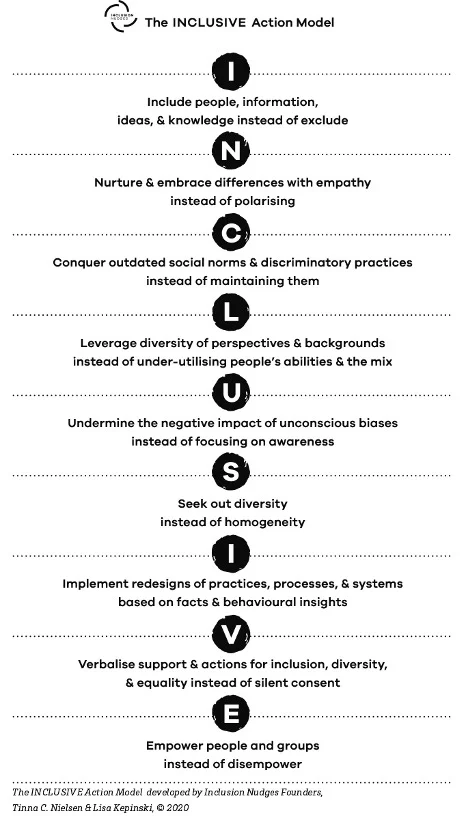
For leaders and organizations, this demands not just an acknowledgment of these trends but a proactive, integrated strategy rooted in inclusive leadership. It requires continuous reflection on how DEI is embedded in every aspect of organizational life, from talent acquisition and development to policy design and crisis response. Tools and frameworks that foster behavioral insights and challenge unconscious biases, such as "Inclusion Nudges," become indispensable in guiding these transformations. The imperative is clear: to move beyond rhetoric and towards systemic action, ensuring that the profound lessons learned during this tumultuous era pave the way for a truly inclusive and purpose-driven future of work for all.
This article draws inspiration from the research and insights presented by Inclusion Nudges, including an HR Master Class given by Lisa during Legal Island’s support for DEI change-makers. For organizations seeking advisory consulting, coaching, or speaking engagements on these critical topics, further engagement can be sought directly.