The escalation of military conflict in Iran has triggered a humanitarian crisis of staggering proportions, yet as the international community grapples with the immediate devastation, the United Kingdom finds itself at a profound geopolitical and economic crossroads. For decades, British foreign and domestic policy has been tethered to a specific vision of global capitalism—one largely authored in Washington D.C. However, as the war in the Middle East exposes the shifting priorities of the United States, Westminster is being forced to confront a question it has deferred since the conclusion of the Second World War: which economic model will define Britain’s future? The current crisis is not merely a matter of strategic alignment; it is a catalyst for a fundamental re-evaluation of the British state’s relationship with capital, labor, and its European neighbors.
The Humanitarian Context and Geopolitical Shift
As of March 24, 2026, the human cost of the hostilities in Iran has reached a critical threshold. Reports from international aid agencies indicate a civilian population besieged by the dual pressures of active combat and a collapsing infrastructure. Families have been displaced by the millions, and the destruction of urban centers has created a vacuum of basic necessities. While the geopolitical ramifications are vast, the immediate reality remains one of profound suffering—a reality that must remain the focal point of any international response.
However, beneath the surface of the military campaign lies a significant shift in American posture. The United States’ approach to the conflict has been characterized by an erratic blend of interventionism and economic nationalism. This "America First" trajectory, which has been gaining momentum for over a decade, has left traditional allies like the United Kingdom in a precarious position. The assumption that Britain could rely on a stable, predictable partner in the Anglosphere is being dismantled in real-time. The war has acted as an accelerant, highlighting the risks of a British economic strategy that is overly dependent on American hardware, American strategic priorities, and an American-style deregulated marketplace.
A Forty-Year Drift: The Americanization of the British Economy
To understand the current dilemma, one must look back at the trajectory of the British economy over the last four decades. Since the late 1970s and early 1980s, the UK has steadily moved away from the social democratic consensus of post-war Europe and toward a model of "Anglosphere Capitalism." This shift has been defined by several key pillars:
- Financial Deregulation: The "Big Bang" of 1986 transformed the City of London into a global hub for high-risk, high-reward financial services, often at the expense of the productive manufacturing sector.
- Weakened Collective Bargaining: Legislative changes have systematically reduced the power of trade unions, leading to a decline in the labor share of national income.
- Privatization of Public Assets: From energy and water to transportation and elements of healthcare, the UK has pursued a policy of marketization that stands in stark contrast to many of its continental peers.
- Technological Dependency: The UK’s digital infrastructure is largely dominated by Silicon Valley platforms, ensuring that the value generated by British data and consumer behavior is extracted to US-based corporations.
- The Post-Brexit Gamble: Following the 2016 referendum, the UK government doubled down on the "Global Britain" narrative, which was effectively a bet on deeper integration with the US economy to offset the loss of the European Single Market.
This bet now appears increasingly unstable. The United States of 2026 is no longer the champion of multilateralism or international institutions that it was in the late 20th century. As Washington pursues aggressive subsidies for its own industries and retreats from global trade norms, the UK is left as a junior partner in an arrangement that offers diminishing returns.
Chronology of the Crisis (2024–2026)
The current state of affairs is the result of a multi-year escalation that has redefined British-American relations:
- Late 2024: Tensions in the Persian Gulf escalate following the collapse of renewed nuclear negotiations. The UK remains aligned with the US "maximum pressure" campaign despite warnings from European allies.
- May 2025: The US passes the "Economic Security and Sovereignty Act," a protectionist measure that heavily penalizes foreign firms—including British ones—that do not move their supply chains to American soil.
- November 2025: Hostilities break out in Iran. The US demands immediate and unconditional military support from the UK, while simultaneously bypassing NATO protocols.
- January 2026: A series of diplomatic rifts emerge as the UK Treasury expresses concern over the impact of energy price volatility and the cost of the war effort on the domestic cost-of-living crisis.
- March 2026: As the war enters a new, more destructive phase, the British public and business sectors begin to openly question the sustainability of the current strategic alignment.
Comparative Data: The Cost of Inequality
The choice facing Britain is not just about foreign policy; it is about the internal distribution of wealth and power. Data from the OECD and the World Bank consistently show a widening gap between the UK and its Northern European neighbors. In the UK, the Gini coefficient—a measure of income inequality—remains significantly higher than in countries like Germany, Denmark, or the Netherlands.
| Country | Gini Coefficient (Approx.) | Union Density (%) | Public Spending (% of GDP) |
|---|---|---|---|
| United Kingdom | 0.35 | 23% | 40% |
| United States | 0.41 | 10% | 38% |
| Germany | 0.29 | 16% | 45% |
| Norway | 0.26 | 50% | 49% |
| Netherlands | 0.28 | 15% | 43% |
Source: Consolidated OECD 2024-2025 Data.
These figures suggest that the "European Model"—characterized by stronger labor rights, more robust financial regulation, and higher levels of public investment—results in more resilient and equitable societies. For Britain, moving closer to this model would mean addressing the systemic issues that have allowed extreme wealth to concentrate in the hands of a few.
The Influence of the Ultra-Wealthy
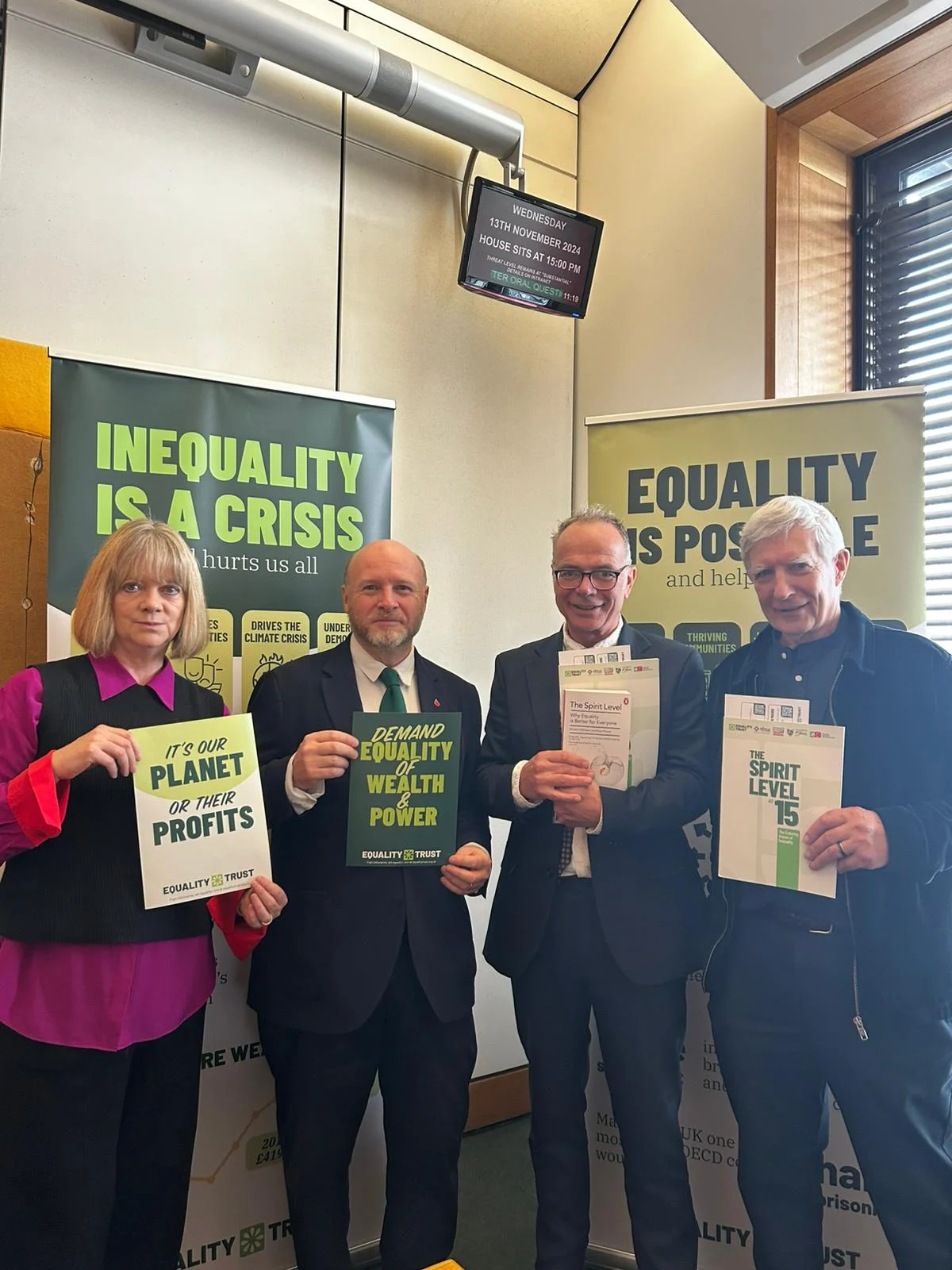
A critical factor in Britain’s continued adherence to the American model is the influence of concentrated corporate power and extreme wealth on the political system. According to a recent briefing by the Equality Trust, titled Money, Media and the Lords: How the Ultra-wealthy are Shaping Britain, there is a documented "feedback loop" between financial elites and legislative outcomes.
Oligopolies in key sectors—such as energy, media, and finance—not only reduce competition but also exercise significant lobbying power. This influence often results in regulations that favor large-scale capital over small businesses and workers. In the House of Lords, for instance, a significant number of peers hold directorships or substantial shareholdings in industries that benefit from the current deregulated environment. This concentration of influence makes it difficult for the government to pivot toward a more equitable economic model without facing internal political resistance.
Reactions from Stakeholders
The debate over Britain’s economic future has drawn sharp reactions from across the political and social spectrum.
The Treasury and Business Sector: "We must remain cautious about any radical shifts in our trade relationships," a senior Treasury official stated. "The US remains our largest single-country trading partner. However, we cannot ignore the growing trend of American protectionism. We need a strategy that protects British interests while maintaining our global competitiveness."
Labor and Advocacy Groups: Priya Sahni-Nicholas, Co-Executive Director of the Equality Trust, argues that the war in Iran is a wake-up call. "We are at a crossroads. We can continue to be an appendage of an erratic American economic machine, or we can build an independent economy that works for everyone. This means naming the problem of concentrated wealth and acting to dismantle the structures that perpetuate inequality."
European Diplomats: Representatives from the EU have signaled a cautious openness to renewed British cooperation. "The door is not closed to a closer relationship based on shared values of social stability and regulated markets," noted a spokesperson for the European Commission. "But that requires a commitment to the standards that define the European social model."
A Path Forward: Community Wealth and Strategic Autonomy
If Britain is to break its dependence on the American model, it must adopt a proactive strategy focused on domestic resilience and social equity. This involves several key policy shifts:
- Community Wealth Building: Implementing strategies that keep wealth circulating within local economies. This includes using "anchor institutions"—such as hospitals and universities—to procure goods and services from local businesses rather than multinational corporations.
- Domestic Industrial Strategy: Investing in green energy and advanced manufacturing to build capacity in "left-behind" regions. This would reduce the reliance on overseas contractors and create high-quality, unionized jobs.
- Technological Sovereignty: Developing UK-based digital infrastructure and data regulations that ensure the value of the digital economy is retained domestically, rather than extracted by Silicon Valley.
- Financial Reform: Strengthening regulations to ensure the financial sector serves the productive economy. This could include a financial transaction tax and stricter "ring-fencing" of retail banking from investment activities.
- Competition Policy: Empowering regulators to break up monopolies and prevent the concentration of market power that allows a handful of owners to dictate national policy.
Conclusion: The Stakes of the Crossroads
The war in Iran has laid bare the fragility of the current global order and Britain’s place within it. The choice before the UK government is stark: it can attempt to maintain its current trajectory, leaving the country vulnerable to the whims of an increasingly nationalist United States and the influence of a domestic elite, or it can seize this moment to reorient.
Moving toward a model inspired by the more equal economies of Northern Europe is not a radical departure from reality; it is a pragmatic response to a changing world. By focusing on community wealth, industrial investment, and the curbing of extreme wealth, Britain can build an economy that is both strategically autonomous and socially just. The human catastrophe of the war in Iran is a tragedy that cannot be undone, but it may yet serve as the moment Britain finally chooses a future that works for the many, not the few.