Virginia Governor Abigail Spanberger this week signed into law a landmark bill, HB167, effectively ending state tax exemptions for several organizations dedicated to perpetuating the memory of the Confederacy. This pivotal legislative action repeals a controversial "segregation era carve-out" within the state’s tax code, a provision that has financially benefited groups like the United Daughters of the Confederacy (UDC) and other pro-Confederate associations since the 1950s. The move marks a significant step in Virginia’s ongoing efforts to reconcile with its complex past and redefine its public commemoration of the Civil War and its aftermath.
A Legacy of State-Sanctioned Support for the Confederacy
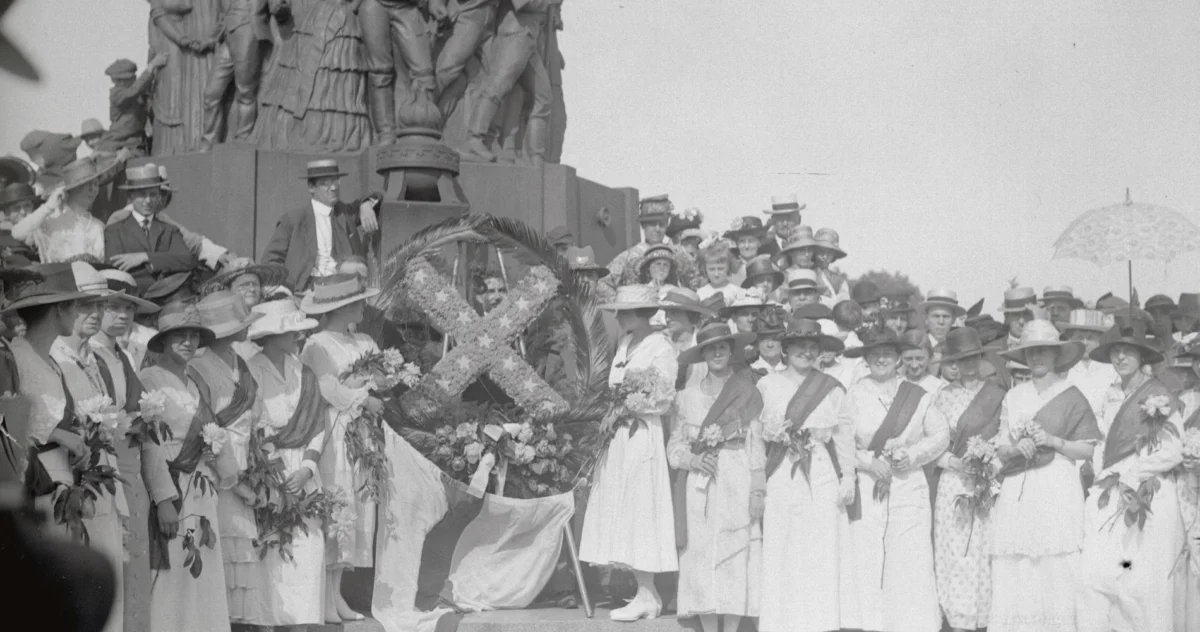
The recently enacted legislation directly addresses Virginia’s deep-rooted history of providing financial and symbolic support to organizations that championed the Confederacy. For decades, groups such as the United Daughters of the Confederacy and the Sons of Confederate Veterans have played a central role in shaping public narratives and installing hundreds of Confederate memorials across the Southern landscape. These monuments, often erected during periods of intense racial tension, served not merely as historical markers but as powerful symbols glorifying the Confederacy’s fight to preserve slavery, frequently reframing Southern secession as a noble defense of states’ rights and local autonomy.
The historical context of these exemptions is crucial. They were introduced during the mid-20th century, a period often referred to as the "Massive Resistance" era in Virginia. This was a time when the state actively opposed federal desegregation mandates following the landmark Brown v. Board of Education Supreme Court decision in 1954. The proliferation of new Confederate monuments and the granting of tax benefits to their proponents in the 1950s and 1960s were not coincidental; they were direct responses to the burgeoning Civil Rights Movement and explicit efforts to reassert white supremacy and reinforce racial hierarchy. Delegate Alex Askew, the sponsor of HB167, articulated this historical truth, telling WHRO that these monuments were intentionally placed "to show African Americans and certain individuals, certain communities, that they were second-class citizens."
Virginia, historically a pivotal state in the Confederacy and the site of its capital, Richmond, holds the dubious distinction of having more Confederate monuments than any other state in the country. This dense concentration of memorials underscores the extent to which the state’s official and unofficial structures were intertwined with the "Lost Cause" narrative—a revisionist historical interpretation that downplayed slavery as the cause of the Civil War, romanticized the antebellum South, and celebrated Confederate figures.
A Detailed Timeline of Virginia’s Confederate Endorsements
The state’s financial and material support for Confederate groups was not an isolated incident but a sustained policy.
- 1950: Virginia Governor John S. Battle signed a deed gifting land in Richmond to the United Daughters of the Confederacy for the construction of its headquarters. This marble-clad building, a prominent structure in the city, is reportedly valued at approximately $4.7 million today, highlighting the substantial nature of the state’s initial contribution.
- 1952: The Virginia General Assembly explicitly exempted the UDC from the state recordation tax, a levy typically imposed when property sales are registered. Notably, the UDC’s Virginia division was the only organization specifically named in this section of the tax code, underscoring the unique favor it received.
- Post-1952: Further legislative actions granted tax exemptions for real and personal property owned by the Virginia Division of the UDC, the General Organization of the UDC, the Confederate Memorial Literary Society, and the Stonewall Jackson Memorial, Incorporated. These exemptions provided considerable financial relief, saving the UDC an estimated $57,000 annually in property taxes on its Richmond headquarters alone, according to The New York Times. This sustained financial backing was, as WHRO reported, "part of a wave of resistance to racial integration and civil rights efforts in the commonwealth."
These provisions, deeply embedded in Virginia’s legal and financial framework for over 75 years, actively facilitated efforts to romanticize slavery, glorify the Confederacy, and, by extension, support the infrastructure of Jim Crow segregation.
The Financial and Symbolic Impact of HB167
The passage of HB167 signifies a definitive end to this long-standing state endorsement. While the exact total financial impact on the organizations affected will vary, the UDC alone reported approximately $2.1 million in revenue and $1.1 million in expenses in 2025. Losing the estimated $57,000 in property tax savings for their Richmond headquarters, along with other exemptions, will undoubtedly impact their operational budget and potentially their ability to maintain their historical properties or pursue their stated mission.
However, the symbolic impact of HB167 arguably outweighs the purely financial one. For Delegate Askew, the legislation represents more than just fiscal adjustments; it’s about fostering a "fairer, more inclusive tax policy that truly reflects our commitment to equality and progress," rather than "providing tax relief to historically pro-slavery institutions." He emphasized that these groups "help glorify the Confederacy and essentially, I believe, have whitewashed the commonwealth’s history. It’s truthfully time to move forward." The bill’s signing is, in Askew’s words, "a proud moment and an important step forward for Virginia."
Broader Initiatives to Confront Virginia’s Confederate Past
HB167 is not an isolated measure but part of a broader, concerted effort by Virginia’s leadership to critically re-evaluate and dismantle remnants of the state’s Confederate legacy. Governor Spanberger has signed additional legislation aimed at this goal:
- Confederate Specialty License Plates: Another bill signed into law discontinues specialty license plates featuring images or symbols associated with Robert E. Lee and the Sons of Confederate Veterans. This move removes another layer of state-sanctioned recognition and promotion of Confederate figures.
- Virginia Military Institute (VMI) Task Force: The Governor also sent back to the Assembly with recommendations a bill to establish a task force. This body is charged with recommending changes to, among other things, distance the Virginia Military Institute from the "Lost Cause" narrative. VMI, with its deep historical ties to Confederate leadership, has been under increasing pressure to address its institutional history and symbols. The task force’s mandate is to critically examine how VMI’s past is presented and to ensure that its narrative is truthful and inclusive, moving away from romanticized portrayals that minimize the Confederacy’s role in perpetuating slavery.
These legislative actions underscore a growing consensus within Virginia’s government that the time for passively accepting or actively supporting Confederate iconography and organizations has passed.
The Ongoing Battle for Historical Memory
The effort to confront and recontextualize the legacy of the Confederacy extends beyond legislative chambers, reaching into communities and educational institutions. The contentious debate over school names in the Shenandoah Valley serves as a stark example. When a local school board controversially reinstated the names of two schools originally christened for Confederate generals, it sparked immediate backlash. Black students subsequently filed a lawsuit, arguing that the decision to name schools after individuals who not only fought for slavery but were outspoken proponents of racist ideologies was a deliberate act "to make it very clear that Black students were not welcome." This case, which remains pending, highlights the deep emotional and social resonance of these historical symbols and the continuing struggle for equitable representation in public spaces.
The debate in Virginia is mirrored in different forms across the nation, reflecting a broader societal reckoning with American history. While some argue for the preservation of these monuments and exemptions as a tribute to "heritage," a growing chorus emphasizes the need for a more accurate and inclusive historical narrative that acknowledges the painful realities of slavery and racial oppression.
A Stark Contrast: Virginia vs. Federal Government Actions
Virginia’s proactive approach to confronting its Confederate legacy stands in notable contrast to certain actions taken at the federal level in recent years. The Trump administration, for instance, implemented policies that appeared to downplay or erase aspects of slavery and racial injustice from public discourse and historical sites:
- National Parks and Smithsonian: The administration reportedly ordered the removal of content related to slavery at several national parks and exerted pressure on the Smithsonian Institution to remove exhibits that, according to the president, focused excessively on "how bad Slavery was." These actions were seen by critics as an attempt to whitewash history and present a sanitized version of America’s past.
- Military Base Renaming Reversal: In a highly publicized move, the Army, under the Trump administration, reversed a congressionally mandated, multimillion-dollar effort to remove Confederate names from military bases. Instead, it changed base names to those that honored secessionists who fought against the United States to preserve slavery and white supremacy. This decision directly contradicted efforts by many to update military iconography to reflect modern American values and honor a more inclusive pantheon of heroes.
These federal actions have been widely criticized by historians, civil rights advocates, and some military leaders as a step backward, an attempt to re-legitimize figures associated with treason and racial oppression. They underscore a national divergence in how different levels of government choose to grapple with the divisive symbols of the past.
Broader Implications and the Path Forward
Virginia’s decision to end tax exemptions for Confederate groups, alongside its other legislative actions, represents a significant cultural and political shift. It signals a formal acknowledgment by the state that symbols and organizations rooted in the Confederacy’s defense of slavery do not merit state endorsement or financial support. This move is not merely about taxes; it’s about public memory, historical truth, and the ongoing process of building a more inclusive society.
The implications are far-reaching. It encourages other states with similar historical legacies and tax provisions to re-examine their own policies. It also adds momentum to the broader national conversation about how the United States commemorates its past, particularly the Civil War, and the role of public institutions in shaping that narrative. As Delegate Askew articulated, "It’s about moving forward from our dark past that our commonwealth has had."
While groups like the United Daughters of the Confederacy may continue to exist as private entities, the removal of state financial advantages strips them of a powerful symbol of official validation. This legislative change reinforces the idea that true progress involves confronting difficult truths, rectifying historical injustices, and ensuring that public resources are aligned with principles of equality and justice for all citizens. Virginia’s actions demonstrate a commitment to a future where the complexities of its history are truthfully acknowledged, rather than romanticized or denied.