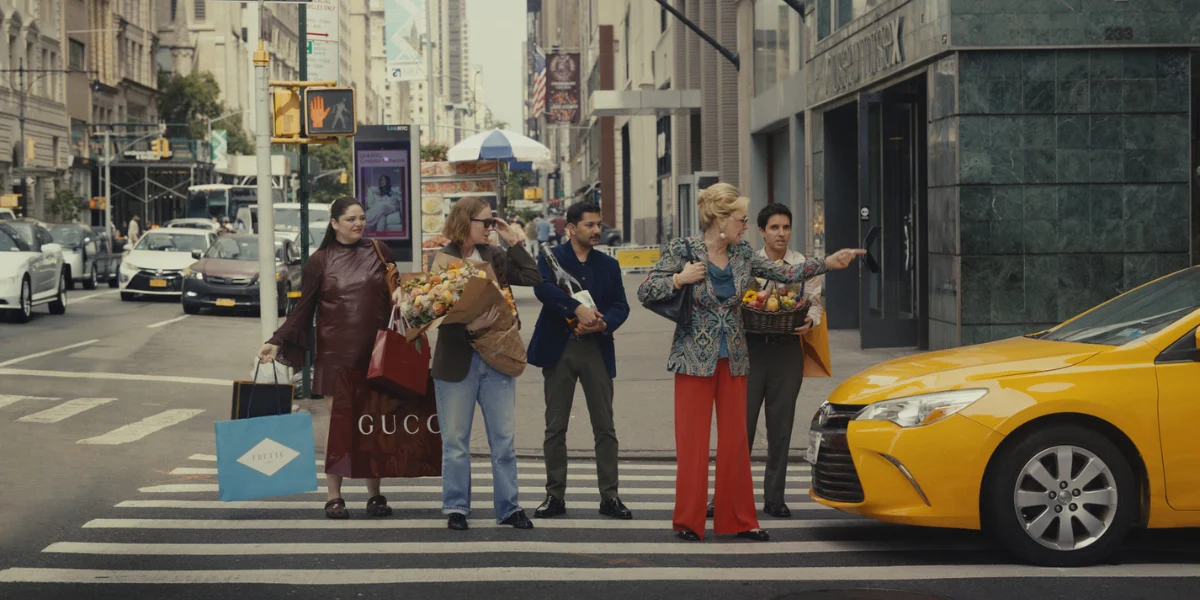
The fourth season of the critically acclaimed Max original series Hacks continues to dissect the intricate layers of professional and personal interdependence, specifically focusing on the evolving bond between legendary comedian Deborah Vance and her protégé, Ava Daniels. Since its debut in 2021, the series has garnered significant praise for its portrayal of the "creative partnership," a relationship dynamic that transcends traditional labels of friendship or romance. In the latest installment, particularly the episode titled "Number One Fan," the narrative explores the volatility of these bonds when professional ambitions collide with deep-seated emotional vulnerabilities. By examining the fallout of previous seasonal arcs and the introduction of new external pressures, the series offers a clinical look at the labor-intensive nature of comedy and the symbiotic relationship between performers and their audiences.
The Architectural Framework of Creative Partnerships
At the core of Hacks is the central thesis that a creative partnership is a distinct social unit, often more complex than a romantic or sexual union. Industry analysts have noted that the show intentionally avoids the "will-they-won’t-they" trope common in television, instead substituting romantic tension with professional stakes. This season emphasizes that while the relationship between Deborah and Ava is frequently characterized by toxicity, codependency, and power imbalances, it remains the most fulfilling connection for both parties.
The partnership is defined by a shared obsession with the craft of comedy. Unlike a traditional friendship, their bond is mediated by the "work"—the constant refinement of sets, the drafting of "thought poems," and the pursuit of late-night television dominance. Data regarding the show’s reception suggests that viewers respond most strongly to this depiction of work-life integration. According to critical metrics, the show’s ability to treat a professional collaboration as a primary emotional arc is one of its most significant contributions to modern television writing. This dynamic is further complicated by the financial reality of the relationship; Ava is frequently on Deborah’s payroll, creating a fluctuating power dynamic that reflects the reality of many high-stakes creative environments in Hollywood.
Chronology of the Vance-Daniels Relationship
To understand the current state of the partnership in Season 4, it is necessary to trace the chronological milestones of the characters’ shared history:
- Season 1 (The Collision): The two characters are brought together by their shared agent, Jimmy LuSaque Jr., out of mutual necessity. Deborah Vance is struggling with a stagnant residency in Las Vegas, while Ava Daniels is a "canceled" writer seeking employment. The season establishes their initial hostility, which eventually evolves into a grudging respect for each other’s comedic instincts.
- Season 2 (The Litigation and Liberation): Following a breach of trust where Ava sent a defamatory email about Deborah to British producers, the duo embarks on a cross-country tour. The season culminates in Deborah suing Ava while simultaneously using her as a catalyst for her most successful stand-up special to date. The season ends with Deborah "firing" Ava to allow the younger writer to pursue her own career, an act of tough love that underscores their deep connection.
- Season 3 (The Reunion): The characters drift apart and eventually reconnect as Deborah targets a late-night hosting position. The season concludes with a significant shift in power; after Deborah attempts to bypass Ava for a head writer position, Ava uses leverage to force her way into the role, effectively ending the mentor/mentee dynamic and establishing a more adversarial partnership.
- Season 4 (The Power Struggle): The current season deals with the immediate aftermath of Ava’s promotion. The episode "Number One Fan" highlights the lingering trauma of their past conflicts, specifically addressing comments made by Deborah during a trip to Singapore, where a drunken Deborah criticized Ava’s lack of external social connections.
Case Study: "Number One Fan" and the Singapore Incident
In the episode "Number One Fan," the narrative pivots to the psychological impact of Deborah’s past verbal transgressions. Ava addresses the "Singapore incident," where Deborah suggested it was "weird" that she was Ava’s only friend. This interaction serves as a microcosm of the show’s broader themes: the blurring of boundaries between a boss and a best friend.
The dialogue in this episode illustrates how Deborah uses her platform and her personality to shield herself from genuine intimacy, often lashing out at those closest to her to maintain a sense of control. Critics have pointed out that Ava’s hurt does not stem from the accuracy of Deborah’s statement, but from the realization that Deborah views their closeness as a pathology rather than a strength. This tension is a recurring motif in the series, reflecting the inherent "messiness" of creative collaborations where personal lives and professional outputs are inextricably linked.
Supporting Data: Guest Star Contributions and Cultural Context
The success of Hacks is also attributed to its strategic use of guest actors who provide a foil for the main duo. In the fourth season, the inclusion of veteran performers like Ann Dowd and Renee O’Connor adds a layer of industry meta-commentary.
- Jane Adams: Reprising her role as Ava’s mother, Adams provides essential context for Ava’s psychological makeup. The character’s boundary-crossing behavior—reading Ava’s journals and projecting her own insecurities—explains Ava’s tolerance for Deborah’s demanding nature.
- Alanna Ubach: Playing a high-powered executive, Ubach’s character highlights the commercial side of the industry. Her dialogue regarding the podcast "Murder My Stupid Ass Please," which boasts 90 million monthly listeners, serves as a satire of current media trends where "popular people" can sway national elections and influence corporate decisions.
- Renee O’Connor: Her appearance is a nod to the show’s significant LGBTQ+ following. Jimmy’s "fanboy" reaction to the Xena: Warrior Princess star reflects the show’s awareness of its cultural footprint and its role in representing lesbian and queer subcultures.
These guest appearances are not merely cameos; they serve to ground the show’s heightened reality in the factual, often absurd, landscape of modern celebrity culture.
Analysis of Fan Culture and Parasocial Dynamics
A significant portion of the recent narrative is dedicated to the exploration of fan culture. The episode "Number One Fan" examines the "symbiotic relationship" between an artist and their audience. Deborah Vance initially dismisses her fan base as a necessary evil or a transactional tool for career longevity. However, the narrative suggests that fans often fill an emotional void for performers who struggle with trust in their private lives.
The show threads a needle between critiquing the invasive nature of modern "stan culture" and acknowledging the genuine comfort that fandom provides. The parody of the true-crime podcast "Murder My Stupid Ass Please" highlights the absurdity of parasocial relationships, where listeners feel a sense of ownership over the lives of creators. Conversely, Deborah’s eventual realization that she "needs" her fans provides a rare moment of vulnerability, suggesting that for a performer of her stature, the applause of thousands is a safer form of intimacy than a one-on-one relationship with a peer.
Official Responses and Production Insights
The creators of Hacks—Lucia Aniello, Paul W. Downs, and Jen Statsky—have stated in various industry interviews that the show is intended to be a "love letter to work." According to showrunner Lucia Aniello, the goal was to depict a relationship that is "as intense as a marriage but centered around a shared goal." Jean Smart, who has won multiple Emmy Awards for her portrayal of Deborah Vance, has noted that the character’s "cruelty is often a defense mechanism against the fear of becoming irrelevant."
Hannah Einbinder, who portrays Ava, has frequently discussed the importance of depicting a "non-linear" growth path for her character. In Season 4, Ava is no longer the wide-eyed assistant; she is a professional peer who is willing to use the same ruthless tactics as her mentor. This evolution has been cited by critics as a realistic portrayal of how power shifts within long-term professional collaborations.
Broader Impact and Implications for the Television Industry
The impact of Hacks extends beyond its viewership numbers. It has set a new standard for the "prestige comedy" genre, proving that there is a significant market for stories centered on older women in Hollywood. The series has successfully navigated the transition from a "niche" streaming hit to a major cultural touchstone, largely due to its focus on the universal themes of legacy and the cost of greatness.
Furthermore, the show’s exploration of the "writer-performer" dynamic provides a rare, accurate glimpse into the labor behind the laughter. In an era where the mechanics of content creation are often obscured by the polished final product, Hacks demystifies the process, showing the late nights, the failed jokes, and the emotional toll of constant creative output.
As the series progresses, the central question remains: can a creative partnership survive the transition to a true peer-to-peer relationship, or is the friction between the "Number One" and the "Number Two" essential to the art? Season 4 suggests that while the friction is painful, it is also the engine that drives both characters toward their highest potential. The "thought poems" and the bitter arguments are not just symptoms of a complicated relationship; they are the raw materials of the comedy itself. Through this lens, Hacks serves as a definitive study of the modern creative life, where the boundaries between the self, the work, and the audience are permanently blurred.