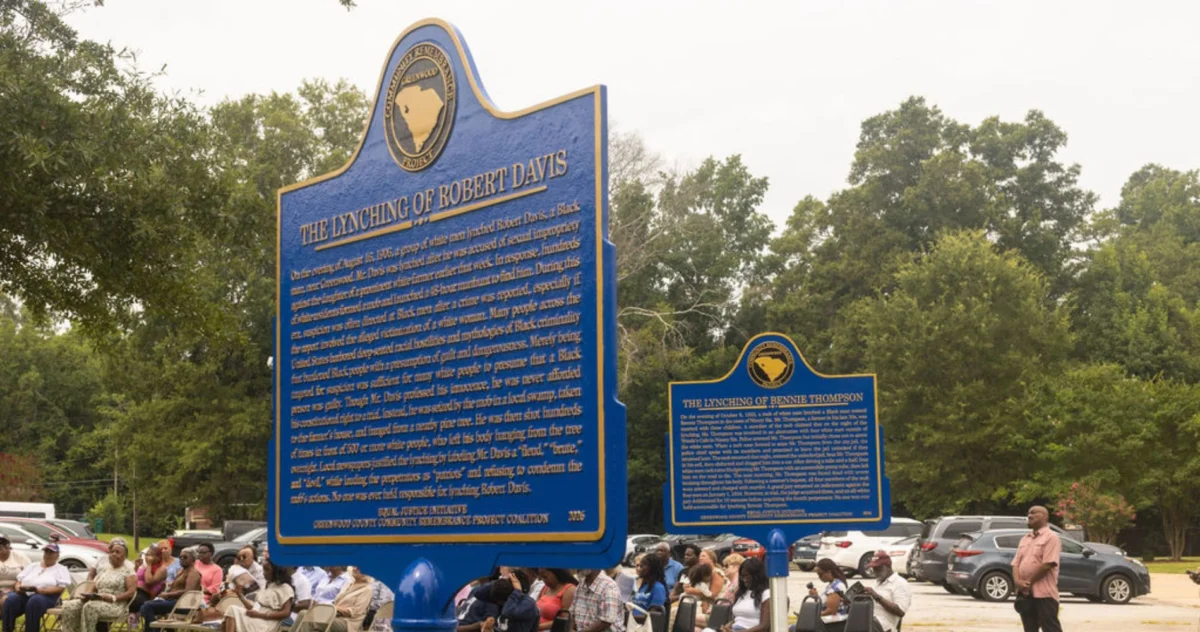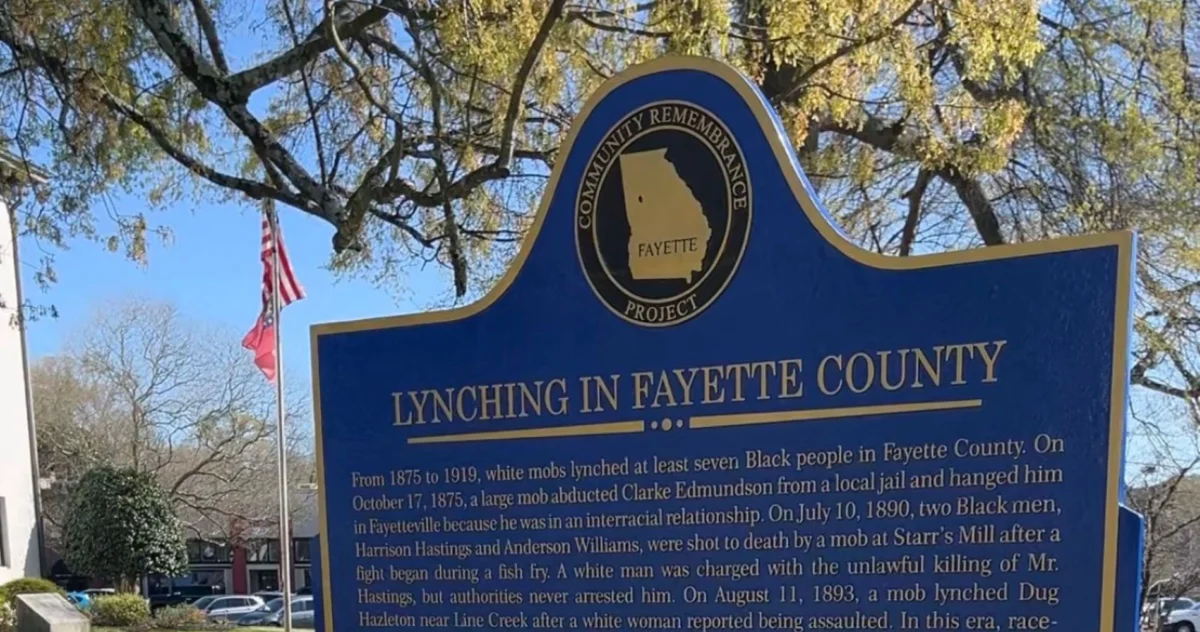
On March 12, 2024, a significant step toward confronting a painful chapter of American history was taken in Fayetteville, Georgia, as dozens of community members and local officials gathered outside the historic courthouse. The assembly convened for the dedication of a historical marker, a solemn recognition of the victims of racial terror lynching in Fayette County. This marker, now a permanent fixture in the heart of Fayetteville, approximately 20 miles south of Atlanta, stands as a testament to years of dedicated work by the Fayette County Community Remembrance Project (FCCRP) in close coordination with the Equal Justice Initiative (EJI).
A Community Confronts Its Past
Since its establishment in 2021, the FCCRP has spearheaded efforts to engage the community in a necessary, albeit difficult, confrontation with its history of racial terror. A cornerstone of their work has been the meticulous process of community soil collections from documented lynching sites, a powerful symbolic act that connects the present generation with the victims of past atrocities. This process, deeply rooted in EJI’s broader national initiative, serves not only as an act of remembrance but also as a catalyst for dialogue, education, and healing within the community.
The dedication ceremony itself was imbued with a sense of purpose and solemnity. Coalition co-chairs Janice Bryant and Tamika Smith opened the proceedings, articulating the profound significance of recognizing this suppressed history. They emphasized that the marker represents a crucial stride toward community healing and accountability, situating the FCCRP’s efforts within a wider network of remembrance initiatives championed by EJI across the United States. Ms. Bryant’s words resonated deeply: "Today, we gather not only to unveil a marker, but to remember lives that were taken, acknowledge a painful chapter in our past, and confirm a commitment to truth, justice, and healing." Her statement underscored the multifaceted goals of the project: not just to memorialize, but to actively work towards a more equitable future grounded in an honest understanding of the past.
Official Voices for Truth and Reconciliation
The presence and participation of local officials further amplified the ceremony’s importance, signaling a collective civic commitment to historical truth. The Rev. Edward Johnson, who holds the distinction of being Fayetteville’s first Black mayor, offered an opening prayer that transcended denominational boundaries. His invocation expressed gratitude for the opportunity to reflect on the past while simultaneously striving for a more just and unified future for Fayetteville. Mayor Johnson’s remarks highlighted the imperative of fellowship, compassion, and collective responsibility as foundational pillars for building stronger, more inclusive communities. His leadership in this moment underscored the evolving civic landscape in the South, where once-silenced histories are now being brought into the public square with official sanction and support.
County Commissioner Charles Rousseau also delivered poignant remarks, focusing on the transformative power of publicly memorializing racial terror lynchings. These acts of violence, he reminded attendees, were systematically employed to intimidate and silence entire Black communities, enforcing a brutal racial hierarchy. Breaking that historical silence, Commissioner Rousseau asserted, is an indispensable step toward restoring dignity to the victims and their descendants. He offered a powerful redefinition of remembrance: "[R]emembering is not about dwelling in the past. It is about telling the truth about the past, so that our future can be different." He lamented that for generations, countless stories of racial terror "were ignored, minimized, or left unspoken," underscoring the long overdue nature of the current recognition. His words articulated a clear vision: honest remembrance is not punitive, but redemptive, laying the groundwork for a future free from the injustices of the past.
EJI’s National Framework for Remembrance
Jennifer Harris, EJI Senior Project Manager, provided a broader context for the Fayetteville dedication, emphasizing the critical role of EJI’s work in documenting histories of racial terror through collaborations with local community coalitions nationwide. She explained that installing historical markers is a cornerstone of EJI’s strategy to encourage education, remembrance, and ultimately, reconciliation. The profound national significance of the Fayette County marker was further highlighted by her announcement: "To honor [FCCRC], a duplicate marker will be placed at the National Memorial for Peace and Justice in Montgomery." This gesture ensures that the story of Fayette County’s victims will resonate on a national and international stage, proclaiming to the world that "people here in Fayette County have taken a stance to advance truth and justice." This connection to the National Memorial, often referred to as the "lynching memorial," places Fayetteville’s local efforts within a monumental national movement to confront America’s legacy of racial injustice.
The Shadow of Terror: Lynching in Fayette County (1875-1919)
The historical marker in Fayetteville serves as a stark reminder of the brutal realities faced by Black communities in the post-Reconstruction South. From 1875 to 1919, white mobs perpetrated acts of racial terror, lynching at least seven Black individuals in Fayette County. These acts were not isolated incidents of individual violence but rather components of a systemic campaign to enforce white supremacy and suppress Black freedom and aspirations.
The earliest documented lynching in this period occurred on October 17, 1875. Clarke Edmundson was abducted from a local jail in Fayetteville and hanged simply because he was in an interracial relationship. This incident exemplifies how perceived violations of racial social norms, especially those challenging the strictures of white supremacy, could provoke immediate and deadly mob violence. The "crime" was not a legal transgression but a social one, punishable by extralegal murder.
July 10, 1890, marked another horrific event when Harrison Hastings and Anderson Williams, two Black men, were shot to death by a mob near Starr’s Mill. The violence erupted following a fight during a fish fry, escalating quickly into a deadly racial attack. Despite a white man being charged with the unlawful killing of Mr. Hastings, authorities never apprehended him, illustrating the pervasive lack of accountability for violence against Black people. This impunity was a hallmark of racial terror lynching, emboldening perpetrators and entrenching the system of injustice.
August 11, 1893, witnessed the lynching of Dug Hazleton near Line Creek. His murder followed a white woman’s report of an assault. In this era, race-based suspicion was almost invariably directed at Black men after such allegations, regardless of evidence. EJI’s research indicates that nearly 25% of lynchings were fueled by allegations of sexual impropriety, often baseless, serving as a pretext for racial violence. These allegations were frequently used to justify mob rule and to reinforce the stereotype of Black men as inherently dangerous.
On May 20, 1899, Thomas Linton became another victim when masked "whitecaps" — a term often referring to white supremacist terrorist groups akin to the Ku Klux Klan — broke into his home and shot him to death. This incident highlights the clandestine and terroristic nature of these groups, who operated with near impunity, using intimidation and murder to control Black populations.
The terror continued into the 20th century. Bud Crosby, a Black man, was lynched by a mob on the night of February 17, 1918, near present-day Peachtree City. He was accused of attempted robbery and kidnapping, charges that were often fabricated or exaggerated to justify mob violence. The swift, brutal "justice" meted out by lynch mobs bypassed any semblance of due process, denying victims their fundamental rights.
The final documented lynching in this period in Fayette County, on July 31, 1919, involved 26-year-old Black World War I veteran Charles Kelly. Tragically, days after returning home from service, Mr. Kelly was lynched by a white family in Woolsey. His "offense" was allegedly not turning his car out of the road soon enough to let a white boy pass—a perceived violation of prevailing social norms that dictated Black subservience. This incident, occurring during the "Red Summer" of 1919, a period of intense racial violence across the U.S., underscores the brutal reality that even military service could not protect Black individuals from the racialized violence prevalent in their own communities. The return of Black veterans, often demanding the rights they fought for abroad, frequently provoked violent white backlash.
In every single one of these documented cases, no one was ever held accountable for these lynchings. This systemic failure of justice is a crucial element of racial terror lynching, demonstrating the complicity of legal systems and local authorities in perpetuating violence and maintaining white supremacy.
Lynching in America: A National Scourge
The grim statistics from Fayette County are but a fraction of a much larger national tragedy. More than 6,500 Black people were killed in racial terror lynchings across the United States between 1865 and 1950. This era, immediately following the Civil War and the abolition of slavery, saw many white Americans vehemently oppose equal rights for Black people. Lynching emerged as the most public, notorious, and effective form of racial terrorism, designed to re-establish and enforce white dominance after the formal structures of slavery had been dismantled.
During this period, a deep-seated racial hostility permeated Southern society, burdening Black people with a presumption of guilt. This prejudice often served to focus suspicion on Black communities after any crime was reported, regardless of actual evidence. Race, far more than any alleged offense, was the primary determinant in the lynching of Black individuals.
Public spectacle lynchings were meticulously orchestrated to serve specific purposes: to maintain white supremacy, to instill fear, and to terrorize the Black community into submission. Mobs targeted Black people in public spaces and even invaded their homes, often displaying the victims for hours, sometimes preventing families from claiming their loved ones. This macabre display was a deliberate strategy to maintain racial hierarchy through the explicit threat of violence to the entire Black community. The psychological and social scars of these public acts of terror ran deep, influencing generations.
A critical aspect of this reign of terror was the widespread indifference or outright complicity of local law enforcement. In most cases, authorities were either ineffective in protecting Black residents from these attacks or actively participated in them, allowing white mobs to perpetrate violence and murder without any fear of legal repercussions. This systemic failure of the justice system was not an oversight but a fundamental feature of the racial terror regime.
While countless racial terror lynchings undoubtedly went undocumented and remain unknown, the seven victims recognized in Fayette County are part of a larger statistic: more than 715 Black victims killed by white mobs in Georgia alone. These numbers represent lives violently cut short, families shattered, and communities traumatized by a pervasive system of racial oppression.
The Community Remembrance Project: A Path to Healing and Reconciliation
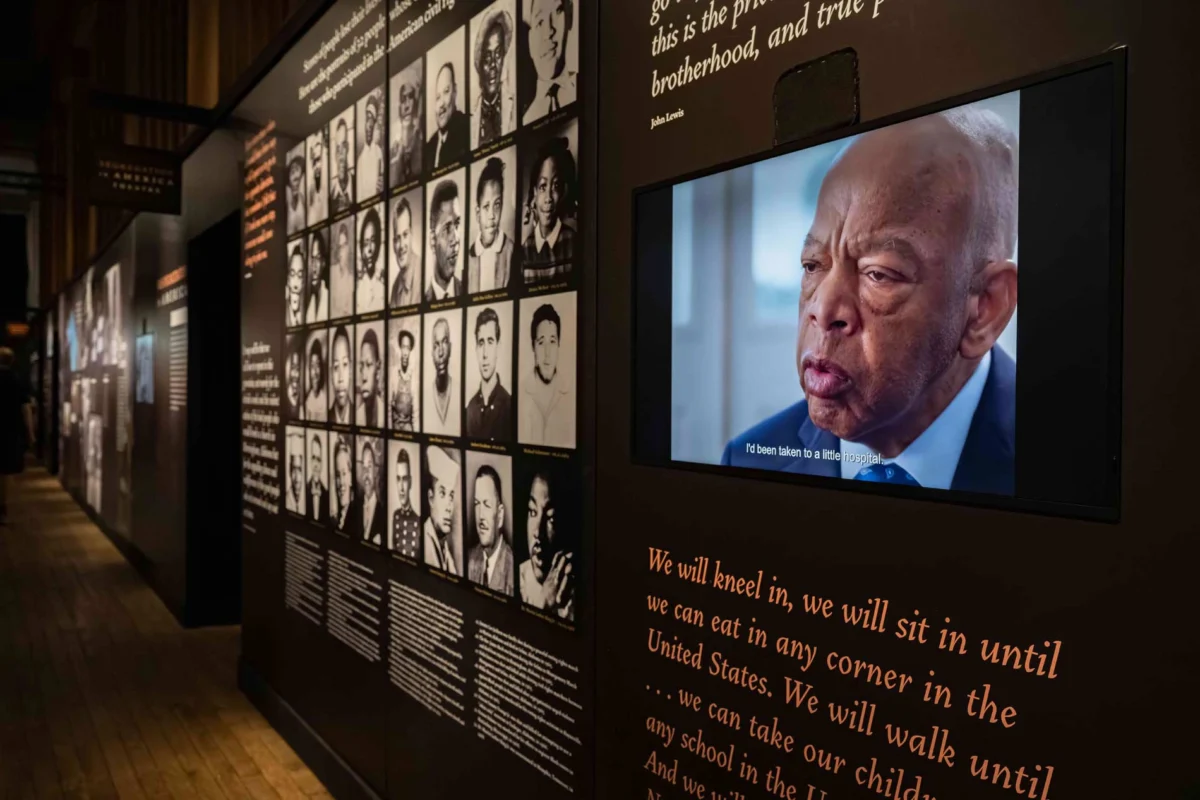
The Fayette County Community Remembrance Project is an integral part of EJI’s broader national campaign to recognize and honor the victims of lynching. This comprehensive initiative involves several key components: the meticulous collection of soil from lynching sites, the erection of historical markers like the one in Fayetteville, and the development of the Legacy Sites in Montgomery, Alabama, including the National Memorial for Peace and Justice and the Legacy Museum.
EJI’s philosophy is rooted in the conviction that by courageously reckoning with the truth of racial violence, communities can initiate a necessary conversation that ultimately advances healing and reconciliation. This process is not about assigning blame to contemporary generations but about understanding the historical roots of racial inequality and injustice, acknowledging the profound suffering caused, and committing to building a more just future. The historical marker in Fayetteville is more than a plaque; it is a beacon for truth, a catalyst for dialogue, and a powerful symbol of a community’s commitment to never forget, and to always strive for a better tomorrow. The journey of remembrance is long and arduous, but in Fayetteville, a vital step has been taken toward collective healing and the pursuit of genuine justice.