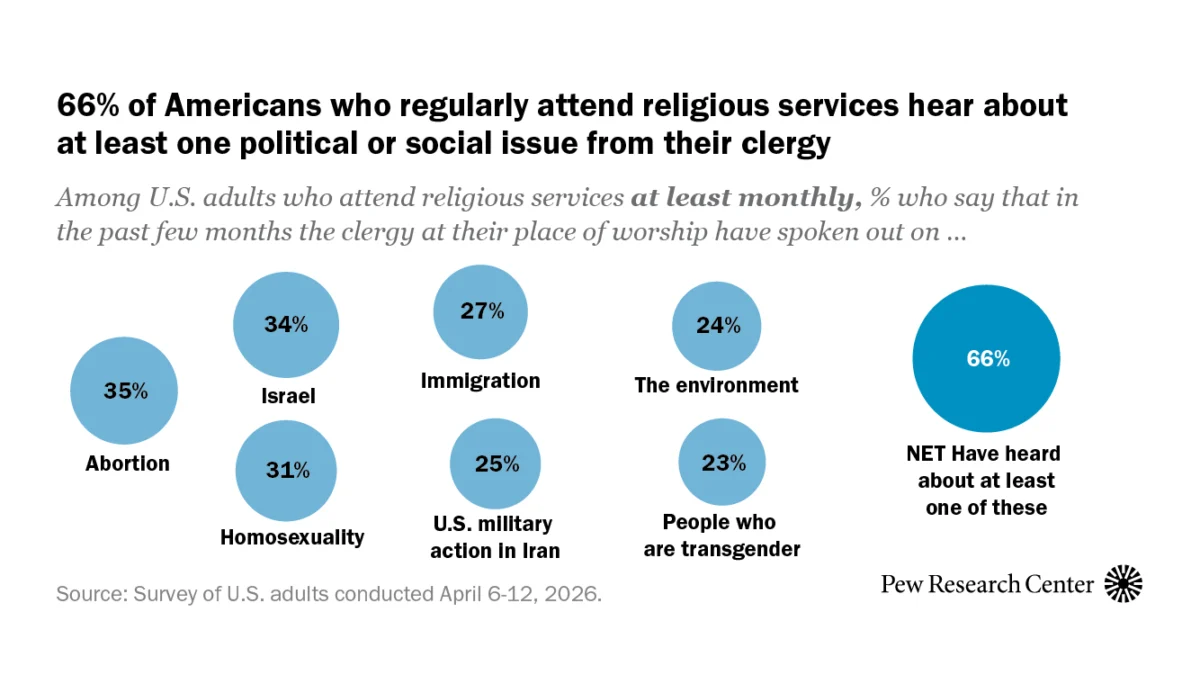
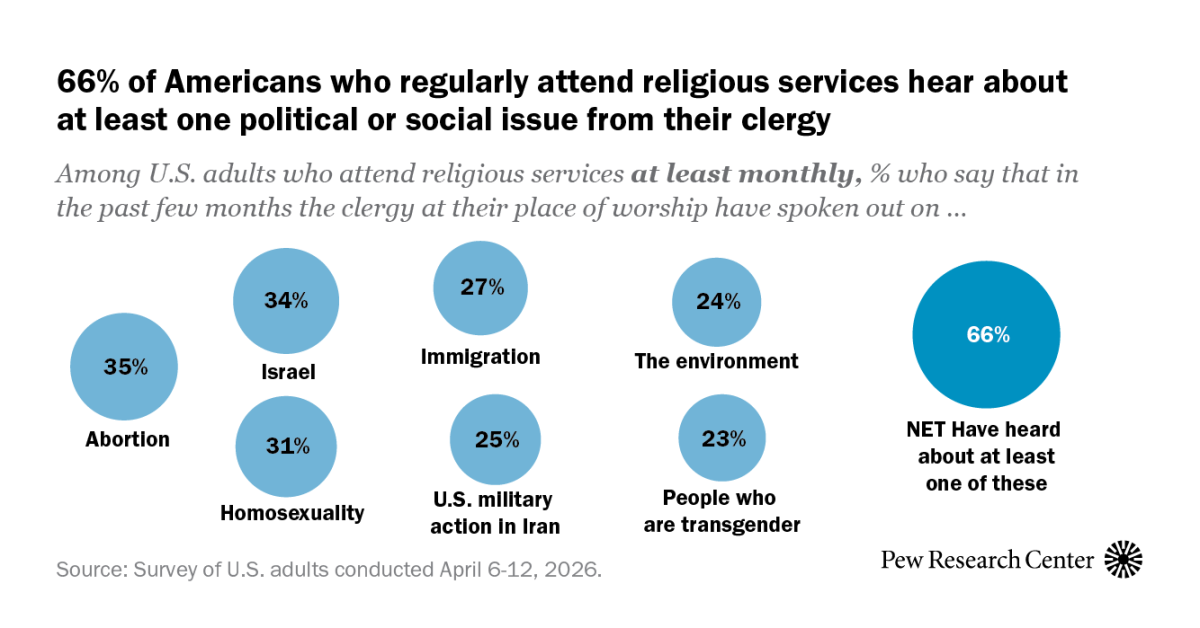
A comprehensive new report from the Pew Research Center reveals a significant trend: a majority of U.S. adults who regularly attend religious services are hearing their clergy speak about contemporary social and political issues. The survey, conducted between April 6-12, 2026, indicates that 66% of these individuals have encountered discussions on at least one of seven key topics in their places of worship over the past few months. This detailed analysis sheds light on the intersection of faith and public life, exploring the specific issues being addressed from the pulpit and how congregants perceive their religious leaders’ engagement with the political landscape.
The Pew Research Center’s ongoing commitment to understanding religion’s role in public life informed this study. In an era marked by fervent debate on issues ranging from immigration and foreign policy to reproductive rights and LGBTQ+ inclusion, the organization sought to quantify the extent to which religious institutions are participating in these national conversations. By surveying adults who attend religious services at least monthly, the research aims to provide a nuanced picture of how religious leaders are navigating these complex topics within their congregations. The study’s methodology involved a survey of 3,592 U.S. adults, with a specific focus on the 1,391 who reported attending religious services at least once or twice a month. The margin of error for this subgroup was plus or minus 3.5 percentage points, ensuring a reliable representation of their experiences.
Key Issues Dominating Religious Discourse
Among the seven social and political issues examined, abortion, the Israeli-Palestinian conflict, and homosexuality emerged as the most frequently discussed topics by clergy. Thirty-five percent of regular service attenders reported hearing their clergy speak about abortion, while 34% heard discussions concerning Israel, and 31% heard conversations about homosexuality. These figures underscore the prominence of these deeply felt and often contentious issues within religious communities.
The nature of these discussions also reveals a discernible pattern. When clergy address abortion, the majority of congregants report hearing messages against abortion rights (30%), with only a small fraction (2%) hearing support for abortion rights. Similarly, discussions surrounding homosexuality tend to be framed against LGBTQ+ acceptance, with 20% hearing messages against homosexuality compared to just 3% hearing messages encouraging acceptance of gay and lesbian individuals. In contrast, the sentiment surrounding Israel is predominantly supportive, with 15% of attenders hearing messages in support of Israel, while a mere 3% report hearing criticism of the nation.
Beyond these top three, other significant social and political issues are also entering the religious sphere. Immigration was mentioned by 27% of regular attenders, U.S. military action in Iran by 25%, environmental concerns by 24%, and transgender identity by 23%. These findings illustrate a broad engagement with a spectrum of contemporary challenges that extend beyond purely theological matters.
Nuances in Messaging and Engagement
The Pew Research Center’s analysis further delves into the specific tenor of these religious discussions. For instance, regarding immigration, there is a notable divergence in the messages heard. While 3% of regular attenders report hearing clergy advocate for stricter immigration enforcement, a larger segment, 15%, hears messages emphasizing the need to be welcoming and supportive of immigrants. This suggests a more varied approach to this issue within religious communities.
The environmental crisis is another area where religious leaders are engaging. Twenty-four percent of regular service attenders report hearing clergy speak about the environment. Of those, a significant 15% hear messages advocating for the protection of the environment, while only 3% hear discussions opposing environmental regulations. This indicates a leaning towards environmental stewardship as a theme within religious discourse.
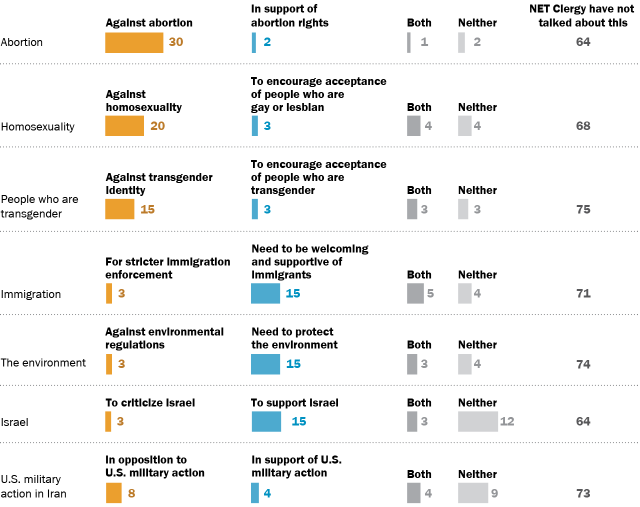
The complexity of the geopolitical landscape is also reflected in pulpit discussions. For U.S. military action in Iran, the messages are more divided. Eight percent of attenders report hearing clergy speak in opposition to such actions, while 4% hear support for them. An additional 9% report that their clergy have discussed the conflict without taking a definitive stance. This nuanced approach suggests an awareness of the multifaceted nature of international conflict and its ethical considerations.
Religious Affiliations and Their Pulpit Contents
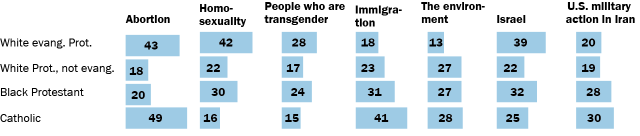
The survey also highlights differences in the topics discussed among various religious denominations. Catholics and White evangelical Protestants are the most likely to report hearing their clergy speak about abortion, with 49% of Catholics and 43% of White evangelical Protestants noting such discussions. White evangelicals are particularly likely to hear about homosexuality from their clergy (42%), while Catholics frequently hear about immigration (41%).
Interestingly, White evangelicals appear less inclined to engage with environmental issues from the pulpit. Only 13% of White evangelical Protestants report hearing their clergy discuss the environment, significantly lower than the proportions in other major Christian denominations. For example, 27% of White Protestants who are not evangelical and 27% of Black Protestants report hearing environmental discussions.
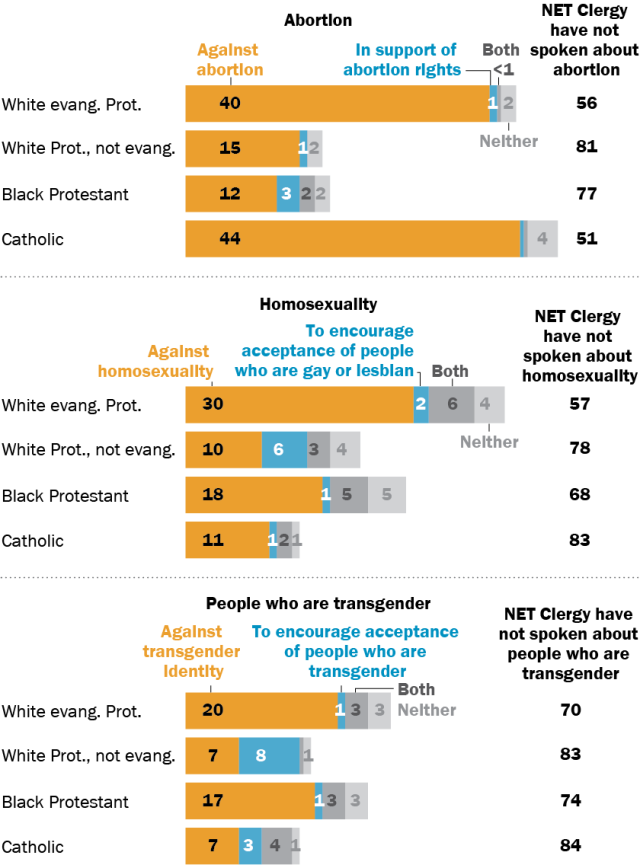
When it comes to the messaging on social issues, a consistent pattern emerges across most major religious groups. Regular attenders are more likely to report hearing clergy speak against abortion, homosexuality, and transgender identity than to hear messages in support of abortion rights or encouraging acceptance of LGBTQ+ individuals. For example, 40% of White evangelical Protestants report hearing messages against abortion, while less than 1% hear messages in support of abortion rights. Catholics show a similar trend, with 44% hearing messages against abortion and less than 1% hearing support.
However, White nonevangelical Protestants present a notable exception. They are as likely to report hearing clergy advocate for the acceptance of gay, lesbian, and transgender people as they are to hear messages opposing homosexuality or transgender identity. This finding suggests a greater degree of openness and inclusivity on these specific social issues within this demographic.
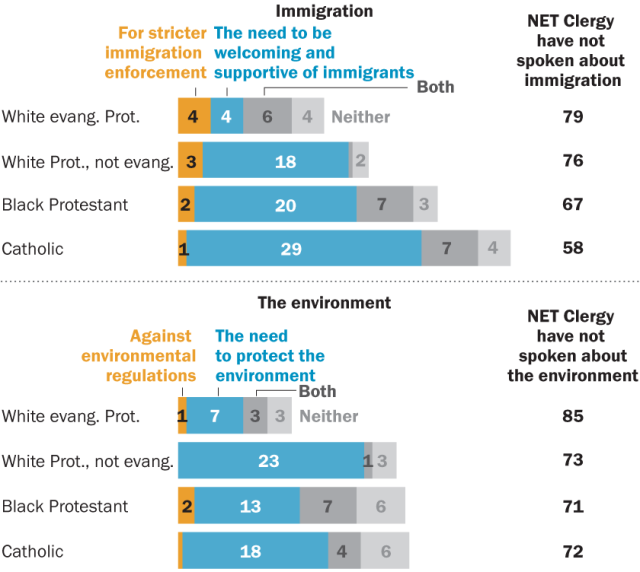
Regarding environmental stewardship, a strong majority across denominations seem to hear messages encouraging protection of the environment. For instance, 18% of Catholics report hearing clergy advocate for protecting the environment, compared to less than 1% hearing opposition to environmental regulations. This trend is mirrored in other Protestant groups, indicating a broad consensus on this issue.
The dynamics surrounding Israel and U.S. military action in Iran also show denominational variations. White evangelicals and Black Protestants are more inclined to hear messages of support for Israel (24% and 16% respectively) than criticism. Conversely, when it comes to U.S. military action in Iran, a more mixed picture emerges. Black Protestants are the most likely to report hearing opposition to military action (10%), while Catholics are also significantly represented (12%). White nonevangelical Protestants also show a notable portion hearing opposition (7%).
Perceptions of Clergy Partisanship
Beyond the specific issues discussed, the Pew Research Center also investigated how regular service attenders perceive the political leanings of their religious leaders. The findings reveal a significant degree of uncertainty, with 44% of regular attenders stating they are unsure about their clergy’s political affiliations. Twenty-seven percent believe their clergy represent a mix of Republicans and Democrats, while a smaller proportion identifies their clergy as predominantly Republican (19%) or Democratic (8%).
This ambiguity is particularly pronounced among Catholics, where 59% are unsure of their clergy’s political leanings. White evangelicals, while more likely to perceive a partisan tilt, still show substantial uncertainty, with 36% unsure. White nonevangelical Protestants and Black Protestants also exhibit significant levels of uncertainty regarding their clergy’s political affiliations, at 44% and 44% respectively.
While a clear partisan lean is not dominant overall, specific subgroups do show stronger perceptions. White evangelical Protestants are the most likely to believe their clergy are predominantly Republican (36%). Conversely, Black Protestants are the most likely to perceive their clergy as predominantly Democratic (21%). However, even within these groups, a considerable portion remains uncertain or perceives a mixed political landscape among their religious leaders.
Implications and Broader Context
The Pew Research Center’s findings underscore a growing trend of religious institutions engaging directly with social and political issues. This engagement is not uniform, with significant variations in the topics addressed and the messages conveyed, often reflecting the theological and social stances of different denominations. The data suggest that for many congregants, their place of worship serves as a forum not only for spiritual guidance but also for understanding and navigating complex societal challenges.
The research also highlights a potential disconnect between the perception of clergy partisanship and the reality of congregational views. The high rate of uncertainty regarding clergy political leanings suggests that either these affiliations are not overtly expressed or that congregants are not actively seeking to categorize them. This could indicate a strategic approach by religious leaders to maintain a broad appeal or a genuine focus on shared spiritual values over partisan alignment.
The timing of this research, conducted in mid-2026, places it within a period of heightened political polarization and ongoing debates on critical social issues. The fact that religious leaders are addressing these topics suggests a recognition of their relevance to their congregations’ lives and faith. The specific framing of these discussions – often leaning towards traditional stances on issues like abortion and LGBTQ+ rights, while showing more progressive leanings on immigration and environmentalism – reflects the diverse theological and ethical frameworks within American religious traditions.
As religious institutions continue to navigate their role in public discourse, this research provides valuable insights into the extent and nature of their engagement. The findings serve as a critical resource for understanding the multifaceted relationship between faith, politics, and societal values in contemporary America.