Montgomery, Alabama – The Equal Justice Initiative (EJI) is poised to host an unparalleled Juneteenth celebration in 2026, featuring a special one-night-only "Jazz on Juneteenth" concert headlined by the acclaimed talents of Grammy Award-winning drummer Nate Smith and celebrated vocalist and songwriter Lizz Wright. This musical event, scheduled for Friday, June 19, 2026, at 7:30 pm, will take place at EJI’s Peace and Justice Memorial Center in downtown Montgomery, complementing a full day of free public access to EJI’s transformative Legacy Sites. The confluence of exceptional artistic expression and profound historical commemoration underscores EJI’s ongoing commitment to fostering truth-telling and justice through diverse cultural programming.
A Night of Musical Brilliance: Nate Smith and Lizz Wright
The "Jazz on Juneteenth" concert promises an evening of profound musicality, uniting two of contemporary jazz’s most compelling voices. Nate Smith, lauded by The Hype Magazine as a "global touring powerhouse and an accomplished recording artist," brings a percussive virtuosity that transcends genre boundaries. His distinctive drumming style, a fluid blend of jazz, funk, and R&B, has earned him multiple Grammy nominations and collaborations with luminaries such as Pat Metheny, Chris Potter, and Dave Holland. Smith’s compositions often explore complex rhythmic landscapes while retaining a deep groove and melodic sensibility, making him a dynamic force on the international music scene. His performance is expected to be a masterclass in rhythmic innovation and musical improvisation, setting a vibrant tone for the Juneteenth commemoration.
Joining Smith is Lizz Wright, an artist described by The New York Times as "an awesome talent." Wright’s rich, resonant alto voice and her masterful ability to weave together jazz, gospel, blues, and folk traditions have captivated audiences worldwide. Her lyrical themes frequently delve into introspection, heritage, social consciousness, and the human condition, resonating deeply with the spirit of Juneteenth. Having previously graced EJI’s annual Juneteenth stage, Wright’s return signifies her profound connection to the organization’s mission and the historical weight of the occasion. Her performances are known for their emotional depth and spiritual resonance, creating an atmosphere that is both reflective and uplifting. The pairing of Smith’s rhythmic brilliance and Wright’s soulful vocal artistry is anticipated to create a unique and unforgettable musical dialogue, echoing the complexities and triumphs inherent in the Juneteenth narrative.
The choice of these artists is deliberate, aligning with EJI’s "Art and Justice" programming philosophy, which posits that art, particularly music, serves as a powerful medium for confronting difficult histories, fostering empathy, and inspiring social change. The improvisation and collaborative spirit inherent in jazz itself can be seen as a metaphor for the ongoing American experiment, constantly evolving and striving for harmony amidst diverse voices. Tickets for this singular concert event are available for purchase via the EJI website.
Juneteenth 2026: A National Holiday of Reflection and Celebration
Juneteenth, observed annually on June 19th, stands as a pivotal moment in American history, commemorating the effective end of slavery in the United States. The holiday marks the day in 1865 when Union General Gordon Granger arrived in Galveston, Texas, issuing General Order No. 3, which informed enslaved African Americans that they were free—more than two and a half years after President Abraham Lincoln signed the Emancipation Proclamation. This profound announcement initiated a prolonged, complex, and often violent transition to freedom for hundreds of thousands of individuals, fundamentally reshaping the trajectory of American society.
Historically celebrated within Black communities, Juneteenth has gained broader national recognition in recent decades. In 2021, it was officially designated a federal holiday, a milestone that significantly elevated its prominence and encouraged nationwide observance. This national recognition underscores a growing societal imperative to acknowledge and educate the public about the full scope of American history, including its painful chapters of enslavement and racial injustice. EJI’s annual Juneteenth celebration in Montgomery, a city steeped in both the history of the Confederacy and the Civil Rights Movement, offers a uniquely poignant setting for this commemoration. By hosting both artistic performances and offering free access to its educational sites, EJI provides a multifaceted platform for remembrance, education, and inspiration.
The EJI Legacy Sites: Experiencing American History in Montgomery
Complementing the evening concert, the Equal Justice Initiative is opening its renowned Legacy Sites in downtown Montgomery to the public for free admission on June 19, 2026, from 9 am to 6 pm. These sites are not merely museums but immersive experiences designed to confront the nation’s history of racial injustice and its contemporary manifestations. The opportunity to visit these sites without charge on Juneteenth reinforces EJI’s mission of public education and accessible historical truth.

Visitors will have the opportunity to explore:
- The Legacy Museum: From Enslavement to Mass Incarceration: Located on the site of a former warehouse where enslaved people were imprisoned, this museum presents a comprehensive narrative of racial injustice in America. Through interactive exhibits, survivor testimonies, and meticulously researched historical data, it draws direct lines from chattel slavery and the domestic slave trade to the era of Reconstruction, Jim Crow segregation, racial terror lynchings, and the contemporary crisis of mass incarceration. The museum effectively illustrates how historical injustices continue to shape present-day systemic inequalities, challenging visitors to engage critically with the nation’s past and present. Its exhibits utilize cutting-edge technology and evocative displays to create a powerful, often unsettling, but ultimately essential educational journey.
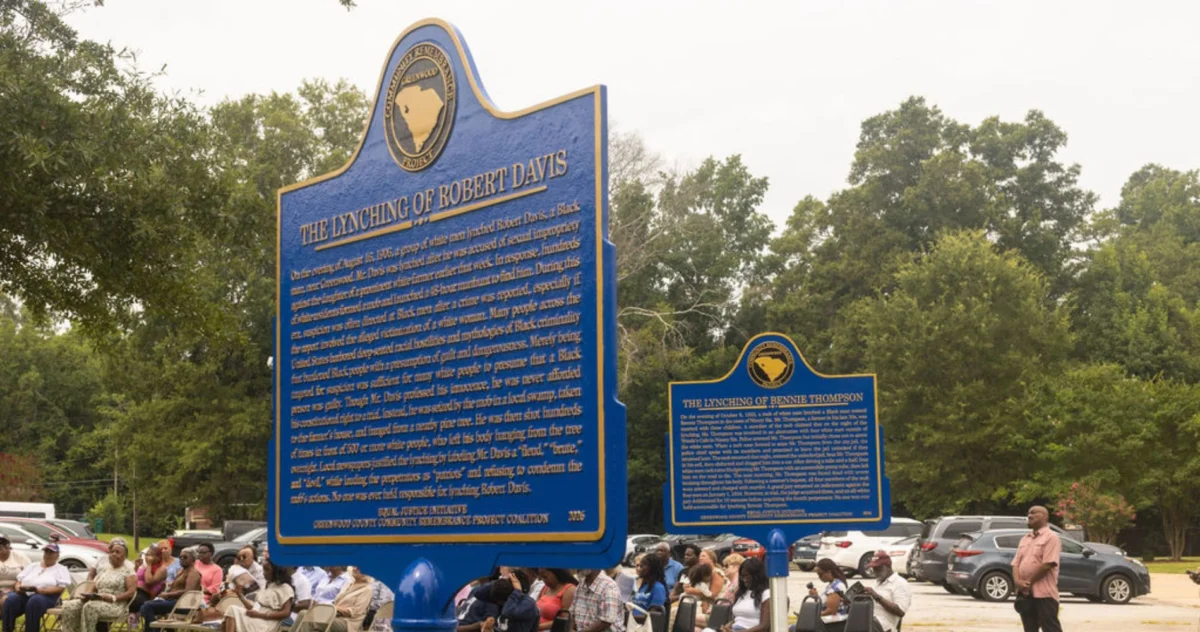
- The National Memorial for Peace and Justice: Widely recognized as a profound and moving tribute, this memorial stands as the nation’s first monument dedicated to the victims of racial terror lynching. Situated on a six-acre site overlooking Montgomery, it features 800 corten steel monuments, each representing a U.S. county where a racial terror lynching took place, with the names of victims engraved. The design, which sees the monuments gradually rise overhead, evokes the experience of being lynched, creating an overwhelming sense of loss and reflection. The memorial also includes sculptural art by prominent artists and soil collection jars from lynching sites, serving as a powerful testament to the enduring impact of racial violence and the imperative of collective remembrance.
- Freedom Monument Sculpture Park: This newly opened outdoor park expands EJI’s narrative, offering a contemplative space that celebrates the journey from enslavement to liberation. Spanning 17 acres along the Alabama River, the park features monumental sculptures and installations by celebrated artists, historical markers, and thousands of slave narratives inscribed on metal panels. It emphasizes the resilience, resistance, and cultural contributions of enslaved people, providing a counter-narrative to traditional historical accounts that often overlook the agency of the oppressed. The park also includes reconstructed structures from the era of enslavement, offering tangible links to the past and fostering a deeper understanding of the conditions faced by those seeking freedom.
- Montgomery Square: As a recent addition to the EJI campus, Montgomery Square serves as a central gathering space, offering visitors an opportunity for reflection and community engagement. This public square enhances the overall visitor experience, providing areas for respite and further interaction with the historical context of Montgomery. It serves as a vital connective tissue between the various EJI sites, symbolizing the ongoing dialogue between history and contemporary advocacy.
The confluence of these sites in Montgomery, a city that served as the first capital of the Confederacy and later became a crucible of the Civil Rights Movement, amplifies the significance of the Juneteenth commemoration. The EJI Legacy Sites collectively draw hundreds of thousands of visitors annually, transforming Montgomery into a national hub for civil rights tourism and education.
The Equal Justice Initiative’s "Art and Justice" Program
EJI Executive Director Bryan Stevenson articulated the profound synergy between these commemorative and artistic endeavors. "We are once again thrilled to open up our sites for free in celebration of Juneteenth," Stevenson stated. "With new exhibits and our recently opened Montgomery Square, there will be much to experience at the Legacy Sites. I’m also thrilled that we can bring to Montgomery two towering and phenomenally talented artists, Nate Smith and Lizz Wright, to perform at our Juneteenth concert." Stevenson’s remarks underscore EJI’s holistic approach to justice, recognizing that education, remembrance, and cultural engagement are all integral components of fostering a more equitable society.
The "Jazz on Juneteenth" concert is a cornerstone of EJI’s broader "Art and Justice" programming, an initiative dedicated to integrating artistic expression with the pursuit of social justice. This program operates on the premise that art has a unique capacity to communicate complex truths, evoke empathy, and inspire action in ways that traditional legal or historical discourse sometimes cannot. By bringing celebrated artists and creatives to Montgomery, EJI aims to create a "new soundtrack for truth telling," enriching the experiences at the Legacy Sites and amplifying the organization’s advocacy for human rights.
The roster of past performers at EJI’s annual Juneteenth events highlights the program’s commitment to artistic excellence and diversity. Previous artists include jazz legends such as Wynton Marsalis, Cécile McLorin Salvant, Terence Blanchard, Esperanza Spalding, and Samara Joy, alongside gospel and contemporary artists like Yolanda Adams, Donald Lawrence and Company, and Cory Henry, and classical musicians such as Anthony McGill. These performances have consistently provided a powerful cultural backdrop to the solemn and educational mission of EJI, fostering a unique blend of remembrance, celebration, and contemplation. A recent "Art and Justice" event, for instance, featured the iconic cellist Yo-Yo Ma and the distinguished saxophonist Branford Marsalis, further cementing EJI’s reputation as a significant cultural institution that bridges the worlds of art, history, and social justice.
Broader Implications: Fostering Dialogue and Cultural Impact
The EJI’s Juneteenth 2026 celebration, with its dual focus on a world-class jazz concert and free access to profound historical sites, carries significant implications for national discourse on race, memory, and justice. By consistently bringing high-caliber cultural events to Montgomery, EJI not only enriches the local cultural landscape but also reinforces the city’s role as a critical locus for civil rights pilgrimage and education. This sustained effort contributes to the economic vitality of Montgomery through cultural tourism, while more importantly, it positions the city as a leading voice in the ongoing national conversation about racial reconciliation and equity.
The choice of jazz for the celebratory concert is particularly symbolic. Jazz, with its deep roots in African American culture, its emphasis on improvisation, resilience, and collective expression, serves as an apt musical metaphor for the journey towards freedom and justice. It is a genre born from struggle and joy, mirroring the very essence of Juneteenth. Through such events, EJI facilitates a deeper understanding of American history, not merely as a collection of facts, but as a living narrative that continues to shape contemporary society.
The organization’s strategy of combining rigorous historical documentation and legal advocacy with powerful artistic expressions provides a comprehensive model for civic engagement. It acknowledges that confronting difficult truths requires both intellectual understanding and emotional resonance, and that art can unlock pathways to empathy and collective healing. The Juneteenth 2026 events in Montgomery represent more than just a holiday celebration; they are a vital demonstration of how cultural institutions can leverage art and history to inspire a commitment to justice and equality for all. The presence of artists like Nate Smith and Lizz Wright, performing at a site dedicated to memorializing the victims of racial injustice, underscores the enduring power of culture to illuminate the past, celebrate progress, and inspire future generations to continue the struggle for a more just world.