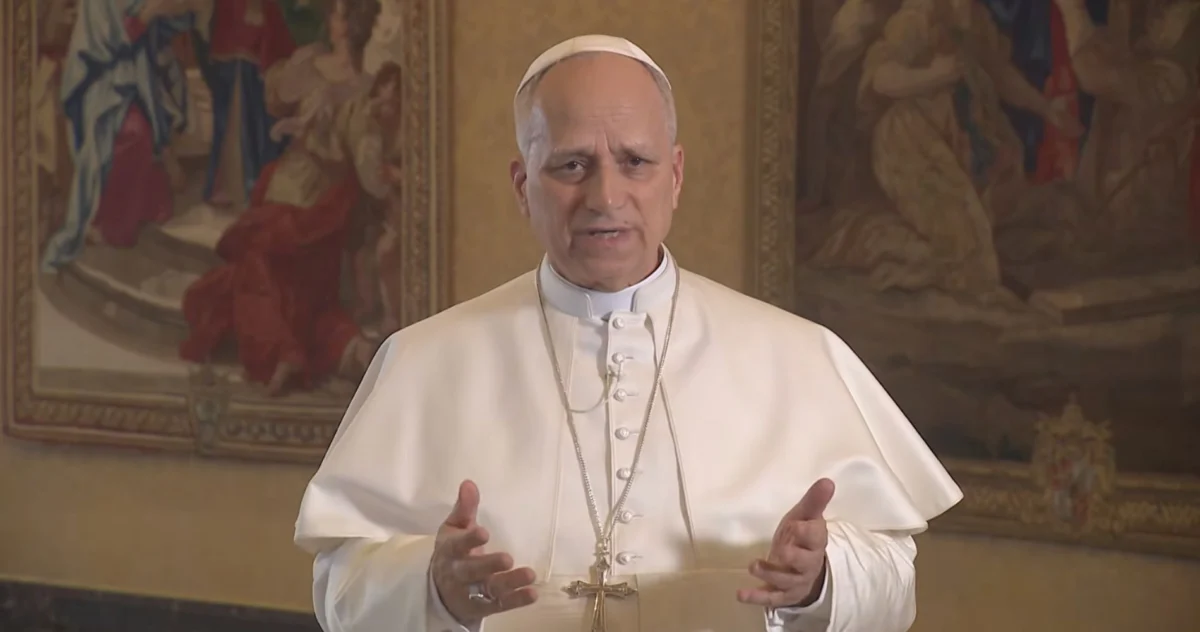
Vatican City — Pope Leo XIV, in a significant video message released on April 24, joined in the commemoration of the 15th anniversary of Illinois’s abolition of the death penalty, offering fervent support to advocates striving for the eradication of capital punishment across the United States and worldwide. The pontiff’s address underscored the unwavering commitment of the Catholic Church to the sanctity of human life and the inherent dignity of every individual, irrespective of their actions.
"I pray that your efforts will lead to a greater acknowledgment of the dignity of every person," Pope Leo XIV stated, addressing those gathered to mark the milestone. He continued, expressing hope that these endeavors "will inspire others to work for the same just cause." The message, published on the website of the Archdiocese of Chicago, served as a powerful reinforcement of the Church’s contemporary stance against capital punishment, a position that has solidified considerably in recent decades.
Pontiff’s Resounding Call for Dignity
The core of Pope Leo XIV’s message revolved around the Church’s consistent teaching that human life is sacred from conception to natural end. He articulated that a society’s true flourishing and prosperity are intrinsically linked to its safeguarding of this fundamental sanctity. A critical tenet highlighted by the Holy Father was that "the dignity of the person is not lost even after very serious crimes are committed." This assertion directly challenges the traditional retributive justifications for capital punishment, emphasizing the enduring moral worth of every human being.
The Pope further elaborated on the practical and ethical reasons for rejecting the death penalty in the modern era. He pointed out the existence of effective systems of detention capable of protecting citizens, thereby rendering capital punishment unnecessary for public safety. Crucially, these systems, he argued, also preserve the "possibility of redemption for those who are guilty." This emphasis on rehabilitation and the potential for moral transformation is a hallmark of the Church’s social teaching. Referencing the Catechism of the Catholic Church, Pope Leo XIV affirmed that "the common good can be safeguarded and the requirements of justice can be met without recourse to capital punishment."
Echoing the transformative revision made by his predecessor, Pope Francis, in 2018, Pope Leo XIV explicitly cited the updated Catechism, declaring, "Consequently, the Church teaches that ‘the death penalty is inadmissible because it is an attack on the inviolability and dignity of the person.’" This declaration solidifies the Church’s outright opposition, moving beyond previous qualifications that permitted capital punishment in extremely rare circumstances where it was the only means to defend human lives against an unjust aggressor. The current teaching posits that such extreme necessity is virtually non-existent given contemporary penal systems.
This April 24 message followed closely on the heels of another significant papal address just two days prior. On April 22, Pope Leo XIV spoke directly to incarcerated individuals at Bata Prison in Equatorial Guinea amidst a rainstorm, a poignant scene that underscored his message. During that visit, he emphasized that the administration of justice, while protecting society, "must always promote the dignity and potential of every person." He offered words of hope and encouragement, stating, "Life is not defined solely by one’s mistakes, which are often the result of difficult and complex circumstances. There is always the possibility to start over, learn and become a new person." These combined messages from the pontiff present a coherent and robust theological and moral framework for the universal abolition of capital punishment.
Illinois’s Pivotal Abolition: A Decade and a Half Later
The occasion for Pope Leo XIV’s message — the 15th anniversary of Illinois’s abolition of the death penalty — represents a significant milestone in the broader American movement against capital punishment. Illinois officially abolished the death penalty on March 9, 2011, when then-Governor Pat Quinn signed legislation ending capital punishment and commuted the sentences of all 15 inmates on death row to life imprisonment. This decision marked the culmination of a decade-long moratorium and intense public debate fueled by a troubling pattern of wrongful convictions.
The journey to abolition in Illinois began in earnest in 2000 when Governor George Ryan, a Republican and a supporter of the death penalty, declared a moratorium on executions. His decision was prompted by the exoneration of 13 death row inmates since the state reinstated capital punishment in 1977 – a number that shockingly exceeded the 12 executions carried out during the same period. Ryan famously stated that he could not support a system "so fraught with error." This moratorium, initially temporary, became a critical period for re-evaluation and reform efforts.
A special commission, appointed by Governor Ryan, conducted an exhaustive review of the state’s capital punishment system, identifying over 80 recommendations for reform. Despite these reforms, concerns about fairness, accuracy, and racial disparities persisted. The Illinois General Assembly ultimately voted to repeal the death penalty, citing its high cost, its failure to act as a deterrent, and the undeniable risk of executing innocent individuals. Governor Quinn, in signing the bill, articulated that the state could not create a "perfect system, free of all mistakes." The abolition in Illinois sent a powerful signal across the nation, demonstrating that a major state could successfully transition away from capital punishment.
The Evolving Doctrine of the Catholic Church
The Catholic Church’s stance on capital punishment has undergone a significant evolution over centuries, culminating in its current unequivocal opposition. Historically, Church teaching, while always valuing human life, had acknowledged the state’s right to impose the death penalty in cases of extreme gravity, primarily to protect society and ensure justice, provided no other means were available. This position was often rooted in interpretations of scripture and the writings of theologians like St. Thomas Aquinas.
However, beginning with Pope John Paul II, there was a marked shift towards a more restrictive view. In his 1995 encyclical Evangelium Vitae (The Gospel of Life), John Paul II taught that capital punishment should be reserved for cases of "absolute necessity," meaning when society cannot otherwise be defended from the offender. He noted that such cases were "very rare, if not practically non-existent," given modern penal systems. This significantly narrowed the permissible use of the death penalty.
Pope Benedict XVI continued this trajectory, advocating for the abolition of capital punishment and calling on Catholic politicians to work towards its end. He emphasized the importance of mercy and the possibility of rehabilitation.
The most decisive shift came under Pope Francis. In 2018, he ordered a revision of paragraph 2267 of the Catechism of the Catholic Church, declaring the death penalty "inadmissible because it is an attack on the inviolability and dignity of the person." The revised text explicitly states that the Church works with "determination for its abolition worldwide." This revision was not merely a pastoral recommendation but a doctrinal development, reflecting a deeper understanding of human dignity in light of the Gospel and modern societal conditions. Pope Francis argued that advancements in penal systems make it possible to protect citizens without definitively depriving the guilty of the possibility of redemption. Pope Leo XIV’s current pronouncements serve to reaffirm and strengthen this definitive teaching, leaving no room for ambiguity within the Church’s moral framework.
Capital Punishment in the United States: A Shifting Landscape
The Pope’s message comes at a time when the landscape of capital punishment in the United States continues to shift dramatically. While the federal government and 27 states still retain the death penalty, its application has been in steady decline for decades.
Since 1976, when the U.S. Supreme Court reinstated capital punishment, 1,590 executions have occurred. However, annual executions peaked in 1999 with 98, and have since seen a significant reduction, with 2023 recording 24 executions across five states. Similarly, death sentences have plummeted from a high of 315 in 1996 to just 18 in 2023, reflecting a broader societal reconsideration of capital punishment.
A critical factor in this decline is the increasing number of exonerations. Since 1973, over 197 individuals sentenced to death have been exonerated and released from death row, highlighting the grave risk of executing innocent people. The financial cost of capital punishment, often far exceeding that of life imprisonment due to lengthy appeals processes, also contributes to its diminishing use. Public opinion, too, has evolved, with support for the death penalty reaching historical lows in recent years, though it still holds majority support among certain demographics.
States like Illinois, Maryland, New Jersey, and Colorado have all abolished capital punishment in the last two decades, citing moral, ethical, and practical concerns. Other states have implemented de facto moratoriums, with governors or courts halting executions. This trend indicates a growing momentum towards abolition within the U.S., aligning with the global movement.
Global Momentum Towards Abolition
Globally, the trend towards the abolition of capital punishment is even more pronounced. According to Amnesty International, as of 2023, 112 countries have abolished the death penalty for all crimes, and 144 countries have abolished it in law or practice. Only 55 countries retain the death penalty, and a smaller number of these actively carry out executions. The vast majority of executions occur in a handful of countries, predominantly China (which executes thousands annually, though exact figures are state secrets), Iran, Saudi Arabia, Egypt, and the United States.
International human rights bodies, including the United Nations, consistently advocate for the abolition of the death penalty, viewing it as a violation of fundamental human rights, specifically the right to life and the prohibition against cruel, inhuman, or degrading treatment or punishment. The Vatican, under its recent pontiffs, has become a leading voice in this global advocacy, using its diplomatic channels and moral authority to press for worldwide abolition. Pope Leo XIV’s latest message reinforces this global mission, offering spiritual and moral encouragement to those working on the ground in various nations.
Advocates Applaud Papal Intervention
The Pope’s video message was met with widespread acclaim from abolitionist groups, human rights organizations, and Catholic advocates in the United States and internationally. Organizations such as the Catholic Mobilizing Network, which works to end the death penalty and promote restorative justice, lauded the pontiff’s clear and compassionate reaffirmation of Church teaching. Krisanne Vaillancourt Murphy, Executive Director of the Catholic Mobilizing Network, commented on the significance of the papal message, stating that it "serves as a powerful call to conscience for Catholics and all people of goodwill to join the urgent work of ending capital punishment." She highlighted the particular resonance of the message in the context of the U.S., where the debate over capital punishment continues.
Similarly, the Illinois Coalition to Abolish the Death Penalty, which played a crucial role in the state’s legislative victory, likely welcomed the papal endorsement as a validation of their long-standing efforts. Advocacy groups often rely on such high-profile moral leadership to galvanize public opinion and pressure lawmakers. The Pope’s focus on dignity and redemption provides a strong moral framework that transcends political divides for many believers.
Even organizations like Amnesty International, which approaches the issue from a secular human rights perspective, would likely view the Pope’s consistent advocacy as a valuable contribution to the global movement. The confluence of religious and secular arguments against capital punishment strengthens the overall case for its abolition.
Broader Implications for Human Rights and Justice Reform
Pope Leo XIV’s message carries significant implications for the broader discourse on human rights and justice reform. By unequivocally stating that the death penalty is "inadmissible," the Catholic Church provides a robust moral and theological argument that resonates with millions worldwide. This stance contributes to:
- Strengthening the Abolition Movement: The Pope’s voice provides moral authority and spiritual encouragement, particularly in countries with significant Catholic populations, potentially influencing public opinion and political will towards abolition.
- Reinforcing Human Dignity: The message re-centers the debate on the inherent dignity of every person, a foundational principle of human rights, regardless of their actions. This emphasis challenges retributive justice models and promotes restorative approaches.
- Encouraging Justice Reform: By advocating for effective detention systems that preserve the possibility of redemption, the Church implicitly promotes broader justice reforms focused on rehabilitation, education, and re-entry into society, rather than solely punishment.
- Challenging State Power: The Church’s position serves as a moral check on the state’s ultimate power over life and death, advocating for a more humane and limited application of state authority in penal matters.
- Global Dialogue: The Vatican’s consistent advocacy keeps the issue of capital punishment on the global agenda, encouraging international bodies and states to adhere to human rights standards and work towards a world free from the death penalty.
The Path Forward: A Continued Dialogue on Life
The 15th anniversary of Illinois’s abolition of the death penalty, celebrated with the powerful endorsement of Pope Leo XIV, marks a moment of reflection and renewed commitment for advocates worldwide. The pontiff’s clear articulation of the Church’s teaching—that capital punishment is an attack on human dignity and is inadmissible—provides a compelling moral imperative for continued action.
As the global community grapples with complex issues of crime, justice, and human rights, the message from the Vatican serves as a beacon, guiding societies towards systems of justice that uphold the sanctity of life, promote rehabilitation, and ensure that even in the face of grave offenses, the inherent dignity of every person is never extinguished. The path forward, as envisioned by Pope Leo XIV, is one of persistent advocacy, theological reflection, and the tireless pursuit of a world where justice is served without resorting to the ultimate and irreversible punishment.