The past two years have undeniably marked a period of unprecedented upheaval, fundamentally reshaping the global understanding of work. What began as a crisis response to the COVID-19 pandemic rapidly evolved into a grand, real-time experiment in novel working paradigms, accelerating a profound philosophical and practical re-evaluation of the employment landscape. While many questions remain open and data continues to emerge, the contours of a future workplace are becoming clearer, necessitating strategic responses from organizations worldwide. This transformative period has been analyzed through a framework encompassing ‘Purpose,’ ‘People,’ ‘Process & Policy,’ and ‘Polarization & Activism.’ This article specifically delves into the critical shifts occurring within ‘Process & Policy,’ examining how organizations are adapting to new operational realities and the evolving social contract between employers and employees.
A Retrospective: The Pandemic as a Catalyst for Unprecedented Change
Before the dawn of 2020, the global workforce largely operated within well-established, often rigid, frameworks. The traditional office was the default, characterized by fixed hours, physical presence, and hierarchical structures. Concepts like "presenteeism"—the expectation of being physically present at work, often beyond necessary hours—were deeply ingrained, frequently prioritized over actual productivity or employee well-being. Long commutes, formal dress codes, and standardized working conditions were norms, accepted as inherent aspects of professional life. Discussions around flexible work, while present, were often niche, seen as a perk rather than a fundamental operational model, and frequently met with skepticism regarding productivity and team cohesion.
The onset of the COVID-19 pandemic in early 2020 served as an abrupt and undeniable rupture with this status quo. As national lockdowns and public health mandates swept across continents, businesses were forced to pivot almost overnight, transitioning millions of employees to remote work setups. This emergency measure, initially perceived as temporary, soon revealed unexpected resilience and capabilities within the remote model. Companies discovered that work could, in many instances, continue effectively outside the traditional office, challenging long-held assumptions about necessary physical proximity.
As the pandemic extended through 2020 and into 2021, the temporary shift became a prolonged reality. Employees, having experienced the benefits of greater autonomy, reduced commute times, and enhanced work-life integration, began to reassess their priorities. This period coincided with the "Great Resignation," a widespread phenomenon where workers, empowered by new perspectives and a tight labor market, voluntarily left their jobs in record numbers. A significant driver behind this trend was the desire for greater flexibility, better working conditions, and a more equitable employment relationship. The emergency remote work model evolved into a demand for permanent, structured changes to organizational processes and policies, marking a definitive shift in employee expectations and bargaining power.
The Erosion of Outdated Norms and the Demand for New Policies
The heightened scrutiny brought about by the pandemic cast a stark light on the deficiencies and inequities embedded within pre-existing workplace norms. What was once passively accepted is now actively challenged. Employees are exhibiting significantly lower tolerance for practices such as:
- Workplace Presenteeism: The expectation of physical presence regardless of actual need or efficiency, often leading to burnout and reduced productivity. Data prior to the pandemic suggested that only a fraction of office time was truly productive for many, with distractions and long commutes adding to stress.
- Long Office Commutes: The daily grind of travel, often costly and time-consuming, has been replaced by the convenience of working from home for many, highlighting the inefficiency of mandatory in-office presence for tasks that can be performed remotely. A 2021 survey by Owl Labs found that remote workers save an average of 40 minutes per day on commuting.
- Formal Clothing Codes: The rigid adherence to business attire has softened, reflecting a broader shift towards comfort and individual expression, especially in roles where client-facing interactions are less frequent.
- Poor Working Conditions and Unfair Compensation: The pandemic underscored the vulnerabilities of many frontline and essential workers, leading to increased demands for improved safety, benefits, and equitable pay structures across all sectors.
- Discrimination and Lack of Psychological Safety: The isolation of remote work, ironically, brought greater awareness to issues of workplace discrimination and the critical importance of psychological safety. Employees became more vocal about the need for inclusive environments where they feel safe to speak up without fear of reprisal. A 2022 Gartner study indicated that 65% of employees believe psychological safety is more important now than before the pandemic.
- False Belief in Meritocracy: The pandemic exposed how existing systemic biases can be amplified or altered in new work environments, prompting a re-evaluation of performance management and promotion processes to ensure genuine equity.
- Low Control Over Work and "Always-On" Expectations: While remote work offered flexibility, it also blurred boundaries, leading to an "always-on" culture for some. This has fueled demands for clearer policies around working hours, right to disconnect, and greater employee autonomy over their schedules.
- Excessive Business Travel: The forced reduction in business travel demonstrated that many meetings and collaborations could be effectively conducted virtually, prompting organizations to reconsider the necessity and environmental impact of frequent travel.
- Lack of Well-being and Mental Health Support: The stress of the pandemic brought mental health to the forefront, with employees expecting robust support systems from their employers.
- Gender Inequality in Family Care: The disproportionate burden of caregiving on women during lockdowns highlighted the persistent lack of equitable family care policies, driving calls for more inclusive parental leave, flexible hours, and support for working parents.
These emerging insights reveal that many workplaces were operating on outdated norms, no longer fit for the current realities of an empowered and globally interconnected workforce. This period presents a critical juncture for organizations to not merely react but proactively reset and communicate clear, equitable policies for where and how work is performed.
The Paradigm Shift in Work Location: A Defining Policy Challenge
Perhaps the most significant and contentious policy shift revolves around the location of work. Data on remote work preferences is often conflicting, yet a consistent theme emerges: a substantial segment of the workforce, often defined by demographic characteristics, expresses a strong desire for continued flexibility. In the United States, projections suggest that remote work will persist at least one day a week for a significant portion of the workforce. Notably, the desire for flexible work arrangements is particularly pronounced among women, working parents, and employees of color. These groups have often reported improved employee experience scores while working remotely, citing benefits such as reduced exposure to microaggressions, greater control over their schedules, and better integration of personal and professional responsibilities.
The implications of this shift are far-reaching, promising significant social ramifications including enhanced employee diversity, improved work-life balance, and the expansion of talent pools as geographical barriers diminish. For instance, companies can now recruit from a wider talent pool, potentially accessing diverse skill sets and perspectives previously unavailable due to location constraints.
However, the demand for flexibility extends beyond just one day a week. Estimates suggest that up to two-thirds of workers expect substantial remote work options, with a significant number willing to resign if their employers do not accommodate these preferences. This phenomenon, dubbed "The Great Reshuffle" or "The Great Reconsideration," underscores the depth of employee empowerment.
Before the pandemic, many organizations adopted an ad-hoc approach to remote work requests. This informal system was fraught with challenges:
- Bias: Decisions often rested on individual manager discretion, opening the door to unconscious biases.
- Decision Burden: Managers faced the difficult task of approving or denying requests without clear guidelines, leading to inconsistencies.
- Employee Reluctance: Many employees, particularly working mothers and junior staff, felt stigmatized or feared being perceived as "less serious" about their careers if they requested remote work. Research conducted by Lisa and Veronika Hucke in 2019 revealed that remote workers were predominantly senior males, while working mothers faced significant stigma, and junior staff, despite desiring flexibility, hesitated to ask.
The collective global experience with remote work during the pandemic offers an unparalleled opportunity to rectify these past inequities and establish fair, transparent, and effective remote work policies. Organizations must move beyond ad-hoc arrangements and formalize their approach to work location.
The Policy Creation Paradox: Disconnect Between Leaders and Employees
While the imperative for new policies is clear, the method of policy creation is proving to be as crucial as the policies themselves. A worrying trend has emerged: many organizations are designing their post-pandemic workforce policies in isolation, with little to no direct input from the very employees who will be most affected. A multi-country survey of knowledge workers revealed that a staggering 66% of executives reported developing new policies without significant employee consultation.
This top-down approach has created a considerable transparency gap and a concerning level of executive overconfidence. The same survey found that 66% of executives believed they were being "very transparent" in their policy-making process, yet only 42% of workers agreed. This significant disconnect signals a fundamental flaw in the approach, almost pre-ordaining future challenges. Policies crafted without the lived experience and insights of the workforce risk being ill-suited for purpose, leading to low acceptance, underutilization, and potentially exacerbating existing inequalities or creating new ones. Such an approach represents a missed opportunity for genuine co-creation and inclusive organizational development.
Experts in organizational psychology and human resources caution that neglecting employee input in policy design can lead to resentment, decreased engagement, and a perception of distrust. Employee advocacy groups have consistently called for greater collaboration, emphasizing that those closest to the work are often best positioned to identify practical solutions and potential pitfalls. A collaborative approach, involving diverse employee groups, not only ensures policies are fit-for-purpose but also fosters a sense of ownership and buy-in, crucial for successful implementation.
Broader Implications and the Path Forward for DEI
The collective experience of the pandemic-era presents a compelling call to action: policies must be rigorously assessed against current realities and future aspirations. This requires a data-driven approach, integrating behavioral insights, and crucially, leveraging input from all levels of the organization to co-create solutions. Implementation should be agile and experimental, allowing for continuous refinement based on feedback and emerging data.
For Diversity, Equity, and Inclusion (DEI) initiatives, these shifts in process and policy hold immense significance. The opportunity to embed DEI principles into the very fabric of how work is done is unprecedented. For example, flexible working, when implemented thoughtfully, can be a powerful tool for equity, enabling individuals with diverse needs—such as caregivers, individuals with disabilities, or those from marginalized communities facing microaggressions in physical offices—to thrive. However, poorly designed flexible work policies can also create a two-tiered system, inadvertently penalizing those who work remotely by limiting their visibility or access to opportunities.
Organizations must consider the intersectionality of identities when crafting policies. For example, a policy on work location might impact a working mother of color differently than a single male employee, and these nuances must be understood and addressed. The push for psychological safety must extend beyond rhetoric, translating into concrete policies that protect employees from discrimination, harassment, and retaliation, fostering environments where all feel safe to contribute their authentic selves.
Practical Applications: Leveraging Inclusion Nudges
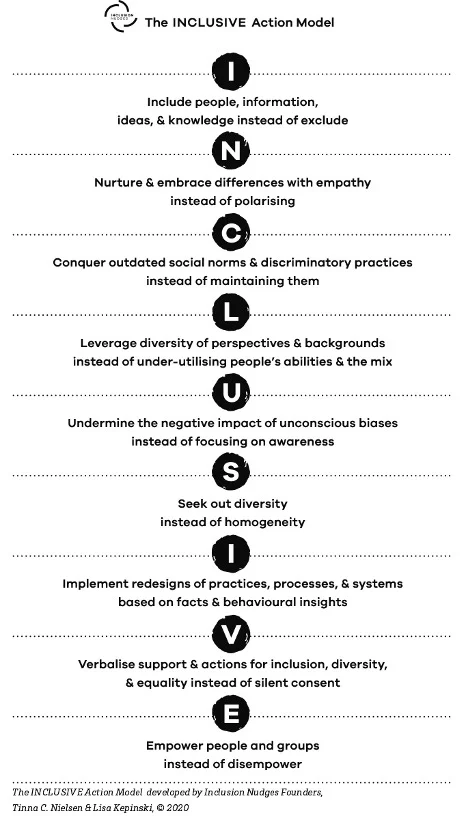
To support organizations in navigating these complex shifts and embedding DEI into their processes and policies, frameworks like "Inclusion Nudges" offer actionable strategies. These behavioral design interventions can help address unconscious biases and promote inclusive behaviors and outcomes by subtly shifting decision-making environments. Examples relevant to the ‘Process & Policy’ domain include:
- Reveal Gaps in Flexible Working to Increase Use by All: This nudge encourages organizations to analyze who is currently utilizing flexible work options and, more importantly, who is not, and why. By making these gaps visible, organizations can address barriers and actively promote equitable access.
- Flexible Working as the Default & Norm: Shifting the default from in-office to flexible work options fundamentally alters perceptions and expectations. When flexibility is the norm, the burden of justification moves from the employee requesting it to the organization requiring in-office presence, promoting greater equity.
- Default as ‘All Jobs Are 80% Jobs’: This radical approach challenges the assumption of full-time, often over-extended, work as the only standard. By defaulting to a reduced-hour model (e.g., 80% of full-time), organizations can proactively foster work-life balance, enhance well-being, and potentially open opportunities for a more diverse workforce.
These nudges provide concrete pathways for organizations to translate their DEI aspirations into tangible policy and process changes, ensuring that the new era of work is inherently more inclusive and equitable.
Conclusion
The pandemic-era has presented a truly transformative moment for the world of work. The rapid experimentation with new ways of working has not only highlighted the resilience and adaptability of organizations and individuals but has also laid bare the inefficiencies and inequities of outdated processes and policies. The shifts in ‘Process & Policy’ are not merely operational adjustments; they represent a fundamental re-negotiation of the social contract between employers and employees.
Organizations that embrace this opportunity to re-evaluate, co-create, and implement policies with a strong focus on inclusion, psychological safety, and employee well-being will be best positioned to attract, retain, and empower diverse talent in the evolving landscape. By engaging employees in policy design, leveraging data and behavioral insights, and adopting agile experimentation, leaders can ensure that the lessons learned from this tumultuous period pave the way for a more equitable, productive, and sustainable future of work. The journey is ongoing, but the direction is clear: toward a workplace where policies are designed not just for efficiency, but for human flourishing and collective progress.