Virginia Governor Abigail Spanberger this week enacted landmark legislation, signing into law HB167, a bill designed to end state tax exemptions for several organizations with historical ties to the Confederacy. The new law represents a significant step in the Commonwealth’s ongoing effort to reconcile with its complex past, specifically targeting financial support that has benefited groups like the United Daughters of the Confederacy (UDC) since the segregation era of the 1950s. This legislative action repeals a carve-out in the state’s tax code that, for over seven decades, effectively subsidized entities dedicated to promoting a romanticized view of the Confederacy and its fight to preserve slavery.
A Legacy of State-Sanctioned Support for Confederate Ideology
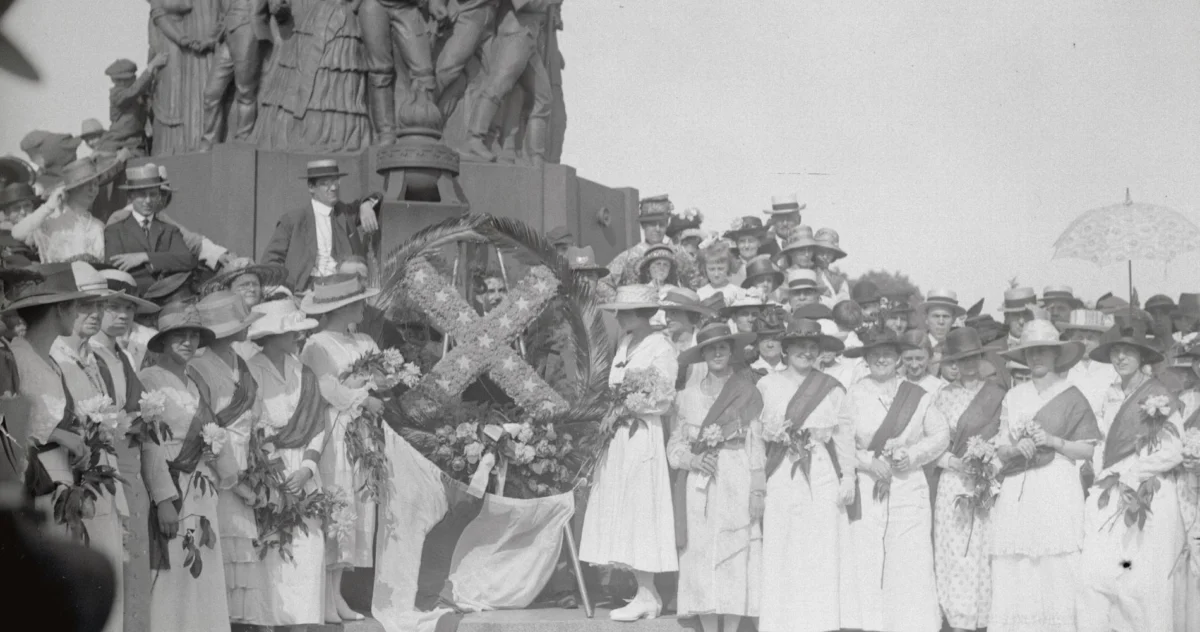
The historical context of these tax exemptions is deeply intertwined with Virginia’s period of "Massive Resistance" against the federal government’s efforts to desegregate public schools following the landmark 1954 Brown v. Board of Education Supreme Court decision. During this era, Virginia, a former capital of the Confederacy, actively sought to defy federal mandates and maintain its racial hierarchy. State support for pro-Confederate groups and the proliferation of Confederate iconography intensified dramatically as a direct response to the burgeoning Civil Rights Movement and desegregation orders. These groups, most notably the United Daughters of the Confederacy and the Sons of Confederate Veterans, were instrumental in erecting hundreds of Confederate memorials across the Southern landscape. These monuments were not merely historical markers; they served as powerful symbols intended to glorify the Confederacy’s cause, framing Southern secession as a noble defense of states’ rights and local autonomy, rather than an effort to preserve the institution of slavery.
The post-Reconstruction era, characterized by widespread racial terror and the entrenchment of Jim Crow laws, saw the initial surge of Confederate monument construction. However, a second wave of monument building and the reinforcement of Confederate narratives occurred in the 1950s and 1960s, precisely when the federal government pushed for desegregation. These memorials, often strategically placed in prominent public spaces, played a vital role in restoring and enforcing the racial hierarchy that permeated life in the American South and influenced perceptions of racial equality nationwide. Delegate Alex Askew, the sponsor of HB167, articulated this historical truth, telling WHRO that these monuments were put in place "to show African Americans and certain individuals, certain communities, that they were second-class citizens." Virginia, notably, possesses more Confederate monuments than any other state in the country, underscoring the depth of this historical commitment to such iconography.
Virginia’s financial entanglement with these organizations was particularly explicit. In 1950, then-Governor John S. Battle, a figure deeply associated with the state’s segregationist policies, signed a deed granting the UDC land in Richmond for the construction of its headquarters. This prominent, marble-clad building is reportedly valued at approximately $4.7 million today. Just two years later, in 1952, the Virginia General Assembly further solidified this support by explicitly exempting the UDC from the state’s recordation tax, a levy applied when property sales are registered. The Virginia division of the UDC holds the unique distinction of being the only organization singled out by name in this particular section of the state’s tax code, highlighting the specific and intentional nature of this legislative favor.
Beyond the recordation tax, lawmakers also provided broad tax exemptions for real and personal property owned by the Virginia Division of the UDC, the General Organization of the UDC, the Confederate Memorial Literary Society, and the Stonewall Jackson Memorial, Incorporated. These exemptions have provided substantial financial relief to these groups for decades. The New York Times reported that the UDC alone saved an estimated $57,000 annually in property taxes on its Richmond headquarters due to these provisions. This extensive network of state support, as WHRO observed, was "part of a wave of resistance to racial integration and civil rights efforts in the commonwealth."
The Path to Repeal: HB167 and Modern Virginia
The recent passage of HB167 signals a decisive shift in Virginia’s public policy, effectively ending more than 75 years of direct state financial support for efforts that have been widely criticized for romanticizing slavery, glorifying the Confederacy, and underpinning Jim Crow segregation. Delegate Alex Askew, a driving force behind the legislation, emphasized the importance of this change, stating in 2024 that rather than "providing tax relief to historically pro-slavery institutions," ending these exemptions is integral to fostering a "fairer, more inclusive tax policy that truly reflects our commitment to equality and progress."
The legislative journey for HB167 involved navigating both chambers of the General Assembly, where proponents argued for the moral and historical imperative of removing state subsidies for organizations whose foundational tenets are seen as antithetical to modern values of equality and justice. The debate surrounding the bill often revisited the origins of the exemptions, connecting them directly to a period of state-sanctioned racial discrimination. Opponents, while not extensively quoted in public records, would likely have raised arguments centered on historical preservation, the non-profit status of the organizations, or the principle of long-standing tax policy. However, the bill ultimately garnered sufficient bipartisan support to reach the Governor’s desk.
Financially, the United Daughters of the Confederacy reported approximately $2.1 million in revenue and $1.1 million in expenses in 2025, according to The New York Times. While the immediate financial impact of losing the estimated $57,000 in property tax exemption on their Richmond headquarters might not be crippling to an organization of this size, the broader loss of state tax-exempt status for various properties and transactions will undoubtedly necessitate adjustments to their financial planning. More significantly, the repeal carries immense symbolic weight, stripping away a long-held privilege that underscored state endorsement of their activities. Delegate Askew underscored the symbolic nature of this move, asserting that these groups "help glorify the Confederacy and essentially, I believe, have whitewashed the commonwealth’s history. It’s truthfully time to move forward."
Beyond Tax Exemptions: A Broader Reckoning
Governor Spanberger’s signing of HB167 is not an isolated event but part of a broader, more comprehensive effort within Virginia to confront and rectify its historical relationship with the Confederacy. As Delegate Askew remarked in a statement on Monday, the signing "is a proud moment and an important step forward for Virginia." The governor also signed into law another significant bill that discontinues specialty license plates featuring images of Confederate General Robert E. Lee and symbols associated with the Sons of Confederate Veterans. These plates, once a common sight on Virginia roads, were another visible manifestation of state-sanctioned veneration of Confederate figures.
Furthermore, Governor Spanberger demonstrated her commitment to a deeper reckoning by sending back to the Assembly with recommendations a bill (HB1377) aimed at establishing a task force. This task force is charged with recommending changes, among other things, to distance the Virginia Military Institute (VMI) from the "Lost Cause" narrative. The "Lost Cause" is a revisionist historical interpretation that emerged in the post-Civil War South, asserting that the Civil War was not fundamentally about slavery but rather about states’ rights, minimizing the Confederacy’s military defeat, and celebrating the South’s supposed triumph over Reconstruction-era federal policies. VMI, a public military college with deep historical roots in Virginia, has long grappled with its Confederate legacy, including monuments and traditions honoring Confederate figures. The proposed task force signals an institutional commitment to re-evaluating and recontextualizing this history within one of the state’s prominent educational institutions.
The drive to end the use of Confederate names and monuments to promote the "Lost Cause" and enforce segregation is not solely confined to Virginia’s elected officials. Public pressure and legal challenges are also playing a crucial role. In a notable instance, when a school board in the Shenandoah Valley reinstated the names of two schools originally christened for Confederate generals, Black students filed a lawsuit. They argued that the school board’s decision to name the schools after Confederate generals—individuals who not only fought for the preservation of slavery but were also outspoken about their racist belief that Black people were inherently unequal to white people—was an intentional act "to make it very clear that Black students were not welcome." This case remains pending, highlighting the ongoing legal and social battles over the symbolism of Confederate names in public spaces, particularly those affecting educational environments.
A National Divide: Virginia’s Stance Versus Federal Trends
Virginia’s proactive efforts to truthfully confront the legacy of slavery and to remedy its past governmental support for Confederate groups stand in stark contrast with certain trends observed at the federal level during the previous administration. While Virginia moves to dismantle symbols and financial supports of the Confederacy, the Trump administration reportedly pursued policies that sought to minimize the centrality of slavery in American history and, in some instances, to restore or protect Confederate monuments.
Reports indicated that the Trump administration ordered the removal of content related to slavery at several national parks, and pressured the Smithsonian Institution to remove exhibits that, according to President Trump, focused excessively on "how bad Slavery was." These actions underscored a federal inclination to present a more sanitized version of American history, often at odds with the growing public demand for a more complete and accurate understanding of the nation’s past, particularly concerning racial injustice.
Regarding military installations, the federal landscape has been complex. While there was a strong, congressionally mandated, multimillion-dollar effort to remove Confederate names from military bases and rename them in honor of American heroes, the Trump administration initially resisted these changes. The subsequent process, led by the Naming Commission, has seen numerous military installations across the South, including Fort Bragg in North Carolina (now Fort Liberty) and Fort Lee in Virginia (now Fort Gregg-Adams), undergo renaming. This national effort to remove Confederate names from military bases, enshrined in law, ultimately moved forward despite earlier resistance, demonstrating a broader societal shift away from honoring figures who fought against the United States to preserve slavery and white supremacy. This national movement, albeit with periods of federal tension, aligns with Virginia’s recent legislative actions.
Looking Ahead: Reconciling with History
Virginia, through the passage of HB167 and related legislation, is signaling a clear commitment to shaping a more inclusive future by directly addressing the painful legacies of its past. This move aligns with similar efforts in other states and by private museums across the country that are actively working to preserve history in a truthful manner, acknowledging the importance of confronting difficult truths about the nation’s origins and subsequent development.
The implications of this legislation are multifaceted. Financially, it redirects state resources away from organizations that have historically perpetuated divisive narratives. Symbolically, it sends a powerful message that Virginia no longer officially endorses or financially supports groups that romanticize a period built on the oppression of millions. For racial justice and equity, it represents a tangible step towards dismantling systemic vestiges of segregation and white supremacy. For historical memory and education, it encourages a more accurate and critical understanding of the Civil War and its aftermath, moving beyond the "Lost Cause" mythology. Virginia, as a historically significant state in both the Civil War and the Civil Rights movement, now stands as a potential model for other states grappling with similar legacies.
The journey towards full reconciliation with history is ongoing, marked by legislative action, legal challenges, and continued public discourse. However, as Delegate Askew reiterated, the sentiment driving these changes is clear: "It’s about moving forward from our dark past that our commonwealth has had." The recent legislative actions in Virginia underscore a profound cultural and political evolution, aiming to build a future that truly reflects its commitment to equality and progress for all its citizens.