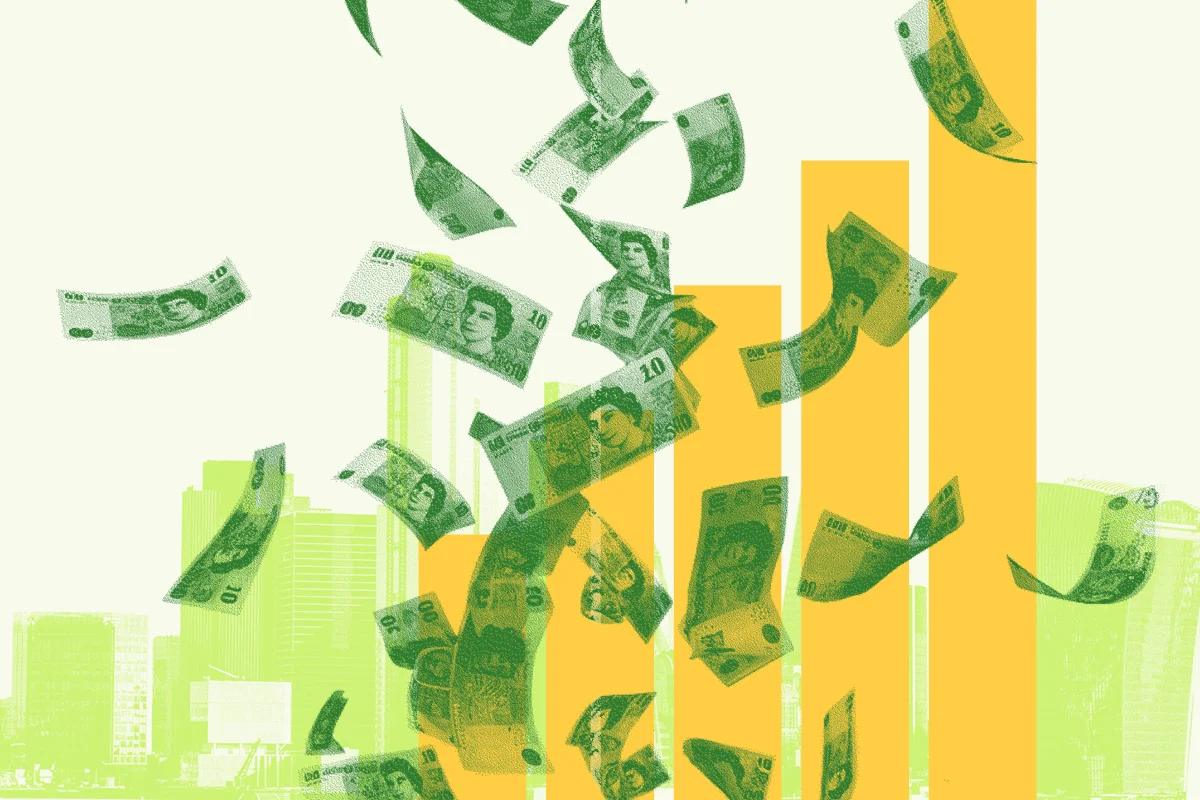
The Equality Trust has released a comprehensive analysis for 2026 revealing that the United Kingdom’s 157 billionaires now command wealth equivalent to 22 percent of the nation’s Gross Domestic Product (GDP), a dramatic escalation from the 4 percent recorded in 1990. This findings, released in tandem with the annual Sunday Times Rich List, underscores a profound structural shift in the British economy over the last three and a half decades. While traditional economic indicators such as GDP growth are frequently cited by policymakers as evidence of national prosperity, the report argues that these figures mask a "hollow economy" where wealth is increasingly concentrated at the extreme top while the broader population experiences stagnant wages, declining health outcomes, and a deteriorating social safety net.
The 2026 data highlights a stark trajectory of wealth accumulation. In 1990, the UK’s 15 wealthiest individuals held approximately £27 billion, representing roughly 4p of every pound generated in the national economy. By contrast, the 157 billionaires identified in 2026 hold nearly £670 billion, or more than 22p of every pound of GDP. This concentration of resources has reached a point where the 50 wealthiest families in the country now possess more collective wealth than the poorest 34 million citizens combined.
The Genesis of the Hollow Economy and Ghost GDP
The term "Ghost GDP" was popularized in early 2026 by Citrini Research to describe an economic phenomenon where top-line growth appears robust on paper—often driven by artificial intelligence, high-frequency financial trading, and multinational accounting—but fails to translate into tangible benefits for the average household. The Equality Trust posits that Britain has already entered this "hollowed out" state.
The historical roots of this disparity trace back to the late 1970s and 1980s. Following the systematic dismantling of post-war economic protections during the Thatcher administration, the UK began a transition away from a manufacturing-based economy toward one dominated by finance and property. The Sunday Times Rich List, first published in 1989, has served as a yearly chronicle of this shift. Initially tracking the top 1,000 wealthiest individuals, the list has narrowed its focus in 2026 to the top 350, as the entry threshold has climbed to a staggering £350 million.
Analysts note that the source of billionaire wealth has fundamentally changed. In 1990, only three billionaires on the list drew their primary wealth from property, inheritance, and finance. By 2025, that number had risen to 42. Today, the finance sector alone accounts for 30 percent of all billionaire wealth in the UK, a fourfold increase in its share of the total. This evolution signals the dominance of "rentier capitalism," a system where wealth is generated not through the creation of new value or innovation, but through the ownership of existing assets, the collection of rents, and the extraction of fees from the movement of capital.
A Chronology of Crisis and Concentration
The report identifies a pattern where national crises have served as catalysts for accelerated wealth concentration. Over the past twenty years, major global and domestic shocks—including the 2008 financial collapse, the COVID-19 pandemic, and recent geopolitical conflicts—have consistently resulted in billionaire wealth growing at a faster rate than the general economy.
- 1990-2000: The post-Thatcher era sees the initial decoupling of productivity and wages, with the first significant rise in the GDP share of the ultra-wealthy.
- 2008-2010: Following the banking crisis, austerity measures are introduced for the public sector while asset prices begin a long-term ascent fueled by low interest rates, benefiting property and stock owners.
- 2020-2022: The pandemic sees a massive transfer of public funds into the private sector, with billionaire wealth surging globally while workers face the beginning of a historic inflation-driven pay squeeze.
- 2023-2026: The emergence of AI-driven "Ghost GDP" further inflates corporate valuations and billionaire portfolios, while healthy life expectancy in the UK continues its decade-long decline.
This chronology suggests that the current economic system is designed to insulate the ultra-wealthy from risk while distributing the costs of crises across the working and middle classes.
International Warnings: The Irish and American Precedents
The Equality Trust points to Ireland as a cautionary tale of economic distortion. In 2025, Ireland reported a GDP growth rate of 12 percent, yet the majority of this growth was attributed to multinational corporations routing profits through Dublin for tax optimization. The distortion became so extreme that the Irish government was forced to adopt a new metric, "Modified Domestic Demand," to understand the actual economic health of its citizens. Despite the soaring GDP, a generation of Irish citizens remains priced out of the housing market, illustrating the disconnect between paper growth and social reality.
Similarly, the report draws parallels with the United States, the most unequal of the wealthy nations. The UK now trails only the U.S. in terms of income inequality among comparable economies. This disparity is reflected in public health; the Health Foundation recently found that healthy life expectancy in Britain has fallen to under 61 years. The gap between the richest and poorest areas in the UK now represents a 20-year difference in healthy life expectancy, a statistic that aligns more closely with developing nations than with the UK’s status as the world’s sixth-largest economy.
The Human and Environmental Cost
The impact of the hollow economy extends beyond financial statistics into the literal well-being of the next generation. UNICEF’s Report Card 20, released earlier this year, ranked the UK 24th for child well-being and 35th for income inequality among the world’s richest nations. The report highlights that the UK is failing children in mental well-being and poverty metrics, suggesting that the current economic trajectory is compromising future human capital.
The environmental implications are equally severe. Research from Oxfam indicates that the world’s richest billionaires produce more carbon through superyachts, private jets, and carbon-heavy investments in under three hours than the average UK citizen does in a lifetime. In Britain, the richest 0.1 percent are 56 times more polluting than those on the lowest incomes. Furthermore, since 1990, while the bottom 90 percent of the UK population has reduced its carbon emissions by 26 percent, the emissions of the ultra-wealthy have risen by 53 percent. This is largely attributed to the fact that nearly 40 percent of billionaire investments remain tied to "extractive" industries such as oil, gas, shipping, and cement.
Institutional Capture and Structural Corruption
The persistence of the hollow economy is maintained through what the report calls "structural corruption." This is defined not as illegal activity, but as the legal and normalized influence of extreme wealth over democratic institutions.
Key indicators of this capture include:
- Political Donations: Large-scale donations to political parties rose sixfold between 2002 and 2019, buying access and shaping policy.
- Media Concentration: Three major conglomerates, including the owners of the Sunday Times, now control 90 percent of national newspaper circulation, influencing the public narrative on wealth and taxation.
- Legislative Influence: The House of Lords has grown to over 750 members, making it the second-largest legislative chamber in the world. Research has documented a strong correlation between significant financial donations and the attainment of peerages.
Professor Kate Pickett, a patron of the Equality Trust, argues that these inequalities create a "bifurcated society" where different rules apply to different classes. Even figures within the financial establishment, such as BlackRock CEO Larry Fink, have warned that the current level of inequality could lead to social breakdown, though critics argue that the solutions proposed by the financial elite—such as increased individual investment—ignore the reality that most citizens have no surplus capital to invest.
Beyond GDP: The Search for New Metrics
In response to these findings, there is a growing international movement to abandon GDP as the primary measure of national success. In May 2026, the United Nations High-Level Expert Group on "Beyond GDP" launched its final report, proposing 31 new indicators that prioritize wellbeing, equity, and environmental sustainability.
Simultaneously, the UN Special Rapporteur on Extreme Poverty, Olivier De Schutter, published a roadmap for eradicating poverty that explicitly moves "beyond growth." De Schutter argues that the pursuit of GDP growth has become an obstacle to solving poverty, as the benefits of that growth are almost entirely captured by the top 1 percent.
The Equality Trust and its network of Community Economists are advocating for several structural reforms to address the UK’s wealth concentration:
- Progressive Wealth Tax: A structural limit on the concentration of power through the taxation of high-value assets.
- Democratic Reform: Capping political donations and breaking up media monopolies to ensure a more diverse range of voices in the public square.
- Universal Basic Services: Moving toward a system where essential needs—such as housing, transport, and digital access—are guaranteed, reducing the reliance on stagnant wages.
- Inheritance Reform: Addressing the legal structures that allow dynastic wealth to pass between generations virtually tax-free.
Conclusion: The Need for Systemic Replacement
The 2026 analysis concludes that the UK’s economic system is not "broken" in the traditional sense, but is rather functioning exactly as it was designed—to aggregate wealth at the top while hollowing out the middle and bottom. The Equality Trust warns that "sticking plaster" reforms will no longer suffice to address a 22 percent GDP wealth concentration.
As local election results in early May 2026 indicated a growing public disillusionment with traditional political platforms, analysts suggest that the "anger" resulting from the hollow economy is seeking new outlets. The question facing the UK government is whether it will proactively reform the economic system to ensure an equitable society or continue to manage the fallout of a system that serves a shrinking elite at the expense of the many. The transition from a 4 percent to a 22 percent GDP share for billionaires represents more than just a change in numbers; it represents a fundamental shift in the nature of British democracy and social stability.