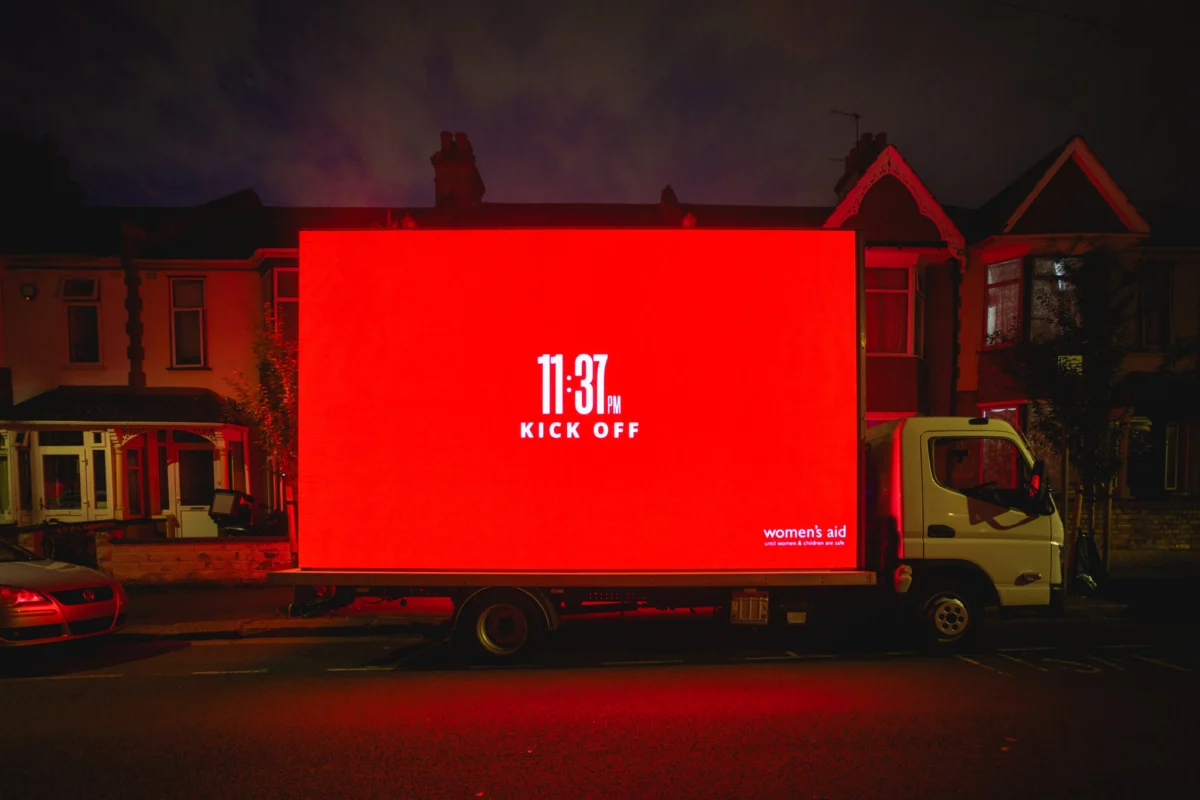
London, 17th June 2026 – As England prepares for its eagerly anticipated opening match in the World Cup, the national domestic abuse charity Women’s Aid has initiated a powerful new public awareness campaign titled ‘The Other Kick Off’. This initiative confronts a grim reality often overshadowed by the national euphoria of major sporting events: the predicted surge in domestic abuse incidents following England’s games. The campaign specifically draws attention to an estimated "other kick-off time" of 11:37 PM, a moment that for many women and children marks the beginning of intensified fear and potential violence.
The official start time for England’s inaugural World Cup match is set for 9:00 PM, a moment of collective excitement and anticipation across the nation. However, Women’s Aid starkly contrasts this with a far more sinister ‘kick-off time’ that commences much later: 11:37 PM. This precise timestamp has been meticulously calculated to represent the estimated point at which domestic abuse is predicted to escalate after the final whistle. It accounts for the average duration of a football match, including half-time and any additional time, followed by typical post-match activities such as drinking and the journey home. For countless women and children, 11:37 PM symbolises the dreaded return of abusive partners, transforming what should be a shared national celebration into a period of profound anxiety and heightened danger within their own homes. The late-night nature of many World Cup fixtures this year further exacerbates this issue, creating an even more isolating and frightening environment for survivors who may feel trapped and without immediate recourse.
A Bold Awareness Drive: Hijacking the World Cup Narrative
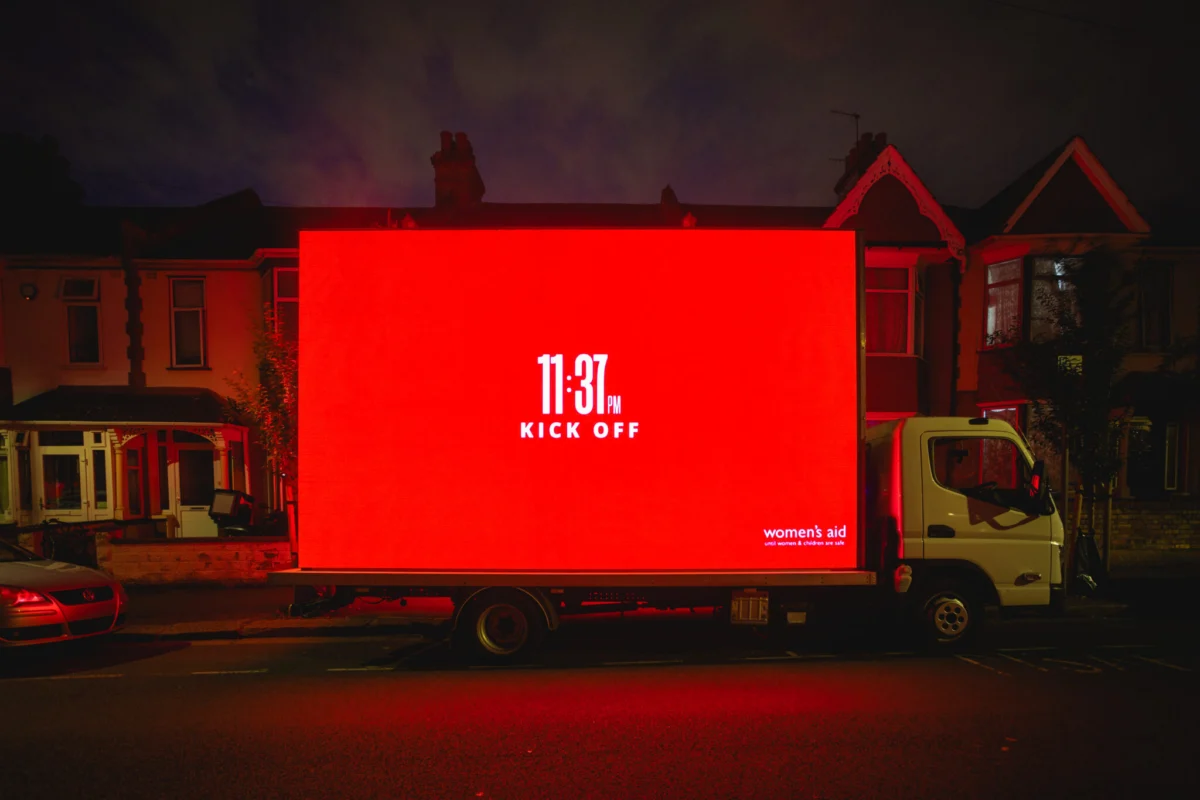
The ‘Other Kick Off’ campaign strategically intercepts one of the most frequently asked questions during the World Cup: "What time is kick-off?" By re-framing this question, Women’s Aid diverts public attention from the sporting event itself to the critical, often hidden, issue of domestic abuse. The campaign aims to stop people in their tracks and provoke a deeper understanding of the realities faced by survivors. To achieve this, Women’s Aid has deployed a multi-channel awareness drive across London. Digital billboards, mobile vans, and fly posters have been strategically placed near major fan zones and football hotspots, ensuring maximum visibility among the public and particularly football enthusiasts. Each of these prominent displays features a QR code, serving as a direct link to Women’s Aid’s comprehensive website. This digital gateway offers immediate access to support services, opportunities for donations, crucial information on identifying the signs of domestic abuse, and actionable steps for intervention and assistance.
This innovative campaign builds upon the legacy of Women’s Aid’s successful 2022 ‘He’s Coming Home’ campaign, which similarly utilised the cultural resonance of football anthems to highlight the same pervasive issue during the previous World Cup. The consistent messaging across these campaigns underscores the charity’s unwavering commitment to challenging the societal blind spots surrounding domestic abuse during periods of national sporting fervour. By leveraging the immense public attention garnered by the World Cup, Women’s Aid seeks to transform a moment of national unity into an opportunity for critical social reflection and action against a deeply entrenched societal problem.
The Uncomfortable Truth: Football’s Darker Side
The premise of ‘The Other Kick Off’ is not based on mere speculation but on longstanding, well-documented research that consistently demonstrates a significant correlation between major football tournaments and a rise in domestic abuse incidents. A pivotal study by Kirby and Francis in 2014, published in the Journal of Research in Crime and Delinquency, provided empirical evidence confirming this alarming trend. Their research indicated that domestic abuse incidents increase by a staggering 38% when England loses a match, and still rise by 26% even when the national team secures a victory. These statistics reveal a troubling pattern, suggesting that the outcome of a game, whether triumph or defeat, can act as a catalyst for existing abusive behaviours.
While football itself is unequivocally not a direct cause of domestic abuse, the heightened emotions, intensified rivalries, and increased alcohol consumption often associated with major sporting events can significantly exacerbate pre-existing patterns of abuse. The atmosphere surrounding these tournaments can create an environment where anger, frustration, or even celebratory excesses provide a pretext for perpetrators to escalate violence and control. This phenomenon is not unique to the UK; similar patterns have been observed globally during other major sporting spectacles. The consensus among experts and support organisations is clear: regardless of the match outcome, the underlying issue of domestic abuse cannot be tolerated, and its amplification during these events demands urgent and dedicated attention.
Voices from the Frontline: Leadership and Advocacy
The launch of ‘The Other Kick Off’ campaign has been met with powerful statements from key figures, reinforcing the urgency and gravity of the issue.
Farah Nazeer, CEO at Women’s Aid, articulated the stark dichotomy faced by many: “The World Cup is a wonderful opportunity for us to come together and cheer on our team. However, for women and children living with domestic abuse, ‘kick-off’ has a different meaning. For those living with abuse, the final whistle of the game signals the beginning of something frightening and potentially life-threatening.” Nazeer’s words underscore the charity’s central message: that the collective joy of football must not eclipse the private terror experienced by survivors. She further emphasised the amplifying factors: “While we know that domestic abuse isn’t caused by football, we also know that heightened emotions and alcohol consumption can lead to a rise in domestic abuse frequency and severity. Whether England wins, loses or draws, no woman or child should live in fear of that final whistle blow.” Her statement concluded with a call for broad community engagement: “We hope that our campaign helps raise awareness of this heinous crime, while also signposting people to support, not only for themselves, but for loved ones they’re concerned about.”
Adding her influential voice to the campaign, Women’s Aid Ambassador Charlie Webster highlighted the national emotional landscape juxtaposed against individual suffering: “The World Cup is one of those rare moments when the whole country holds its breath together – united, hopeful, alive! That joy is real, and it’s precious. But for women and children living with domestic abuse, tournament time brings something very different: heightened fear, and heightened danger. That is a reality we cannot look away from.” Webster, a survivor of domestic abuse herself, brings a deeply personal perspective to the advocacy, stating: “Football is our game. It belongs to all of us, and it should be a place of safety. I am proud to be raising awareness to change that, and make sure that when England plays, every woman at home is safe.” Her powerful call for safety and inclusivity within the realm of football resonates deeply, challenging the sport to live up to its ideals of community and fair play.

Government’s Stance and Strategic Responses
The campaign has also garnered official recognition and support from the government, with Natalie Fleet, Minister for Safeguarding and Violence Against Women and Girls, offering a clear condemnation of domestic abuse and outlining strategic interventions. “Nobody should live in fear because of a football match. As a Mum and a Nana, I find it heartbreaking that while many families come together to enjoy the World Cup, some women and children are left dreading the final whistle. The latest Women’s Aid campaign shines a powerful light on this reality,” Minister Fleet stated.
Her comments acknowledge the dual nature of national sporting events and the government’s commitment to tackling the issue. “We know domestic abuse can escalate during major sporting events, and there is never any excuse for it. Tackling this is central to our VAWG Strategy – including placing domestic abuse specialists in 999 control rooms through Raneem’s Law, rolling out Domestic Abuse Protection Orders, and working with partners to challenge harmful behaviours,” she explained. These measures reflect a multi-faceted approach, combining immediate response mechanisms with broader preventative and protective frameworks. Raneem’s Law, for instance, aims to improve the initial police response to domestic abuse calls, ensuring victims receive specialist support from the outset. Domestic Abuse Protection Orders (DAPOs) provide a flexible means of protecting victims and survivors by imposing prohibitions and positive requirements on perpetrators. Minister Fleet concluded with a resolute pledge: “We are clear that enough is enough. We will deploy the full power of the state to halve violence against women and girls in a decade.” This ambitious target underscores a long-term commitment to systemic change and greater safety for women and girls across the UK.
Beyond the Whistle: A Call for Collective Responsibility
The ‘Other Kick Off’ campaign extends beyond simply raising awareness; it issues a profound call for collective responsibility. While Women’s Aid leads the charge, the burden of addressing domestic abuse during sporting events, and indeed throughout the year, falls upon various stakeholders. Football associations, clubs, and individual players have an increasingly important role to play in promoting safe environments and publicly condemning abuse. Many football organisations are already partnering with charities to run awareness campaigns, and further integration of anti-abuse messaging into matchday experiences and fan engagement programmes could significantly amplify the message.
Law enforcement agencies are also crucial. Police forces across the UK often prepare for an anticipated increase in domestic abuse incidents during major tournaments by increasing patrols, staffing helplines, and coordinating with support services. However, continuous training, resource allocation, and a victim-centric approach remain paramount to ensuring effective responses. Furthermore, the broader public holds a significant responsibility. By understanding the signs of abuse, challenging harmful behaviours, and knowing where to direct those in need of help, individuals can become active participants in prevention and support networks. The campaign’s QR codes are a direct invitation for this engagement, empowering bystanders to transition from passive observers to active allies.
Sustaining the Fight: Women’s Aid’s Ongoing Mission
Women’s Aid is not merely reactive to major events but is at the forefront of a sustained, national effort to end domestic abuse. For over 50 years, the charity has been a powerful voice for survivors, operating as a federation of 183 organisations that collectively provide over 300 local lifesaving services across the country. Their work encompasses a wide array of support, advocacy, and educational initiatives.
The charity’s support services include the Survivors’ Forum, an online community providing a safe space for women to connect and share experiences; the No Woman Turned Away Project, which helps women access refuge spaces when local services are full; and the Survivor’s Handbook, a comprehensive guide to navigating the complexities of leaving an abusive relationship. Additionally, Love Respect is a dedicated website for young people, offering age-appropriate information and support. The national Women’s Aid Directory provides a vital resource for locating local services, while various advocacy projects work tirelessly to influence policy and practice at governmental and societal levels. These multifaceted efforts ensure that thousands of women and children receive critical support every year, addressing both immediate safety needs and long-term recovery and empowerment. The ‘Other Kick Off’ campaign, therefore, is an integral part of this broader mission, leveraging specific cultural moments to shine a spotlight on an enduring crisis and galvanise public support.
Conclusion: A Future Free from Fear
The ‘Other Kick Off’ campaign serves as a poignant reminder that while the nation unites in celebration of football, a significant segment of society faces an entirely different, terrifying reality. The precise timing of 11:37 PM is more than just a calculation; it is a symbol of the pervasive fear that overshadows the lives of women and children living with domestic abuse. By challenging the public to look beyond the spectacle of the game, Women’s Aid implores everyone to acknowledge the interconnectedness of national events and personal safety.
The widespread display of the campaign’s message, facilitated by donated billboard placements from leading out-of-home media partners like The Outernet and Ocean Outdoor, ensures that this critical message penetrates public consciousness. Ultimately, the campaign is a powerful call to action: to recognise the signs of abuse, to understand the devastating impact of these ‘other kick-off times’, and to actively support the efforts to create a society where no woman or child lives in fear after the final whistle blows. The vision is clear: a future where the joy of football is truly universal, and where every home is a place of safety, not fear. For more information, support, or to donate, visit https://womensaid.org.uk/.