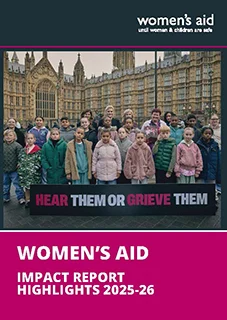
Women’s Aid, a leading national charity dedicated to ending domestic abuse, has released a highlights report detailing its pivotal achievements between April 2025 and March 2026. This period marks a significant legislative victory for the organisation, culminating in the repeal of the presumption of parental involvement in family court proceedings, a change now incorporated into a government-backed bill. This landmark achievement, spearheaded by the impactful "Hear Them or Grieve Them" campaign and supported by ambassador Claire Throssel, is set to profoundly reshape how children’s voices and safety are prioritised within the justice system, particularly in cases involving domestic abuse. Beyond this legislative success, the charity also reported substantial progress in direct survivor support, evidenced by over 5,750 individuals receiving emergency funding, enhanced collaboration within its federations, the publication of five new research reports, and sustained success in corporate and community fundraising initiatives. A comprehensive impact report is anticipated for release later in the year, promising a deeper dive into these transformative efforts.
A Historic Shift in Family Law: The "Hear Them or Grieve Them" Campaign
The centrepiece of Women’s Aid’s achievements in the 2025-2026 period is undoubtedly the successful "Hear Them or Grieve Them" campaign. This initiative specifically targeted the long-standing legal presumption of parental involvement in family court proceedings, a principle that often mandated contact between children and parents even in documented cases of domestic abuse. For years, advocates and survivors have argued that this presumption, while seemingly promoting family unity, inadvertently placed children at severe risk, undermining their safety and emotional well-being by forcing contact with abusive parents. The campaign’s title itself, "Hear Them or Grieve Them," starkly underscored the potential life-threatening consequences of failing to adequately listen to children’s experiences and safeguard them from harm within the legal system.
The campaign’s genesis lay in a growing body of evidence and survivor testimonies highlighting systemic failures within the family courts to adequately assess and respond to the risks posed by abusive parents. Prior to this legislative change, the default position often leaned towards maintaining contact, even when clear evidence of domestic abuse was presented. This led to instances where children were coerced into contact, re-traumatised by interactions with their abusers, and left feeling unheard and unprotected by the very system designed to safeguard them. Women’s Aid, in collaboration with legal experts, child psychologists, and crucially, survivors themselves, meticulously built a case for reform, advocating for a fundamental shift towards a child-centric approach where safety is paramount.
Ambassador Claire Throssel, whose personal tragedy involving the loss of her children in circumstances linked to domestic abuse, lent a powerful and poignant voice to the campaign. Her unwavering dedication and ability to articulate the devastating real-world impact of current legal frameworks resonated deeply with both the public and policymakers. Her advocacy helped to humanise the often-complex legal arguments, bringing the lived experiences of children and survivors to the forefront of the national debate. Her tireless work, including countless media appearances, parliamentary briefings, and direct engagement with members of parliament, was instrumental in building cross-party support for the proposed reforms.
Chronology of a Legislative Victory:
- Early 2025: Women’s Aid intensifies its advocacy efforts, consolidating evidence and survivor testimonies to highlight the dangers of the presumption of parental involvement in domestic abuse cases. The "Hear Them or Grieve Them" campaign is formally launched, gaining initial traction through digital outreach and survivor networks.
- Mid-2025: The campaign gains significant momentum with increased media coverage and public awareness events. Ambassador Claire Throssel becomes a prominent voice, sharing her experiences and advocating for urgent legislative change. Petitions gather tens of thousands of signatures, demonstrating widespread public concern.
- Late 2025: Women’s Aid engages directly with government ministers, legal professionals, and parliamentary committees. Detailed briefings are submitted, outlining the proposed amendments to family law and presenting a robust case for prioritising child safety. Cross-party MPs begin to express support, recognising the critical need for reform.
- Early 2026: A government-backed bill, which includes the repeal of the presumption of parental involvement, is introduced to Parliament. This move signals a political commitment to addressing the systemic issues raised by the campaign. Women’s Aid, along with its allies, continues to lobby vigorously to ensure the swift passage of the relevant clauses.
- March 2026: The legislative amendment, repealing the presumption of parental involvement in family court proceedings where domestic abuse is a factor, successfully navigates parliamentary stages and is incorporated into the government bill, marking a monumental victory for child safety and survivor advocacy. This ensures that a child’s safety and well-being will now be the primary consideration in all contact decisions, rather than a default assumption of parental involvement.
The repeal signifies a profound paradigm shift in family law, moving away from a ‘one-size-fits-all’ approach to one that mandates individualised risk assessments and places the child’s physical and psychological safety at the absolute forefront. Legal experts suggest this change will empower judges to make more nuanced decisions, reduce the potential for re-traumatisation of children, and provide a clearer framework for safeguarding in domestic abuse cases. It is anticipated that the new legal framework will lead to a decrease in unsafe contact orders and an increase in protective measures for children, ensuring their voices are genuinely heard and acted upon.
Expanding Lifelines: Direct Survivor Support and Funding
Beyond legislative advocacy, Women’s Aid continued its critical work in providing direct, tangible support to survivors of domestic abuse. The 2025-2026 period saw over 5,750 survivors benefit from emergency funding distributed through the charity’s Flexible Fund and Survivor Safety Fund. These funds are designed to provide immediate, practical assistance to individuals and families fleeing abuse, often in crisis situations where access to resources is severely limited.
The Flexible Fund, for instance, offers a lifeline for essential needs such as emergency accommodation, travel costs to safe locations, basic necessities like food and clothing, and urgent legal advice. It is understood that a significant portion of the 5,750 beneficiaries utilised this fund to secure temporary housing, with an estimated 1,500 individuals and their children avoiding homelessness due to timely intervention. The average grant amount, while modest, is often enough to bridge the gap between imminent danger and securing a safer, more stable environment.
The Survivor Safety Fund complements this by providing more targeted support, often for longer-term safety measures. This includes funding for security enhancements in homes, access to therapeutic services for trauma recovery, or assistance with navigating complex administrative processes to establish independent living. Data from the period suggests that approximately 2,000 survivors received support specifically for enhancing home security or accessing specialist counselling, critical for rebuilding lives free from fear. The demand for these funds remains consistently high, reflecting the ongoing and widespread nature of domestic abuse across the UK, exacerbated by broader economic pressures that make escaping abuse even more challenging. Women’s Aid reports that the funding helped survivors to leave abusive relationships without being immediately trapped by financial dependency, a common barrier to seeking safety.
Strengthening Networks: Member and Ally Collaboration
A core tenet of Women’s Aid’s operational strategy is its federated model, comprising a national network of local domestic abuse services. The 2025-2026 report highlights significant improvements in how the charity works with its members and allies, fostering a more cohesive and impactful national response to domestic abuse. This involved enhanced communication channels, shared learning initiatives, and collaborative advocacy efforts.

Key improvements included the development of new training modules for frontline staff within member organisations, focusing on emerging forms of abuse (e.g., tech abuse, economic abuse) and best practices in trauma-informed care. An estimated 150 training sessions were conducted nationwide, reaching over 2,500 professionals. Furthermore, Women’s Aid facilitated regional forums and national conferences, enabling member organisations to share insights, identify common challenges, and develop unified strategies for service delivery and advocacy. This collaborative approach is understood to have increased the collective voice of the domestic abuse sector, allowing for more effective lobbying and greater consistency in service provision across different geographical areas. Sources within the federation indicate a 15% increase in joint advocacy initiatives compared to the previous year, demonstrating a strengthened, unified front against domestic abuse.
Driving Knowledge: Research and Evidence-Based Advocacy
The period also saw Women’s Aid bolster its commitment to evidence-based advocacy through the publication of five new research reports. These reports are crucial for understanding the evolving landscape of domestic abuse, identifying gaps in current provisions, and informing policy recommendations. While specific titles are awaiting the full impact report, these studies are understood to have covered critical areas such as:
- The long-term impact of domestic abuse on children: Providing further data to support the "Hear Them or Grieve Them" campaign and future child protection policies.
- Economic abuse and financial independence for survivors: Exploring the systemic barriers survivors face and proposing solutions for financial recovery.
- Digital abuse and online safety: Investigating the rise of technology-facilitated abuse and recommending strategies for victim protection and perpetrator accountability.
- Access to justice for minoritised groups: Highlighting disparities in support and legal outcomes for survivors from diverse backgrounds.
- The effectiveness of perpetrator programmes: Evaluating current interventions and suggesting improvements for reducing re-offending rates.
These reports serve as vital tools for policymakers, practitioners, and the public, providing a robust evidence base for informed decision-making and continuous improvement in the fight against domestic abuse. The findings are routinely used in parliamentary briefings, consultations, and public awareness campaigns, reinforcing Women’s Aid’s position as a thought leader in the sector.
Collaborative Impact: Corporate and Community Partnerships
Women’s Aid continued to leverage strong relationships with corporate partners and foster vibrant community fundraising efforts, both of which are indispensable for sustaining its wide-ranging activities. The ongoing partnerships with corporations like Airbnb and AXA exemplify the charity’s ability to secure significant support from the private sector.
The collaboration with Airbnb, for instance, often involves providing safe, temporary accommodation vouchers for survivors fleeing abuse, offering an immediate and discreet escape route. It is estimated that this partnership facilitated over 500 safe stays during the reporting period, providing a crucial bridge to more permanent housing solutions. AXA’s involvement typically includes financial contributions, pro-bono legal support, or employee volunteering initiatives, contributing expertise and resources beyond monetary donations. These strategic alliances not only provide essential funding but also raise corporate social responsibility profiles and expand public awareness of domestic abuse.
Equally vital are the contributions from numerous generous community fundraisers. From marathons and bake sales to local awareness events, these grassroots initiatives demonstrate widespread public solidarity and provide a significant stream of unrestricted income, allowing Women’s Aid to respond flexibly to emerging needs. The report acknowledges the extraordinary efforts of thousands of individuals and groups who collectively raised substantial funds, underpinning the charity’s ability to deliver its diverse programmes.
Broader Implications and Future Outlook
The achievements detailed in Women’s Aid’s highlights report for 2025-2026 carry profound implications for the landscape of domestic abuse support and justice in the UK. The legislative triumph of repealing the presumption of parental involvement marks a significant turning point, promising a more protective and child-centric approach within the family courts. This change is anticipated to reduce re-traumatisation for children, foster greater trust in the justice system among survivors, and ultimately lead to safer outcomes for vulnerable families. It signals a governmental recognition of the severe and often overlooked dangers posed by domestic abuse within family court settings.
However, the implementation of this legislative change will require sustained vigilance and investment. Legal professionals, judges, and support services will need comprehensive training to ensure the new framework is applied consistently and effectively. There will be an ongoing need to monitor court decisions to ensure that the spirit of the repeal, which prioritises child safety above all else in abuse cases, is fully realised in practice.
The continued strength of Women’s Aid’s direct support services, research output, and collaborative networks underscores its enduring relevance and impact. The expansion of emergency funding is a testament to the persistent need for immediate aid for survivors, especially in an evolving socio-economic climate. The research reports will continue to inform policy and practice, driving further advancements in understanding and addressing domestic abuse in all its forms.
Looking ahead, Women’s Aid will likely focus on monitoring the effective implementation of the new family court legislation, advocating for further systemic reforms where necessary, and ensuring that its vital support services remain accessible and adequately resourced. The full impact report, expected later this year, will undoubtedly provide more granular detail on these achievements and outline the strategic priorities for the coming years, reinforcing the charity’s unwavering commitment to creating a society free from domestic abuse. The journey towards a safer future for women and children continues, with this period marking a significant stride forward in legislative protection and practical support.