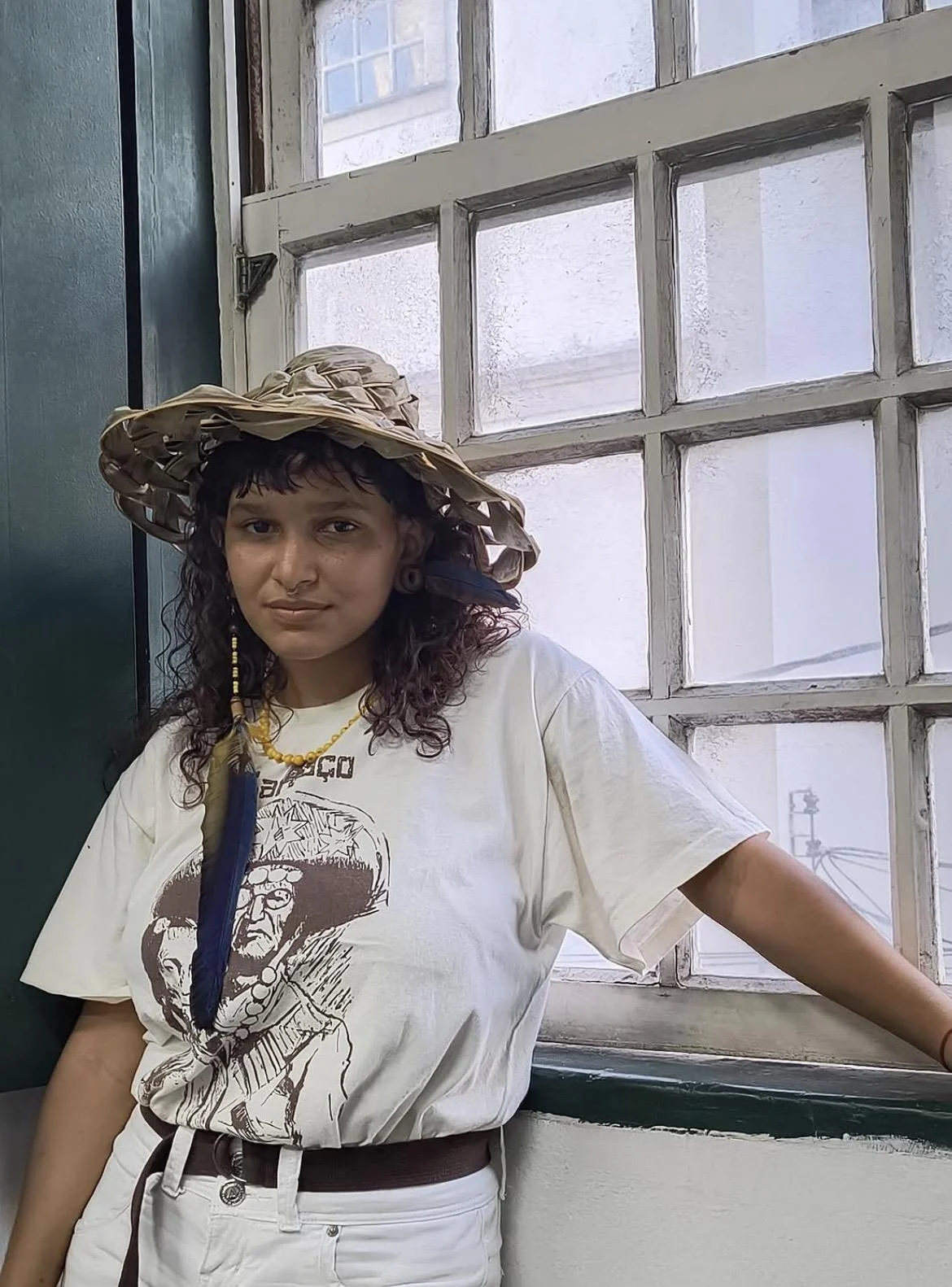
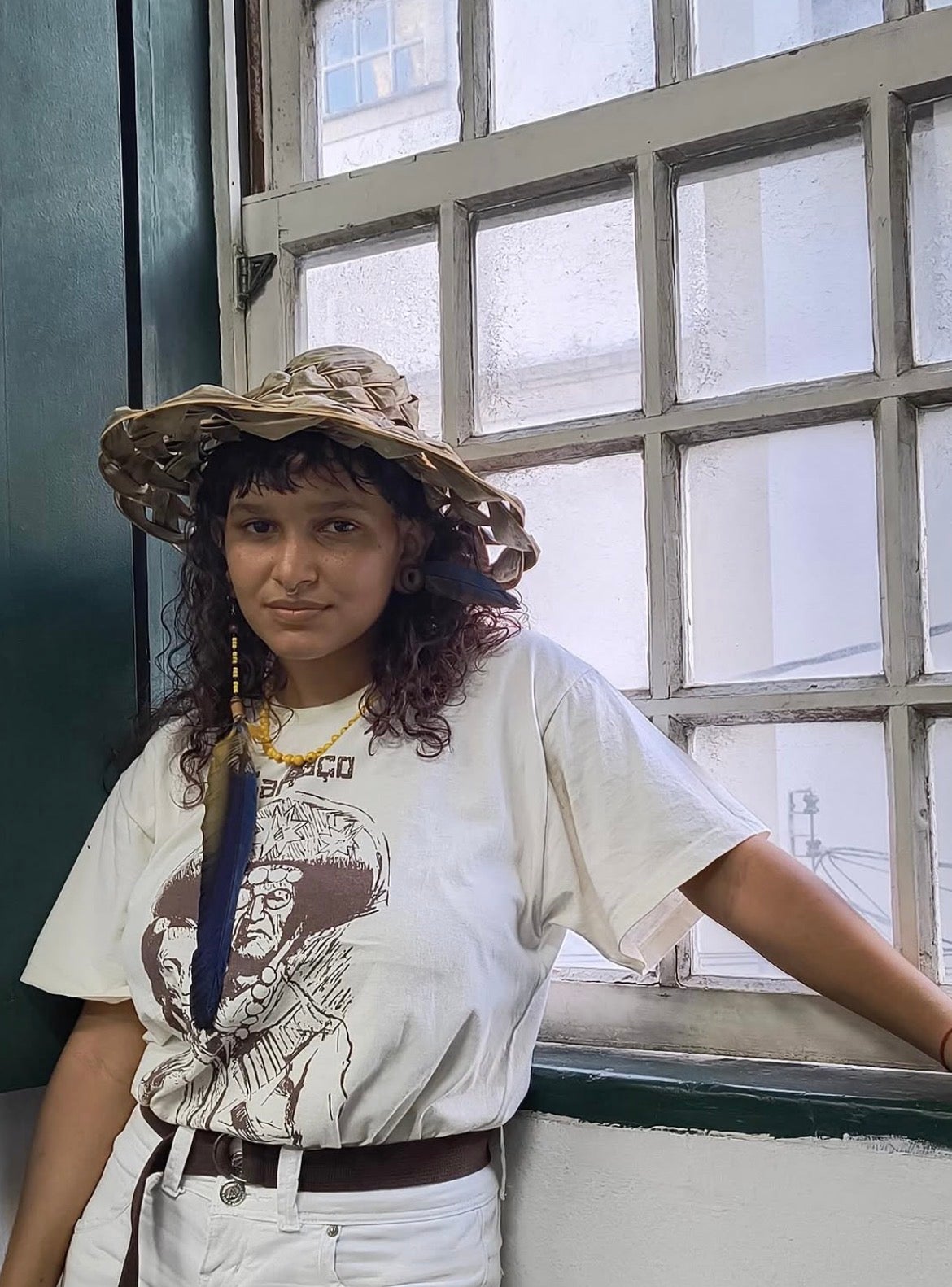
The pervasive narrative of the 2SLGBTQ+ experience often centers on vibrant urban landscapes, leaving individuals in rural areas to navigate their identities in relative isolation. This dichotomy is profoundly felt by Yala, a 25-year-old interdisciplinary creator from Pontalinda, a town nestled in the countryside of São Paulo, Brazil. Yala, who works with traditional crafts, audiovisual production, and ancestral graphisms, and also serves as a producer for the groundbreaking Indigenous anime "O Canto da Lua" (The Moon’s Song), is actively challenging these isolating narratives. Their work is a testament to the power of storytelling in bridging generational divides and fostering a sense of total belonging, refusing to compartmentalize their Indigenous heritage and queer identity. For Yala, authentic resistance is not found in grand urban displays but in the quiet, everyday acts of cultural preservation, land stewardship, and the gentle assertion that diverse identities are not antithetical to ancestral traditions but integral to their richness. Cultural Survival recently engaged in a conversation with Yala to explore these profound themes.
The Rural Landscape of Pride: An Indigenous Perspective
Growing up in the interior of Brazil, Yala’s journey toward embracing their 2SLGBTQ+ identity was marked by a conspicuous absence of local representation. "For me, growing up in the countryside and always living in the interior, feeling pride in being 2SLGBTQ+ wasn’t always easy," Yala shared. "The references I sought out always came from the outside, never from people in my daily life." The scarcity of visible 2SLGBTQ+ Indigenous individuals compounded this sense of otherness. "Finding references to 2SLGBTQ+ Indigenous people was even harder, so I often felt like people looked at me as if I were someone inherently wrong, something bizarre."
The intersection of Indigenous and 2SLGBTQ+ identities often meant facing multifaceted prejudice. "Being Indigenous and 2SLGBTQ+ constantly intersect; sometimes you face prejudice for being Indigenous, other times for being 2SLGBTQ+," Yala explained. While time has fostered a sense of self-acceptance, the experience of being 2SLGBTQ+ in rural settings remains a solitary undertaking for many. "Over time, I learned to take pride in who I am and where I come from, but for a long time, and sometimes even today, being 2SLGBTQ+ in the interior is a very lonely process." This sentiment is echoed in broader statistics regarding rural 2SLGBTQ+ populations, which often report higher rates of isolation and limited access to affirming community resources compared to their urban counterparts.
Visibility and Vulnerability: Navigating the Double-Edged Sword
The concept of Pride is frequently associated with visibility, a powerful tool for advocacy and recognition. However, this visibility can also expose individuals to increased risk, particularly for marginalized communities. Yala approaches this delicate balance with a nuanced perspective, prioritizing recognition within their own community. "I think the desire to be seen, for me, is more about being seen for who I truly am by my own community rather than by outsiders," they stated.
The persistent realities of prejudice against both Indigenous and 2SLGBTQ+ individuals create a complex environment. "There is still a lot of prejudice against 2SLGBTQ+ people and Indigenous communities, and it often feels easier to hide who we are to protect ourselves, ensuring it doesn’t end up bringing harm to our community either," Yala admitted. However, they firmly believe that concealment is not a sustainable solution. Instead, the focus should be on demonstrating resilience and positive contributions. "Hiding isn’t the way. Instead, it’s about showing that we exist beyond the prejudice and the pejorative comments, and that we can also contribute positively to our community." This philosophy underscores a proactive approach to visibility, one that seeks to redefine perceptions and foster understanding from within.
Cultural Anchors: Understanding Identity Through Indigenous Lenses
While Yala’s journey did not involve direct cultural pronouncements on gender identity or sexual orientation, the act of finding and connecting with other 2SLGBTQ+ Indigenous individuals proved transformative. "It wasn’t something direct within my culture that made me better understand my gender identity and sexual orientation, but rather the act of finding other people from my own people who are also 2SLGBTQ+," Yala explained. The shared experience and exchange of stories provided a profound sense of validation and belonging. "Being able to share and exchange experiences with them definitely gave me a stronger sense of belonging." This highlights the critical role of peer support and community building in affirming diverse identities within Indigenous contexts.
Decolonizing Perceptions: Challenging Colonial Imprints on Gender and Sexuality
Colonial histories have deeply influenced how gender, sexuality, and diversity are understood, often imposing rigid and binary frameworks. Yala points to the historical marginalization and stigmatization of 2SLGBTQ+ individuals within many communities, a direct consequence of colonial imposition. "For a very long time, trans, lesbian, gay, and bisexual people were viewed as profane and wrong, as if we weren’t capable of taking on positions of responsibility within our community and culture," they stated. The binary division of labor, a prevalent colonial construct, has also directly impacted Yala’s lived experience. "The issue of tasks divided by gender binaries is also something that has directly affected me."
The assertion that certain identities "didn’t exist before in our cultures" is a dangerous oversimplification that erases Indigenous histories and the fluidity of gender and sexuality that existed prior to colonization. Yala powerfully refutes this notion, explaining, "Coloniality distorted our histories to the point where some people think there is only one right way to exist, heavily impregnated by the ideas of the colonizer." The suppression of pre-colonial understandings is evident in the historical erasure of individuals like Tibira, who is recognized as the first recorded Indigenous 2SLGBTQ+ person to be killed due to homophobia in Brazil. The danger faced by 2SLGBTQ+ Indigenous individuals historically meant that their true selves often had to remain hidden.
The Wounds of Fragmentation and the Hope for Wholeness
The pressure to choose between one’s Indigenous heritage and one’s 2SLGBTQ+ identity inflicts deep wounds. Yala articulates this internal conflict with poignant honesty: "I don’t think these are things that can be separated within me; they are two elements that flow together in my being." However, the necessity of navigating exclusionary spaces has forced fragmentation. "There have been moments where I had to fragment myself to fit into certain spaces, choosing which identity was more appropriate to be shown there." This experience is profoundly alienating. "It is something I do not like doing. I don’t like annulling one part of myself to be another. I want to be embraced in my entirety." This desire for holistic acceptance is a fundamental human need, amplified within contexts that demand assimilation or erasure.
Everyday Resistance: Beyond the March and the Flag
Indigenous 2SLGBTQ+ resistance extends far beyond the visible displays of urban Pride parades and institutional advocacy. Yala emphasizes the profound significance of everyday cultural practices as acts of resilience. "2SLGBTQ+ Indigenous resistance also manifests in everyday life: when we meet with other relatives like us to practice our culture, such as singing the toré, performing a ritual prayer, studying our ancestral language together, taking care of the land, and talking and exchanging our life experiences." These intimate acts of cultural preservation and community building are vital in maintaining identity and solidarity in the face of external pressures. They represent a continuous reaffirmation of self and heritage, a quiet but potent defiance against forces that seek to diminish or erase them.
Indigenous Languages: Naming and Grounding Diverse Identities
Indigenous languages play a crucial role in providing accurate and culturally resonant terminology for identities that often defy Western categorization. Terms like "gay," "lesbian," "trans," and "queer," while adopted for communication in the contemporary world, are foreign constructs. "Indigenous languages are incredibly important in naming our identities because the terms we know—lesbian, gay, queer—came from other countries and other cultures, and we often adopt them just to be able to communicate in the world we live in today," Yala explained. The power of having an ancestral name for one’s identity is deeply grounding. "But having a name for your identity in an ancestral language feels very grounding; we feel much more represented." This linguistic reclamation is a vital aspect of decolonization, reasserting Indigenous epistemologies and affirming the validity of diverse experiences within their own cultural frameworks.
Ethical Engagement: Moving Beyond Tokenism and Extraction
Yala offers a critical perspective for organizations, media, and allies seeking to support 2SLGBTQ+ Indigenous individuals, urging them to move beyond superficial engagement. The risk of tokenistic or extractive practices, where Indigenous stories are used without genuine respect or benefit, is a significant concern. "We need to go much further than mere visibility; we need to be seen in our entirety as vital pieces of our cultures," Yala asserted. "As a group living on the margins, we need this visibility to not just end with itself." This call for deeper, more meaningful engagement emphasizes the need for genuine partnership, equitable representation, and a commitment to supporting Indigenous-led initiatives that empower communities.
A Future of Integral Belonging: Recognizing Indigenous 2SLGBTQ+ Contributions
Envisioning a truly liberated future, Yala paints a picture of Indigenous communities where 2SLGBTQ+ individuals are not merely accepted but are recognized as invaluable bearers of knowledge, leadership, and healing. "I believe it would be a place where our gender identity and sexual orientation would be respected and not viewed as a threat," Yala stated. In such a future, these aspects of identity would not be perceived as impediments to ancestral paths or the exercise of inherent gifts. Instead, they would be understood as integral, beautiful details of who individuals are. This vision represents a profound shift from marginalization to integral belonging, where the full spectrum of Indigenous identities enriches the collective strength and wisdom of the community. The implication is a future where diversity is not tolerated but celebrated as a fundamental element of cultural resilience and a source of unique insights and contributions.