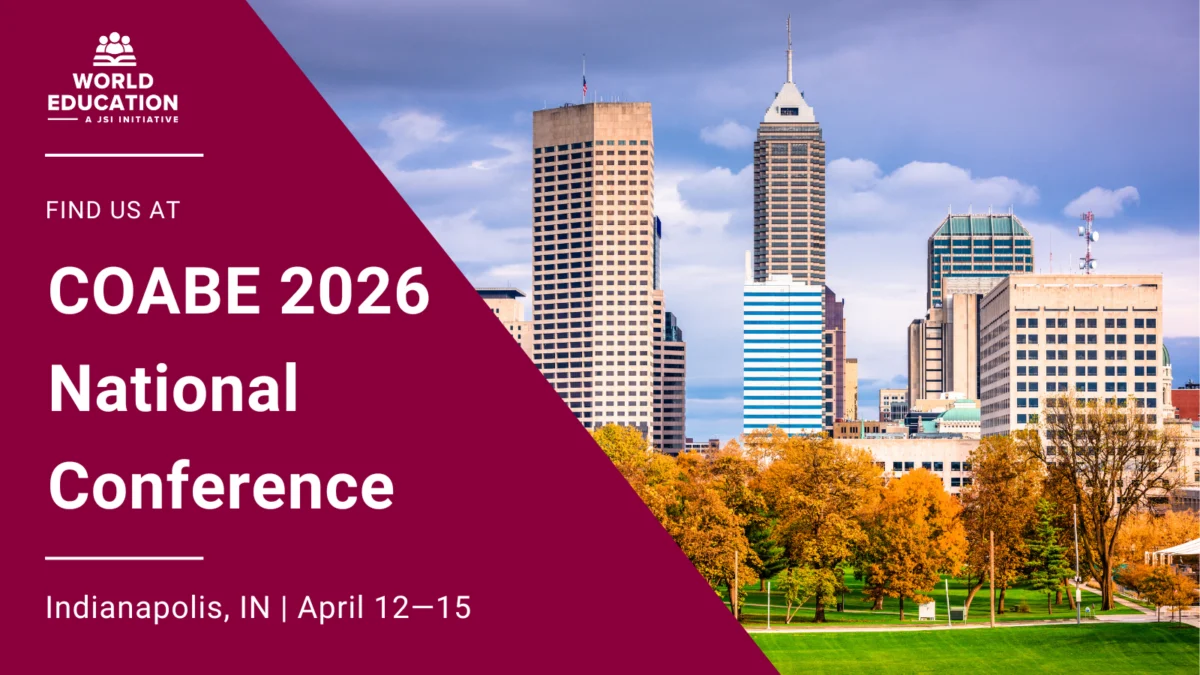
World Education, a prominent initiative of JSI, has officially announced its comprehensive participation in the Coalition on Adult Basic Education (COABE) 2026 National Conference, set to take place in Indianapolis, Indiana, from April 12 to 15. As the adult education sector faces unprecedented shifts driven by rapid technological advancement and the integration of artificial intelligence, World Education’s presence at the conference underscores a commitment to bridging the digital divide and enhancing professional development for educators nationwide. The organization’s experts are scheduled to lead a series of high-impact sessions focusing on digital literacy, generative AI, and research-based instructional strategies, aiming to equip practitioners with the tools necessary to support adult learners in an increasingly digital economy.
The COABE National Conference serves as the premier gathering for adult education professionals, attracting thousands of administrators, teachers, and advocates dedicated to improving literacy and workforce readiness. The 2026 event in Indianapolis arrives at a critical juncture for the field. According to data from the National Center for Education Statistics (NCES), nearly one in six U.S. adults possesses low digital literacy skills, a factor that significantly impacts employability and economic mobility. World Education’s involvement seeks to address these systemic challenges through the dissemination of evidence-based practices and innovative technological frameworks.
Strategic Focus on Digital Skills and Frameworks
The conference programming for World Education begins on Monday, April 13, with a focused look at standardized digital skill development. Jeff Goumas, a leading expert in educational technology, will present on the "BRIDGES Skills Checklists." This session is designed to provide a universal framework for driving digital skill acquisition across diverse learning contexts. As adult education programs often struggle with varying levels of student readiness, the BRIDGES framework offers a structured approach to assessing and advancing learner competencies.
The importance of moving from high-level policy to classroom-level execution will be a primary theme. Sandy Goodman and Catalina González will lead a session titled "From Policy to Practice: Implementation Lessons from Boston’s Digital Literacy Initiative." This presentation will analyze the successes and hurdles encountered during the rollout of large-scale digital literacy programs in urban environments. By sharing data-driven insights from the Boston initiative, World Education aims to provide a blueprint for other municipalities and state agencies looking to modernize their educational infrastructure.
Furthermore, the integration of rigorous research into classroom practice will be highlighted through the CREATE Network. Jen Vanek and Jeff Goumas, collaborating with the American Institutes for Research (AIR) and other network organizations, will present practical solutions derived from recent research. This "Research-to-Practice" pipeline is essential for ensuring that digital tools used in the classroom are not only innovative but also pedagogically sound and effective for adult learners who may have been out of the formal education system for decades.
Addressing the Generative AI Frontier
As 2026 marks a period where artificial intelligence has moved from a novel concept to a workplace requirement, World Education has dedicated significant resources to AI literacy. On Tuesday, April 14, Rachel Riggs will lead a session on "Aligning AI Literacy with Learning and Work Goals in Adult Ed." This session is expected to address the dual challenge of teaching students how to use AI responsibly while ensuring that educators themselves are proficient in the technology.
The conversation around AI continues with "Generative AI and the EdTech Maker Space," where Riggs will demonstrate how GenAI can be leveraged to fill gaps in learning resources. In many adult education settings, curriculum materials are often outdated or not culturally relevant. Generative AI offers a mechanism for educators to rapidly create customized, high-quality content. This session will explore the "EdTech Maker Space" model, a collaborative approach where practitioners use technology to build open educational resources (OER) that are accessible to all.
The focus on open-source and free resources is a cornerstone of World Education’s philosophy. Alongside Stephen Sireci from UMass Amherst, Jen Vanek and Jeff Goumas will present on "SkillBlox" and "ASAP," two platforms designed to provide free and open online literacy curricula. By reducing the financial barriers to high-quality materials, these initiatives aim to democratize access to education, particularly for literacy-level adults who are often the most underserved by traditional publishing models.
Professional Development and Institutional Capacity
A significant portion of the conference will be dedicated to the "educate the educator" model. On Wednesday, April 15, the focus shifts toward institutional strengthening and sustainable professional development (PD). Dani Scherer will present "Maximum Impact Professional Development: A Three-Pronged Approach." This session addresses a common critique in the field: that one-off workshops are often insufficient for long-term skill retention among staff. The three-pronged approach emphasizes continuous coaching, peer learning communities, and administrative support to ensure that new teaching strategies are successfully integrated into the curriculum.
Eliana Stanislawski will further this theme with two sessions focused on the practical application of educational technology. The first, "EdTech in Action," provides a roadmap for structuring digital literacy learning series for educators. The second, "Engaging Strategies for Online Instruction of Literacy-Level Adults," addresses the specific pedagogical needs of students who are simultaneously learning to read and learning to navigate digital interfaces. This is a particularly complex area of adult education, as the cognitive load of navigating a software platform can often interfere with the primary goal of literacy acquisition.
Broader Economic and Social Implications
The initiatives presented by World Education at COABE 2026 are set against a backdrop of shifting labor market demands. The World Economic Forum’s Future of Jobs Report has consistently highlighted that digital literacy and AI fluency are among the most sought-after skills by employers globally. For the adult education sector, this means that the stakes have never been higher. Programs that fail to integrate digital skills risk leaving their students behind in a bifurcated economy.
World Education’s work with the CREATE Network and the American Institutes for Research provides a data-centric foundation for these transitions. By leveraging "Practitioner-Friendly Findings," the organization helps translate complex academic data into actionable classroom strategies. This ensures that even underfunded programs can access the latest advancements in educational science.
The choice of Indianapolis as the host city also carries symbolic weight. As a hub of Midwestern manufacturing and a growing tech sector, Indiana represents the "skills gap" challenge facing much of the American heartland. The strategies shared at the conference are intended to ripple outward, influencing state-level policies and local program delivery across the country.
Institutional Mission and Partnership Opportunities
World Education, as a JSI initiative, operates on the principle that education is a fundamental driver of health, equity, and economic stability. Beyond the conference presentations, the organization is seeking to expand its network of partners across various sectors, including government agencies, private foundations, and community-based organizations.
The organization’s service offerings—ranging from systems strengthening and program design to applied research and policy development—are designed to create "enduring partnerships" that survive beyond a single grant cycle. By participating in COABE 2026, World Education is not only sharing its expertise but also inviting collaboration to address the multifaceted barriers to adult education.
As the conference concludes on April 15, the goal is for attendees to return to their respective regions with a concrete toolkit. Whether it is the implementation of the BRIDGES checklist, the adoption of SkillBlox for open-access learning, or the ethical integration of Generative AI, the insights provided by World Education are positioned to define the next era of adult basic education.
The shift toward a more digital-centric instructional model is no longer optional. As Rachel Riggs noted in preliminary discussions regarding AI literacy, the objective is to move beyond mere "tool usage" and toward a comprehensive understanding of how technology reshapes work and civic life. Through its extensive presence at the COABE 2026 National Conference, World Education remains at the forefront of this essential transformation, ensuring that adult learners are not merely observers of the digital revolution, but active and empowered participants in it.