World Education, an initiative of JSI Research & Training Institute, Inc., has significantly expanded its footprint in Côte d’Ivoire since 2012, spearheading a multi-dimensional approach to improving the quality of education and eradicating the systemic roots of child labor. As the world’s leading producer of cocoa, Côte d’Ivoire faces a unique set of socio-economic challenges where the demands of the global chocolate supply chain often intersect with the educational needs of rural youth. Central to these efforts is the CocoaLife Quality Education Project, a strategic partnership funded by Mondelez International that targets the specific vulnerabilities of cocoa-growing communities. Ferdinand Beblai, the Country Director for JSI Côte d’Ivoire, recently provided an in-depth analysis of the program’s progress, highlighting how localized governance and community-led financial initiatives are transforming the educational landscape for thousands of children.
The Intersection of Cocoa Production and Educational Access
The educational landscape in Côte d’Ivoire is characterized by a stark divide between urban centers and the rural interior, particularly in the "cocoa belt" regions like Soubré and Méagui. While the Ivorian government has made strides in national literacy and enrollment rates, the specific realities of cocoa-producing villages often render national statistics insufficient. According to Ferdinand Beblai, the primary challenge remains the inconsistent enrollment of school-aged children, exacerbated by the seasonal demands of the cocoa harvest.
In these regions, the harvest cycle dictates the rhythm of life. When global demand for cocoa peaks, the pressure on local labor increases, leading many parents to pull their children out of the classroom to assist in the fields. This transition from student to laborer has immediate and long-term academic consequences. Students who return to school often arrive late, miss foundational lessons, and struggle to catch up with their peers. This cycle is reflected in national data from 2021, which indicates that more than 15% of primary-level students in Côte d’Ivoire repeat a grade annually. For many of these children, repeated failure leads to frustration, eventually resulting in expulsion or permanent dropout.
Furthermore, the physical infrastructure of rural schools remains a critical barrier. In many remote areas, schools are constructed from temporary materials such as wood and straw. These "precarious sheds" are not only inadequate for learning but are increasingly dangerous due to the rising frequency of extreme weather events linked to climate change. Heavy rains and wind can easily destroy these structures, leaving children without a safe place to study and further discouraging consistent attendance.
Strengthening Community Governance through the COGES Model
To address these systemic failures, World Education has focused on strengthening the Comité de Gestion Établissement Scolaire (COGES), or School Management Committees. These committees were established by the Ivorian government to bring together local stakeholders—including parents, teachers, and community leaders—to manage the daily operations of schools. However, despite their theoretical potential, many COGES units historically lacked the training and financial resources to be effective.
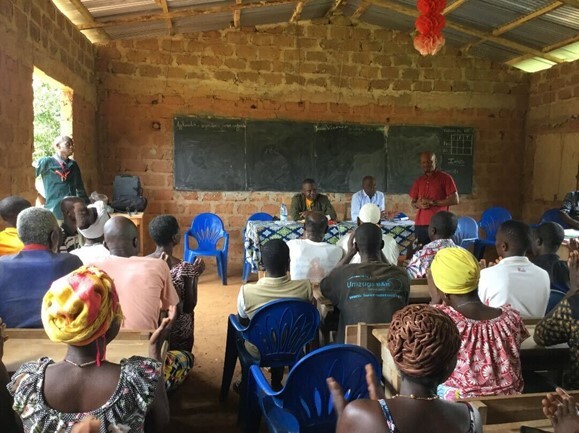
Since 2012, World Education has deployed specialized tools to evaluate and enhance COGES functionality. The core of this intervention involves capacity building, specifically training committee members in financial management, resource mobilization, and the implementation of income-generating activities (IGAs). By empowering these committees to generate their own revenue, World Education ensures that schools have a sustainable source of funding that is not entirely dependent on volatile government allocations or fluctuating parental contributions.
In practice, these income-generating activities are tailored to the local economy. In some villages, COGES members have established maize plantations; in others, they have launched poultry-raising initiatives or cassava farms. The profits from these ventures are reinvested directly into the school. This funding is often used to provide "motivation" stipends for teachers who conduct remedial tutoring sessions in core subjects like French and mathematics. By providing extra support to struggling students, the COGES model directly tackles the high rate of grade repetition, ensuring that at-risk children remain in the educational system.
Case Study: The Transformation of N’drikro
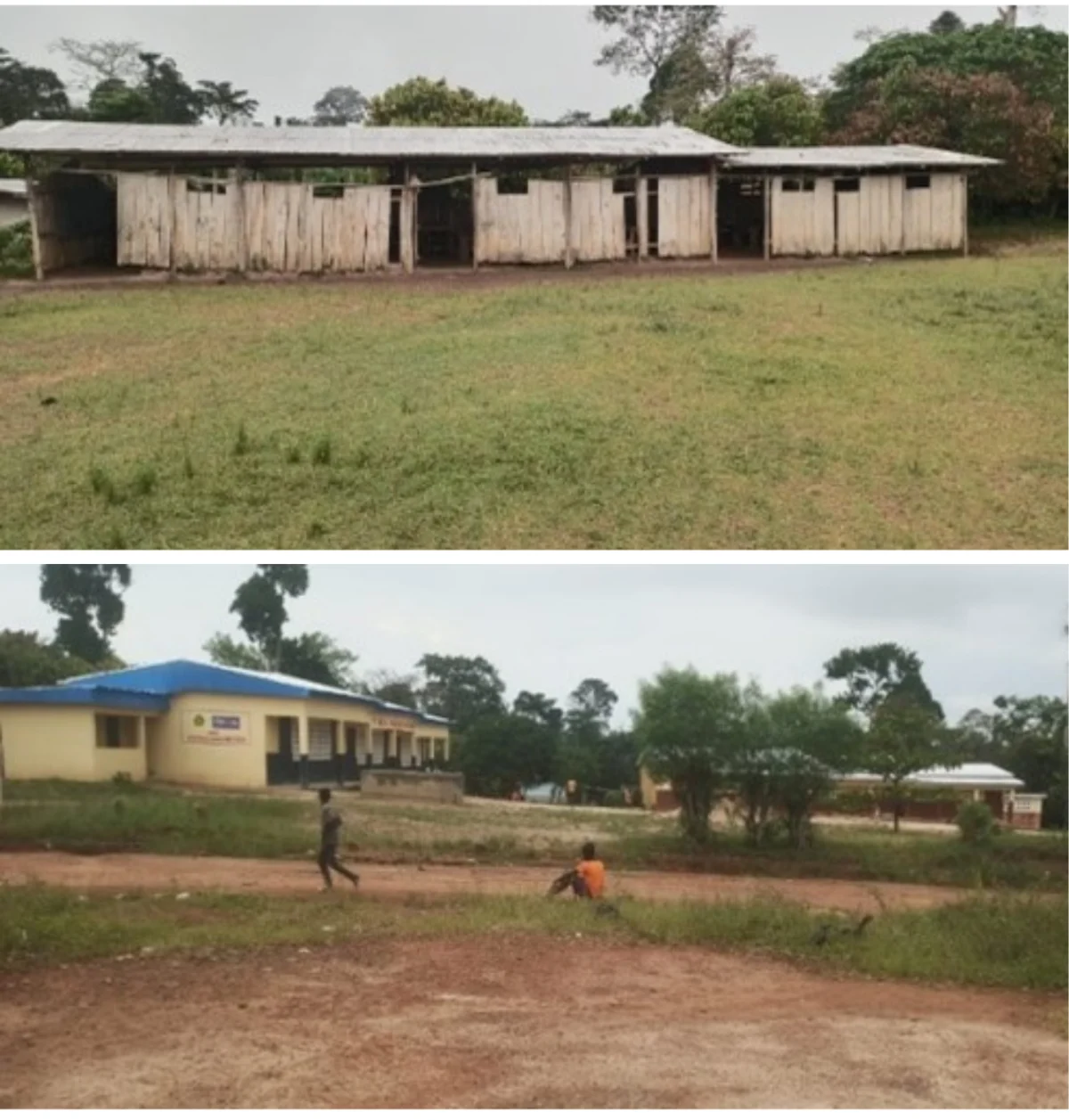
The impact of this community-centric approach is most visible in the village of N’drikro, located in the Soubré region. Before the intervention of the CocoaLife Quality Education Project, the local school consisted of dilapidated sheds that lacked basic amenities such as desks, toilets, or administrative offices. The environment was hazardous, and the lack of proper facilities contributed to poor academic performance and low morale among both students and staff.
The transformation of N’drikro began when the COGES mobilized a broad coalition of local actors, including the Village Leadership, youth groups, and Village Savings and Loan Associations (VSLAs). By framing the school as a "community asset" rather than a government obligation, the project fostered a sense of collective ownership. The VSLA provided the initial financial and material support, while the community leveraged a dedicated cassava field to generate ongoing income.
The results were transformative. The temporary sheds were replaced with two modern school buildings equipped with proper offices and sanitary facilities. This shift in the physical environment had an immediate psychological impact: children began learning in safe, dignified conditions, and the introduction of remedial classes led to a measurable improvement in literacy and numeracy. Today, N’drikro serves as a model for other communities, utilizing excellence awards to motivate students and maintaining a rigorous maintenance schedule funded by their own agricultural profits.
The Importance of Granular, Community-Level Data
A recurring theme in World Education’s strategy is the critique of over-reliance on high-level national data. Beblai notes that while state-level figures provide a general overview, they often obscure the specific needs of individual villages. For example, national reports might provide an enrollment average for a whole district, but they fail to identify the exact number of six-year-olds in a specific remote hamlet who are not in school.
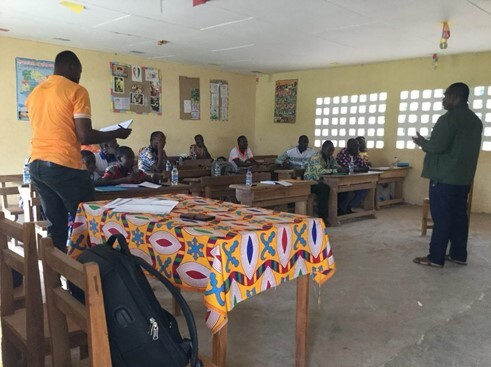
By conducting granular data collection, World Education identified a critical financial gap in the cocoa-growing calendar. Cocoa production occurs twice a year, and the periods between harvests are often characterized by severe liquidity shortages for farming families. During these "lean months," families often lack the cash to buy basic school supplies, leading to absenteeism. Recognizing this, the project implemented a targeted grant system, providing 80,000 francs (approximately USD 140) to the most vulnerable families to cover essential educational costs. This intervention, informed by local data rather than national averages, ensured that poverty did not become a barrier to classroom attendance during the off-season.
Forging a Sustainable Future through Government Collaboration
The long-term success of the CocoaLife project is predicated on its transition from an NGO-led initiative to a government-supported standard. The Ivorian government has recently recognized the efficacy of the World Education/JSI model and has moved to formalize this partnership through a collaboration protocol. This agreement is designed to integrate the lessons learned from the CocoaLife project into national educational policy, ensuring that the COGES framework remains robust and self-sufficient across the country.
Sustainability, in this context, means more than just maintaining buildings; it means shifting the cultural perception of education within cocoa-growing communities. Beblai emphasizes that parents are increasingly recognizing the practical value of schooling, even for children who may eventually go into farming. An educated farmer is better equipped to read pesticide labels, manage agricultural inputs safely, and understand the complexities of global market pricing. This "practical literacy" is becoming a powerful motivator for parents who previously saw school as a distraction from manual labor.
Analysis of Broader Implications for the Global Cocoa Industry
The work of World Education and JSI in Côte d’Ivoire carries significant implications for the global chocolate industry and corporate social responsibility (CSR). As international regulations regarding human rights and environmental due diligence (such as the EU’s Corporate Sustainability Due Responsibility Directive) become more stringent, companies like Mondelez International are under increasing pressure to prove that their supply chains are free from child labor.
The CocoaLife Quality Education Project demonstrates that child labor cannot be solved through monitoring alone; it requires a deep investment in the social infrastructure of the producing communities. By improving school quality and community governance, the project addresses the "push factors" of child labor—poverty, poor school quality, and lack of local agency.
As the project moves into its next phase, the focus will remain on ensuring that COGES committees are fully autonomous and capable of managing resources with transparency and traceability. This focus on "traceability" is not just for cocoa beans, but for educational outcomes, ensuring that every dollar invested by partners and generated by communities results in a measurable improvement in a child’s life. Through this holistic approach, World Education is not only building schools but is also fostering a resilient educational ecosystem that can withstand the economic and environmental challenges of the 21st century.