The Equality Trust, a leading UK-based organization dedicated to reducing social and economic inequality, has announced the departure of long-serving Trustee Gerry Boyle following the completion of his maximum six-year tenure. Mr. Boyle, whose background bridges the gap between international business and humanitarian development, concluded his second three-year term on March 23, 2026, marking the end of a pivotal era for the charity’s governance. His departure comes at a critical juncture for the third sector, as non-governmental organizations (NGOs) navigate an increasingly complex landscape defined by shifting political priorities, economic volatility, and a fundamental restructuring of charitable funding models.
During his six years on the board, Mr. Boyle was instrumental in steering the organization through some of the most significant socio-economic challenges in recent British history. Having been appointed in 2020, his tenure spanned the global pandemic, the subsequent cost-of-living crisis, and a period of intense fiscal consolidation in the United Kingdom. As a member of the Trust’s finance committee, Boyle’s expertise was central to the organization’s efforts to maintain financial resilience amidst a broader decline in institutional grant availability and significant cuts to international aid budgets.
A Legacy of Evidence-Based Advocacy
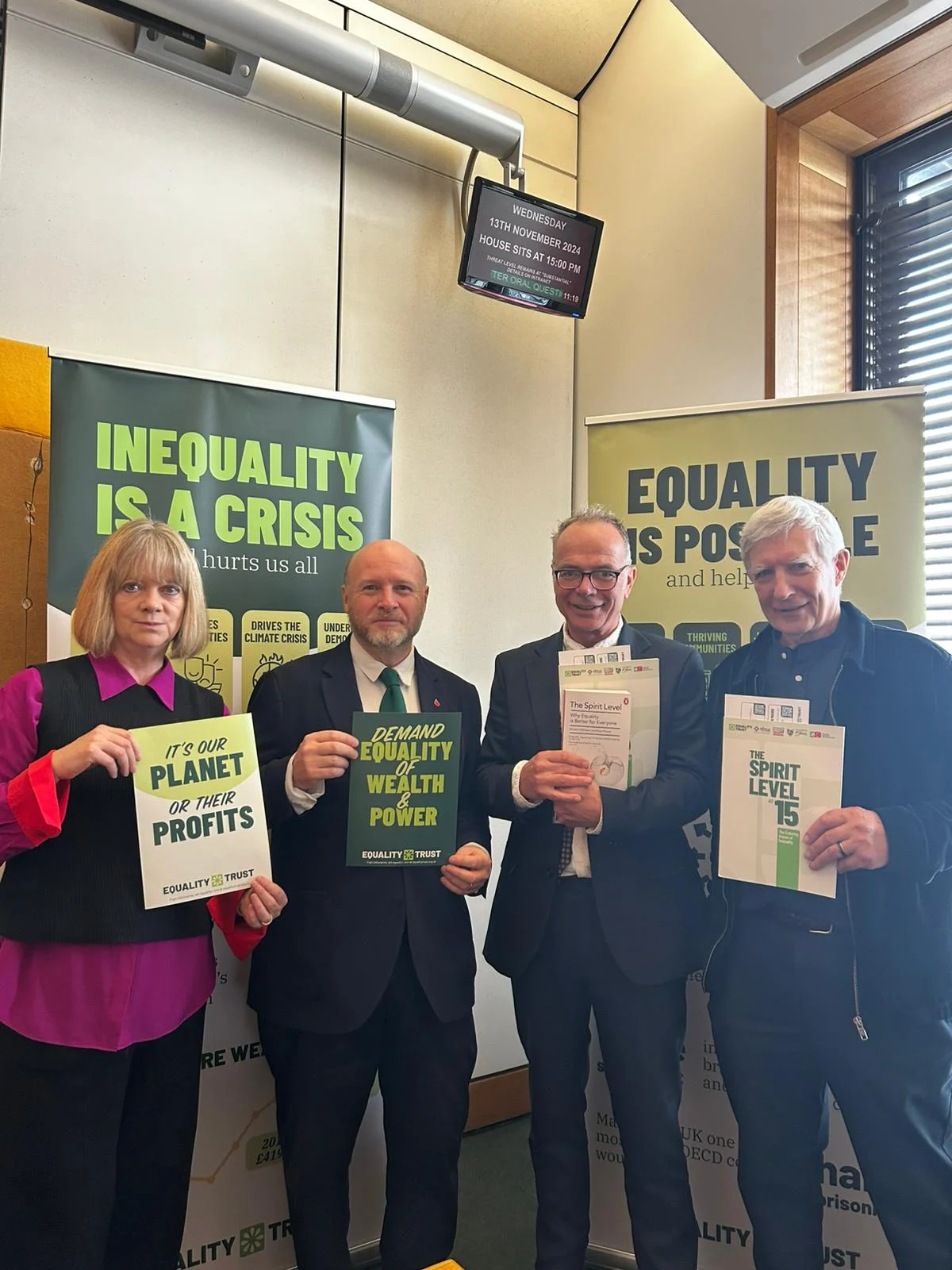
Gerry Boyle’s involvement with The Equality Trust was rooted in the intellectual framework provided by The Spirit Level: Why More Equal Societies Almost Always Do Better, the seminal work by Professors Richard Wilkinson and Kate Pickett. The book, which serves as the foundational text for the Trust, argues that nearly all social problems—from poor health and low literacy to high crime rates and infant mortality—are more prevalent in societies with large gaps between the rich and the poor.
Boyle’s transition from a business and international development background to the governance of a domestic advocacy group was driven by a commitment to these findings. Throughout his tenure, he sought to apply rigorous strategic planning to the Trust’s mission. His departure highlights the importance of diverse board compositions, where lived experience and academic expertise are balanced by professional financial oversight. Under his watch, the Trust successfully integrated various perspectives, ensuring that campaigning efforts remained grounded in fiscal reality while pushing for radical systemic change.
Chronology of Service: 2020–2026
The timeline of Mr. Boyle’s service reflects the broader trajectory of social justice movements in the 2020s:
- 2020–2021: Crisis Management and Remote Governance. Joining the board just as the COVID-19 pandemic reshaped global society, Boyle assisted in transitioning the Trust’s operations to a remote model while addressing the widening inequalities exposed by the health crisis.
- 2022–2023: Economic Turbulence and the Socio-Economic Duty. As inflation rose, the Trust intensified its focus on the "Socio-Economic Duty" (Section 1 of the Equality Act 2010). Boyle supported the executive team in lobbying local authorities to voluntarily adopt this duty, requiring them to consider how their decisions could reduce the inequalities resulting from socio-economic disadvantage.
- 2024–2025: Navigating the Funding Cliff. Following successive cuts to the UK’s Official Development Assistance (ODA) and a tightening of domestic grants, Boyle’s role on the finance committee became vital. He oversaw the strategic shift toward a "supporter-led" funding model to mitigate the risks associated with "lumpy" institutional grants.
- 2026: Transition and Succession. Completing his second term, Boyle leaves the Trust with a reinforced focus on youth engagement and a diversified funding base, passing the mantle to a new generation of trustees.
The Financial Challenge: From Institutional Grants to Individual Giving
One of the most significant contributions of Boyle’s tenure was his oversight of the Trust’s financial evolution. For much of its history, The Equality Trust, like many medium-sized advocacy groups, relied on a small number of substantial grants from large foundations. However, the economic climate of the mid-2020s has rendered this model increasingly precarious.
The UK’s austerity measures, combined with the reduction of the foreign aid budget from 0.7% to 0.5% of GNI, created a "crowding-out" effect in the domestic charity sector. As international NGOs lost funding, they increasingly competed for the same domestic pots of money previously reserved for smaller, local organizations. Furthermore, data from the National Council for Voluntary Organisations (NCVO) indicates that grant-making foundations have become more risk-averse, favoring short-term project-based funding over the long-term core funding essential for advocacy groups.
In his final statements, Boyle emphasized that replacing a few large grants with many small contributions from individual supporters is a slow but necessary process. This strategy provides the "maximum freedom to campaign effectively," as it decouples the organization’s agenda from the specific requirements of large-scale donors. The Trust has reported a steady increase in recurring individual donations, though the rising cost of living remains a significant barrier to growth in this area.
Supporting Data: The State of Inequality in 2026
The context of Boyle’s departure is underscored by stark economic data. As of early 2026, the UK continues to grapple with one of the highest levels of income inequality among developed nations. According to data from the Office for National Statistics (ONS) and independent think tanks:
- Wealth Concentration: The richest 1% of households in the UK continue to hold more wealth than the bottom 70% combined.
- Income Stagnation: While nominal wages have seen increases, real-term wage growth for the bottom 20% of earners has struggled to keep pace with the cumulative inflation of the last four years.
- The Poverty Gap: The "poverty gap"—the distance between the average income of those below the poverty line and the poverty line itself—has widened, suggesting that those in poverty are falling deeper into financial distress.
- Social Mobility: Indices suggest that social mobility in the UK has reached a 30-year low, with a person’s postal code and parental income remaining the primary predictors of future earnings.
These figures validate the continued necessity of The Equality Trust’s work and explain the "harder fight" Boyle referenced in his reflections. The organization’s focus on the Socio-Economic Duty is seen as a direct counter-measure to these trends, aiming to embed equality into the DNA of public policy.
Official Responses and Sector Implications
The executive leadership of The Equality Trust has expressed profound gratitude for Boyle’s contributions. A spokesperson for the Trust noted that his "business acumen and international perspective provided a steady hand during a period of unprecedented external pressure."
The broader charitable sector has viewed Boyle’s departure as symptomatic of a wider trend: the "professionalization" of trustee boards. As the regulatory environment for charities becomes more stringent and the financial landscape more treacherous, there is an increasing demand for trustees who can provide sophisticated financial and strategic oversight. Boyle’s tenure is being cited by sector analysts as a successful example of how individuals from the private sector can effectively transition into third-sector governance without compromising the radical social missions of the organizations they serve.
Broader Impact and Future Outlook
As Gerry Boyle steps down, The Equality Trust is doubling down on its core initiatives. The organization’s work with young people—those at the "sharp end of inequality"—has become a flagship program. By developing the voices of the youth, the Trust aims to create a sustainable movement that can outlast individual political cycles or board tenures.
The implications of Boyle’s work on the Socio-Economic Duty are also beginning to bear fruit. A growing number of councils across the UK have now formally adopted Section 1 of the Equality Act, leading to more equitable resource allocation in local housing, education, and healthcare. However, the Trust maintains that without central government mandate, the application of this duty remains "postcode dependent."
The departure of a long-term trustee like Boyle serves as a reminder of the cyclical nature of NGO governance. While his exit marks the loss of significant institutional memory, it also opens the door for "new blood" and fresh perspectives. The Trust is expected to announce a new board appointment in the coming months, seeking a candidate who can continue the work of financial diversification while navigating the complex socio-political environment of the late 2020s.
In conclusion, Gerry Boyle’s six-year tenure at The Equality Trust represents a period of strategic fortification. By focusing on financial stability, evidence-based advocacy, and the promotion of the Socio-Economic Duty, he has helped ensure that the organization remains a potent force in the ongoing struggle against systemic inequality. As he noted in his final address to supporters, the struggle is "really important," and while the challenges are mounting, the framework for a more equal society remains within reach through persistent, smart, and motivated collective action.