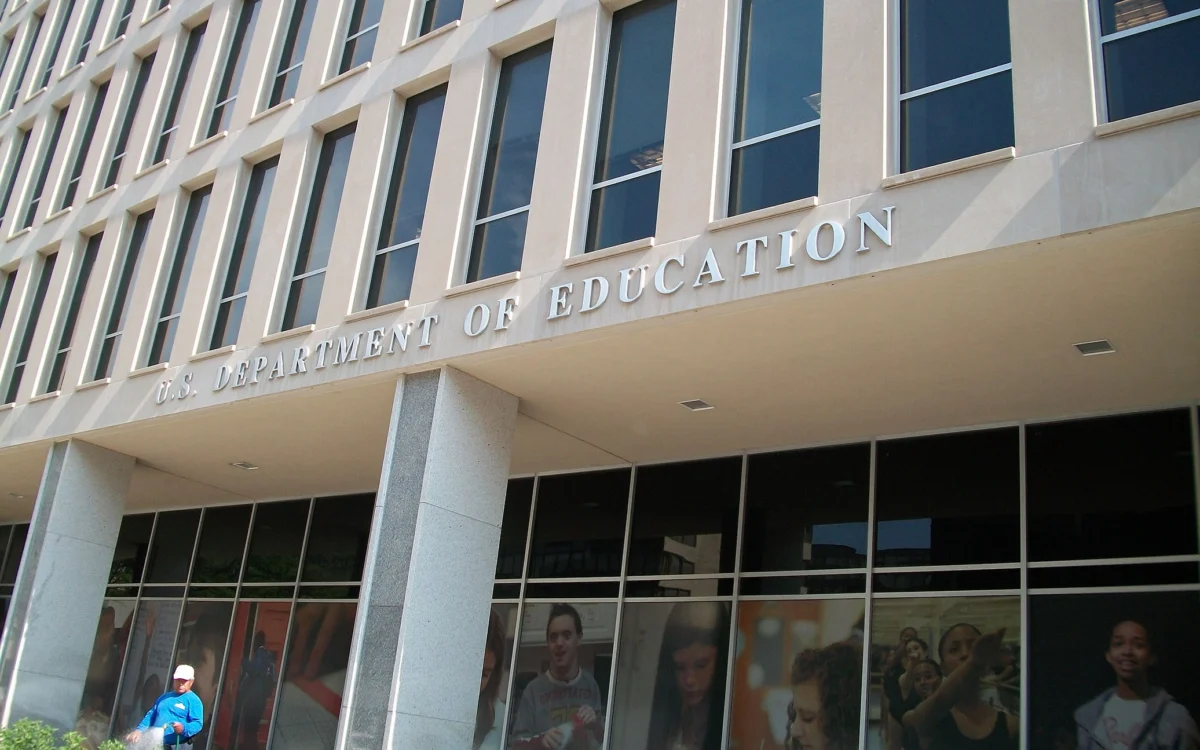
Federal education officials have provided additional details regarding their forthcoming plans to transfer significant special education responsibilities, a move aimed at streamlining government operations but one that continues to fall short of alleviating deep-seated concerns among disability advocates and stakeholders. The U.S. Department of Education recently convened a call with disability advocacy groups to elucidate the proposed shift of substantial functions from its Office of Special Education and Rehabilitative Services (OSERS) to the Department of Health and Human Services (HHS).
Despite assurances from federal officials, the precise implications and practical execution of this organizational restructuring remain a significant source of apprehension, raising questions about the continuity of vital support and oversight for students with disabilities and their families.
Clarifying the Scope of the Transition
During a late-week call with disability advocates, Kelly Rogers, the acting assistant secretary overseeing special education within the Education Department, emphasized that the proposed changes do not constitute a transfer of special education itself or the foundational Individuals with Disabilities Education Act (IDEA) to HHS. According to a transcript obtained by Disability Scoop, Rogers stated unequivocally, "The U.S. Health and Human Services is not taking over IDEA. Period." This statement was intended to allay fears that the core legal framework governing special education services would be relocated.
However, the clarification that OSERS staff will be reassigned to HHS has introduced a new layer of complexity and generated further questions. Advocates who participated in the call reported that Rogers indicated she would continue to supervise these OSERS personnel, albeit "with additional support by HHS," while remaining based at the Education Department. This arrangement, where staff integral to special education oversight would operate under the administrative umbrella of a different department, has been met with skepticism.
Lingering Questions and Stakeholder Reactions
Jacqueline Rodriguez, CEO of the National Council for Learning Disabilities, articulated the core of the concern: "That is significant new information because it raises a basic question: if IDEA is staying at ED and nothing is changing for states or families, why are the staff responsible for carrying out this work being moved to HHS?" She elaborated on the practical ramifications, stating, "For families, the distinction matters. A child’s rights may not change on paper, but those rights depend on whether the federal government can provide timely guidance, strong monitoring, clear accountability and education-specific expertise when states or districts fall short."
The uncertainty surrounding the precise number of OSERS staff remaining after recent agency layoffs further compounds these concerns, as it raises questions about the capacity and expertise available to manage these critical functions.
Promises of Continuity and Unwavering Support
Federal officials have attempted to reassure stakeholders by detailing the intended continuity of OSERS’ core responsibilities. Rogers informed participants that the reassigned staff would continue their oversight of IDEA, vocational rehabilitation programs, and other related initiatives. The partnership with HHS, she explained, is intended to enhance OSERS’ capacity to monitor state-level IDEA implementation. She assured that state education agencies and vocational rehabilitation programs would continue to report data to the federal government as they have historically, and that funding and support for parent training and information centers would remain unaffected.
Savannah Newhouse, press secretary for the Education Department, reiterated these assurances, stating, "Advocates, parents, and teachers in the special education community have nothing to fear." She explained that, under these interagency agreements, "Department of Education staff who are detailed to support partner agencies remain Department of Education staff." Newhouse emphasized that even if staff are physically located within HHS facilities, their expertise and commitment to serving students with disabilities would persist, unaffected by their physical location.
Skepticism Persists Amidst Explanations
Despite these reassurances, many advocates who participated in the call remained unconvinced. Denise Marshall, CEO of the Council of Parent Attorneys and Advocates (COPAA), a nonprofit dedicated to advocating for the rights of students with disabilities and their families, expressed the prevailing sentiment: "They insist they will fulfill all obligations under IDEA, but there was no clarity on a practical level for how that will work." Marshall added, "They spent time outlining responsibilities of (the federal government) and states, and I cannot for the life of me see how this move returns anything to the states they did not already have, except continued confusion and chaos."
This sentiment highlights a fundamental distrust in the administrative reorganization, stemming from a perceived lack of tangible benefits for states and families, and a fear that the move could inadvertently create bureaucratic hurdles and diminish the effectiveness of federal oversight.
Background and Context of the Reorganization
The proposed restructuring is part of a broader federal effort to reorganize government agencies and consolidate certain functions for increased efficiency. The Office of Special Education and Rehabilitative Services (OSERS) has historically played a pivotal role in administering federal special education programs, including the IDEA, which mandates that all public schools provide free appropriate public education to eligible children with disabilities. OSERS is also responsible for programs related to vocational rehabilitation, which aim to help individuals with disabilities prepare for and secure employment.
The genesis of this specific transfer to HHS appears to stem from an initiative to better align services that support individuals with disabilities across their lifespan, from early intervention through education and into employment and community living. Proponents of the move suggest that integrating OSERS functions within HHS could foster a more holistic approach to disability services, potentially improving coordination between educational and health-related support systems. However, the devil, as always, is in the details of implementation.
Historical Precedents and Potential Implications
While interagency collaborations and staff details are not uncommon in federal government operations, the scale and nature of this proposed shift raise specific concerns within the special education community. Historically, the close ties between OSERS and the Department of Education have ensured that the unique needs and legal mandates of special education have been prioritized within an educational framework. Moving significant portions of OSERS to HHS, a department primarily focused on health and human services, raises questions about whether the specific expertise and educational lens required for IDEA oversight will be adequately maintained.
One potential implication is the risk of a diffusion of responsibility or a dilution of focus. While federal officials emphasize that IDEA will remain under the purview of the Education Department, the physical relocation and operational integration of OSERS staff into HHS could lead to a gradual shift in priorities or a reduced emphasis on the educational aspects of disability services. This could manifest in slower response times to state inquiries, less nuanced guidance on complex special education issues, or a diminished capacity for robust enforcement of IDEA provisions when states or districts are non-compliant.
Furthermore, the lack of transparency regarding the number of staff affected by potential layoffs within OSERS adds another layer of concern. If the move involves a reduction in force, it could directly impact the capacity of the federal government to effectively monitor state compliance with IDEA, provide technical assistance, and support the vital network of parent training and information centers that serve as crucial resources for families.
Data and Demographics: The Scale of Need
The importance of robust federal oversight in special education cannot be overstated, particularly given the significant number of students relying on these services. According to the most recent data from the National Center for Education Statistics, over 7 million students in the United States received special education and related services under IDEA during the 2021-2022 school year. This represents approximately 14% of all public school students. The effective administration and monitoring of IDEA are crucial to ensuring that these millions of students receive the individualized support they need to succeed academically, socially, and emotionally.
Vocational rehabilitation services, also overseen by OSERS, are equally critical. These programs aim to empower individuals with disabilities to achieve their employment goals, contributing to their independence and economic well-being. In fiscal year 2022, state vocational rehabilitation agencies served over 1.6 million individuals and helped more than 145,000 achieve competitive employment. Any disruption to the federal oversight and support of these programs could have a tangible impact on the lives of individuals seeking to enter or re-enter the workforce.
The Path Forward: A Call for Clarity and Accountability
As the federal government proceeds with its plan, the persistent concerns from disability advocates underscore a critical need for greater transparency and a clear articulation of how the operational shift will be managed without compromising the integrity of special education services. The distinction between the legal framework of IDEA remaining at the Education Department and the operational relocation of OSERS staff to HHS is a nuanced one that requires meticulous explanation and demonstrable safeguards.
Stakeholders are looking for concrete assurances that the expertise, dedication, and responsiveness that have characterized OSERS’ work will not be diminished. The coming months will be crucial in observing the practical implementation of this reorganization and in assessing whether the federal government can indeed reassure the disability community that the rights and needs of students with disabilities will remain a paramount priority, regardless of departmental assignments. The success of this transition hinges on its ability to foster confidence, not confusion, and to ultimately strengthen, not weaken, the federal commitment to special education.