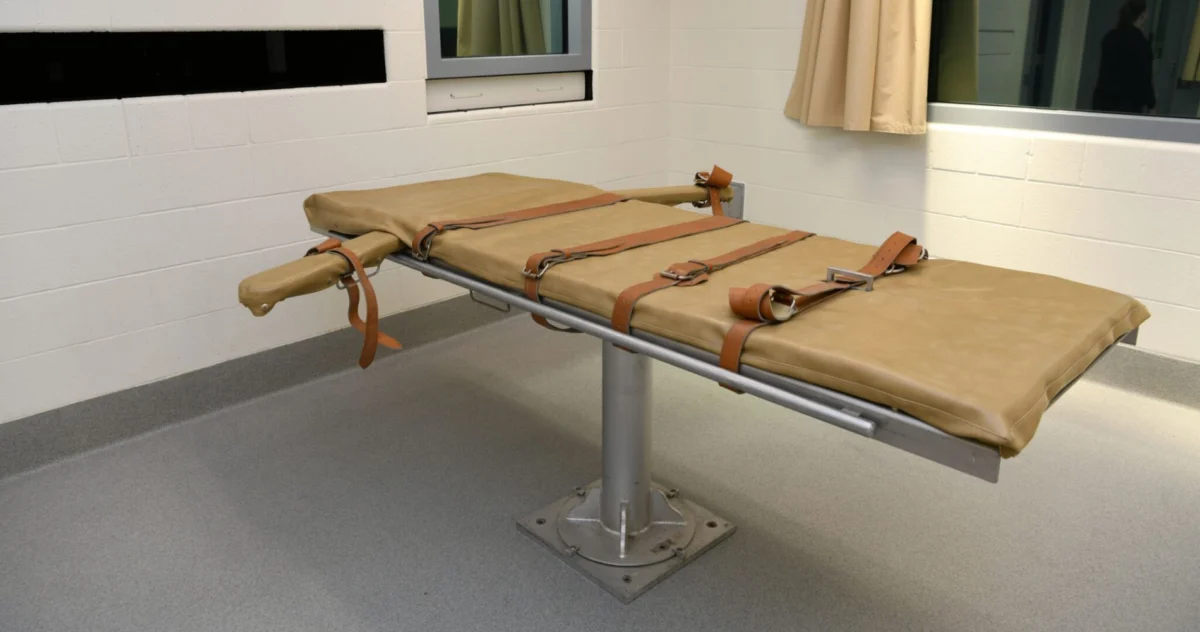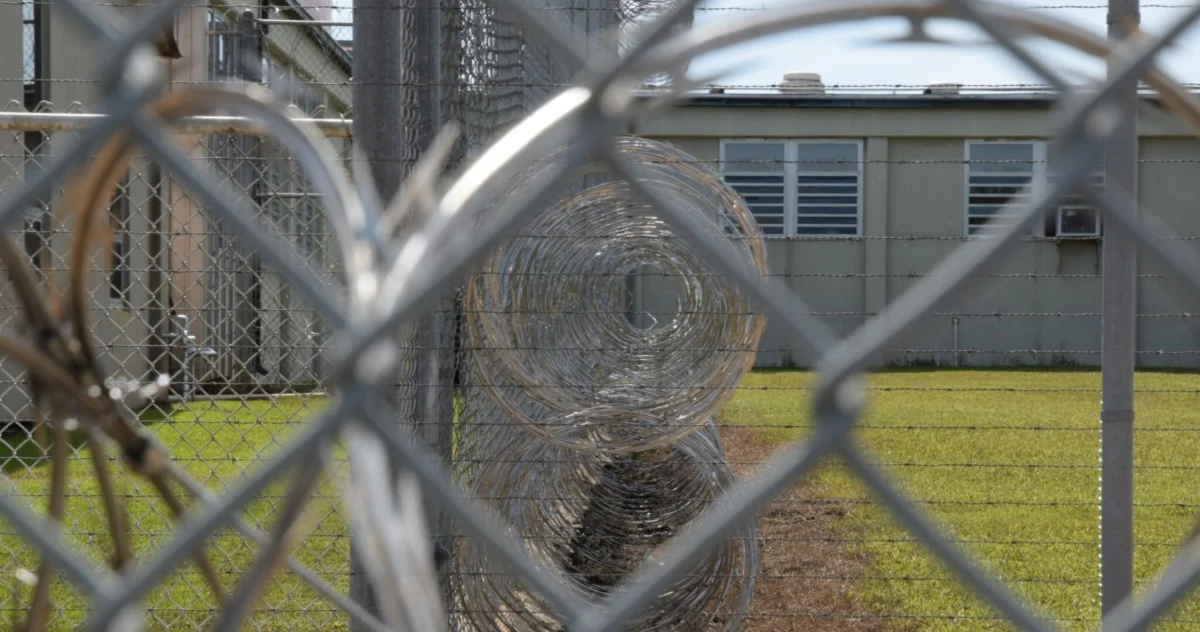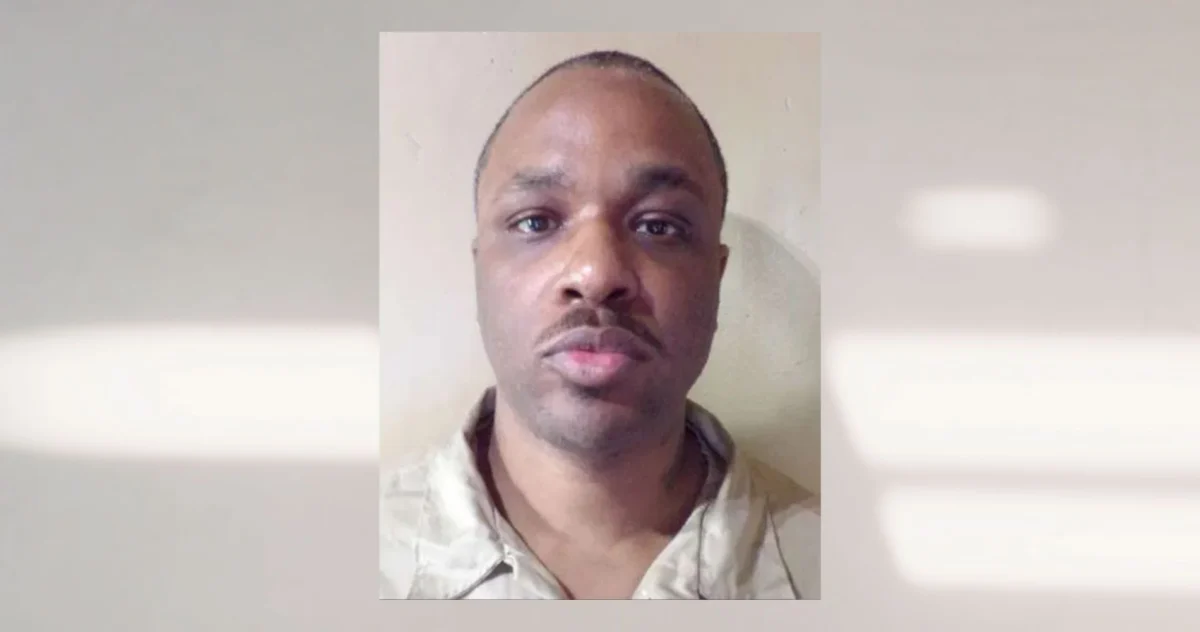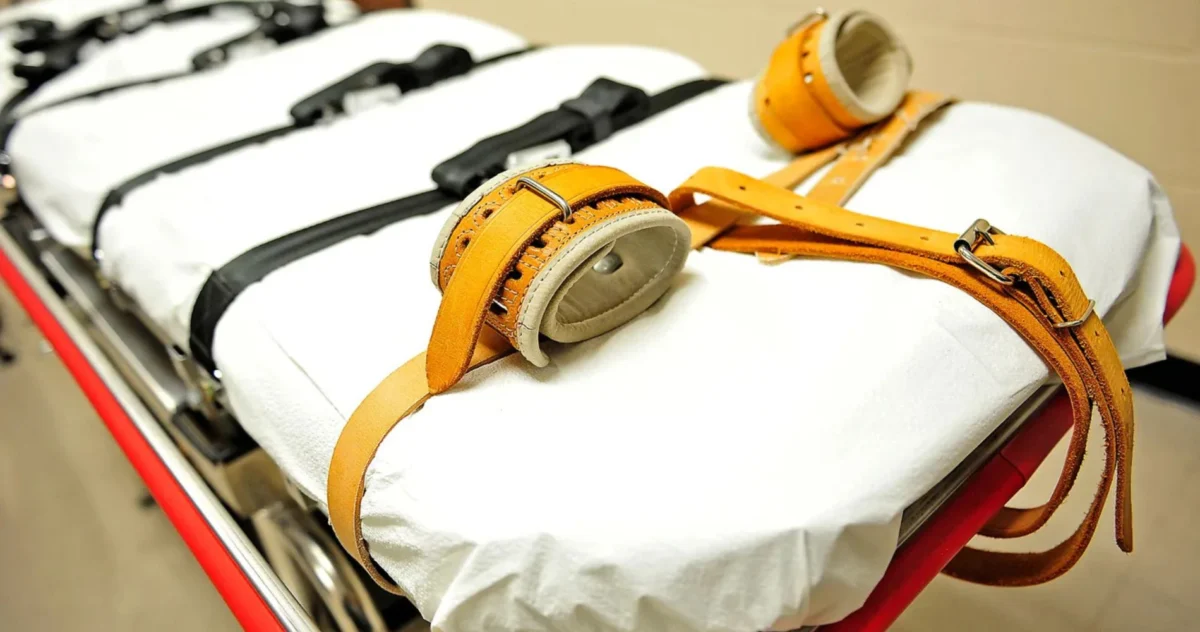
The state of Tennessee attempted last week to execute Tony Carruthers, 57, by lethal injection despite profound and long-standing questions surrounding the reliability of his 1994 conviction and subsequent death sentence. The harrowing scene unfolded at Riverbend Maximum Security Institution in Nashville, where Mr. Carruthers was subjected to a prolonged and excruciating ordeal, strapped to a gurney as execution personnel repeatedly failed to establish the necessary intravenous lines, causing him visible agony and extensive bleeding before the attempt was ultimately called off. This failed execution has not only reignited fervent debate over the morality and efficacy of capital punishment but has also intensified calls for a permanent halt to executions in Tennessee, particularly in light of Mr. Carruthers’ persistent claims of innocence and the state’s refusal to conduct DNA testing that could potentially exonerate him.
The Gruesome Ordeal: A Botched Execution Attempt
The scheduled execution of Tony Carruthers on May 21, 2026, quickly devolved into a graphic display of procedural failure and human suffering. According to accounts from his lawyer, Maria DeLiberato, who was present in the execution chamber, Mr. Carruthers was strapped to the gurney and subjected to multiple attempts to insert an IV line for over an hour. The Tennessee Department of Corrections (TDOC) later confirmed that while a primary IV line was established, the execution team "could not find another suitable vein" for a backup line, a requirement under the state’s lethal injection protocol.
Ms. DeLiberato described the scene as "horrible," recounting how the execution team tried to access veins in Mr. Carruthers’ left arm, left hand, and left foot. During these attempts, Mr. Carruthers was seen "wincing and groaning" in pain, and Ms. DeLiberato noted there was "a lot of blood." The team then reportedly attempted to establish a central line, a more invasive procedure, which also proved unsuccessful. Reporters stationed outside the chamber, though unable to see the direct proceedings due to closed blinds, confirmed hearing Mr. Carruthers groan, corroborating the attorney’s account of his distress. After more than sixty minutes of futile and painful attempts, the warden finally called off the execution, declaring the team unable to proceed.
The TDOC’s statement cited the inability to establish a secondary venous access point as the reason for halting the procedure, adhering to state protocol. However, the sheer duration and visible distress reported by eyewitnesses paint a picture of an execution attempt that verged on torture, raising serious ethical and constitutional questions about cruel and unusual punishment. This incident marks a significant failure in Tennessee’s capital punishment system, coming on the heels of other recent controversies regarding execution protocols.
Deep-Seated Doubts: The Case of Tony Carruthers’ Conviction
Beyond the immediate horror of the botched execution, Mr. Carruthers’ case is emblematic of deeper systemic issues within the American justice system, particularly concerning capital punishment. Convicted in 1994 for the kidnapping and killing of three people in Memphis, Mr. Carruthers has consistently maintained his innocence for decades. Prosecutors had argued that he sought to control a local drug trade, leading to the murders.
However, the foundation of his conviction has been riddled with significant irregularities and a striking lack of corroborating evidence. Crucially, no physical evidence has ever linked Mr. Carruthers to the crime. In fact, five fingerprints recovered from the crime scene remain unidentified and do not match Mr. Carruthers. More alarmingly, the state has repeatedly refused requests to compare DNA collected from the scene to an alternate suspect identified in the case.
The prosecution’s case at trial relied almost entirely on the testimony of a jailhouse informant. A critical detail about this informant — that he was paid for his testimony — was withheld from the defense until 2024, despite explicit requests from defense counsel throughout the years. This non-disclosure of exculpatory evidence raises severe due process concerns, suggesting a fundamental unfairness in the original trial.
Further undermining the reliability of his conviction, an appellate court found Mr. Carruthers’ original trial "so filled with errors due to [Mr. Carruthers’s] forced self-representation" that it mandated a new trial for his co-defendant. This co-defendant, whose trial was deemed flawed, affirmed that Mr. Carruthers was not involved in the crime and identified an alternate suspect. Mr. Carruthers’ legal team has argued vehemently that this alternate suspect’s fingerprints and DNA should be compared to the crime scene evidence, a request that has been consistently denied.
Prior to the scheduled execution, a broad coalition of advocates, including faith leaders, civil rights organizations, community members, and over 130,000 petition signers, urged Governor Bill Lee to grant clemency or issue a stay to allow for DNA testing. Governor Lee refused to intervene, and the Tennessee Supreme Court also denied Mr. Carruthers’ request for DNA comparison. Ms. DeLiberato articulated the gravity of the situation, stating, "Permitting Tony Carruthers’s execution to move forward without ordering DNA testing was already a profound injustice. Today, that injustice became outright barbaric after Mr. Carruthers was subject to a botched execution attempt." His attorneys have vowed to continue their fight for DNA testing, hoping it will ultimately exonerate him.
A Troubling Pattern: Tennessee’s Execution History and Broader Context
The botched execution of Tony Carruthers is not an isolated incident but rather fits into a disturbing pattern of procedural failures and deep-seated issues within Tennessee’s capital punishment system. The state has a particularly alarming record when it comes to wrongful convictions: the Death Penalty Information Center (DPIC) reports that one person has been exonerated for every five people executed in Tennessee. This rate of error far exceeds the national average, suggesting a systemic vulnerability to executing innocent individuals.
This incident also follows recent administrative and operational failures within Tennessee’s execution protocols. In April 2022, Governor Lee was forced to call off the execution of Oscar Smith due to an undisclosed "technical oversight." A subsequent independent investigation revealed "troubling" and "shocking" failures to comply with the state’s lethal injection protocol. The findings led to the firing of several officials and a temporary pause on executions by the governor to review procedures.
In light of these persistent problems, Mr. Carruthers’ lawyers, on Tuesday, formally requested that Governor Lee implement another comprehensive pause on all executions until ongoing legal challenges to the state’s updated 2025 execution protocol are fully resolved. DPIC, in a statement following the botched attempt, underscored the multifaceted concerns surrounding Mr. Carruthers’ case, noting, "Tony Carruthers’ case raised serious concerns about mental illness, representation, innocence, and access to DNA testing. The state’s failed attempt today to execute him presents an additional issue surrounding the qualifications of the people tasked with executing prisoners."
A National Precedent of Failed Execution Attempts
The ordeal endured by Tony Carruthers places him among a growing number of individuals who have survived botched execution attempts across the United States. According to Amherst College professor Austin Sarat, who has extensively documented such incidents, Mr. Carruthers is the ninth person to survive a failed execution in the last 80 years. A significant majority of these failures have occurred since 2009, highlighting persistent challenges with lethal injection protocols.
Notable examples include:
- Romell Broom (Ohio, 2009): Survived an excruciating lethal injection attempt where executioners struggled for two hours to find a usable vein. He later died in prison of natural causes.
- Alva Campbell (Ohio, 2017): His execution was halted after 25 minutes of failed vein access attempts due to his poor health. He also died in prison awaiting a new execution date.
- Doyle Lee Hamm (Alabama, 2018): His execution was called off after two and a half hours of attempts to find a vein, leaving him with 11 puncture wounds and significant bleeding. He died of cancer in prison.
- Alan Eugene Miller (Alabama, 2022): His execution by lethal injection was halted after execution staff spent over an hour attempting to set an IV line.
- Kenneth Eugene Smith (Alabama, 2022): His lethal injection was called off after multiple failed attempts to set an IV line. He was later executed in 2024 using nitrogen suffocation.
- Thomas Creech (Idaho, 2024): His execution by lethal injection was halted after ten attempts to find a suitable vein failed. He is currently still alive on death row.
The experiences of these individuals underscore the inherent unreliability and often brutal nature of lethal injection, the most common method of execution in the U.S. These repeated failures raise profound questions about the competence of execution teams, the humanity of the process, and the constitutional prohibition against cruel and unusual punishment.
The response in some states to these failures has been particularly controversial. Alabama, for instance, after the botched lethal injection attempts on Alan Miller and Kenneth Smith, resorted to nitrogen suffocation as an alternative execution method. This experimental technique, condemned as torture by international experts and human rights organizations, was used to execute Kenneth Smith in January 2024, making him the first person in the world to be executed by this method. Alan Miller was subsequently executed by nitrogen suffocation in September 2024. These cases highlight a desperate attempt by states to find a "humane" method of execution, often leading to methods that draw even greater criticism for their potential to inflict prolonged suffering. Legal and moral arguments against giving state officials a second chance to execute a person who has already survived a botched attempt are robust, yet some states have proceeded.
The Reprieve and Future Implications
In the immediate aftermath of the failed execution, Governor Bill Lee announced a one-year reprieve for Tony Carruthers, during which the state will not attempt to execute him. While providing temporary relief, Mr. Carruthers’ attorneys are advocating for a permanent reprieve, not only for their client but for all individuals on Tennessee’s death row.
Ms. DeLiberato expressed a measure of relief, stating, "We are incredibly relieved Governor Lee issued a reprieve. We will fight to ensure that the state never again attempts to put Mr. Carruthers and his family through this torture." She emphasized that the fight for justice continues, specifically pushing the governor to "use this moment to allow the forensic testing that should have happened long ago. Tennessee cannot continue torturing a man while refusing to answer serious questions about his innocence."
The implications of this botched execution are far-reaching. For Tony Carruthers, the reprieve offers a critical window for his legal team to redouble efforts to secure the DNA testing that could potentially prove his innocence. The spotlight on his case, fueled by the horrific details of the execution attempt, may generate additional public and legal pressure on state authorities to address the deeply troubling questions about his conviction.
More broadly, this incident places renewed scrutiny on capital punishment in Tennessee. It highlights the inherent risks of lethal injection and fuels arguments for a complete moratorium on executions in the state, if not their outright abolition. The repeated failures, coupled with a high rate of exonerations, challenge the very premise of a reliable and humane death penalty system. Human rights organizations and legal reform advocates are likely to leverage this event to push for legislative changes, greater transparency in execution protocols, and more robust mechanisms for reviewing innocence claims, particularly those involving withheld evidence and reliance on questionable testimony. The harrowing events of May 21, 2026, serve as a stark reminder of the irreversible stakes involved in capital punishment and the profound moral and ethical questions it continues to pose to society.