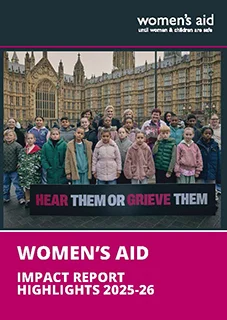
The period between April 2025 and March 2026 marked a pivotal year for Women’s Aid, characterized by significant policy achievements, robust survivor support, and strategic organizational growth, as detailed in the preliminary highlights of their forthcoming impact report. Foremost among these accomplishments is the successful culmination of the "Hear Them or Grieve Them" campaign, which led to the historic repeal of the presumption of parental involvement in family court proceedings, a critical victory for child safety and justice. Beyond this legislative milestone, the organization extended vital emergency funding to over 5,750 survivors, strengthened its national federation, published five new research reports, and fostered successful partnerships with corporate allies and community fundraisers, collectively advancing its mission to end domestic abuse.
A Landmark Victory for Child Safety: The "Hear Them or Grieve Them" Campaign
The "Hear Them or Grieve Them" campaign stands as the centerpiece of Women’s Aid’s achievements for the 2025-2026 reporting period. This highly influential initiative was launched with the explicit goal of ensuring that children’s voices and safety are unequivocally prioritized within the often-complex and emotionally charged environment of family court proceedings. For years, a significant concern among child protection advocates and domestic abuse organizations was the "presumption of parental involvement" embedded within the legal framework. This presumption, designed to encourage children’s relationships with both parents post-separation, inadvertently placed children at severe risk in cases involving domestic abuse. It often compelled children to maintain contact with abusive parents, despite documented evidence of harm, thereby re-traumatizing them and undermining their safety and well-being.
The campaign’s genesis was rooted in extensive research and the lived experiences of countless survivors and their children. Women’s Aid, through its frontline services and advocacy work, had gathered overwhelming evidence demonstrating how the presumption frequently failed to safeguard children, particularly when one parent had a history of domestic violence, abuse, or coercive control. These children were often forced into unsupervised contact, compelled to testify against an abuser, or had their pleas for safety dismissed by a system that prioritized contact over protection. The emotional and psychological toll on these children was profound, impacting their development, mental health, and long-term sense of security.
Central to the campaign’s success was the tireless advocacy of Women’s Aid ambassador Claire Throssel. Drawing upon her deeply personal and tragic experiences, Throssel became a powerful voice, bringing a human face to the urgent need for reform. Her advocacy underscored the devastating consequences of systemic failures to protect children in abusive family situations, galvanizing public support and putting immense pressure on policymakers. The campaign employed a multi-faceted approach, combining public awareness initiatives, direct lobbying of Members of Parliament and government officials, expert evidence submissions to parliamentary committees, and the amplification of survivor testimonies. It leveraged media platforms to expose the flaws in the existing legal framework and rallied a broad coalition of support from legal professionals, child welfare organizations, and survivor groups.
The culmination of these efforts was a historic legislative breakthrough: the repeal of the presumption of parental involvement in family courts. This critical amendment, now incorporated into a government-backed bill, represents a paradigm shift in how family courts are expected to approach cases involving domestic abuse. It sends a clear message that a child’s safety and welfare must be the paramount consideration, overriding any automatic presumption of contact with an abusive parent. The implications of this legislative change are far-reaching, promising to offer greater protection to vulnerable children, empower judges to make more nuanced and safety-conscious decisions, and ultimately save lives. This victory underscores the profound impact of sustained, evidence-based advocacy and collaboration between non-profit organizations, affected individuals, and policymakers.
Empowering Survivors Through Emergency Funding and Direct Support
Beyond legislative reform, Women’s Aid maintained its steadfast commitment to direct survivor support, providing crucial emergency funding through its Flexible Fund and Survivor Safety Fund. In the 2025-2026 period, these funds supported over 5,750 survivors, offering a lifeline to individuals and families fleeing abusive situations. The provision of emergency funding is often the critical first step for survivors to break free from violence. Domestic abuse frequently creates significant financial barriers, trapping individuals in abusive relationships due to a lack of resources for safe housing, legal advice, or even daily necessities. Abusers often exert financial control, leaving survivors with no independent means to escape.
The Flexible Fund and Survivor Safety Fund are designed to address these immediate and pressing needs. Funds can cover a range of essential expenses, including:
- Emergency Accommodation: Securing temporary safe housing, such as refuge spaces or private rentals, is paramount for survivors and their children.
- Legal Aid: Access to legal advice is crucial for navigating complex divorce, child custody, and protection order proceedings.
- Basic Necessities: Providing for food, clothing, and essential toiletries when survivors have had to leave everything behind.
- Transportation: Funding for travel to safe locations, court appearances, or medical appointments.
- Security Measures: Enhancing home security or providing personal safety devices where appropriate.
- Childcare Costs: Enabling survivors to attend appointments or seek employment without compromising their children’s care.
The impact of this direct financial aid extends far beyond monetary value. It provides survivors with a sense of agency, enabling them to make choices for their safety and future. It reduces the immediate stress and trauma associated with fleeing abuse, allowing them to focus on healing and rebuilding their lives. The number of survivors supported – over 5,750 – highlights the immense scale of the need and the operational efficiency of Women’s Aid in deploying these critical resources. This direct support is a cornerstone of the organization’s holistic approach, complementing its policy advocacy with tangible, life-changing assistance.
Strengthening the National Federation and Alliance Network
The strength of Women’s Aid lies not only in its national advocacy but also in its extensive network of member services and allies across the country. The 2025-2026 highlights report notes significant improvements in how the organization works with these federated members and allies, indicating a concerted effort to enhance collaboration, communication, and collective impact. Women’s Aid operates as a federation, supporting a vast network of independent local domestic abuse services, refuges, and helplines. This structure allows for both national coordination and localized, community-specific support.
Improvements in federation work typically encompass several key areas:

- Enhanced Communication Channels: Implementing new platforms or protocols to ensure timely and effective information sharing between the national body and local services.
- Shared Best Practices: Facilitating the exchange of successful strategies, therapeutic approaches, and operational models among members to elevate the quality of support across the network.
- Coordinated Advocacy: Aligning national policy goals with local needs, ensuring that the voices of frontline workers and local survivors inform national campaigns and legislative efforts.
- Training and Capacity Building: Providing specialized training, resources, and technical assistance to local services, helping them adapt to evolving challenges and enhance their service delivery.
- Resource Sharing: Streamlining access to funding opportunities, research findings, and public awareness materials for all members.
By strengthening these internal and external alliances, Women’s Aid maximizes its reach and effectiveness. A cohesive federation ensures that consistent standards of care are upheld, that new research and legislative changes are rapidly disseminated, and that advocacy efforts are amplified by a unified voice. This collaborative model is essential for tackling a pervasive issue like domestic abuse, which requires both national policy shifts and localized, culturally competent interventions.
Informing Policy and Practice Through Research
The publication of five new research reports during the reporting period underscores Women’s Aid’s commitment to evidence-based advocacy and service delivery. Research is fundamental to understanding the complex dynamics of domestic abuse, identifying gaps in current services, and developing effective prevention and intervention strategies. These reports likely covered a range of critical topics, such as:
- The specific impacts of domestic abuse on children: Building on the "Hear Them or Grieve Them" campaign, research could have delved deeper into the psychological, educational, and social consequences for children exposed to abuse.
- Barriers to reporting and seeking help: Investigating reasons why survivors might not report abuse or access support services, including systemic barriers, cultural factors, or fear of reprisal.
- Specific forms of abuse: Focusing on emerging trends or less understood forms of abuse, such as economic abuse, tech abuse, or abuse within particular demographic groups.
- Effectiveness of interventions: Evaluating the impact of various support services, therapeutic models, or legal interventions.
- Funding landscape for domestic abuse services: Analyzing the challenges and opportunities in securing sustainable funding for the sector.
These research findings serve multiple purposes. They provide robust data to inform Women’s Aid’s own policy recommendations, strengthen its arguments in discussions with government and legal bodies, and guide the development of its support services. Furthermore, these reports contribute to the broader academic and public understanding of domestic abuse, fostering informed public discourse and driving societal change. By consistently publishing new research, Women’s Aid positions itself as a thought leader in the field, ensuring its advocacy is grounded in empirical evidence and the lived realities of survivors.
Strategic Partnerships and Community Engagement
Another hallmark of the 2025-2026 year was the continued success of Women’s Aid’s partnerships with corporations like Airbnb and AXA, alongside the invaluable contributions of its many generous community fundraisers. Corporate partnerships provide crucial financial support, but often extend to in-kind contributions, pro-bono services, and employee engagement initiatives. For example:
- Airbnb: A partnership with a major hospitality platform like Airbnb could involve initiatives focused on providing safe temporary accommodation for survivors, raising awareness among their vast user base, or even developing specific training for hosts to identify and respond to domestic abuse risks.
- AXA: An insurance giant like AXA could offer financial contributions, pro-bono legal or financial planning advice for survivors, or develop insurance products tailored to the needs of individuals fleeing abuse. Such partnerships not only inject vital funds but also lend credibility and amplify the message of Women’s Aid to a wider corporate audience and the general public.
Equally vital is the unwavering support from community fundraisers. These grassroots efforts, undertaken by individuals, schools, local groups, and businesses, demonstrate the widespread public commitment to ending domestic abuse. Community fundraising initiatives can range from sponsored runs and charity bake sales to local awareness events and personal challenges. While individual contributions might be smaller, their collective impact is substantial, providing a steady stream of income and fostering a sense of community ownership in the fight against abuse. This dual approach of securing large-scale corporate support and nurturing grassroots engagement ensures a diversified funding base and broad societal backing for Women’s Aid’s mission.
Broader Impact and Future Outlook
The achievements highlighted in this preliminary report for 2025-2026 underscore Women’s Aid’s pivotal role in shaping policy and providing essential support for survivors of domestic abuse in the UK. The repeal of the presumption of parental involvement in family courts represents a monumental shift, promising to provide greater protection for countless children who have historically been failed by the system. This legislative change is a testament to the power of sustained advocacy, collaboration, and the courage of survivors and their allies.
However, despite these significant victories, the persistent prevalence of domestic abuse means that the need for Women’s Aid’s services remains critical. Statistics consistently show that domestic abuse affects millions, with devastating consequences for individuals, families, and society at large. The demand for refuge spaces, helplines, and support services continues to outstrip supply in many areas, underscoring the ongoing challenge of securing adequate and sustainable funding for the sector. Charitable organizations like Women’s Aid navigate a complex funding landscape, often relying on a mix of government grants, corporate donations, and public fundraising to sustain their vital work.
The forthcoming full impact report, slated for publication later in 2026, is anticipated to provide a comprehensive overview of these achievements, alongside detailed financial statements and further insights into the organization’s strategic priorities for the coming years. It will likely elaborate on the specific methodologies of their research, the detailed breakdown of how survivor funds were utilized, and the qualitative impact of their work on individuals and communities. This detailed accountability is crucial for maintaining public trust and demonstrating the tangible outcomes of donor support and volunteer efforts.
The period covered by this highlights report exemplifies Women’s Aid’s multifaceted approach: driving systemic change through expert advocacy, providing immediate relief through direct services, fostering a strong network of support, and informing the discourse through rigorous research. As the organization looks ahead, its commitment to ensuring a future free from domestic abuse remains unwavering, with the successes of 2025-2026 providing a robust foundation for continued progress and impact. The work of Women’s Aid remains indispensable in the ongoing effort to create a society where all individuals, especially children, can live in safety and free from fear.