Montgomery, Alabama’s pivotal Legacy Sites will open their doors free of charge on Friday, June 19, from 8:30 am to 6:30 pm, inviting visitors to observe Juneteenth by engaging directly with the nation’s profound history of racial injustice and the enduring struggle for freedom. This initiative by the Equal Justice Initiative (EJI) provides an unparalleled opportunity to commemorate the lives and legacies of the estimated 10 million Black people subjected to chattel slavery in America, celebrating their indomitable courage, resilience, and perseverance. The four interconnected sites—the Legacy Museum, the National Memorial for Peace and Justice, the Freedom Monument Sculpture Park, and Montgomery Square—are meticulously designed to guide visitors through a comprehensive historical narrative spanning four centuries, from the horrors of enslavement and racial terrorism to codified segregation and contemporary racial disparities. No tickets are required for this special Juneteenth access, underscoring EJI’s commitment to making this vital history accessible to all.
The Juneteenth Mandate: A Federal Holiday’s Deep Roots
Juneteenth, officially recognized as a federal holiday in 2021, marks a pivotal moment in American history: June 19, 1865. On this day, Major General Gordon Granger arrived in Galveston, Texas, issuing General Order No. 3, which announced that all enslaved people in Texas were free. This declaration came more than two and a half years after President Abraham Lincoln’s Emancipation Proclamation, which had been signed on January 1, 1863. The delay in Texas, the westernmost Confederate state, meant that hundreds of thousands of enslaved individuals continued to toil in bondage, unaware of their legal freedom, until Granger’s arrival. The celebration of Juneteenth, therefore, is not merely a remembrance of emancipation but a recognition of the prolonged and often brutal struggle for true liberty and justice. It is a day to reflect on the unfinished work of civil rights and racial equity that continues to shape American society.
Celebrating Juneteenth at the Legacy Sites in Montgomery holds particular resonance. Alabama, a state deeply entrenched in the history of slavery and the subsequent Jim Crow era, served as a flashpoint for both oppression and resistance. Montgomery itself was a major hub for the domestic slave trade, a capital of the Confederacy, and later, the crucible of the modern Civil Rights Movement. The EJI’s sites are strategically located to confront this complex past, offering a tangible link between historical injustices and their contemporary manifestations. By providing free access on Juneteenth, EJI aims to foster a deeper understanding of this history, encouraging a nationwide reckoning that is essential for progress. EJI has previously marked Juneteenth with enriching cultural programs, including musical performances in Montgomery, further enhancing the commemorative experience and connecting historical reflection with vibrant expressions of Black culture and resilience.
A Journey Through American History: The Legacy Sites Unveiled
The EJI’s Legacy Sites collectively represent a powerful and immersive educational experience, meticulously curated to confront the nation’s difficult past and inspire a commitment to justice. Each site contributes a distinct yet interconnected layer to the narrative, creating a holistic understanding of American history through the lens of racial injustice.
The Legacy Museum: From Enslavement to Mass Incarceration
Located on the site of a former slave warehouse, the Legacy Museum: From Enslavement to Mass Incarceration provides a chillingly direct encounter with the history of racial inequality. Through interactive exhibits, first-person accounts, and meticulously researched data, the museum traces a direct line from the transatlantic slave trade and the domestic slave trade to convict leasing, Jim Crow segregation, and the contemporary crisis of mass incarceration. Visitors encounter holographic projections of enslaved individuals, hear their stories, and witness the brutal economic system that underpinned slavery. The museum highlights the vast scale of the domestic slave trade, which forcibly relocated over a million enslaved people from the Upper South to the burgeoning cotton plantations of the Deep South, tearing families apart and generating immense wealth for slaveholders and traders. It then meticulously details how the legal framework of slavery evolved into the racial terrorism of lynching and the oppressive systems of Jim Crow, which disenfranchised and segregated Black Americans for nearly a century. Finally, the museum connects these historical injustices to the modern era, examining the devastating impact of over-policing, mandatory minimum sentencing, and the disproportionate incarceration rates that continue to affect communities of color, presenting mass incarceration as a contemporary manifestation of racial control.
The National Memorial for Peace and Justice: Confronting Racial Terror
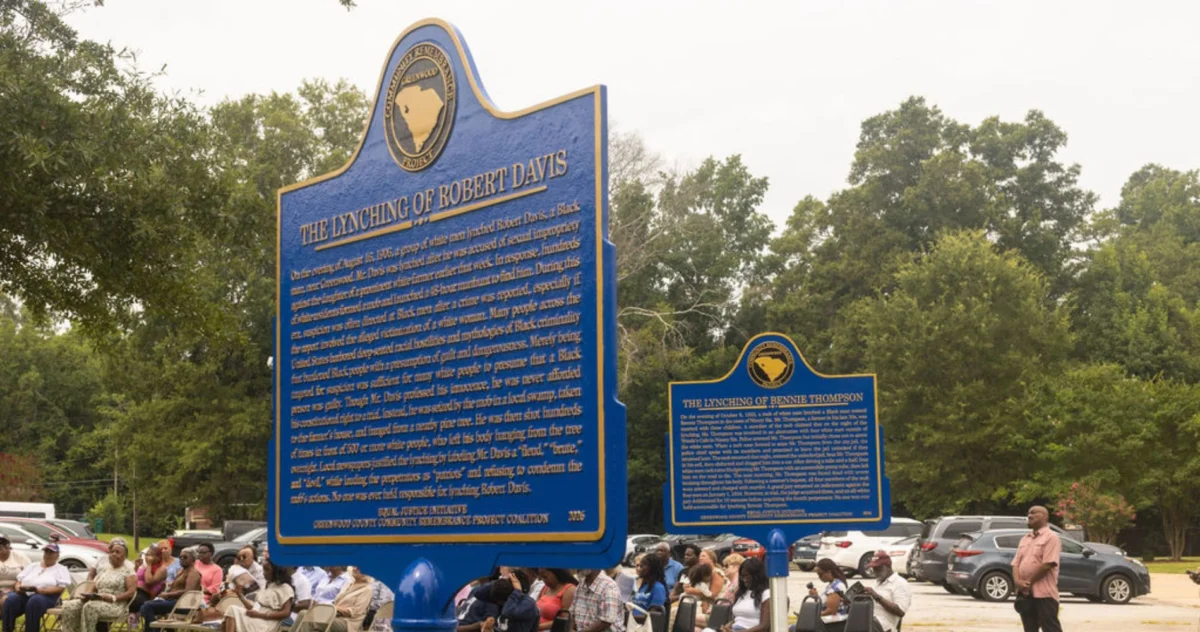
Perched atop a hill overlooking Montgomery, the National Memorial for Peace and Justice stands as a solemn and breathtaking tribute to the more than 4,400 documented victims of racial terror lynchings in the United States between 1877 and 1950. The memorial features 800 corten steel monuments, each six feet tall, representing the counties across America where racial terror lynchings took place. As visitors walk through the memorial, these massive steel slabs, initially at eye level, gradually rise above them, symbolizing the thousands of bodies that were hanged, burned, and mutilated. The names of known lynching victims are etched into the steel, confronting visitors with the sheer scale and brutality of this often-overlooked period of American history. Below the memorial, duplicate monuments lie on the ground, awaiting collection by their respective counties, serving as a powerful call to action for communities to acknowledge and reconcile with their violent pasts. The memorial has garnered international acclaim for its profound emotional impact and its unflinching portrayal of racial violence, forcing a confrontation with a history that has long been suppressed or denied. Its stark beauty and devastating narrative make it a powerful site for reflection and remembrance.
Freedom Monument Sculpture Park: Honoring Resilience and Ancestry
Opened in 2023, the Freedom Monument Sculpture Park is a sprawling 17-acre site nestled along the banks of the historic Alabama River, a waterway once central to the domestic slave trade. This park offers a contemplative and expansive exploration of the institution of slavery, focusing not just on its brutality but also on the lives, cultures, and enduring spirit of enslaved people. It delves into the ingenuity, resistance, and family bonds forged under unimaginable conditions. The park features powerful art installations, historical markers, and native plantings, creating a landscape of memory and reflection. It has been lauded as an "essential American experience," particularly relevant as the nation approaches its 250th birthday, offering a crucial lens through which to understand the very foundations of American identity and wealth.
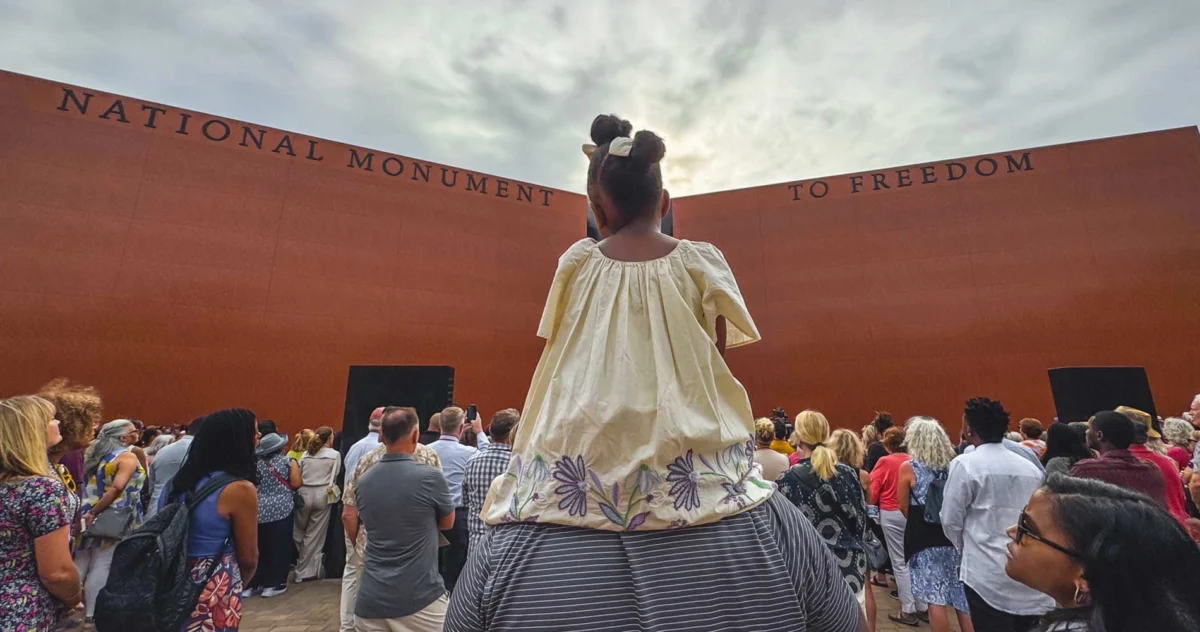
At the heart of the Sculpture Park is the soaring National Monument to Freedom, a monumental structure dedicated on a previous Juneteenth. This powerful memorial is inscribed with 122,000 surnames, representing millions of Black families whose names were often lost or changed during slavery. For tens of millions of descendants, the monument forges a profound connection to the courage, strength, and resilience of their formerly enslaved ancestors who carried these names across generations and into the 21st century. The monument serves as a testament to the enduring legacy of family, identity, and the unbroken chain of humanity that persevered through the darkest chapters of American history. Its dedication on Juneteenth amplifies the holiday’s message of liberation and the reclaiming of identity.
Montgomery Square: Echoes of Civil Rights Activism
The newest addition to the Legacy Sites, Montgomery Square, serves as a poignant reminder that racial injustice and threats to voting rights are not relics of the past but persistent challenges that can be overcome through collective action. This site is dedicated to the decade of extraordinary activism between 1955 and 1965, when Black residents in Montgomery, with unparalleled courage and determination, ignited a movement that transformed the nation and inspired civil rights struggles globally.
Montgomery Square specifically honors the spirit, lives, courage, and tenacity of those who orchestrated and participated in the Montgomery Bus Boycott, an unprecedented and ultimately victorious resistance against segregated public transportation. Sparked by Rosa Parks’ brave stand and led by figures like Dr. Martin Luther King Jr., the boycott lasted 381 days and resulted in a Supreme Court ruling that desegregated Montgomery’s buses. The site also commemorates the broader struggle for voting rights, which culminated in the landmark Selma to Montgomery marches and the subsequent passage of the Voting Rights Act of 1965. This legislation, signed into law by President Lyndon B. Johnson, outlawed discriminatory voting practices and fundamentally reshaped American democracy. Montgomery Square underscores that the fight for justice is an ongoing relay race, passed from one generation to the next, and that vigilance and collective action remain essential to protect and expand civil liberties.
Montgomery: A Crucible of Change and Continued Relevance
Montgomery’s role in American history extends beyond the specific EJI sites. As the first capital of the Confederacy, it symbolizes the nation’s deep divisions over slavery. Later, it became the epicenter of the Civil Rights Movement, with iconic events such as the Montgomery Bus Boycott, the Selma to Montgomery marches, and the bombing of the 16th Street Baptist Church (though that occurred in Birmingham, its spirit is intrinsically linked to the broader Alabama struggle). The city’s transformation from a symbol of oppression to a beacon of civil rights activism underscores the profound shifts that have occurred and the persistent need for remembrance and education.
The EJI’s decision to locate its comprehensive historical sites in Montgomery is deliberate, transforming a city once synonymous with racial injustice into a global center for learning about civil rights and human dignity. This strategic placement not only grounds the narrative in historical accuracy but also leverages Montgomery’s existing historical infrastructure, drawing visitors from around the world who seek to understand the complexities of American democracy and its foundational struggles.
The Enduring Mission of EJI and Its Broader Impact
The Equal Justice Initiative, founded by renowned civil rights attorney Bryan Stevenson, is a non-profit organization committed to ending mass incarceration and excessive punishment in the United States, challenging racial and economic injustice, and protecting basic human rights for the most vulnerable people in American society. Stevenson’s vision for the Legacy Sites stems from his conviction that true reconciliation and progress require a truthful reckoning with the past. He frequently emphasizes that "truth and reconciliation are sequential. You can’t have reconciliation until you have truth." The sites are a direct manifestation of this philosophy, providing platforms for education, dialogue, and healing.
The impact of the Legacy Sites extends far beyond historical preservation. They serve as crucial educational resources for students, scholars, and the general public, fostering a more nuanced understanding of America’s racial history. By attracting hundreds of thousands of visitors annually (pre-pandemic estimates suggested over 500,000 visitors per year across the sites), they contribute significantly to Montgomery’s economy through heritage tourism, supporting local businesses and creating jobs. More profoundly, they inspire visitors to confront their own biases, advocate for justice, and participate in the ongoing struggle for a more equitable society. The testimonials from visitors often speak of profound emotional experiences, renewed commitment to social justice, and a deeper appreciation for the resilience of the human spirit.
Looking Forward: The Imperative of Remembrance and Action
As the nation observes Juneteenth, the invitation to the Legacy Sites in Montgomery serves as a powerful call to action. It is an opportunity to reckon with the difficult history of slavery and racial injustice, to honor the lives of generations who endured and persevered, who hoped and loved in the face of tremendous hardship and suffering. The experience of confronting injustice in this sacred place is intended to imbue visitors with a strong conviction that "we’ve come too far to turn around now."
The ongoing relevance of these sites, particularly in the context of contemporary debates about racial justice, voting rights, and systemic inequalities, cannot be overstated. They stand as enduring monuments to the past, urgent calls to action in the present, and beacons of hope for a future where justice prevails. The free admission on Juneteenth underscores the critical importance of collective memory and education in safeguarding democratic principles and advancing the cause of human rights for all. The narrative woven through the Legacy Sites is not just a recounting of history; it is an invitation to participate in its ongoing shaping, to learn from the past, and to commit to building a more just and compassionate future.